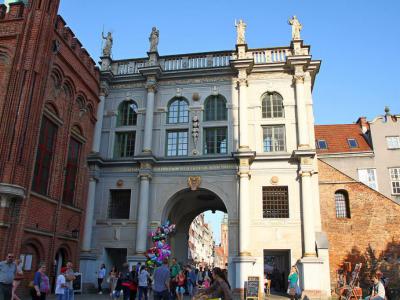


Golden Gate, Gdansk
The Golden Gate marks the inland beginning of the Royal Route, the ceremonial path once used by Polish monarchs entering the city. Built in 1614, it replaced the earlier 13th-century Long Street Gate. Designed by Dutch architect Abraham van den Blocke, the structure reflects the Dutch Mannerist style that influenced much of Gdańsk’s architecture during its trading peak.
Although part of the old city fortifications, the gate was intended as a decorative civic monument rather than a defensive barrier. Its pale stone façade, ornamental columns, and balanced proportions give it the appearance of a ceremonial arch, welcoming visitors into the old town. The upper sections of the gate are decorated with statues representing civic virtues important to the identity of Gdańsk, including Peace, Freedom, Fortune, Fame, Concord, Justice, Piety, and Wisdom. Latin inscriptions reinforce these ideals, including a phrase expressing that small republics prosper through harmony and decline through discord.
Beyond its symbolic role, the Golden Gate formed part of a broader defensive complex, which controlled access to the city from the west. The Golden Gate suffered heavy damage during World War II but was carefully restored by 1957. Today, the area around the gate is lively, with small stalls and nearby shops offering souvenirs, amber jewellery, prints, and handcrafted items inspired by the city’s history.
Although part of the old city fortifications, the gate was intended as a decorative civic monument rather than a defensive barrier. Its pale stone façade, ornamental columns, and balanced proportions give it the appearance of a ceremonial arch, welcoming visitors into the old town. The upper sections of the gate are decorated with statues representing civic virtues important to the identity of Gdańsk, including Peace, Freedom, Fortune, Fame, Concord, Justice, Piety, and Wisdom. Latin inscriptions reinforce these ideals, including a phrase expressing that small republics prosper through harmony and decline through discord.
Beyond its symbolic role, the Golden Gate formed part of a broader defensive complex, which controlled access to the city from the west. The Golden Gate suffered heavy damage during World War II but was carefully restored by 1957. Today, the area around the gate is lively, with small stalls and nearby shops offering souvenirs, amber jewellery, prints, and handcrafted items inspired by the city’s history.
Want to visit this sight? Check out these Self-Guided Walking Tours in Gdansk. Alternatively, you can download the mobile app "GPSmyCity: Walks in 1K+ Cities" from Apple App Store or Google Play Store. The app turns your mobile device to a personal tour guide and it works offline, so no data plan is needed when traveling abroad.
Download The GPSmyCity App



Golden Gate on Map
Sight Name: Golden Gate
Sight Location: Gdansk, Poland (See walking tours in Gdansk)
Sight Type: Attraction/Landmark
Guide(s) Containing This Sight:
Sight Location: Gdansk, Poland (See walking tours in Gdansk)
Sight Type: Attraction/Landmark
Guide(s) Containing This Sight:
Nearby Sights

Walking Tours in Gdansk, Poland

Create Your Own Walk in Gdansk
Creating your own self-guided walk in Gdansk is easy and fun. Choose the city attractions that you want to see and a walk route map will be created just for you. You can even set your hotel as the start point of the walk.
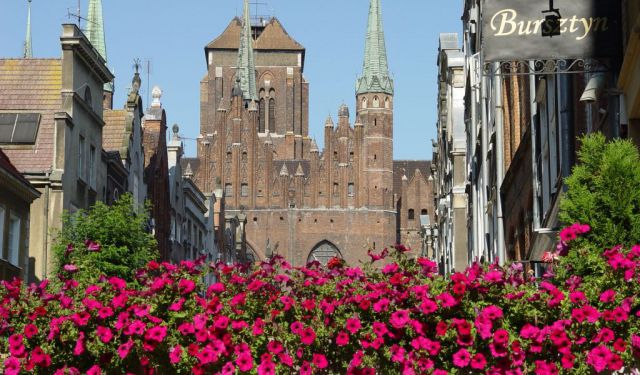
Gdansk's Historical Churches Tour
Gdansk has a long history of Catholicism, hence the abundance of spectacular churches here. Let's delve into some of the most impressive temples that grace the cityscape and see what they are.
Saint John's Church, a Gothic masterpiece, stands tall in the heart of Gdansk. It dates back to the 14th century and features impressive brickwork and intricate details. Its towering spire is a... view more
Tour Duration: 1 Hour
Travel Distance: 1.6 Km or 1 Miles
Saint John's Church, a Gothic masterpiece, stands tall in the heart of Gdansk. It dates back to the 14th century and features impressive brickwork and intricate details. Its towering spire is a... view more
Tour Duration: 1 Hour
Travel Distance: 1.6 Km or 1 Miles
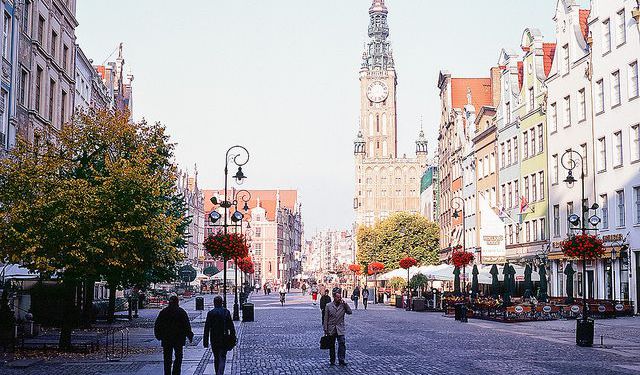
Gdansk Old Town Walking Tour
Standing between river and sea, Gdansk has spent a thousand years welcoming arrivals and surviving departures.
Where the Motława River meets the Baltic Sea, Gdansk has long stood at the crossroads of trade, politics, and culture. Its name is believed to derive from “Gdania”, an early name for the river flowing through the settlement, though some linguists connect it to old Slavic words... view more
Tour Duration: 2 Hours
Travel Distance: 2.2 Km or 1.4 Miles
Where the Motława River meets the Baltic Sea, Gdansk has long stood at the crossroads of trade, politics, and culture. Its name is believed to derive from “Gdania”, an early name for the river flowing through the settlement, though some linguists connect it to old Slavic words... view more
Tour Duration: 2 Hours
Travel Distance: 2.2 Km or 1.4 Miles
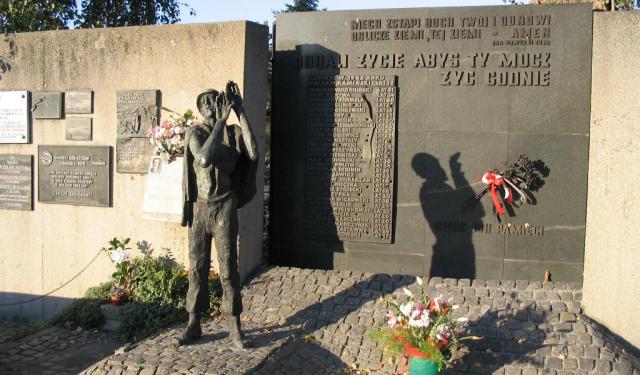
Solidarity Union Walking Tour
For decades, the word “Solidarity” has been synonymous with the city of Gdansk. The peaceful Solidarity revolution, started here in the August of 1980, marked the outset of the fall of communism not only in Poland but also throughout Eastern Europe.
Stemmed from the country's first free labor union born out of strikes at the Lenin Shipyard, now the Gdansk Shipyard,... view more
Tour Duration: 1 Hour
Travel Distance: 0.8 Km or 0.5 Miles
Stemmed from the country's first free labor union born out of strikes at the Lenin Shipyard, now the Gdansk Shipyard,... view more
Tour Duration: 1 Hour
Travel Distance: 0.8 Km or 0.5 Miles