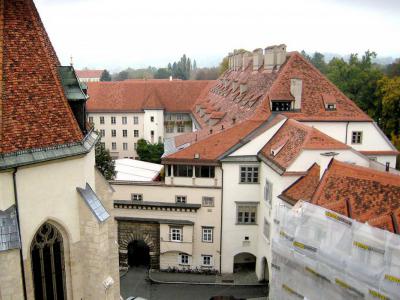


Grazer Burg (Graz Castle), Graz
Situated east of Graz's old town, close to Graz Cathedral, Graz Castle was constructed starting in 1438 under the patronage of Duke Frederick V, who later ascended to become Holy Roman Emperor Frederick III. Its strategic significance was limited, so it was linked to the fortress on Schloßberg through a covered passage. Graz became the capital of Inner Austria in 1564, leading to the castle's expansion and refurbishment as the residence of the region's Archdukes. However, with Archduke Ferdinand II's relocation to Vienna upon his coronation as emperor in 1619, the castle lost its primary role and fell into disrepair.
Over the centuries, there were various minor renovations, but by 1822, sections were deemed rundown, resulting in partial demolition between 1853 and 1854. In the early 20th century, some renovations and expansions occurred, and since 1922, the castle has housed the Styrian governor's offices.
During World War II, the castle sustained significant damage and underwent reconstruction from 1947 onwards. Between 1950 and 1952, new structures were added, forming what is now called the New Castle. Presently, alongside the provincial governor's offices, the castle hosts several departments of the Styrian provincial government. While access to the castle is limited, visitors can explore its courtyards and the iconic double spiral staircase, appreciating its historical significance from the exterior.
Over the centuries, there were various minor renovations, but by 1822, sections were deemed rundown, resulting in partial demolition between 1853 and 1854. In the early 20th century, some renovations and expansions occurred, and since 1922, the castle has housed the Styrian governor's offices.
During World War II, the castle sustained significant damage and underwent reconstruction from 1947 onwards. Between 1950 and 1952, new structures were added, forming what is now called the New Castle. Presently, alongside the provincial governor's offices, the castle hosts several departments of the Styrian provincial government. While access to the castle is limited, visitors can explore its courtyards and the iconic double spiral staircase, appreciating its historical significance from the exterior.
Want to visit this sight? Check out these Self-Guided Walking Tours in Graz. Alternatively, you can download the mobile app "GPSmyCity: Walks in 1K+ Cities" from Apple App Store or Google Play Store. The app turns your mobile device to a personal tour guide and it works offline, so no data plan is needed when traveling abroad.
Download The GPSmyCity App



Grazer Burg (Graz Castle) on Map
Sight Name: Grazer Burg (Graz Castle)
Sight Location: Graz, Austria (See walking tours in Graz)
Sight Type: Attraction/Landmark
Sight Location: Graz, Austria (See walking tours in Graz)
Sight Type: Attraction/Landmark
Nearby Sights
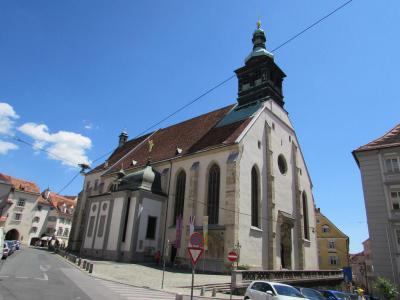
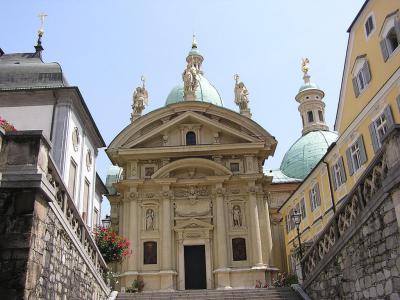
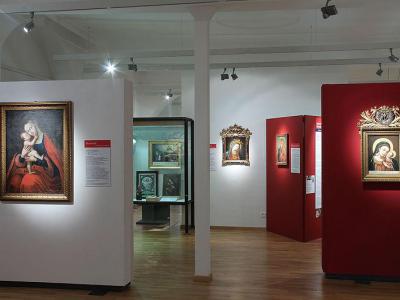

Walking Tours in Graz, Austria

Create Your Own Walk in Graz
Creating your own self-guided walk in Graz is easy and fun. Choose the city attractions that you want to see and a walk route map will be created just for you. You can even set your hotel as the start point of the walk.
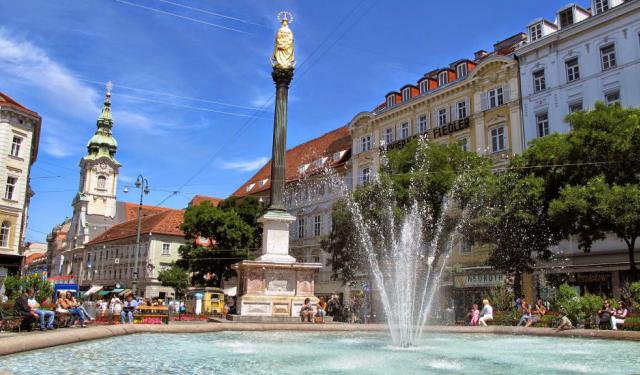
Graz Old Town Walking Tour
Before humanity understood how planets move, the renowned astronomer Johannes Kepler was studying the skies from Graz between 1594 and 1600. During his time here, he developed ideas that would eventually lead to his revolutionary laws of planetary motion.
Graz, the capital of the Austrian state of Styria, has a history stretching back more than a thousand years. Its name derives from the Slavic... view more
Tour Duration: 2 Hours
Travel Distance: 3 Km or 1.9 Miles
Graz, the capital of the Austrian state of Styria, has a history stretching back more than a thousand years. Its name derives from the Slavic... view more
Tour Duration: 2 Hours
Travel Distance: 3 Km or 1.9 Miles