

Greek Agora and Roman Forum, Thessaloniki
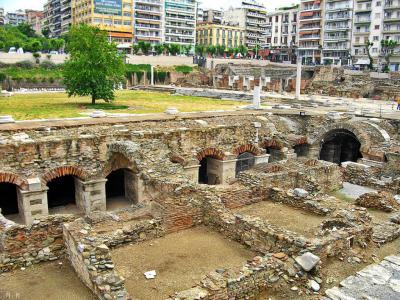
The Roman Forum is an excavated Roman-era civic complex, also commonly referred to as the Ancient Agora. It was uncovered in 1966, when construction work began on a new Thessaloniki Municipal Courthouse. Following the discovery, plans for the courthouse were abandoned, and the site was set aside for systematic archaeological excavation.
When Thessaloniki came under Roman rule, the earlier Hellenistic agora was expanded and reorganized into a large Roman forum laid out on two main levels. Construction began in the late 2nd century CE, and the complex remained in use until at least the 6th century. During this period, it functioned as the city’s primary administrative, commercial, religious, and social center, closely connected to the main streets of Roman Thessaloniki.
The forum included a central open square surrounded by two-story porticoes, along with public buildings and amenities typical of Roman urban planning. Archaeological remains indicate the presence of two bath complexes and an odeon, originally intended for musical performances, public meetings, and civic gatherings. Some interpretations suggest that the odeon itself may have been adapted to host gladiatorial contests and hunts with wild animals.
Decorative elements of the forum included arches, fountains, colonnades, and mosaic floors, fragments of which survive. Several Corinthian columns, once supporting the porticoes, remain standing or partially reconstructed. One of the most distinctive features of the site is the cryptoporticus, a network of semi-subterranean vaulted corridors that supported the upper level of the forum. These passages are exceptionally well preserved and can be followed by visitors today. They also provide access to the underground museum, which displays artifacts uncovered during excavation, including coins, inscriptions, architectural fragments, and marble sculptures found on-site.
When Thessaloniki came under Roman rule, the earlier Hellenistic agora was expanded and reorganized into a large Roman forum laid out on two main levels. Construction began in the late 2nd century CE, and the complex remained in use until at least the 6th century. During this period, it functioned as the city’s primary administrative, commercial, religious, and social center, closely connected to the main streets of Roman Thessaloniki.
The forum included a central open square surrounded by two-story porticoes, along with public buildings and amenities typical of Roman urban planning. Archaeological remains indicate the presence of two bath complexes and an odeon, originally intended for musical performances, public meetings, and civic gatherings. Some interpretations suggest that the odeon itself may have been adapted to host gladiatorial contests and hunts with wild animals.
Decorative elements of the forum included arches, fountains, colonnades, and mosaic floors, fragments of which survive. Several Corinthian columns, once supporting the porticoes, remain standing or partially reconstructed. One of the most distinctive features of the site is the cryptoporticus, a network of semi-subterranean vaulted corridors that supported the upper level of the forum. These passages are exceptionally well preserved and can be followed by visitors today. They also provide access to the underground museum, which displays artifacts uncovered during excavation, including coins, inscriptions, architectural fragments, and marble sculptures found on-site.
Want to visit this sight? Check out these Self-Guided Walking Tours in Thessaloniki. Alternatively, you can download the mobile app "GPSmyCity: Walks in 1K+ Cities" from Apple App Store or Google Play Store. The app turns your mobile device to a personal tour guide and it works offline, so no data plan is needed when traveling abroad.
Download The GPSmyCity App



Greek Agora and Roman Forum on Map
Sight Name: Greek Agora and Roman Forum
Sight Location: Thessaloniki, Greece (See walking tours in Thessaloniki)
Sight Type: Attraction/Landmark
Guide(s) Containing This Sight:
Sight Location: Thessaloniki, Greece (See walking tours in Thessaloniki)
Sight Type: Attraction/Landmark
Guide(s) Containing This Sight:
Nearby Sights
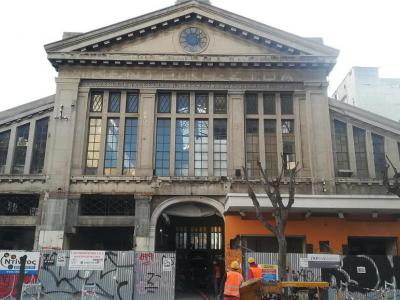
Walking Tours in Thessaloniki, Greece

Create Your Own Walk in Thessaloniki
Creating your own self-guided walk in Thessaloniki is easy and fun. Choose the city attractions that you want to see and a walk route map will be created just for you. You can even set your hotel as the start point of the walk.
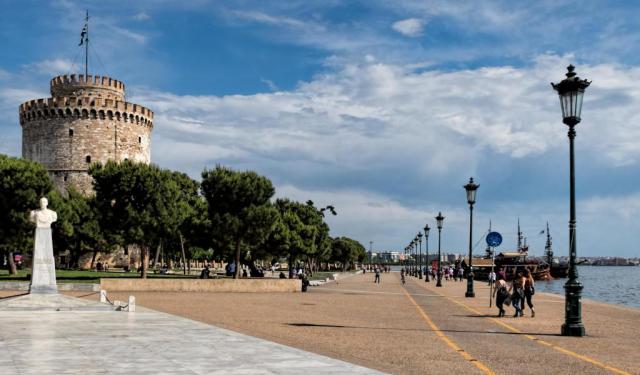
Thessaloniki Waterfront Tour
The Mediterranean has always been an integral part of Thessaloniki’s appeal. The city's orientation toward the sea is largely due to the vision of Ernest Hébrard, the French urban planner and architect, who redesigned the downtown area after the devastating fire of 1917.
To really get the taste of Thessaloniki you need to visit not just its historical landmarks, but also those spots... view more
Tour Duration: 1 Hour(s)
Travel Distance: 2.6 Km or 1.6 Miles
To really get the taste of Thessaloniki you need to visit not just its historical landmarks, but also those spots... view more
Tour Duration: 1 Hour(s)
Travel Distance: 2.6 Km or 1.6 Miles
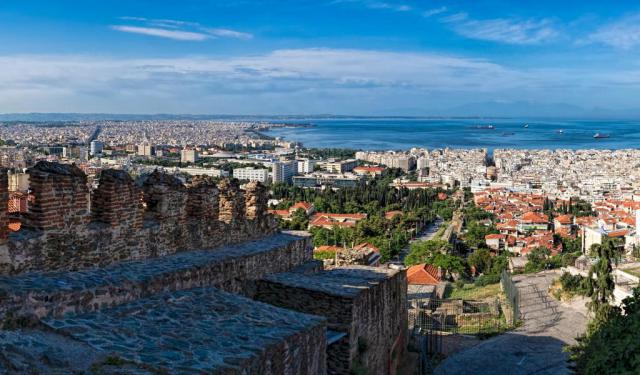
Thessaloniki Upper Town Walking Tour
Thessaloniki’s Upper Town, known locally as Ano Poli, which literally translates as “Upper City” is the city’s oldest continuously inhabited district and the only area to survive the Great Fire of 1917 largely intact. While the lower city was rebuilt along modern, planned lines in the early 20th century, Ano Poli retained its Byzantine street layout, Ottoman-era houses, and defensive... view more
Tour Duration: 2 Hour(s)
Travel Distance: 4.0 Km or 2.5 Miles
Tour Duration: 2 Hour(s)
Travel Distance: 4.0 Km or 2.5 Miles
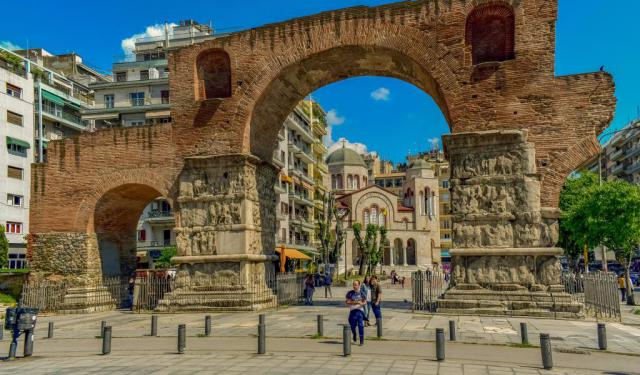
Thessaloniki Downtown Walking Tour
Thessaloniki has been shaped by layers of empire, trade, and migration for more than two millennia. It was founded in 315 BCE by Cassander, king of Macedon, who merged several smaller settlements around the Thermaic Gulf into a single city. He named it after his wife, Thessalonike, the half-sister of Alexander the Great. The name Thessalonikē combines Thessaloi and nikē, meaning victory,... view more
Tour Duration: 2 Hour(s)
Travel Distance: 3.7 Km or 2.3 Miles
Tour Duration: 2 Hour(s)
Travel Distance: 3.7 Km or 2.3 Miles