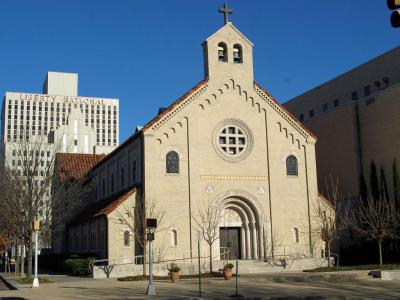


Greek Orthodox Cathedral, Birmingham
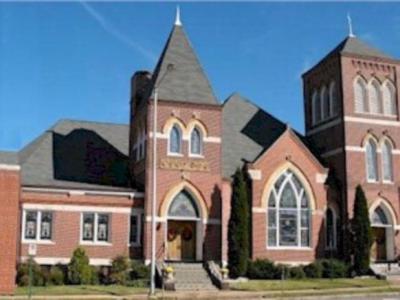
Located in Birmingham’s Five Points South neighborhood, the Holy Trinity–Holy Cross Greek Orthodox Cathedral stands as one of the most historically significant Greek Orthodox churches in the United States. Founded in 1902 and holding its first liturgy in 1907, it is the third oldest Greek Orthodox parish in the country and currently ranks as the third largest within the Metropolis of Atlanta.
The parish began with a lay committee to unite Birmingham’s Greek community. A 1933 dispute over the Greek School led to a split and the creation of Holy Cross Church. In 1953, after years of reconciliation efforts, the two congregations merged to form Holy Trinity–Holy Cross with over 1,500 members.
The cathedral’s present building, begun in 1949 and consecrated in 1956, was designed by local architect George P. Turner. Uniquely, it follows a Latin cross floor plan, diverging from the traditional Greek cross layout seen in many Orthodox churches. In 1971, a 25,000-square-foot educational building replaced the original community center, designed by architect Art Garikes.
Recognized for its cultural outreach, the cathedral launched the Birmingham Greek Festival in 1972, an initiative sparked by the 1968 Birmingham Festival of Arts' “Salute to Greece.” This annual event has since become a major celebration of Hellenic food, music, and traditions, raising funds for charitable causes.
In 1977, the church was elevated to cathedral status. It later expanded with the Family Life Center, built in the former Fire Station No. 2, now housing offices, meeting rooms, a bookstore, and Saint Nicholas Chapel-dedicated to Rev. Father Emanuel Vasilakis. Other additions include a day care, Camp Vakakes near Harpersville, and a 70-space parking lot added in 2017. Led by Dean Gregory Edwards, the cathedral remains a key center for Birmingham’s Orthodox and Greek-American communities.
The parish began with a lay committee to unite Birmingham’s Greek community. A 1933 dispute over the Greek School led to a split and the creation of Holy Cross Church. In 1953, after years of reconciliation efforts, the two congregations merged to form Holy Trinity–Holy Cross with over 1,500 members.
The cathedral’s present building, begun in 1949 and consecrated in 1956, was designed by local architect George P. Turner. Uniquely, it follows a Latin cross floor plan, diverging from the traditional Greek cross layout seen in many Orthodox churches. In 1971, a 25,000-square-foot educational building replaced the original community center, designed by architect Art Garikes.
Recognized for its cultural outreach, the cathedral launched the Birmingham Greek Festival in 1972, an initiative sparked by the 1968 Birmingham Festival of Arts' “Salute to Greece.” This annual event has since become a major celebration of Hellenic food, music, and traditions, raising funds for charitable causes.
In 1977, the church was elevated to cathedral status. It later expanded with the Family Life Center, built in the former Fire Station No. 2, now housing offices, meeting rooms, a bookstore, and Saint Nicholas Chapel-dedicated to Rev. Father Emanuel Vasilakis. Other additions include a day care, Camp Vakakes near Harpersville, and a 70-space parking lot added in 2017. Led by Dean Gregory Edwards, the cathedral remains a key center for Birmingham’s Orthodox and Greek-American communities.
Want to visit this sight? Check out these Self-Guided Walking Tours in Birmingham. Alternatively, you can download the mobile app "GPSmyCity: Walks in 1K+ Cities" from Apple App Store or Google Play Store. The app turns your mobile device to a personal tour guide and it works offline, so no data plan is needed when traveling abroad.
Download The GPSmyCity App



Greek Orthodox Cathedral on Map
Sight Name: Greek Orthodox Cathedral
Sight Location: Birmingham, USA (See walking tours in Birmingham)
Sight Type: Religious
Sight Location: Birmingham, USA (See walking tours in Birmingham)
Sight Type: Religious
Nearby Sights

Walking Tours in Birmingham, Alabama

Create Your Own Walk in Birmingham
Creating your own self-guided walk in Birmingham is easy and fun. Choose the city attractions that you want to see and a walk route map will be created just for you. You can even set your hotel as the start point of the walk.
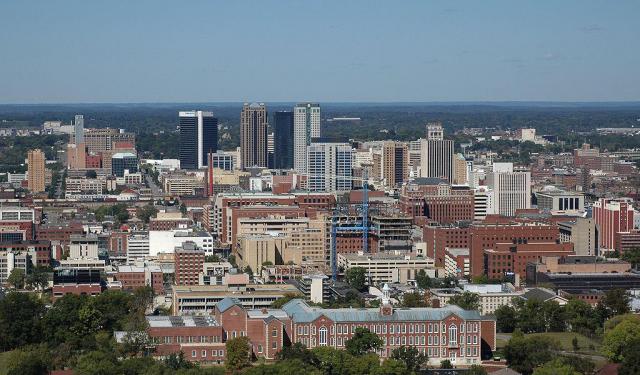
A Walking Guide to Birmingham's Revitalized Downtown
Birmingham is Alabama's biggest city and dates back to 1871, making it a Reconstruction-era city. Although initially formed from agricultural communities, the city quickly became a central railroad and industrial hub, with the iron and steel industries accounting for much of the local workforce.
Irish and Italian immigrants, as well as African Americans, made up most of this early... view more
Tour Duration: 2 Hour(s)
Travel Distance: 3.8 Km or 2.4 Miles
Irish and Italian immigrants, as well as African Americans, made up most of this early... view more
Tour Duration: 2 Hour(s)
Travel Distance: 3.8 Km or 2.4 Miles
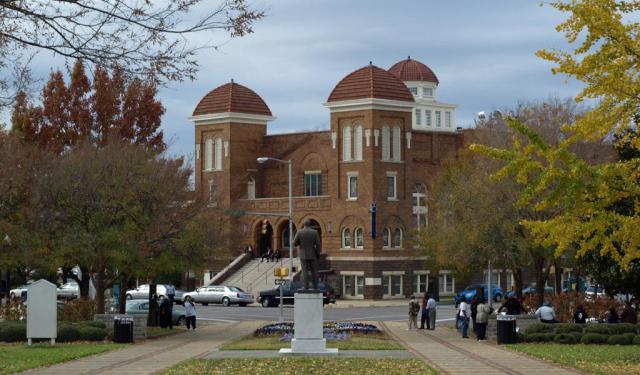
Explore Birmingham's Civil Rights Historical Sites on Foot
Birmingham, Alabama is the very first destination that comes to mind at the mention of the Civil Rights Movement in the United States. Back in the 1950s and 1960s, this city saw a great deal of bloodshed and strife between civil rights leaders, seeking to shed the stigma of centuries-long injustice, and their opponents.
The area of downtown Birmingham, where several significant events in the... view more
Tour Duration: 1 Hour(s)
Travel Distance: 0.9 Km or 0.6 Miles
The area of downtown Birmingham, where several significant events in the... view more
Tour Duration: 1 Hour(s)
Travel Distance: 0.9 Km or 0.6 Miles