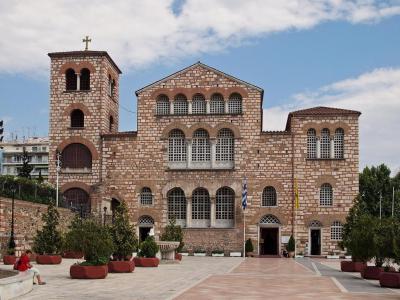


Hagios Demetrios (Church of St. Demetrios), Thessaloniki (must see)
The Church of Saint Demetrios is dedicated to Saint Demetrios, the city’s patron saint and a Roman martyr of the early 4th century. According to tradition, Demetrios was a high-ranking Roman official or military commander who openly professed Christianity during the reign of Galerius. Over time, Demetrios came to be venerated as a military saint and protector of Thessaloniki, believed to have defended the city during its many sieges.
A shrine was first established over the place of his martyrdom, and in the early 5th century it was replaced by a three-aisled basilica. After a major fire in the 7th century, the church was rebuilt as a five-aisled basilica, largely defining the structure that survives today. The present building dates primarily to this reconstruction, though it has undergone repeated restoration following fires, earthquakes, and periods of conversion, including use as a mosque during the Ottoman era.
Architecturally, Hagios Demetrios is one of the largest basilicas in Greece, notable for its scale and relatively restrained exterior. As you enter the church, the interior opens into a broad forest of columns that divide the space into five parallel aisles. The church’s most celebrated artistic treasures are its Byzantine mosaics, dating from the 5th to the 9th centuries. To see them, move slowly along the central nave and into the side aisles, keeping your eyes at upper wall level, above the columns.
Several of the best-preserved mosaics are located along the north and south interior walls, especially near the transept and the area just before the sanctuary. Look for panels showing Saint Demetrios standing frontally, often flanked by clergy, civic officials, or children presenting offerings. Only nine mosaics survived the Great Fire of 1917.
After viewing the mosaics, proceed toward the sanctuary and look for the entrance leading downward. Beneath the sanctuary lies the crypt, traditionally identified as the site of Demetrios’ imprisonment and death. Today, it functions as a museum space, where you can see archaeological remains of the Roman bath complex. Each year on October 26, the feast day of Saint Demetrios, the church becomes the focal point of major religious celebrations.
A shrine was first established over the place of his martyrdom, and in the early 5th century it was replaced by a three-aisled basilica. After a major fire in the 7th century, the church was rebuilt as a five-aisled basilica, largely defining the structure that survives today. The present building dates primarily to this reconstruction, though it has undergone repeated restoration following fires, earthquakes, and periods of conversion, including use as a mosque during the Ottoman era.
Architecturally, Hagios Demetrios is one of the largest basilicas in Greece, notable for its scale and relatively restrained exterior. As you enter the church, the interior opens into a broad forest of columns that divide the space into five parallel aisles. The church’s most celebrated artistic treasures are its Byzantine mosaics, dating from the 5th to the 9th centuries. To see them, move slowly along the central nave and into the side aisles, keeping your eyes at upper wall level, above the columns.
Several of the best-preserved mosaics are located along the north and south interior walls, especially near the transept and the area just before the sanctuary. Look for panels showing Saint Demetrios standing frontally, often flanked by clergy, civic officials, or children presenting offerings. Only nine mosaics survived the Great Fire of 1917.
After viewing the mosaics, proceed toward the sanctuary and look for the entrance leading downward. Beneath the sanctuary lies the crypt, traditionally identified as the site of Demetrios’ imprisonment and death. Today, it functions as a museum space, where you can see archaeological remains of the Roman bath complex. Each year on October 26, the feast day of Saint Demetrios, the church becomes the focal point of major religious celebrations.
Want to visit this sight? Check out these Self-Guided Walking Tours in Thessaloniki. Alternatively, you can download the mobile app "GPSmyCity: Walks in 1K+ Cities" from Apple App Store or Google Play Store. The app turns your mobile device to a personal tour guide and it works offline, so no data plan is needed when traveling abroad.
Download The GPSmyCity App



Hagios Demetrios (Church of St. Demetrios) on Map
Sight Name: Hagios Demetrios (Church of St. Demetrios)
Sight Location: Thessaloniki, Greece (See walking tours in Thessaloniki)
Sight Type: Religious
Guide(s) Containing This Sight:
Sight Location: Thessaloniki, Greece (See walking tours in Thessaloniki)
Sight Type: Religious
Guide(s) Containing This Sight:
Nearby Sights

Walking Tours in Thessaloniki, Greece

Create Your Own Walk in Thessaloniki
Creating your own self-guided walk in Thessaloniki is easy and fun. Choose the city attractions that you want to see and a walk route map will be created just for you. You can even set your hotel as the start point of the walk.
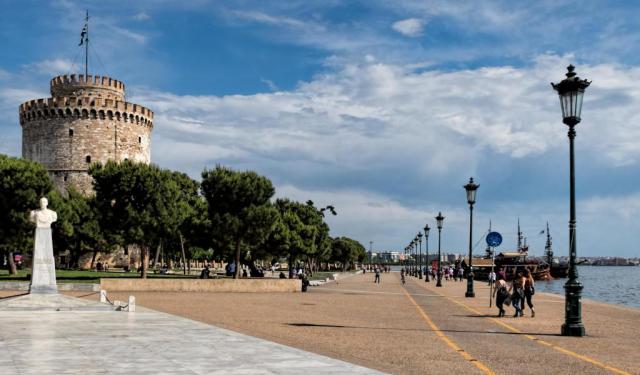
Thessaloniki Waterfront Tour
The Mediterranean has always been an integral part of Thessaloniki’s appeal. The city's orientation toward the sea is largely due to the vision of Ernest Hébrard, the French urban planner and architect, who redesigned the downtown area after the devastating fire of 1917.
To really get the taste of Thessaloniki you need to visit not just its historical landmarks, but also those spots... view more
Tour Duration: 1 Hour
Travel Distance: 2.6 Km or 1.6 Miles
To really get the taste of Thessaloniki you need to visit not just its historical landmarks, but also those spots... view more
Tour Duration: 1 Hour
Travel Distance: 2.6 Km or 1.6 Miles
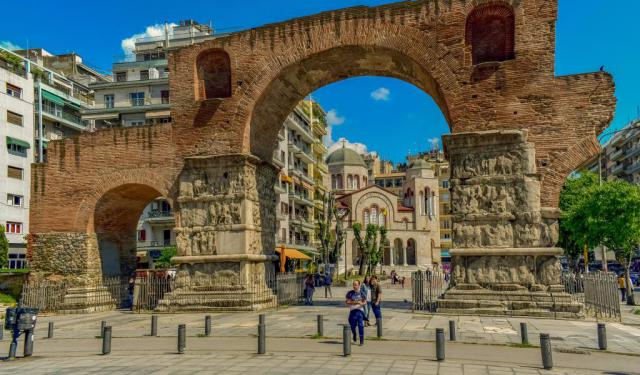
Thessaloniki Downtown Walking Tour
Thessaloniki has been shaped by layers of empire, trade, and migration for more than two millennia. It was founded in 315 BCE by Cassander, king of Macedon, who merged several smaller settlements around the Thermaic Gulf into a single city. He named it after his wife, Thessalonike, the half-sister of Alexander the Great. The name Thessalonikē combines Thessaloi and nikē, meaning victory,... view more
Tour Duration: 2 Hours
Travel Distance: 3.7 Km or 2.3 Miles
Tour Duration: 2 Hours
Travel Distance: 3.7 Km or 2.3 Miles
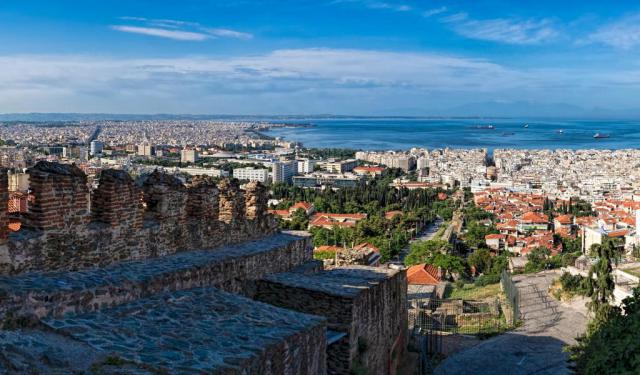
Thessaloniki Upper Town Walking Tour
Thessaloniki’s Upper Town, known locally as Ano Poli, which literally translates as “Upper City” is the city’s oldest continuously inhabited district and the only area to survive the Great Fire of 1917 largely intact. While the lower city was rebuilt along modern, planned lines in the early 20th century, Ano Poli retained its Byzantine street layout, Ottoman-era houses, and defensive... view more
Tour Duration: 2 Hours
Travel Distance: 4 Km or 2.5 Miles
Tour Duration: 2 Hours
Travel Distance: 4 Km or 2.5 Miles
City Walks Overview
