

Japanese Garden, Montevideo
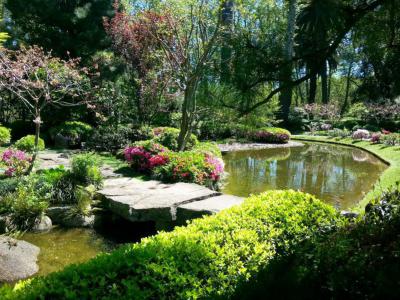
The Japanese Garden of Montevideo, nestled in the scenic Prado neighborhood and situated just behind the Juan Manuel Blanes Museum, offers a serene and meticulously crafted landscape that captures the essence of traditional Japanese aesthetics. Spanning 2000 square meters, this tranquil garden was established as a gift from Japan to commemorate the 80th anniversary of diplomatic relations between Uruguay and Japan. It was inaugurated on September 24, 2001, by Princess Sayako of Japan.
This garden, also known as "Heisei Garden" - a name derived from the Heisei era during Emperor Akihito's reign, features a beautiful ensemble of elements typical of Japanese gardens. Visitors can explore various species of exotic plants, cross quaint bridges, and wander along stone paths. The garden also includes a traditional tea house, a gentle waterfall, and several benches strategically placed for relaxation and reflection. A notable feature is the wooden plaque with calligraphy by the then-Prime Minister Junichiro Koizumi, marking the garden's dedication.
Adding to its charm is a picturesque lake, home to koi fish, reflecting the San-Sui (mountain and water) style, making it a vibrant spot, especially in spring when the cherry blossoms, bamboo, and other oriental flowers are in full bloom. The integration of local flora, like the Uruguayan Ceibo tree, alongside traditional Japanese botanical elements, creates a unique cultural blend and a peaceful retreat for locals and tourists. The Japanese Garden in Montevideo is more than just a garden; it is a symbol of international friendship and a place of cultural and natural beauty, ideal for relaxation, family outings, and quiet contemplation.
This garden, also known as "Heisei Garden" - a name derived from the Heisei era during Emperor Akihito's reign, features a beautiful ensemble of elements typical of Japanese gardens. Visitors can explore various species of exotic plants, cross quaint bridges, and wander along stone paths. The garden also includes a traditional tea house, a gentle waterfall, and several benches strategically placed for relaxation and reflection. A notable feature is the wooden plaque with calligraphy by the then-Prime Minister Junichiro Koizumi, marking the garden's dedication.
Adding to its charm is a picturesque lake, home to koi fish, reflecting the San-Sui (mountain and water) style, making it a vibrant spot, especially in spring when the cherry blossoms, bamboo, and other oriental flowers are in full bloom. The integration of local flora, like the Uruguayan Ceibo tree, alongside traditional Japanese botanical elements, creates a unique cultural blend and a peaceful retreat for locals and tourists. The Japanese Garden in Montevideo is more than just a garden; it is a symbol of international friendship and a place of cultural and natural beauty, ideal for relaxation, family outings, and quiet contemplation.
Want to visit this sight? Check out these Self-Guided Walking Tours in Montevideo. Alternatively, you can download the mobile app "GPSmyCity: Walks in 1K+ Cities" from Apple App Store or Google Play Store. The app turns your mobile device to a personal tour guide and it works offline, so no data plan is needed when traveling abroad.
Download The GPSmyCity App



Japanese Garden on Map
Sight Name: Japanese Garden
Sight Location: Montevideo, Uruguay (See walking tours in Montevideo)
Sight Type: Attraction/Landmark
Sight Location: Montevideo, Uruguay (See walking tours in Montevideo)
Sight Type: Attraction/Landmark
Nearby Sights



Walking Tours in Montevideo, Uruguay

Create Your Own Walk in Montevideo
Creating your own self-guided walk in Montevideo is easy and fun. Choose the city attractions that you want to see and a walk route map will be created just for you. You can even set your hotel as the start point of the walk.
Prado District Walking Tour
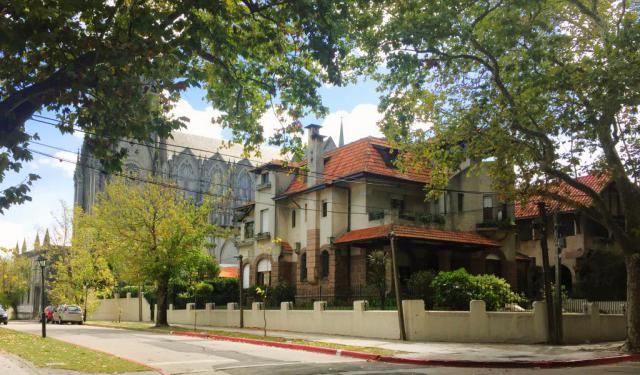
The Prado is one of Montevideo’s oldest and most historically layered districts, shaped by a long transition from rural outskirts to a residential and cultural area closely linked to the city’s elite and intellectual life. The name Prado comes from the Spanish word for “meadow” or “pasture”, reflecting the area’s original landscape: open grasslands along the Miguelete Stream.
... view more
Tour Duration: 2 Hour(s)
Travel Distance: 3.6 Km or 2.2 Miles
... view more
Tour Duration: 2 Hour(s)
Travel Distance: 3.6 Km or 2.2 Miles
Montevideo Old Town Walking Tour
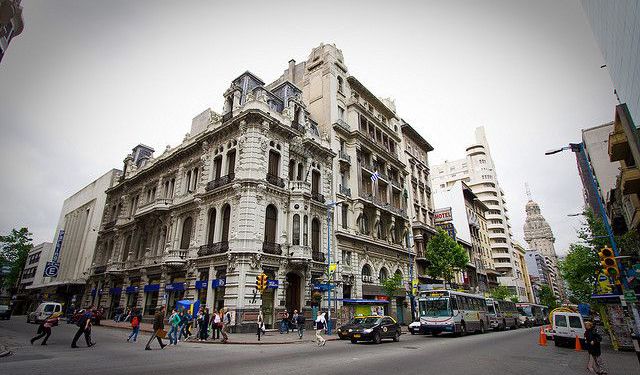
In Charles Darwin's journals, who visited Montevideo in the 1830s during the voyage of the Beagle, he observed that the city felt like “a town living in a state of perpetual expectation”, shaped by sieges, trade, and uncertainty.
Montevideo is the capital and largest city of Uruguay, shaped by its position on the northern bank of the River Plate and by centuries of rivalry between... view more
Tour Duration: 2 Hour(s)
Travel Distance: 2.5 Km or 1.6 Miles
Montevideo is the capital and largest city of Uruguay, shaped by its position on the northern bank of the River Plate and by centuries of rivalry between... view more
Tour Duration: 2 Hour(s)
Travel Distance: 2.5 Km or 1.6 Miles