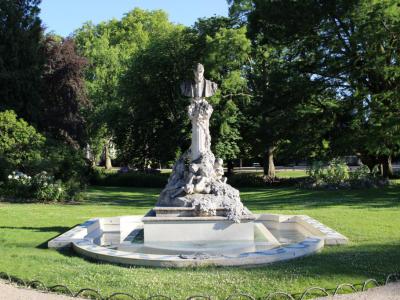


Jardin des Prébendes d'Oé (Prébendes d'Oé Gardens), Tours
The Prébendes d'Oé Gardens in Tours stands as a picturesque example of a public English garden, meticulously crafted by the renowned Bühler brothers. Established in 1872, this tranquil oasis is nestled within the city limits, bordered by Prébendes Street, Roger Salengro Street, Lakanal Street, and Boisdenier Street.
Originally a marshy area dotted with vegetable plots that provided income (prebends) to the provost of Oé during the Ancien Régime, the site was transformed following the economic downturn caused by the 1870 war. This transformation was part of a broader initiative mirroring the Second Empire’s urban enhancements in Paris, aiming to provide employment through public works and to enrich urban life with lush, landscaped environments.
The design of the gardens reflects the signature Bühler style-serpentine paths that weave through diverse woodlands, highlighted by clusters of specific tree species such as cedars, plane trees, giant sequoias, and lime trees. These are thoughtfully arranged to contrast sharply with expansive lawns, creating a dynamic visual experience. The garden also features a central island adorned with bald cypresses, typical of Bühler’s incorporation of water elements into their designs.
Prominent within the garden are two music kiosks and several statues commemorating notable figures from Touraine, including poets Pierre de Ronsard and Honorat de Bueil de Racan, and the scientist Jean-Baptiste Marie Meusnier de La Place. These elements underline the cultural and historical significance of the garden within the community.
Today, the Prébendes d'Oé Gardens serves as a vital communal space, cherished by locals and visitors alike. It hosts concerts and provides a peaceful retreat for families, children, and anyone looking to enjoy a slice of nature’s beauty amidst the urban landscape. It is officially recognized as a “Remarkable Garden,” a testament to its design excellence and historical value.
Originally a marshy area dotted with vegetable plots that provided income (prebends) to the provost of Oé during the Ancien Régime, the site was transformed following the economic downturn caused by the 1870 war. This transformation was part of a broader initiative mirroring the Second Empire’s urban enhancements in Paris, aiming to provide employment through public works and to enrich urban life with lush, landscaped environments.
The design of the gardens reflects the signature Bühler style-serpentine paths that weave through diverse woodlands, highlighted by clusters of specific tree species such as cedars, plane trees, giant sequoias, and lime trees. These are thoughtfully arranged to contrast sharply with expansive lawns, creating a dynamic visual experience. The garden also features a central island adorned with bald cypresses, typical of Bühler’s incorporation of water elements into their designs.
Prominent within the garden are two music kiosks and several statues commemorating notable figures from Touraine, including poets Pierre de Ronsard and Honorat de Bueil de Racan, and the scientist Jean-Baptiste Marie Meusnier de La Place. These elements underline the cultural and historical significance of the garden within the community.
Today, the Prébendes d'Oé Gardens serves as a vital communal space, cherished by locals and visitors alike. It hosts concerts and provides a peaceful retreat for families, children, and anyone looking to enjoy a slice of nature’s beauty amidst the urban landscape. It is officially recognized as a “Remarkable Garden,” a testament to its design excellence and historical value.
Want to visit this sight? Check out these Self-Guided Walking Tours in Tours. Alternatively, you can download the mobile app "GPSmyCity: Walks in 1K+ Cities" from Apple App Store or Google Play Store. The app turns your mobile device to a personal tour guide and it works offline, so no data plan is needed when traveling abroad.
Download The GPSmyCity App



Jardin des Prébendes d'Oé (Prébendes d'Oé Gardens) on Map
Sight Name: Jardin des Prébendes d'Oé (Prébendes d'Oé Gardens)
Sight Location: Tours, France (See walking tours in Tours)
Sight Type: Attraction/Landmark
Sight Location: Tours, France (See walking tours in Tours)
Sight Type: Attraction/Landmark
Nearby Sights

Walking Tours in Tours, France

Create Your Own Walk in Tours
Creating your own self-guided walk in Tours is easy and fun. Choose the city attractions that you want to see and a walk route map will be created just for you. You can even set your hotel as the start point of the walk.
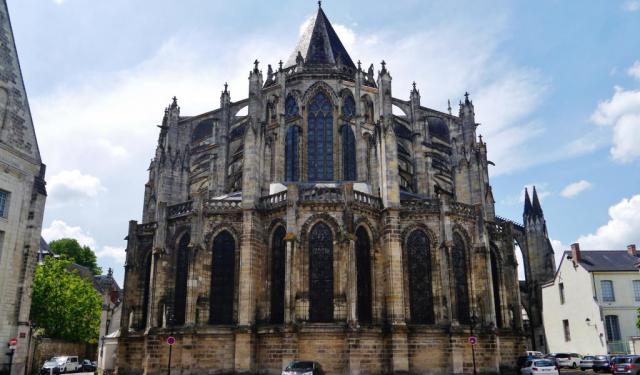
A Walking Map of Tours Historical Churches
The French city of Tours is forever linked to the Battle of Tours, a pivotal event in European history. Taking place in 732 AD, this momentous encounter saw the Frankish leader Charles Martel, a devout Christian, successfully repel a substantial army of Spanish Moors, thus effectively halting the Muslim advance and ensuring the preservation of Christianity throughout Western Europe.
Had it... view more
Tour Duration: 1 Hour(s)
Travel Distance: 2.7 Km or 1.7 Miles
Had it... view more
Tour Duration: 1 Hour(s)
Travel Distance: 2.7 Km or 1.7 Miles
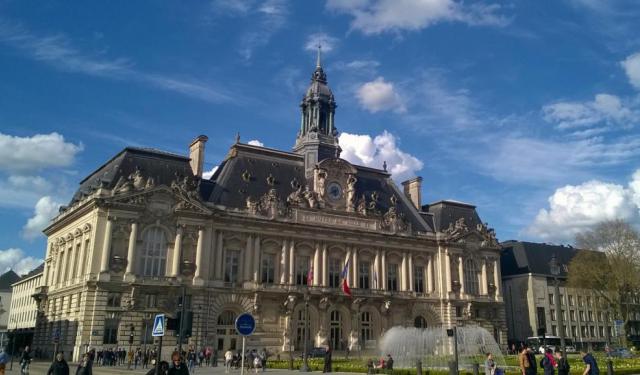
A Walking Guide to Tours City Center
The Roman Emperor Augustus named the city Caesarodunum (Hill of Caesar). But it was always Tours. Caesar left the Tours Ampitheatre, the largest amphitheater of the Empire. It's good to be Caesar.
Tours is located on the River Loire. It stands between Orleans and the Atlantic shore. It is famous for the Battle of Tours in 732 CE when Spanish Moors led by Abdul Rahman Al Ghafiqi was... view more
Tour Duration: 2 Hour(s)
Travel Distance: 3.7 Km or 2.3 Miles
Tours is located on the River Loire. It stands between Orleans and the Atlantic shore. It is famous for the Battle of Tours in 732 CE when Spanish Moors led by Abdul Rahman Al Ghafiqi was... view more
Tour Duration: 2 Hour(s)
Travel Distance: 3.7 Km or 2.3 Miles
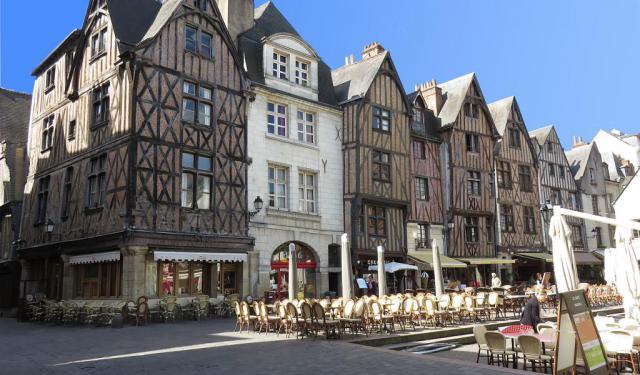
A Stroll Through Tours Historical Old Town
Having successfully preserved much of its historic heritage, Tours is particularly famous for its original medieval district - Vieux Tours. The bulk of it is concentrated around three squares: Place du Grand Marché, Place Plumereau and Place de Chateauneuf.
A stroll through the Old Town, day or night, offers many delights, and is best started at Place Plumereau. Lined with wood-framed,... view more
Tour Duration: 1 Hour(s)
Travel Distance: 1.6 Km or 1 Miles
A stroll through the Old Town, day or night, offers many delights, and is best started at Place Plumereau. Lined with wood-framed,... view more
Tour Duration: 1 Hour(s)
Travel Distance: 1.6 Km or 1 Miles