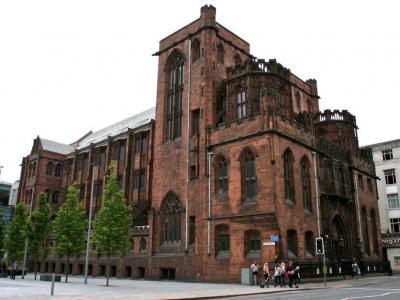


John Rylands Library, Manchester (must see)
John Rylands Library was founded in the late nineteenth century by Enriqueta Rylands in memory of her husband, a prominent industrialist. Designed in a late Gothic Revival style, the building was intended to house rare books, manuscripts, and archival collections in secure and fire-resistant conditions. Its sandstone exterior, pointed arches, and carved details reflect the period’s interest in combining medieval forms with modern technology. Inside, a network of reading rooms, corridors, and staircases was arranged to protect the collections while welcoming scholars and the public.
As you enter the vestibule, look straight ahead toward the main staircase. The stone steps rise between high walls lined with carved niches and slender columns. Look up to see the lantern-like lamps and the tracery patterns set into the ceiling. Walk a few steps forward and look to your left at the carved doorframes that lead to smaller side rooms. Their stonework displays precise detailing, with leaf patterns and small figurative elements integrated into the structure.
Continue toward the historic reading room, passing through the antechamber. When you reach the centre of the long hall, pause and look to your right at the tall windows. Their stained glass filters light in soft tones, revealing the fine ribbing that supports the vaulted ceiling. Turn to your left to see the line of reading desks and the carved screens that separate the bays. If you look ahead toward the far end, a statue of John Rylands stands beneath a canopied niche, framed by stone pillars and bookcases.
The surrounding rooms and corridors hold a mixture of materials, including medieval manuscripts, early printed books, and personal papers from notable figures. Climate-controlled spaces and secure storage reflect the library’s continuing role as a research institution. The contrast between the elaborate historic architecture and the quiet working areas shows how the building has adapted over time while preserving its original purpose as a place for study, preservation, and public access to written history.
As you enter the vestibule, look straight ahead toward the main staircase. The stone steps rise between high walls lined with carved niches and slender columns. Look up to see the lantern-like lamps and the tracery patterns set into the ceiling. Walk a few steps forward and look to your left at the carved doorframes that lead to smaller side rooms. Their stonework displays precise detailing, with leaf patterns and small figurative elements integrated into the structure.
Continue toward the historic reading room, passing through the antechamber. When you reach the centre of the long hall, pause and look to your right at the tall windows. Their stained glass filters light in soft tones, revealing the fine ribbing that supports the vaulted ceiling. Turn to your left to see the line of reading desks and the carved screens that separate the bays. If you look ahead toward the far end, a statue of John Rylands stands beneath a canopied niche, framed by stone pillars and bookcases.
The surrounding rooms and corridors hold a mixture of materials, including medieval manuscripts, early printed books, and personal papers from notable figures. Climate-controlled spaces and secure storage reflect the library’s continuing role as a research institution. The contrast between the elaborate historic architecture and the quiet working areas shows how the building has adapted over time while preserving its original purpose as a place for study, preservation, and public access to written history.
Want to visit this sight? Check out these Self-Guided Walking Tours in Manchester. Alternatively, you can download the mobile app "GPSmyCity: Walks in 1K+ Cities" from Apple App Store or Google Play Store. The app turns your mobile device to a personal tour guide and it works offline, so no data plan is needed when traveling abroad.
Download The GPSmyCity App



John Rylands Library on Map
Sight Name: John Rylands Library
Sight Location: Manchester, England (See walking tours in Manchester)
Sight Type: Attraction/Landmark
Guide(s) Containing This Sight:
Sight Location: Manchester, England (See walking tours in Manchester)
Sight Type: Attraction/Landmark
Guide(s) Containing This Sight:
Nearby Sights


Walking Tours in Manchester, England

Create Your Own Walk in Manchester
Creating your own self-guided walk in Manchester is easy and fun. Choose the city attractions that you want to see and a walk route map will be created just for you. You can even set your hotel as the start point of the walk.
Manchester Historical Architecture Tour
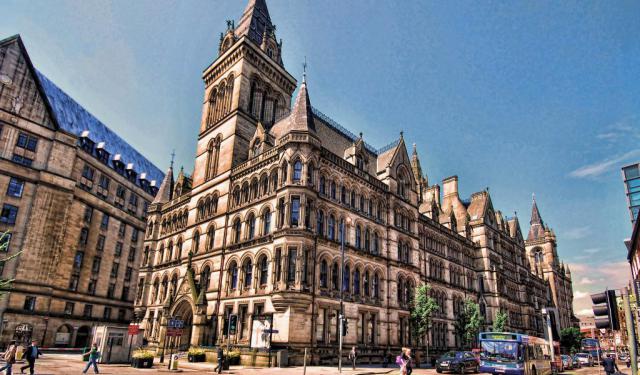
Manchester’s architecture is rich in styles. Throughout centuries, the city has evolved in phases, each of which left its peculiar imprint on the city's architectural tapestry. Here, you can see medieval red-brick buildings coexisting harmoniously with concrete-and-glass structures from the modern era.
One notable landmark in Manchester is the Statue of Prince Albert, a regal monument... view more
Tour Duration: 1 Hour
Travel Distance: 1.6 Km or 1 Miles
One notable landmark in Manchester is the Statue of Prince Albert, a regal monument... view more
Tour Duration: 1 Hour
Travel Distance: 1.6 Km or 1 Miles
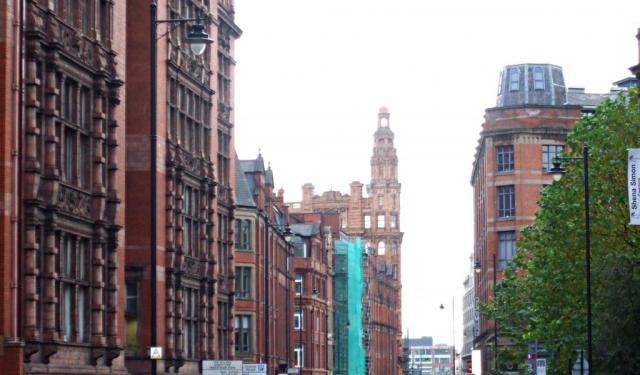
Edwardian Architecture Tour
A product of the Industrial Revolution, Manchester is noted for its warehouses, railway viaducts, cotton mills, and canals, reflecting the most ambitious and exciting phase of the city's history.
During the reign of King Edward VII, which spanned from 1901 to 1910, Manchester experienced a significant boom in architectural development. This period saw a shift towards more ornate and... view more
Tour Duration: 2 Hours
Travel Distance: 2.6 Km or 1.6 Miles
During the reign of King Edward VII, which spanned from 1901 to 1910, Manchester experienced a significant boom in architectural development. This period saw a shift towards more ornate and... view more
Tour Duration: 2 Hours
Travel Distance: 2.6 Km or 1.6 Miles
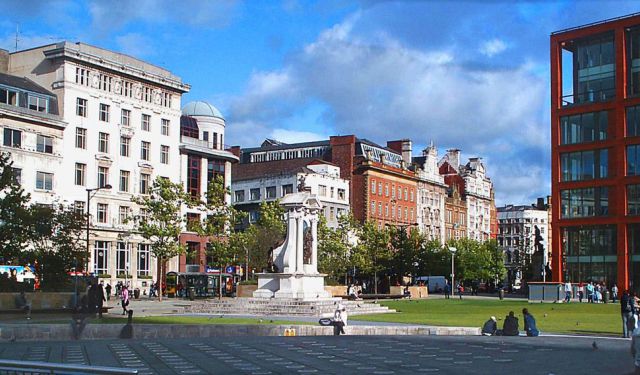
Manchester City Center Walking Tour
Manchester is a city known for people who changed things in practical ways, from scientists and industrialists to musicians and footballers. The Industrial Revolution reshaped daily life in its streets and mills, Alan Turing, the legendary mathematician and computer scientist, worked here after the war, and modern bands like Oasis started out in local venues. Their stories aren’t dramatic in the... view more
Tour Duration: 2 Hours
Travel Distance: 2.5 Km or 1.6 Miles
Tour Duration: 2 Hours
Travel Distance: 2.5 Km or 1.6 Miles
Useful Travel Guides for Planning Your Trip

Top 8 Cafes and Sweet Shops in Manchester
Heading up Oldham Street from Picadilly Gardens you arrive at The Northern Quarter; the ‘cool’ part of Manchester, think Brooklyn, Shoreditch, Le Marais; trendy young things with fancy haircuts frequent the coffee houses, boutique and vintage shops during the day and the bars once night-time...