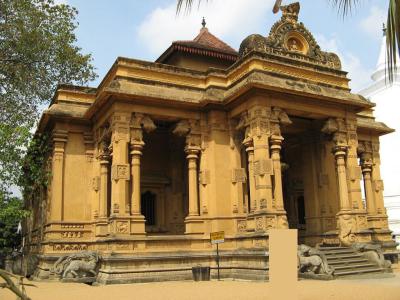


Kelaniya Temple, Colombo (must see)
Kelaniya Raja Maha Vihara is an important Buddhist temple connected to religion, history, and art. Buddhist tradition says that the Buddha visited this place during his third visit to the island in the 6th century BCE. A temple later developed around this belief. Over many centuries, it was repaired and cared for by kings and local worshippers, keeping it active as a place of worship through different periods.
Most of the buildings seen today were built in the late 1800s and the 1900s, after earlier structures were damaged. The main shrine room is well known for wall paintings by the artist Solias Mendis, completed in the mid-20th century. The murals show scenes from the Buddha’s life, Jataka stories, and local history in a clear, easy-to-follow style. Stone steps, moonstones, and guard figures around the buildings reflect traditional Sinhala temple design.
The temple is used every day by devotees. People come to offer flowers, light oil lamps, and spend time in prayer or quiet reflection. The busiest time of year is the Duruthu Perahera in January, which remembers the Buddha’s visit. The festival includes night processions with dancers, drummers, and decorated elephants, drawing large crowds. At other times, the grounds are quieter and easier to explore.
Visitors may enter most areas if they dress modestly and remove their shoes before going into shrine rooms. Photography is usually allowed outside, but it should not be taken inside shrine spaces unless clearly permitted. Taking time to walk slowly and watch daily activities helps visitors see how worship and history continue side by side.
Most of the buildings seen today were built in the late 1800s and the 1900s, after earlier structures were damaged. The main shrine room is well known for wall paintings by the artist Solias Mendis, completed in the mid-20th century. The murals show scenes from the Buddha’s life, Jataka stories, and local history in a clear, easy-to-follow style. Stone steps, moonstones, and guard figures around the buildings reflect traditional Sinhala temple design.
The temple is used every day by devotees. People come to offer flowers, light oil lamps, and spend time in prayer or quiet reflection. The busiest time of year is the Duruthu Perahera in January, which remembers the Buddha’s visit. The festival includes night processions with dancers, drummers, and decorated elephants, drawing large crowds. At other times, the grounds are quieter and easier to explore.
Visitors may enter most areas if they dress modestly and remove their shoes before going into shrine rooms. Photography is usually allowed outside, but it should not be taken inside shrine spaces unless clearly permitted. Taking time to walk slowly and watch daily activities helps visitors see how worship and history continue side by side.
Want to visit this sight? Check out these Self-Guided Walking Tours in Colombo. Alternatively, you can download the mobile app "GPSmyCity: Walks in 1K+ Cities" from Apple App Store or Google Play Store. The app turns your mobile device to a personal tour guide and it works offline, so no data plan is needed when traveling abroad.
Download The GPSmyCity App



Kelaniya Temple on Map
Sight Name: Kelaniya Temple
Sight Location: Colombo, Sri Lanka (See walking tours in Colombo)
Sight Type: Religious
Sight Location: Colombo, Sri Lanka (See walking tours in Colombo)
Sight Type: Religious
Nearby Sights

Walking Tours in Colombo, Sri Lanka

Create Your Own Walk in Colombo
Creating your own self-guided walk in Colombo is easy and fun. Choose the city attractions that you want to see and a walk route map will be created just for you. You can even set your hotel as the start point of the walk.
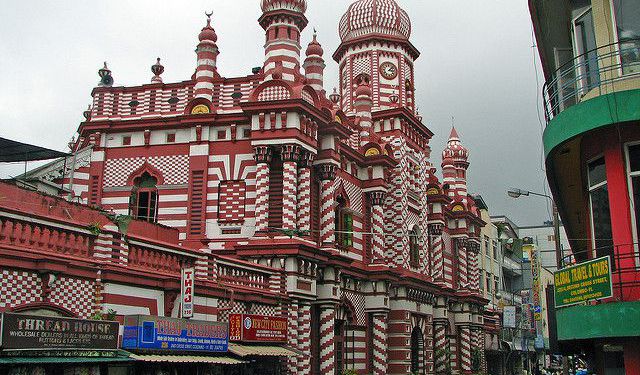
Colombo City Center Walking Tour
Colombo, the commercial capital and largest city of Sri Lanka, has a history shaped by centuries of trade, colonization, and cultural exchange. Strategically positioned on the island’s western coast along the Indian Ocean, it has served as an important port city for more than 2,000 years. Early maritime accounts and Sri Lankan chronicles describe Colombo as a hub for spices, gemstones, and other... view more
Tour Duration: 3 Hours
Travel Distance: 5.5 Km or 3.4 Miles
Tour Duration: 3 Hours
Travel Distance: 5.5 Km or 3.4 Miles
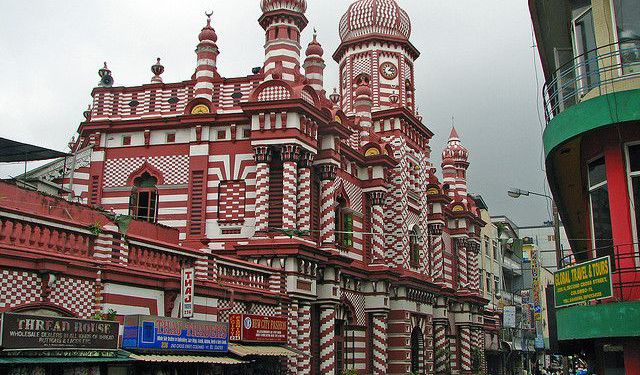
Old Colombo Walking Tour
Old Colombo developed as a port settlement long before it became the capital of modern Sri Lanka, shaped by its natural harbor and strategic position along Indian Ocean trade routes. From at least the early centuries BCE, the area attracted merchants trading spices, gemstones, elephants, and textiles. Arab traders were particularly influential, establishing early Muslim communities near the... view more
Tour Duration: 2 Hours
Travel Distance: 2.9 Km or 1.8 Miles
Tour Duration: 2 Hours
Travel Distance: 2.9 Km or 1.8 Miles
City Walks Overview
