

Colombo Introduction Walking Tour, Colombo

Audio Guide: Colombo Introduction Walking Tour (Self Guided), Colombo

Colombo, the commercial capital and largest city of Sri Lanka, has a history shaped by centuries of trade, colonization, and cultural exchange. Strategically positioned on the island’s western coast along the Indian Ocean, it has served as an important port city for more than 2,000 years. Early maritime accounts and Sri Lankan chronicles describe Colombo as a hub for spices, gemstones, and other valuable commodities, frequented by traders from India, Greece, Rome, Persia, China, and the Arab world.

The name “Colombo” itself reflects this long connection to the sea. One theory traces it to the Sinhalese term Kolon thota, meaning “port on the Kelani River,” referring to the river that flows through the city. Another links it to the Tamil word Kolambu, meaning “safe harbor” or “bend in the river,” later adapted by the Portuguese. Together, these interpretations underline Colombo’s enduring role as a maritime crossroads.

The city rose to greater prominence during the colonial era. The Portuguese arrived in the early 16th century, establishing fortifications and asserting control over regional trade routes. In 1656, the Dutch East India Company captured Colombo, expanding the fort and developing the city into a major trading center. British rule began in 1796, transforming Colombo into the administrative and commercial heart of present-day Sri Lanka.

During this period, modern infrastructure, port facilities, and civic buildings were introduced. Many of these landmarks remain integral to the city’s layout and identity. Following independence in 1948, Colombo continued to evolve as Sri Lanka’s economic and cultural capital, blending its colonial legacy with rapid urban growth.

Today, Colombo is a vibrant, cosmopolitan city shaped by Sinhalese, Tamil, Muslim, Burgher, and European influences. Its city center reflects layers of history and culture woven into everyday urban life. Gangaramaya Temple stands out as a richly detailed Buddhist complex, known for its gilded statues, intricate carvings, and an eclectic museum. Nearby, Galle Face Green stretches along the coastline as an open seaside promenade, where the rhythm of daily life unfolds against the backdrop of the Indian Ocean. (I deleted couple of words

Further inland, Independence Square offers a quieter setting, anchored by the Independence Memorial Hall and the statue of Sri Lanka’s first Prime Minister, Don Stephen Senanayake, symbols of the country’s path to self-rule. Throughout the surrounding streets, colonial-era buildings, shaded avenues, and lively marketplaces sit side by side, forming an urban landscape that captures Colombo’s ongoing dialogue between history and modern life.

As you walk through Colombo, you follow paths once shaped by merchants, administrators, pilgrims, and residents—echoing the same currents of movement and exchange that first gave rise to the city as a harbor, and that continue to define it today.
How it works: Download the app "GPSmyCity: Walks in 1K+ Cities" from Apple App Store or Google Play Store to your mobile phone or tablet. The app turns your mobile device into a personal tour guide and its built-in GPS navigation functions guide you from one tour stop to next. The app works offline, so no data plan is needed when traveling abroad.

Download The GPSmyCity App

Colombo Introduction Walking Tour Map

Guide Name: Colombo Introduction Walking Tour
Guide Location: Sri Lanka » Colombo (See other walking tours in Colombo)
Guide Type: Self-guided Walking Tour (Sightseeing)
# of Attractions: 8
Tour Duration: 3 Hour(s)
Travel Distance: 5.5 Km or 3.4 Miles
Author: Linda
Sight(s) Featured in This Guide:
  • Independence Square and Memorial Hall
  • Arcade Independence Square
  • The National Museum of Colombo
  • Viharamahadevi Park
  • Town Hall
  • Gangaramaya Temple
  • Seema Malaka Temple
  • Galle Face Green
1
Independence Square and Memorial Hall

1) Independence Square and Memorial Hall (must see)

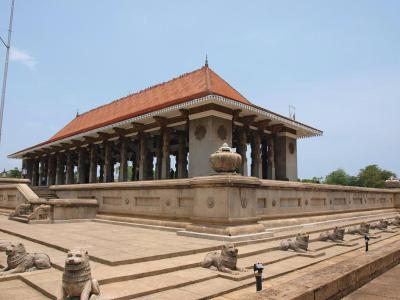
Independence Square is one of the most significant historical landmarks in Colombo, commemorating Sri Lanka’s independence from British rule on February 4, 1948. Located in the leafy district of Cinnamon Gardens, the site occupies the area formerly known as Torrington Square, where the formal ceremony marking the beginning of self-rule took place. Take a moment to enjoy the spacious recreational park around you, with its manicured lawns and shaded paths. It’s a favorite spot for families, joggers, and anyone looking for a peaceful pause in the city.

At the center of the square, you will see the Independence Memorial Hall, a grand national monument built to honor the establishment of the Dominion of Ceylon. The Hall marks the exact location where HRH Prince Henry, Duke of Gloucester, opened the first parliament on a ceremonial podium in 1948. Step inside through the main entrance to admire its classical architecture, with open halls and impressive stone columns that echo Sri Lanka’s history and tradition.

Now, turn to the head of the monument, and you’ll find the statue of Rt. Hon. Don Stephen Senanayake, Sri Lanka’s first Prime Minister and widely celebrated as the “Father of the Nation.” This statue is a central feature and a perfect spot for photographs. Walk around it to fully appreciate the monument’s scale and symbolic importance.

Finally, walk along the east side of the Hall to reach the entrance to the Independence Memorial Museum, located in the basement of the Independence Memorial Hall. Explore its exhibits that document Sri Lanka’s journey to independence, including photographs, artifacts, and historical records. Signs within the museum guide you through the timeline of events, making it easy to follow the country’s path to sovereignty.

When you’re finished, step back outside and enjoy the gardens again—Independence Square remains not only a place of history but also a serene public space in the heart of Colombo, hosting annual Independence Day celebrations and other national events.
2
Arcade Independence Square

2) Arcade Independence Square

Arcade Independence Square is a prominent lifestyle and retail complex in Colombo, developed as part of the national Independence Square Redevelopment Programme. The arcade occupies a group of carefully restored colonial-era buildings, including the former Jawatta Lunatic Asylum and the former Western Provincial Council Building. Rather than constructing new structures, the project focused on revealing and preserving the original architecture, a process that involved nearly two years of renovation and the dedicated work of around 200 soldiers to clear and stabilize the historic spaces.

The redevelopment retained the integrity of the 19th-century design, with no major additions or alterations to the original complex. Elegant colonnades, symmetrical façades, and spacious courtyards reflect Western architectural influences while harmonizing with landscaped gardens and serene surroundings.

Today, Arcade Independence Square features a diverse mix of international boutiques, restaurants, and leisure corners, creating a dynamic setting where shopping is the main attraction for visitors. Within its grand arena, branded outlets stand alongside local shops and boutiques, offering a balanced blend of global labels and Sri Lankan craftsmanship. The wide, elegant walkways invite both casual shoppers and dedicated buyers to explore at an unhurried pace, making the arcade appealing to a broad range of visitors.

From ladies’ fashion, skincare, and accessories to Apple stores, watch boutiques, and jewelry shops, the variety of retail options is extensive. In addition to electronics centers, sports hubs, and themed attractions such as wax museums, the complex offers several leisure corners where visitors can pause and relax. One notable spot is Sri Lanka’s first boutique cinema, the Empire Cineplex, which adds a cultural dimension to the shopping experience.
3
The National Museum of Colombo

3) The National Museum of Colombo (must see)

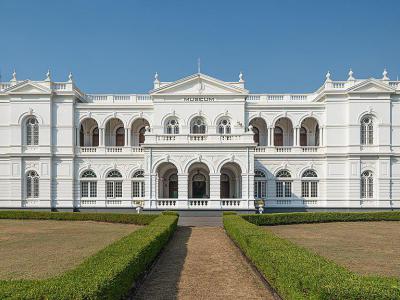
The National Museum of Colombo is Sri Lanka’s premier cultural institution and a must-visit for anyone eager to explore the island’s rich history and heritage. The museum was established in 1877 by British Governor Sir William Henry Gregory. Its grand neoclassical building, with white colonnades and spacious galleries, immediately conveys the importance of the collections housed within.

The ground floor introduces you to Sri Lanka’s prehistoric and early history. To the left of the foyer, the Prehistory and Early History Gallery displays stone tools, early metal artifacts, and items recovered from archaeological excavations across the island. Moving further in, the Buddhist Art and Sculpture Galleries feature stone and bronze Buddha statues, Bodhisattva figures, and architectural fragments from ancient temples, providing insight into the island’s religious and artistic traditions.

At the center of the ground floor, the Kandyan Gallery is one of the museum’s highlights. Here, you can admire the royal regalia of the Kandyan monarchs, including the throne, crown, ceremonial swords, and court costumes. The gallery’s rich wood paneling and central display cases make it easy to locate. Adjacent exhibits display traditional masks, ritual objects, and ceremonial attire, reflecting both court life and folk practices.

On the first floor you'll find galleries dedicated to ethnography, manuscripts, and colonial history. The Manuscripts Gallery preserves ancient palm-leaf manuscripts, while the Traditional Arts Gallery showcases folk masks, ceremonial objects, and cultural artifacts from across Sri Lanka. Pay attention to the signage – it will guide you through the museum in chronological order, from prehistory to the Kandyan period and beyond.

Don't miss the gift shop, located near the entrance. The gift shop offers souvenirs, books, handicrafts, and replicas of museum artifacts, allowing visitors to take a piece of Sri Lankan heritage home.

The museum is also surrounded by well-maintained landscaped gardens, featuring manicured lawns, tropical trees, and decorative flower beds. You can access the gardens directly through the main gate or exiting through the side doors of the the central foyer.
4
Viharamahadevi Park

4) Viharamahadevi Park

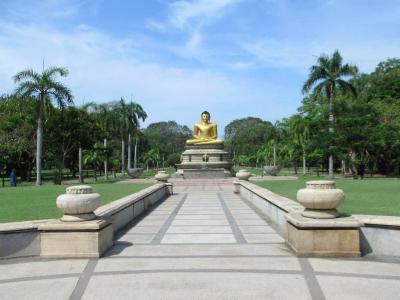
Viharamahadevi Park, located in the heart of Colombo, is the city’s largest and oldest public park, offering a green oasis amid the urban bustle. Situated adjacent to the Colombo Town Hall, the park spans over 24 acres and provides a peaceful retreat for locals and tourists alike. Originally named Victoria Park during the British colonial period, it was later renamed in honor of Queen Viharamahadevi, the mother of King Dutugemunu. Its wide, tree-lined avenues, manicured lawns, and open spaces make it an ideal location for leisurely walks, jogging, or simply relaxing under the shade of tropical trees.

As you enter the park through the main gate, you will immediately notice the central pathway, which leads to some of the park’s most iconic features. At the center stands a large bronze statue of Queen Viharamahadevi, which serves as a focal point and a popular spot for photographs.

Scattered throughout the park are numerous flower gardens, fountains, and ornamental sculptures, adding to its visual appeal and creating a vibrant, colorful atmosphere. The park is also home to several playgrounds and recreational areas, making it a family-friendly destination where children and adults can enjoy outdoor activities together.

Viharamahadevi Park is also known for its cultural and artistic installations. Near the Colombo Town Hall entrance, you can admire the open-air auditorium and exhibition spaces, where art exhibitions, cultural events, and performances are often held. The park is dotted with monuments and memorials, including statues of notable historical figures, providing both a scenic and educational experience for tourists interested in Sri Lanka’s history and public art.
5
Town Hall

5) Town Hall

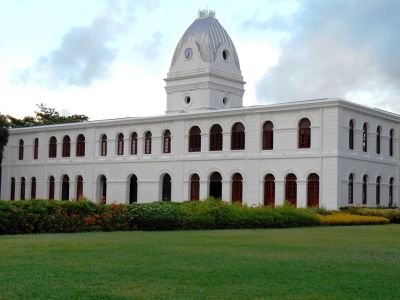
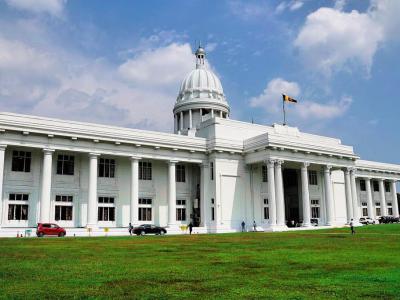
The Colombo Town Hall is one of the city’s most prominent civic landmarks, symbolizing the administrative and political heart of Colombo. The building serves as the headquarters of the Colombo Municipal Council, overseeing the city’s governance and municipal services. Its imposing presence and historical significance make it a key feature in Colombo’s urban landscape.

Tourists can admire the Town Hall from Viharamahadevi Park, which offers scenic views and excellent photo opportunities. From the park, follow the main pedestrian paths to the front façade to view the central dome and grand entrance.

Designed by British architect S.J. Edwards, the Town Hall is celebrated for its Neoclassical architecture, heavily inspired by the U.S. Capitol Building in Washington, D.C. The façade features grand columns, decorative cornices, and expansive stairways, while the central white dome serves as its most striking visual element. Inside, spacious council chambers and administrative halls reflect its ongoing role in municipal governance.

While access to the interior is limited, the surrounding landscaped gardens and pathways allow visitors to explore the area comfortably and appreciate the building’s architecture.
6
Gangaramaya Temple

6) Gangaramaya Temple (must see)
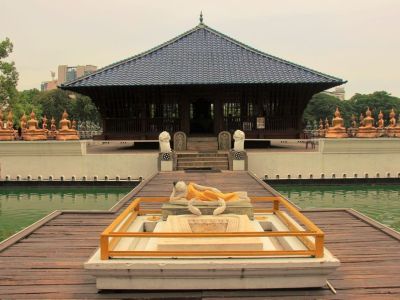
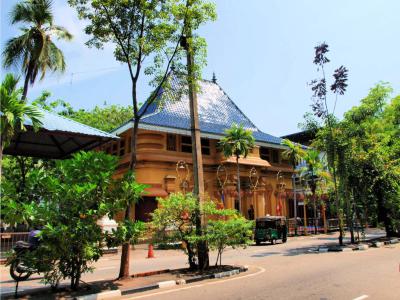
Gangaramaya Temple, one of Colombo’s most important Buddhist temples, was founded in the late 19th century by the monk Hikkaduwe Sri Sumangala Nayaka Thera. The temple has long been more than a place of prayer—it has also served as a center for education, charity, and public ceremonies. As you enter through the main gate, notice the mix of traditional and eclectic architecture, blending influences from Sri Lanka, Thailand, China, and India.

To your right, you will find the main shrine room, or Vihara Mandiraya, which houses several Buddha statues. Here, devotees light oil lamps, offer flowers, and pay respects. The walls and ceilings are intricately painted and carved, reflecting Buddhist iconography and architectural styles from across Asia. Take your time to walk around the central hall, observing the smaller shrines along the sides, each dedicated to different aspects of Buddhist practice. The shrine areas are connected by narrow courtyards and stairways, making it easy to explore the complex step by step.

As you move along the side corridors, you’ll enter the museum halls, which display the temple’s vast collection of historical and religious artifacts. In the first hall, you can see traditional masks used in Sri Lankan rituals, alongside old coins, clocks, and furniture.

Continuing into the next hall, you will find more unusual offerings, including vintage cars and ceremonial gifts, illustrating how the temple has been supported by devotees over many generations. Unlike modern museums, these objects are placed close together, giving a sense of the temple’s accumulated history.

Finally, notice that Gangaramaya is still very much a living temple. Monks teach, lead ceremonies, and organize charity work, especially during Vesak and other full moon days. Visitors are welcome to observe rituals quietly and respectfully, and most areas are accessible, though modest clothing is required.
7
Seema Malaka Temple

7) Seema Malaka Temple

Seema Malaka Temple is a serene Buddhist sanctuary set on the calm waters of Beira Lake in the heart of Colombo, a few hundred meters east of the renowned Gangaramaya Temple, of which it forms an integral part. Originally constructed in the late 19th century, the early structure gradually sank into the lake during the 1970s, making reconstruction necessary. In 1976, the celebrated Sri Lankan architect Geoffrey Bawa was commissioned to redesign the temple, creating the distinctive floating complex that stands today. The project was funded by the Muslim philanthropist S. H. Moosajee and his wife, in memory of their son, Ameer S. Moosajee.

Designed as “the floating temple,” Seema Malaka is built on a series of platforms that appear to drift gently on the water, connected by walkways that enhance the sense of quiet separation from the city. Bawa’s design harmoniously blends traditional Sri Lankan architectural forms with modern simplicity. Wooden pillars, intricate carvings, and roofs adorned with colorful tiles give the temple a refined yet understated elegance, perfectly suited to its contemplative purpose.

Unlike many temples primarily dedicated to ritual worship, Seema Malaka is mainly used as a space for meditation, reflection, and rest. It hosts meditation sessions, small ceremonies, and spiritual retreats, offering practitioners a tranquil environment for mindfulness and inner calm. Visitors are welcome to walk through the complex, admire the architecture, and observe or participate in simple devotional practices.

Today, Seema Malaka is both a spiritual retreat and a popular cultural landmark in Colombo. Its picturesque setting on Beira Lake offers a rare moment of tranquility amid the city’s busy streets, making it especially appealing to travelers seeking quiet reflection. Guided tours provide insight into its history, design, and symbolic meaning, helping visitors appreciate not only its beauty but also its spiritual significance.
8
Galle Face Green

8) Galle Face Green (must see)

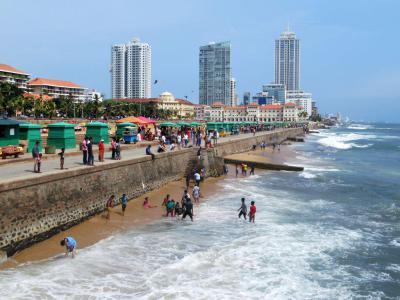
Galle Face Green is a long open grass area beside the Indian Ocean that has been used by the public for over 100 years. It was created during the British colonial period and first used as a walking area and parade ground. Over time, it became a place where people come to relax, walk, and spend free time outdoors. The space is wide and flat, with clear views of the sea and no fences blocking the shoreline.

In the late afternoon and evening, the green becomes more lively. Families, couples, and groups of friends arrive to walk, sit on the grass, or talk while watching the waves. Strong sea winds make kite flying popular, especially with children. Others come simply to sit and rest after work. Because the area is long and open, people can spread out easily, and different activities happen at the same time without feeling crowded.

Food stalls are especially active in the evening. Small vendors sell local snacks, fried food, sweets, and cold drinks, prepared quickly and eaten while standing, sitting on the grass, or walking. Many people choose food on the spot, adding to the relaxed and social atmosphere created by ocean sounds and nearby conversations.

Several large historic buildings stand along the edge of the green, facing the sea. They show how the area has developed over different periods and why it has stayed important in public life. For visitors, this place offers a simple way to observe daily routines, social habits, and how people of all ages share an open public space from day to night.

Walking Tours in Colombo, Sri Lanka

Create Your Own Walk in Colombo

Create Your Own Walk in Colombo

Creating your own self-guided walk in Colombo is easy and fun. Choose the city attractions that you want to see and a walk route map will be created just for you. You can even set your hotel as the start point of the walk.
Old Colombo Walking Tour

Old Colombo Walking Tour

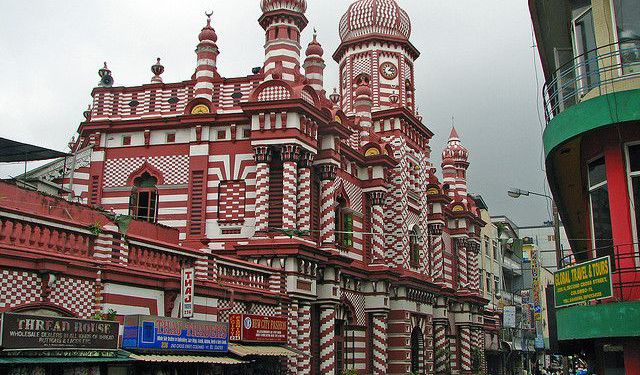
Old Colombo developed as a port settlement long before it became the capital of modern Sri Lanka, shaped by its natural harbor and strategic position along Indian Ocean trade routes. From at least the early centuries BCE, the area attracted merchants trading spices, gemstones, elephants, and textiles. Arab traders were particularly influential, establishing early Muslim communities near the...  view more

Tour Duration: 2 Hour(s)
Travel Distance: 2.9 Km or 1.8 Miles