

Kiek in de Kök Museum and Bastion Tunnels, Tallinn
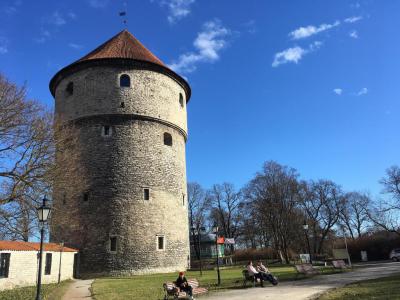
The Kiek in de Kök Museum and Bastion Tunnels provides insight into how the city was defended over centuries. At its center stands the Kiek in de Kök tower, built in 1475 as part of the medieval city walls. Its name, derived from Low German and meaning “peek into the kitchen,” refers to the view soldiers reportedly had into nearby homes from its elevated position.
The tower was designed for artillery defense, rising about 38 meters high with walls up to four meters thick, built to withstand cannon fire. Evidence of this military past can still be seen today, including cannonballs embedded in the stone from 16th-century attacks. In the 17th century, the tower was modified with additional gun ports as warfare evolved, before gradually falling out of active military use by the 18th century.
As Tallinn’s defenses expanded, bastions were added in the 17th century to strengthen the city against new military technologies. Beneath these earthwork structures, a network of tunnels was constructed, dating mainly from the 17th to 18th centuries. Originally used for troop movement, storage, and strategic positioning, these tunnels later took on additional roles, including use during the 20th century.
Today, the tower functions as a museum dedicated to Tallinn’s fortification system, with exhibitions covering the development of the city’s walls, towers, and daily life in earlier periods. From here, visitors can descend into the bastion tunnels, where dimly lit corridors and stone passageways create a distinct underground atmosphere.
The tower was designed for artillery defense, rising about 38 meters high with walls up to four meters thick, built to withstand cannon fire. Evidence of this military past can still be seen today, including cannonballs embedded in the stone from 16th-century attacks. In the 17th century, the tower was modified with additional gun ports as warfare evolved, before gradually falling out of active military use by the 18th century.
As Tallinn’s defenses expanded, bastions were added in the 17th century to strengthen the city against new military technologies. Beneath these earthwork structures, a network of tunnels was constructed, dating mainly from the 17th to 18th centuries. Originally used for troop movement, storage, and strategic positioning, these tunnels later took on additional roles, including use during the 20th century.
Today, the tower functions as a museum dedicated to Tallinn’s fortification system, with exhibitions covering the development of the city’s walls, towers, and daily life in earlier periods. From here, visitors can descend into the bastion tunnels, where dimly lit corridors and stone passageways create a distinct underground atmosphere.
Want to visit this sight? Check out these Self-Guided Walking Tours in Tallinn. Alternatively, you can download the mobile app "GPSmyCity: Walks in 1K+ Cities" from Apple App Store or Google Play Store. The app turns your mobile device to a personal tour guide and it works offline, so no data plan is needed when traveling abroad.
Download The GPSmyCity App



Kiek in de Kök Museum and Bastion Tunnels on Map
Sight Name: Kiek in de Kök Museum and Bastion Tunnels
Sight Location: Tallinn, Estonia (See walking tours in Tallinn)
Sight Type: Attraction/Landmark
Guide(s) Containing This Sight:
Sight Location: Tallinn, Estonia (See walking tours in Tallinn)
Sight Type: Attraction/Landmark
Guide(s) Containing This Sight:
Nearby Sights


Walking Tours in Tallinn, Estonia

Create Your Own Walk in Tallinn
Creating your own self-guided walk in Tallinn is easy and fun. Choose the city attractions that you want to see and a walk route map will be created just for you. You can even set your hotel as the start point of the walk.
Tallinn Old Towers and Gates
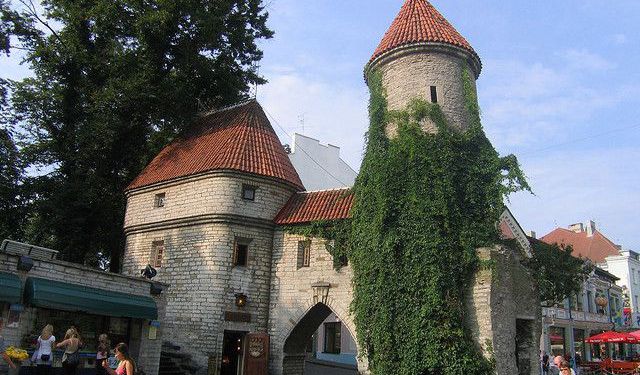
Once Europe's greatest fortified city, Tallinn had 46 defense towers and approximately 4 kilometers of surrounding walls. Today, there are 26 towers and about 2 kilometers of walls still in place, making the Old Town of Tallinn one of the best-preserved systems of medieval fortifications in Europe.
Upon entering the district through the Viru Gate, whose two picturesque, ivy-covered towers... view more
Tour Duration: 2 Hour(s)
Travel Distance: 2.8 Km or 1.7 Miles
Upon entering the district through the Viru Gate, whose two picturesque, ivy-covered towers... view more
Tour Duration: 2 Hour(s)
Travel Distance: 2.8 Km or 1.7 Miles
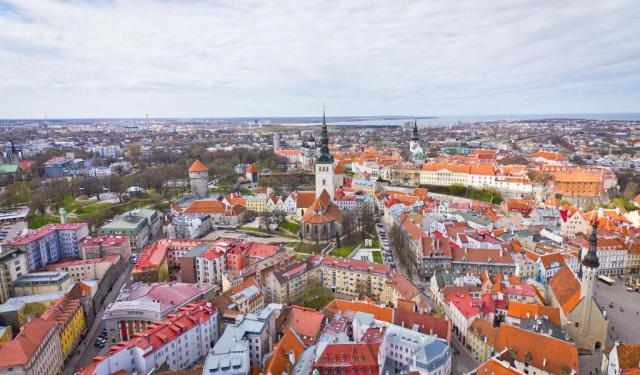
Tallinn Old Town Walking Tour
Tallinn, the capital of Estonia, has a history shaped by trade, conquest, and its strategic position along the Baltic Sea. The area has been inhabited since at least the second millennium BC, but it began to emerge as a significant settlement in the early medieval period. By the 12th century, it was known as a trading hub frequented by Scandinavian and Rus’ merchants, drawn by its sheltered... view more
Tour Duration: 3 Hour(s)
Travel Distance: 4.3 Km or 2.7 Miles
Tour Duration: 3 Hour(s)
Travel Distance: 4.3 Km or 2.7 Miles
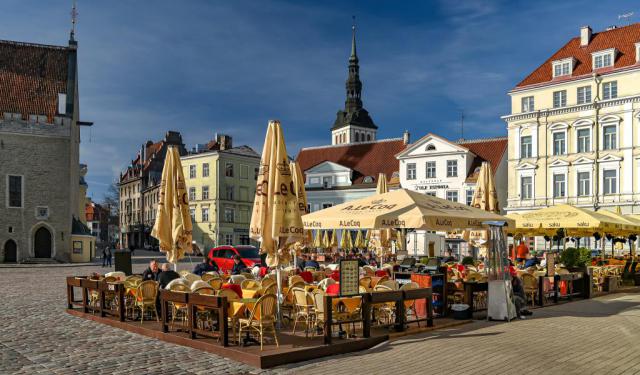
Tallinn Medieval Old Town
In medieval Tallinn, fortunes were not built by kings, but by merchants, men who believed trade could connect worlds separated by sea and distance.
Tallinn’s Medieval Old Town stands as one of the best-preserved urban ensembles in Northern Europe. Its origins trace back to at least the early medieval period, when a settlement grew around a natural harbor that attracted Scandinavian and... view more
Tour Duration: 2 Hour(s)
Travel Distance: 2.1 Km or 1.3 Miles
Tallinn’s Medieval Old Town stands as one of the best-preserved urban ensembles in Northern Europe. Its origins trace back to at least the early medieval period, when a settlement grew around a natural harbor that attracted Scandinavian and... view more
Tour Duration: 2 Hour(s)
Travel Distance: 2.1 Km or 1.3 Miles