

Leeds Grand Theatre, Leeds (must see)
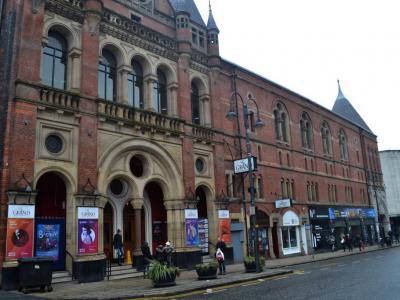
Finding yourself on New Briggate in front of Leeds Grand Theatre, spare some time to examine its elaborate Victorian exterior. Built in 1877-1878 to designs by George Corson and James Robertson Watson, the theatre combines Romanesque arches with Gothic and Scottish baronial features, which give it something of a castle appearance.
Start with the main entrance, marked by large, rounded stone arches and wooden doors. Look above the entrance to see a series of arched windows and, higher still, a circular rose window set between two small turrets. These decorative features were intended to distinguish the theatre from the ordinary music halls of Victorian Leeds.
Now, face the building and follow its frontage to the left. You'll see a row of shopfronts, originally incorporated into the theatre complex. Some retain architectural details recalling the building's Victorian origins, while others reflect alterations made during the 1930s.
Continue towards the southern end, where a separate, elaborately decorated entrance marks the former Assembly Rooms. You can identify it by the ornamental stonework featuring a carved face, fan-shaped decoration, and garlands above the doorway. Originally designed for fashionable social gatherings and concerts, these rooms later became a cinema known as the Plaza. Today, the former Assembly Rooms serve as rehearsal facilities.
If you have an opportunity to enter the theatre, the auditorium is its greatest attraction. Here, three horseshoe-shaped balconies curve around the seating area, their fronts decorated with gilded scrollwork. Take a look at the stage, framed by an ornate arch and flanked by decorative columns and theatrical boxes. Then glance upwards at the richly ornamented ceiling and its magnificent Waterford crystal chandelier, featuring more than 6,000 crystals.
Since opening in 1878, Leeds Grand Theatre has remained one of the city's principal performance venues. Today, it is home to Opera North and hosts touring musicals, plays, opera, ballet, and concerts. Attending a performance here offers the best opportunity to appreciate the auditorium's Victorian splendour in its original theatrical setting.
Want to visit this sight? Check out these Self-Guided Walking Tours in Leeds. Alternatively, you can download the mobile app "GPSmyCity: Walks in 1K+ Cities" from Apple App Store or Google Play Store. The app turns your mobile device to a personal tour guide and it works offline, so no data plan is needed when traveling abroad.
Download The GPSmyCity App



Leeds Grand Theatre on Map
Sight Name: Leeds Grand Theatre
Sight Location: Leeds, England (See walking tours in Leeds)
Sight Type: Attraction/Landmark
Guide(s) Containing This Sight:
Sight Location: Leeds, England (See walking tours in Leeds)
Sight Type: Attraction/Landmark
Guide(s) Containing This Sight:
Nearby Sights
Walking Tours in Leeds, England
Create Your Own Walk in Leeds
Creating your own self-guided walk in Leeds is easy and fun. Choose the city attractions that you want to see and a walk route map will be created just for you. You can even set your hotel as the start point of the walk.
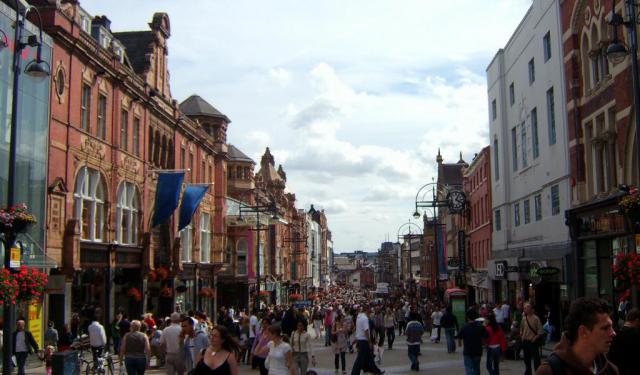
A Walking Guide To Leeds City Center
Leeds has come a long way from its beginnings as a small settlement beside the River Aire. Its name is possibly rooted in the ancient Brythonic word "Ladenses," which means "folks of the rapid river." In the 5th century, the area formed part of the kingdom of Elmet, and the 8th-century scholar, the Venerable Bede, referred to it as “Loidis.” Over time, the name evolved into... view more
Tour Duration: 2 Hours
Travel Distance: 2.7 Km or 1.7 Miles
Tour Duration: 2 Hours
Travel Distance: 2.7 Km or 1.7 Miles
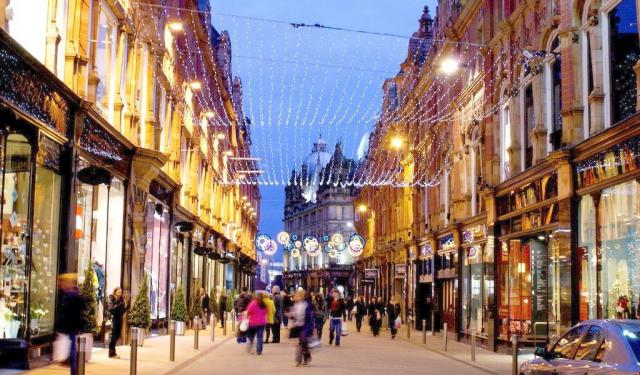
Explore Leeds' Historical Shopping Venues on Foot
Leeds is a shopaholic’s paradise and a true world of retail scaled down to the size of a downtown area. Compactly located within walking distance from each other, the city's best boutiques are never far away from an eager shopper.
Here, the biggest brands and small independents are housed in some of the city’s most iconic buildings. Among them is the historic Kirkgate Market, the... view more
Tour Duration: 1 Hour
Travel Distance: 1.2 Km or 0.7 Miles
Here, the biggest brands and small independents are housed in some of the city’s most iconic buildings. Among them is the historic Kirkgate Market, the... view more
Tour Duration: 1 Hour
Travel Distance: 1.2 Km or 0.7 Miles
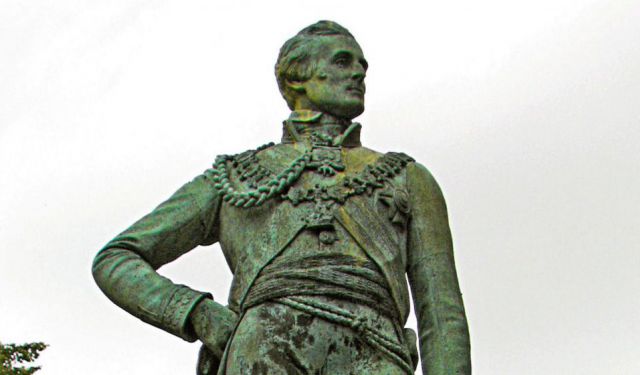
Discover Leeds' Historical Sculptures on Foot
In Leeds, statues adorn various corners, reflecting historical figures and cultural symbols. Some of them are hundreds of years old but still in remarkable condition.
One notable sculpture is that of Robert Peel, commemorating the 19th-century Prime Minister and founder of Britain's modern police force.
On the opposite side of the nearby Woodhouse Moor Park stands the regal Statue of... view more
Tour Duration: 2 Hours
Travel Distance: 3.2 Km or 2 Miles
One notable sculpture is that of Robert Peel, commemorating the 19th-century Prime Minister and founder of Britain's modern police force.
On the opposite side of the nearby Woodhouse Moor Park stands the regal Statue of... view more
Tour Duration: 2 Hours
Travel Distance: 3.2 Km or 2 Miles
City Walks Overview
