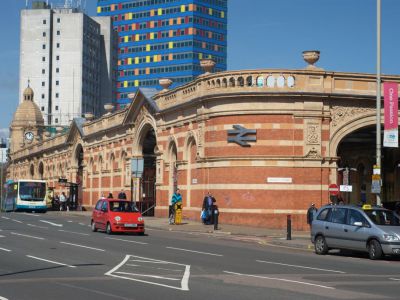


Leicester Railway Station and Thomas Cook Statue, Leicester
Leicester Railway Station, serves as the primary railway hub in Leicester. Managed by East Midlands Railway and owned by Network Rail, it stands as the busiest station in Leicestershire, the second busiest in the East Midlands, and ranks fifth in the Midlands overall. It accommodates both East Midlands Railway and CrossCountry services, providing vital connections along the Midland Main Line between London Saint Pancras, Sheffield, and Nottingham.
Originally opened in 1840 by the Midland Counties Railway, the station underwent significant reconstructions in 1894 and 1978. Its establishment necessitated the demolition of approximately 300 houses, making way for what was then Leicester’s largest single building. The station’s grand clock tower and gateway quickly became city landmarks, reflecting the Victorian architectural ambition of the time.
A notable historical feature once accessible at the station was a Roman mosaic floor, which was displayed under a public entrance. This mosaic is now preserved in the collections of Leicester Museums and Galleries. During wartime, Leicester Station became a site of social transformation as women assumed roles traditionally held by men, such as porters and engine cleaners, due to labor shortages.
Just outside Leicester Station on London Road stands the Thomas Cook statue, a tribute to one of Leicester’s most influential figures in the travel industry. Born in Market Harborough, Thomas Cook organized his first-ever group excursion in 1841, taking passengers from Leicester to Loughborough for a temperance meeting. It was during his walk to Leicester for work that the idea of utilizing the railway for organized social travel first came to him. His vision would eventually lay the foundation for modern travel agencies.
The statue, crafted by sculptor James Butler, was unveiled in 1991 to mark the 150th anniversary of Cook’s historic excursion. The site is historically significant, as the original Campbell Street station, where the journey commenced, once stood nearby. Butler, known for his works across Leicester, also created the city’s Seamstress Statue and the statue of Richard III in Castle Gardens.
Together, Leicester Railway Station and the Thomas Cook Statue serve as enduring symbols of Leicester’s rich transportation heritage, reflecting both its architectural grandeur and its role in shaping the travel industry.
Originally opened in 1840 by the Midland Counties Railway, the station underwent significant reconstructions in 1894 and 1978. Its establishment necessitated the demolition of approximately 300 houses, making way for what was then Leicester’s largest single building. The station’s grand clock tower and gateway quickly became city landmarks, reflecting the Victorian architectural ambition of the time.
A notable historical feature once accessible at the station was a Roman mosaic floor, which was displayed under a public entrance. This mosaic is now preserved in the collections of Leicester Museums and Galleries. During wartime, Leicester Station became a site of social transformation as women assumed roles traditionally held by men, such as porters and engine cleaners, due to labor shortages.
Just outside Leicester Station on London Road stands the Thomas Cook statue, a tribute to one of Leicester’s most influential figures in the travel industry. Born in Market Harborough, Thomas Cook organized his first-ever group excursion in 1841, taking passengers from Leicester to Loughborough for a temperance meeting. It was during his walk to Leicester for work that the idea of utilizing the railway for organized social travel first came to him. His vision would eventually lay the foundation for modern travel agencies.
The statue, crafted by sculptor James Butler, was unveiled in 1991 to mark the 150th anniversary of Cook’s historic excursion. The site is historically significant, as the original Campbell Street station, where the journey commenced, once stood nearby. Butler, known for his works across Leicester, also created the city’s Seamstress Statue and the statue of Richard III in Castle Gardens.
Together, Leicester Railway Station and the Thomas Cook Statue serve as enduring symbols of Leicester’s rich transportation heritage, reflecting both its architectural grandeur and its role in shaping the travel industry.
Want to visit this sight? Check out these Self-Guided Walking Tours in Leicester. Alternatively, you can download the mobile app "GPSmyCity: Walks in 1K+ Cities" from Apple App Store or Google Play Store. The app turns your mobile device to a personal tour guide and it works offline, so no data plan is needed when traveling abroad.
Download The GPSmyCity App



Leicester Railway Station and Thomas Cook Statue on Map
Sight Name: Leicester Railway Station and Thomas Cook Statue
Sight Location: Leicester, England (See walking tours in Leicester)
Sight Type: Attraction/Landmark
Sight Location: Leicester, England (See walking tours in Leicester)
Sight Type: Attraction/Landmark
Nearby Sights
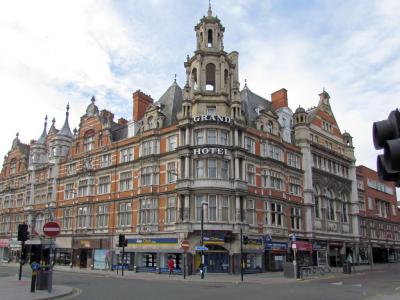
Walking Tours in Leicester, England

Create Your Own Walk in Leicester
Creating your own self-guided walk in Leicester is easy and fun. Choose the city attractions that you want to see and a walk route map will be created just for you. You can even set your hotel as the start point of the walk.
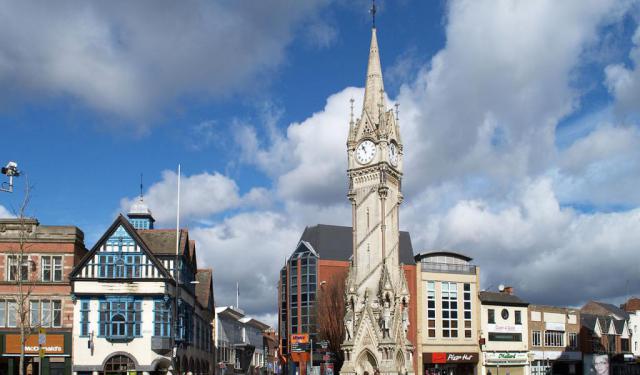
Leicester City Center Walking Tour
Leicester is one of the oldest cities in England, whose history goes back almost two millennia. The Romans arrived in the area around 47 AD, during their conquest of southern Britain. Following the Saxon invasion, Leicester was then captured by Danish Vikings, in the 9th century.
The settlement was first documented in the early 10th century, under the name Ligeraceaster. At the time of the... view more
Tour Duration: 1 Hour
Travel Distance: 1.1 Km or 0.7 Miles
The settlement was first documented in the early 10th century, under the name Ligeraceaster. At the time of the... view more
Tour Duration: 1 Hour
Travel Distance: 1.1 Km or 0.7 Miles
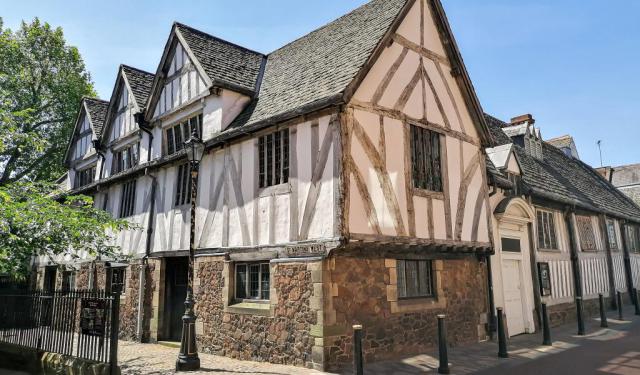
Discover Leicester's Historical Buildings
Leicester, a city in England's East Midlands, has a storied past that is vividly presented in its historical buildings. Valuable architectural monuments, they are the city's pride and as such enjoy special protection by the government.
Among such, Magazine Gateway stands as a testament to the city's medieval legacy. Originally part of its defensive walls, this structure now... view more
Tour Duration: 2 Hours
Travel Distance: 2.6 Km or 1.6 Miles
Among such, Magazine Gateway stands as a testament to the city's medieval legacy. Originally part of its defensive walls, this structure now... view more
Tour Duration: 2 Hours
Travel Distance: 2.6 Km or 1.6 Miles
City Walks Overview
