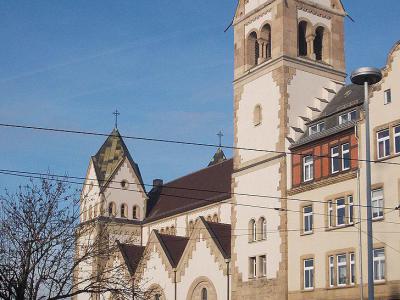


Lindenau Liebfrauen (Our Lady of Lindeau), Leipzig
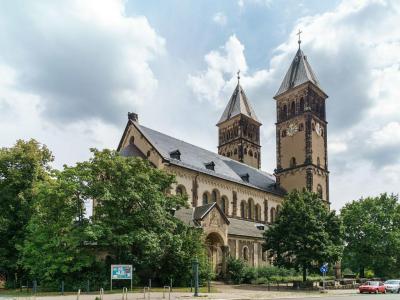
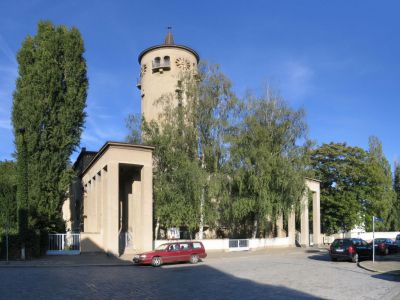
The Catholic Church of Our Lady of Lindenau (Liebfrauenkirche) stands as a prominent neo-Romanesque structure near the Leipzig-Plagwitz S-Bahn station. The church's foundation stone was laid in May 1907 by Bishop Aloys Schaefer, and by July 1908, its bronze bells were installed, marking the beginning of worship services in the new church. Officially consecrated on September 27, 1908, the church was designed by Leipzig architect Anton Käppler.
The church's interior was enhanced with a colorful mural depicting the Seven Joys of Mary, painted by local artist Henry Hinrichs. The church underwent multiple renovations throughout its history, including significant work during the 1930s, when a workday chapel was established in the rear section. Following the Second Vatican Council, the church was redesigned in 1964 to align with contemporary liturgical movements, with further adaptations made to deepen parishioners' understanding of church services.
The Oratory of Saint Philip Neri was established in the parish on January 5, 1930, with the Oratory's priests taking on the role of parish pastoral care since then. The church's commitment to its community is not limited to religious services; it also hosts various cultural events, including performances during the Leipzig Jazztage, making it a vibrant part of the city's cultural landscape. The addition of a new organ by the Schuke company in Potsdam in 1972 further enriched its musical tradition.
Despite challenges, including the aftermath of World War II, the church has been maintained and remodeled with the help of local volunteers, preserving its historical and architectural significance as one of the major churches in Leipzig.
The church's interior was enhanced with a colorful mural depicting the Seven Joys of Mary, painted by local artist Henry Hinrichs. The church underwent multiple renovations throughout its history, including significant work during the 1930s, when a workday chapel was established in the rear section. Following the Second Vatican Council, the church was redesigned in 1964 to align with contemporary liturgical movements, with further adaptations made to deepen parishioners' understanding of church services.
The Oratory of Saint Philip Neri was established in the parish on January 5, 1930, with the Oratory's priests taking on the role of parish pastoral care since then. The church's commitment to its community is not limited to religious services; it also hosts various cultural events, including performances during the Leipzig Jazztage, making it a vibrant part of the city's cultural landscape. The addition of a new organ by the Schuke company in Potsdam in 1972 further enriched its musical tradition.
Despite challenges, including the aftermath of World War II, the church has been maintained and remodeled with the help of local volunteers, preserving its historical and architectural significance as one of the major churches in Leipzig.
Want to visit this sight? Check out these Self-Guided Walking Tours in Leipzig. Alternatively, you can download the mobile app "GPSmyCity: Walks in 1K+ Cities" from Apple App Store or Google Play Store. The app turns your mobile device to a personal tour guide and it works offline, so no data plan is needed when traveling abroad.
Download The GPSmyCity App



Lindenau Liebfrauen (Our Lady of Lindeau) on Map
Sight Name: Lindenau Liebfrauen (Our Lady of Lindeau)
Sight Location: Leipzig, Germany (See walking tours in Leipzig)
Sight Type: Religious
Sight Location: Leipzig, Germany (See walking tours in Leipzig)
Sight Type: Religious
Nearby Sights
Walking Tours in Leipzig, Germany

Create Your Own Walk in Leipzig
Creating your own self-guided walk in Leipzig is easy and fun. Choose the city attractions that you want to see and a walk route map will be created just for you. You can even set your hotel as the start point of the walk.
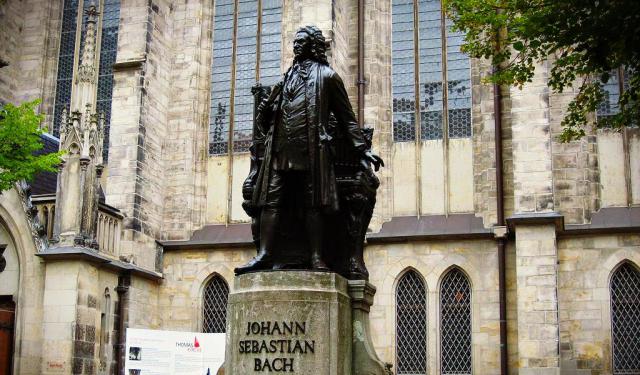
A Walk on the Leipzig Music Trail
The spatial density of historic locations associated with music in Leipzig is truly mind-boggling. But then again, this is hardly surprising, given the eclectic score of musicians who had left their mark on the city in various years.
Indeed, it was in Leipzig that Johann Sebastian Bach served as an organist and choirmaster at Thomaskirche as well as a cantor at Nikolaikirche; composer Robert... view more
Tour Duration: 2 Hours
Travel Distance: 3.2 Km or 2 Miles
Indeed, it was in Leipzig that Johann Sebastian Bach served as an organist and choirmaster at Thomaskirche as well as a cantor at Nikolaikirche; composer Robert... view more
Tour Duration: 2 Hours
Travel Distance: 3.2 Km or 2 Miles
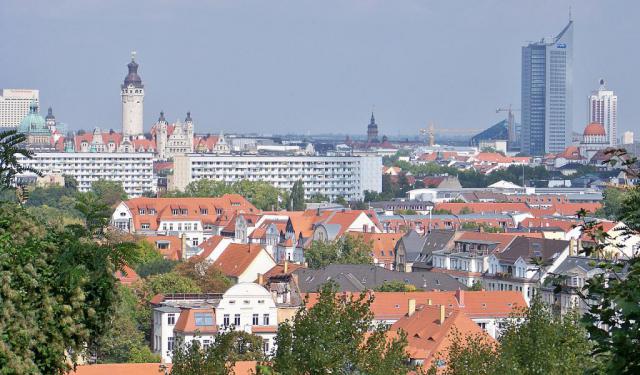
A Stroll Through Leipzig's Car-Free City Center
The name "Leipzig" may be derived from the Slavic word "Lipsk", meaning "linden trees place." The Nazi government renamed the city "Reichsmessestadt Leipzig" ("Reich Fair Trade City Leipzig"). In 1989, with the fall of communism, the city was "Hero City" - in recognition of the role that the Monday demonstrations there played in the fall... view more
Tour Duration: 1 Hour
Travel Distance: 2.4 Km or 1.5 Miles
Tour Duration: 1 Hour
Travel Distance: 2.4 Km or 1.5 Miles
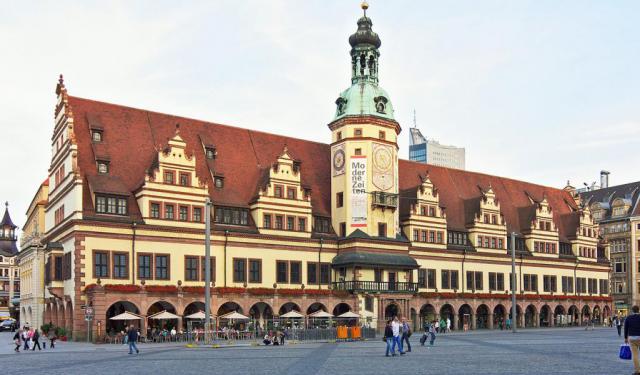
Explore Leipzig's Architectural Jewels on Foot
Anyone who has ever wanted to delve into Leipzig's history could hardly imagine doing so without exploring the local array of architectural jewels. Indeed, Leipzig boasts one of Germany's most beautiful collections of Renaissance buildings.
Our first point of interest lies in downtown Leipzig at the intersection of Katherine and Bruhl Streets. Here, the stunning Baroque-style Romanus... view more
Tour Duration: 1 Hour
Travel Distance: 0.9 Km or 0.6 Miles
Our first point of interest lies in downtown Leipzig at the intersection of Katherine and Bruhl Streets. Here, the stunning Baroque-style Romanus... view more
Tour Duration: 1 Hour
Travel Distance: 0.9 Km or 0.6 Miles
City Walks Overview
