

Linn Park, Birmingham
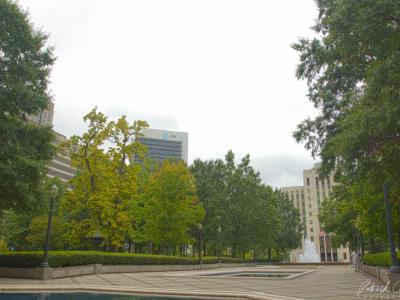
Linn Park is a seven-acre urban green space at the heart of downtown Birmingham. Framed by major civic landmarks-Birmingham City Hall to the west and the Jefferson County Courthouse to the east-the park occupies a full city block and plays a central role in the city’s cultural and civic life.
Once known as Capitol Park, Woodrow Wilson Park, and Central Park, the space was renamed in the 1980s after Charles Linn, a Confederate naval officer and early Birmingham businessman. The park has long served as Birmingham’s primary civic square, hosting major public events like the Birmingham Christmas tree lighting, Magic City Art Connection, and Magic City Blues Fest. For two decades, it was also the site of the popular City Stages music festival (1989–2009).
The park's landscape is dotted with curving sidewalks and shaded by mature trees, leading visitors past a series of historical monuments. A large cast-iron fountain donated in the 1880s was installed in the park in 1891. Sculptor Giuseppe Moretti contributed two early 20th-century monuments here-one honoring physician William Elias B. Davis (1904), the other schoolteacher Mary Cahalan (1908).
For much of the 20th century, Linn Park featured a 52-foot Confederate monument, erected between 1894 and 1905. It, along with a 2013 statue of Charles Linn, became targets during the 2020 George Floyd protests. Both were damaged or removed, prompting a lawsuit from the state’s attorney general.
Today, Linn Park remains a place of gathering, reflection, and transformation-a historic yet evolving space at the core of Birmingham's civic identity.
Once known as Capitol Park, Woodrow Wilson Park, and Central Park, the space was renamed in the 1980s after Charles Linn, a Confederate naval officer and early Birmingham businessman. The park has long served as Birmingham’s primary civic square, hosting major public events like the Birmingham Christmas tree lighting, Magic City Art Connection, and Magic City Blues Fest. For two decades, it was also the site of the popular City Stages music festival (1989–2009).
The park's landscape is dotted with curving sidewalks and shaded by mature trees, leading visitors past a series of historical monuments. A large cast-iron fountain donated in the 1880s was installed in the park in 1891. Sculptor Giuseppe Moretti contributed two early 20th-century monuments here-one honoring physician William Elias B. Davis (1904), the other schoolteacher Mary Cahalan (1908).
For much of the 20th century, Linn Park featured a 52-foot Confederate monument, erected between 1894 and 1905. It, along with a 2013 statue of Charles Linn, became targets during the 2020 George Floyd protests. Both were damaged or removed, prompting a lawsuit from the state’s attorney general.
Today, Linn Park remains a place of gathering, reflection, and transformation-a historic yet evolving space at the core of Birmingham's civic identity.
Want to visit this sight? Check out these Self-Guided Walking Tours in Birmingham. Alternatively, you can download the mobile app "GPSmyCity: Walks in 1K+ Cities" from Apple App Store or Google Play Store. The app turns your mobile device to a personal tour guide and it works offline, so no data plan is needed when traveling abroad.
Download The GPSmyCity App



Linn Park on Map
Sight Name: Linn Park
Sight Location: Birmingham, USA (See walking tours in Birmingham)
Sight Type: Park/Outdoor
Sight Location: Birmingham, USA (See walking tours in Birmingham)
Sight Type: Park/Outdoor
Nearby Sights

Walking Tours in Birmingham, Alabama

Create Your Own Walk in Birmingham
Creating your own self-guided walk in Birmingham is easy and fun. Choose the city attractions that you want to see and a walk route map will be created just for you. You can even set your hotel as the start point of the walk.
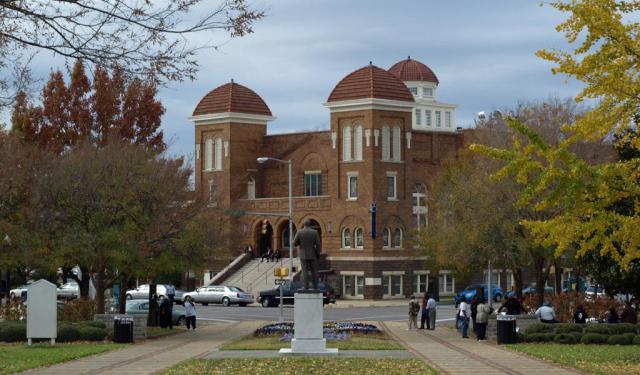
Explore Birmingham's Civil Rights Historical Sites on Foot
Birmingham, Alabama is the very first destination that comes to mind at the mention of the Civil Rights Movement in the United States. Back in the 1950s and 1960s, this city saw a great deal of bloodshed and strife between civil rights leaders, seeking to shed the stigma of centuries-long injustice, and their opponents.
The area of downtown Birmingham, where several significant events in the... view more
Tour Duration: 1 Hour(s)
Travel Distance: 0.9 Km or 0.6 Miles
The area of downtown Birmingham, where several significant events in the... view more
Tour Duration: 1 Hour(s)
Travel Distance: 0.9 Km or 0.6 Miles
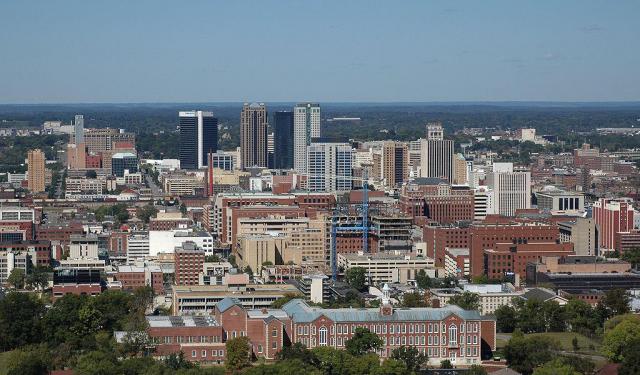
A Walking Guide to Birmingham's Revitalized Downtown
Birmingham is Alabama's biggest city and dates back to 1871, making it a Reconstruction-era city. Although initially formed from agricultural communities, the city quickly became a central railroad and industrial hub, with the iron and steel industries accounting for much of the local workforce.
Irish and Italian immigrants, as well as African Americans, made up most of this early... view more
Tour Duration: 2 Hour(s)
Travel Distance: 3.8 Km or 2.4 Miles
Irish and Italian immigrants, as well as African Americans, made up most of this early... view more
Tour Duration: 2 Hour(s)
Travel Distance: 3.8 Km or 2.4 Miles