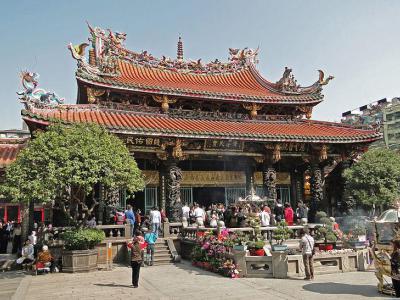


Longshan Temple, Taipei (must see)
Longshan Temple is one of Taipei’s oldest and most important religious landmarks, deeply rooted in the city’s early history and everyday spiritual life. Originally constructed in 1738 by settlers from Fujian Province during the Qing dynasty, the temple was built as a place of worship for Chinese immigrants who had settled in the Bangka area, today’s Wanhua District.
As soon as you pass through the gate facing the street, you will be met by a broad courtyard. It leads you straight ahead to the Front Hall. Step onto its porch, and you'll notice it is flanked by two bronze pillars. They are intricately cast with spiralling dragons and characters from the Ming Dynasty novel Investiture of the Gods. Most temples in Taiwan feature stone pillars; Longshan is the only temple in the country with pillars cast in bronze. If you look ten metres to your right and left, you will see one gate on each side. They might look similar, but according to Taiwanese etiquette, you should always enter through the gate on the right (called the Dragon Gate) and exit through the gate on the left (called the Tiger Gate). Entering through the mouth of the dragon and leaving through the mouth of the tiger symbolises turning bad luck into good fortune.
The temple's architecture follows traditional southern Chinese temple design, with ornate roofs, carved stone pillars, and richly decorated courtyards. The temple’s vivid colours and decorative details immediately stand out, with dragons appearing throughout the complex-an apt motif, as the temple’s name translates to “Dragon Mountain.”
However, the soul of the temple is the miraculous Guanyin statue. To find it, walk into the main courtyard and look toward the central hall. During a World War II Allied air raid on May 31, 1945, a bomb hit this hall, and the entire structure burned to the ground. Miraculously, the wooden Guanyin statue sitting at the centre was found completely unscorched among the ash. To see the statue at its best, wait for a gap in the crowds of chanting worshippers and look through the central doorway.
Decoration plays an important role in the temple’s atmosphere, especially during festivals. During Lunar New Year, lanterns fill the courtyards, and flowers are abundant throughout the grounds. Among the many altars, one of the most popular is dedicated to Yue Lao, the god revered as a matchmaker. Walk past the Main Hall to the very back row of altars. Follow the corridor to the westernmost altar. Single residents of Taipei often visit this altar to pray for lasting love, taking a symbolic red string meant to be tied around their future partner’s wrist.
Outside the temple, food stalls and a nearby underground mall selling Buddhist merchandise add to the experience.
As soon as you pass through the gate facing the street, you will be met by a broad courtyard. It leads you straight ahead to the Front Hall. Step onto its porch, and you'll notice it is flanked by two bronze pillars. They are intricately cast with spiralling dragons and characters from the Ming Dynasty novel Investiture of the Gods. Most temples in Taiwan feature stone pillars; Longshan is the only temple in the country with pillars cast in bronze. If you look ten metres to your right and left, you will see one gate on each side. They might look similar, but according to Taiwanese etiquette, you should always enter through the gate on the right (called the Dragon Gate) and exit through the gate on the left (called the Tiger Gate). Entering through the mouth of the dragon and leaving through the mouth of the tiger symbolises turning bad luck into good fortune.
The temple's architecture follows traditional southern Chinese temple design, with ornate roofs, carved stone pillars, and richly decorated courtyards. The temple’s vivid colours and decorative details immediately stand out, with dragons appearing throughout the complex-an apt motif, as the temple’s name translates to “Dragon Mountain.”
However, the soul of the temple is the miraculous Guanyin statue. To find it, walk into the main courtyard and look toward the central hall. During a World War II Allied air raid on May 31, 1945, a bomb hit this hall, and the entire structure burned to the ground. Miraculously, the wooden Guanyin statue sitting at the centre was found completely unscorched among the ash. To see the statue at its best, wait for a gap in the crowds of chanting worshippers and look through the central doorway.
Decoration plays an important role in the temple’s atmosphere, especially during festivals. During Lunar New Year, lanterns fill the courtyards, and flowers are abundant throughout the grounds. Among the many altars, one of the most popular is dedicated to Yue Lao, the god revered as a matchmaker. Walk past the Main Hall to the very back row of altars. Follow the corridor to the westernmost altar. Single residents of Taipei often visit this altar to pray for lasting love, taking a symbolic red string meant to be tied around their future partner’s wrist.
Outside the temple, food stalls and a nearby underground mall selling Buddhist merchandise add to the experience.
Want to visit this sight? Check out these Self-Guided Walking Tours in Taipei. Alternatively, you can download the mobile app "GPSmyCity: Walks in 1K+ Cities" from Apple App Store or Google Play Store. The app turns your mobile device to a personal tour guide and it works offline, so no data plan is needed when traveling abroad.
Download The GPSmyCity App



Longshan Temple on Map
Sight Name: Longshan Temple
Sight Location: Taipei, Taiwan (See walking tours in Taipei)
Sight Type: Religious
Guide(s) Containing This Sight:
Sight Location: Taipei, Taiwan (See walking tours in Taipei)
Sight Type: Religious
Guide(s) Containing This Sight:
Nearby Sights

Walking Tours in Taipei, Taiwan

Create Your Own Walk in Taipei
Creating your own self-guided walk in Taipei is easy and fun. Choose the city attractions that you want to see and a walk route map will be created just for you. You can even set your hotel as the start point of the walk.
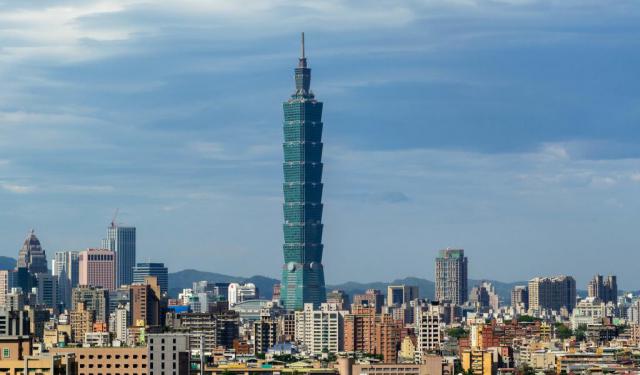
Taipei 101 and Xiangshan Walking Tour
The newest area of urban Taipei, the Xinyi district has technically existed only since 1990. Young as it is though, the neighborhood has earned a reputation of being one of the city's premier travel destinations.
Indeed, in Xinyi you’re never too far from experiencing something truly cool or iconic, be it the impressive Taipei 101 with its landmark observation deck or the breathtaking... view more
Tour Duration: 1 Hour
Travel Distance: 2.3 Km or 1.4 Miles
Indeed, in Xinyi you’re never too far from experiencing something truly cool or iconic, be it the impressive Taipei 101 with its landmark observation deck or the breathtaking... view more
Tour Duration: 1 Hour
Travel Distance: 2.3 Km or 1.4 Miles
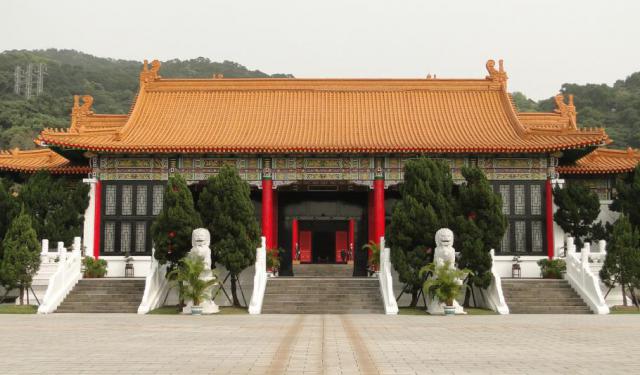
Zhongshan District Walking Tour
Covering a swathe of central Taipei, Zhongshan is the city's most fascinating district. It takes the name from Sun Yat-sen, aka Sun Zhongshan, who was a Chinese statesman and went down in history as the provisional first president of the Republic of China in 1912. Caught in the crosshatch of the area's main streets and secret alleyways is a wonderful mish-mash of attractions: museums and... view more
Tour Duration: 2 Hours
Travel Distance: 5 Km or 3.1 Miles
Tour Duration: 2 Hours
Travel Distance: 5 Km or 3.1 Miles
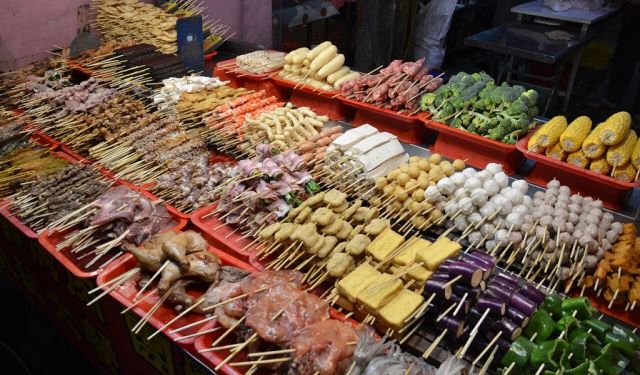
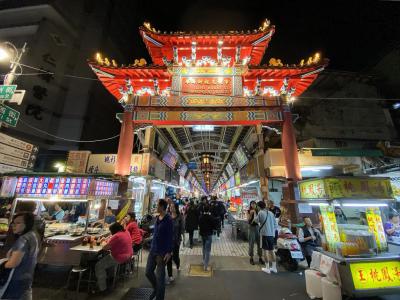
Taipei Night Market Food Tour
British actor Henry Golding described Taipei's night markets as a perfect encapsulation of Taiwan's energy.
The night markets' roots go back to ancient China, particularly the Tang Dynasty, spanning the 7th to 10th centuries, when vendors began selling food and goods after sunset near temples and busy urban areas. Over time, these evening markets became central to social life,... view more
Tour Duration: 1 Hour
Travel Distance: 3.1 Km or 1.9 Miles
The night markets' roots go back to ancient China, particularly the Tang Dynasty, spanning the 7th to 10th centuries, when vendors began selling food and goods after sunset near temples and busy urban areas. Over time, these evening markets became central to social life,... view more
Tour Duration: 1 Hour
Travel Distance: 3.1 Km or 1.9 Miles
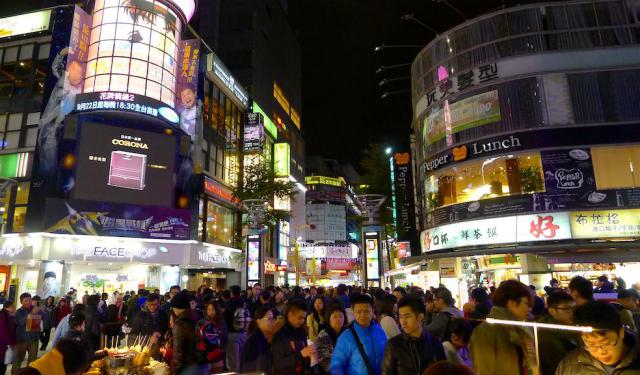
Taipei Shopping Tour
Among the many things Taipei is famous for, shopping is undoubtedly one of the main. The fashion-conscious and business-oriented Taiwanese capital is rightfully regarded to be a shopper’s paradise in East Asia, comparable to the likes of Hong Kong, Seoul, Tokyo, Singapore or Kuala Lumpur. The variety of markets, boutique stores, shopping districts and, of course, first-class malls here is truly... view more
Tour Duration: 1 Hour
Travel Distance: 1.9 Km or 1.2 Miles
Tour Duration: 1 Hour
Travel Distance: 1.9 Km or 1.2 Miles
Taipei City Center Walking Tour
Taipei, the capital of Taiwan, developed relatively late compared to many other major Asian cities, yet its history reflects centuries of migration, trade, and political change. The name Taipei derives from “Tai-pak,” meaning “North of Taiwan” or “Northern Taiwan,” a designation that distinguishes it from Tainan, the island’s earlier administrative centre in the south.
Long before... view more
Tour Duration: 2 Hours
Travel Distance: 3.6 Km or 2.2 Miles
Long before... view more
Tour Duration: 2 Hours
Travel Distance: 3.6 Km or 2.2 Miles
Useful Travel Guides for Planning Your Trip

Taipei Souvenirs: 8 Uniquely Taiwanese Products to Bring Home
Other than being an affluent Chinese state off the shore of mainland China, a non-Chinese foreigner might not know much about Taiwan, unless one has already been there. The island is a home to some truly unique things hardly found anywhere else. In Taipei - the country's capital with a great...
City Walks Overview
