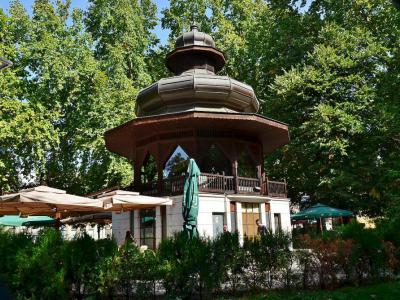


Music Pavilion, Sarajevo
Tucked into leafy At Mejdan Park beside the Miljacka River, Sarajevo’s Music Pavilion is a charming stop a few minutes’ walk from the Old Town and Latin Bridge. The elegant, open-air structure was first built in 1913 to a design by architect Josip Pospisil, during the city’s Austro-Hungarian period, as a small stage for promenades and public concerts. Damaged in the Second World War, it was completely restored in 2004, and today it anchors one of the city’s most pleasant green pockets.
The pavilion sits on the ground with a long, layered story: in the 17th century, this area was a hippodrome (hence the name Atmejdan-“horse square”), later a public square, and eventually landscaped as a park. That sense of continuity-old Sarajevo renewing itself-hangs in the air as you step under the pavilion’s canopy and watch daily life glide past: chess games under the trees, families strolling the riverbank, and the call to prayer drifting from nearby Bascarsija. It’s often described as the city’s only surviving music pavilion, a small but enduring symbol of Sarajevo’s cultural life.
For visitors, the pavilion is both a photo-friendly monument and a handy pause point between sights. Come in the morning for soft light and coffee at the adjacent kiosk-café, or in late afternoon when the park is busiest and buskers sometimes set up nearby. If you’re tracing Sarajevo’s history on foot, pair a stop here with the Latin Bridge and the museums along Obala Kulina Bana-everything lies within a compact riverside stroll. Whether you linger ten minutes or an hour, the Music Pavilion offers a gentler tempo amid Sarajevo’s layered streets.
The pavilion sits on the ground with a long, layered story: in the 17th century, this area was a hippodrome (hence the name Atmejdan-“horse square”), later a public square, and eventually landscaped as a park. That sense of continuity-old Sarajevo renewing itself-hangs in the air as you step under the pavilion’s canopy and watch daily life glide past: chess games under the trees, families strolling the riverbank, and the call to prayer drifting from nearby Bascarsija. It’s often described as the city’s only surviving music pavilion, a small but enduring symbol of Sarajevo’s cultural life.
For visitors, the pavilion is both a photo-friendly monument and a handy pause point between sights. Come in the morning for soft light and coffee at the adjacent kiosk-café, or in late afternoon when the park is busiest and buskers sometimes set up nearby. If you’re tracing Sarajevo’s history on foot, pair a stop here with the Latin Bridge and the museums along Obala Kulina Bana-everything lies within a compact riverside stroll. Whether you linger ten minutes or an hour, the Music Pavilion offers a gentler tempo amid Sarajevo’s layered streets.
Want to visit this sight? Check out these Self-Guided Walking Tours in Sarajevo. Alternatively, you can download the mobile app "GPSmyCity: Walks in 1K+ Cities" from Apple App Store or Google Play Store. The app turns your mobile device to a personal tour guide and it works offline, so no data plan is needed when traveling abroad.
Download The GPSmyCity App



Music Pavilion on Map
Sight Name: Music Pavilion
Sight Location: Sarajevo, Bosnia-Herzegovina (See walking tours in Sarajevo)
Sight Type: Attraction/Landmark
Sight Location: Sarajevo, Bosnia-Herzegovina (See walking tours in Sarajevo)
Sight Type: Attraction/Landmark
Nearby Sights
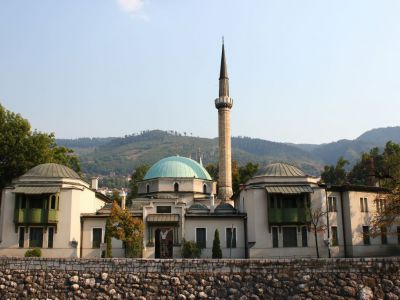
Walking Tours in Sarajevo, Bosnia-Herzegovina

Create Your Own Walk in Sarajevo
Creating your own self-guided walk in Sarajevo is easy and fun. Choose the city attractions that you want to see and a walk route map will be created just for you. You can even set your hotel as the start point of the walk.
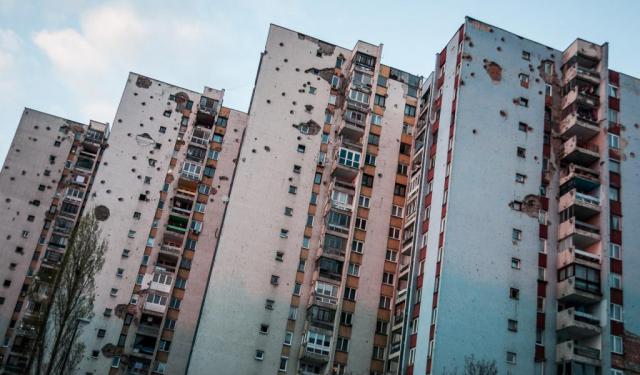
Siege of Sarajevo Walking Tour
The Siege of Sarajevo was an extended battle in the city during the Bosnian War from 1992 to 1996. It is known to be the most prolonged siege of a capital city, having lasted several months longer than the early 20th century Siege of Madrid.
The Bosnian War began when Bosnia and Herzegovina declared independence from Yugoslavia. The city was blockaded by the Serbs and bombarded by bombs, tanks,... view more
Tour Duration: 2 Hours
Travel Distance: 3 Km or 1.9 Miles
The Bosnian War began when Bosnia and Herzegovina declared independence from Yugoslavia. The city was blockaded by the Serbs and bombarded by bombs, tanks,... view more
Tour Duration: 2 Hours
Travel Distance: 3 Km or 1.9 Miles
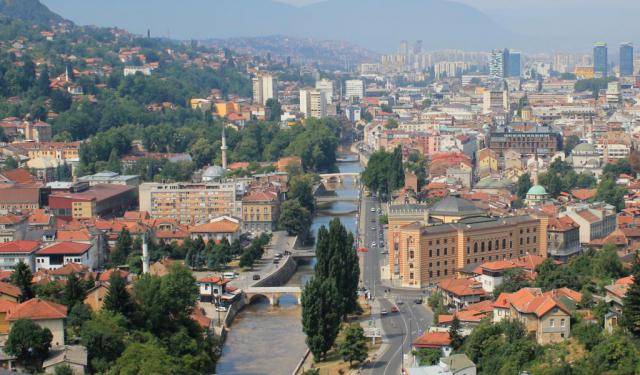
Sarajevo Introduction Walking Tour
Sarajevo is the capital of Bosnia and Herzegovina. It is also the country's largest city. This historical and picturesque city is surrounded by the Dinaric Alps and rests along both banks of the Miljacka River.
The city was established by the Ottoman Empire around 1461. It was named "Sarajevo," which means "the plains around the palace." The name is derived from the... view more
Tour Duration: 2 Hours
Travel Distance: 2.7 Km or 1.7 Miles
The city was established by the Ottoman Empire around 1461. It was named "Sarajevo," which means "the plains around the palace." The name is derived from the... view more
Tour Duration: 2 Hours
Travel Distance: 2.7 Km or 1.7 Miles
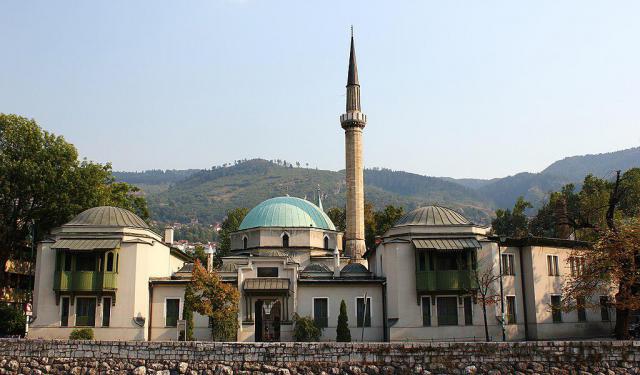
Ottoman Empire Landmarks Walk
The capital of Bosnia and Herzegovina, Sarajevo, was founded in 1461 after the Ottoman Empire conquered the region. Hence, the city's history is closely intertwined with the Ottoman legacy reflected in its landmarks.
One such is the Old Bazaar, a bustling market square dating back to the 15th century. Here, one can immerse oneself in the vibrant atmosphere of traditional crafts, authentic... view more
Tour Duration: 1 Hour
Travel Distance: 1 Km or 0.6 Miles
One such is the Old Bazaar, a bustling market square dating back to the 15th century. Here, one can immerse oneself in the vibrant atmosphere of traditional crafts, authentic... view more
Tour Duration: 1 Hour
Travel Distance: 1 Km or 0.6 Miles