

Odeonsplatz, Munich
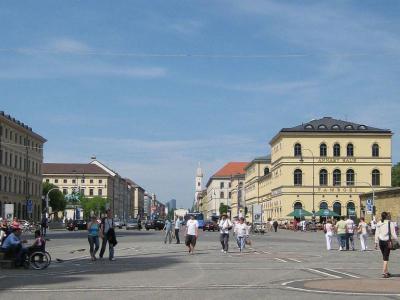
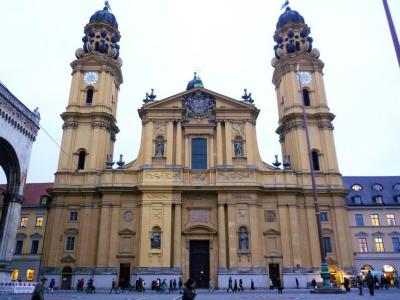
The Odeonsplatz is a significant square in Munich's heart, created in the early 19th century by architect Leo von Klenze. It marks the end of Ludwigstraße, a grand street designed concurrently. The square gets its name from a concert hall called the Odeon situated on its northwest side. Over time, the term "Odeonsplatz" has also come to describe the open area in front of the Residenz palace, bounded by the Theatine Church and the Feldherrnhalle, a monumental loggia to the south.
Situated to the north of Munich's historic center, Odeonsplatz borders two districts: Altstadt-Lehel to the east and Maxvorstadt to the west. Along the west side, set back from Ludwigstraße, stand the Odeon building and the Palais Leuchtenberg, both inspired by Rome's Palazzo Farnese. To the east is Klenze's commercial arcade with Café Tambosi included. A street runs between the western buildings toward the Palais Ludwig Ferdinand, leading also to Wittelsbacherplatz, another square Klenze designed.
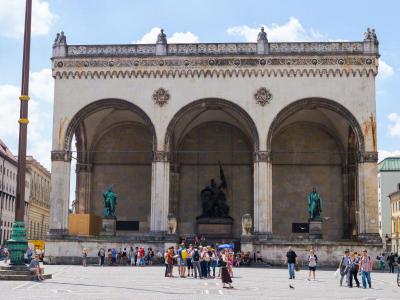
The Feldherrnhalle at the square's edge is modeled on Florence's Loggia dei Lanzi. Odeonsplatz is accessible by its U-Bahn station and a bus line that connects to various museums. In 1972, it became part of Munich's pedestrian-only zone.
Historically, Odeonsplatz has been central to various public ceremonies, from funeral marches to victory parades, moving along Ludwigstraße to the Feldherrnhalle, with a special viewing stand by Ludwig I's statue. The path from Odeonsplatz to the annual Oktoberfest parade has remained unchanged for years.
Situated to the north of Munich's historic center, Odeonsplatz borders two districts: Altstadt-Lehel to the east and Maxvorstadt to the west. Along the west side, set back from Ludwigstraße, stand the Odeon building and the Palais Leuchtenberg, both inspired by Rome's Palazzo Farnese. To the east is Klenze's commercial arcade with Café Tambosi included. A street runs between the western buildings toward the Palais Ludwig Ferdinand, leading also to Wittelsbacherplatz, another square Klenze designed.
The Feldherrnhalle at the square's edge is modeled on Florence's Loggia dei Lanzi. Odeonsplatz is accessible by its U-Bahn station and a bus line that connects to various museums. In 1972, it became part of Munich's pedestrian-only zone.
Historically, Odeonsplatz has been central to various public ceremonies, from funeral marches to victory parades, moving along Ludwigstraße to the Feldherrnhalle, with a special viewing stand by Ludwig I's statue. The path from Odeonsplatz to the annual Oktoberfest parade has remained unchanged for years.
Want to visit this sight? Check out these Self-Guided Walking Tours in Munich. Alternatively, you can download the mobile app "GPSmyCity: Walks in 1K+ Cities" from Apple App Store or Google Play Store. The app turns your mobile device to a personal tour guide and it works offline, so no data plan is needed when traveling abroad.
Download The GPSmyCity App



Odeonsplatz on Map
Sight Name: Odeonsplatz
Sight Location: Munich, Germany (See walking tours in Munich)
Sight Type: Attraction/Landmark
Sight Location: Munich, Germany (See walking tours in Munich)
Sight Type: Attraction/Landmark
Nearby Sights
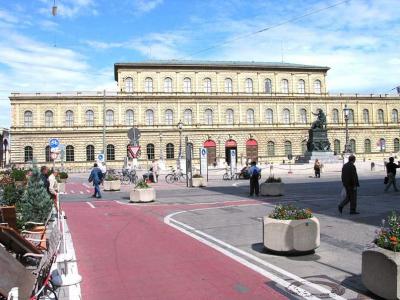
Residenz Royal Palace (must see)
Walking Tours in Munich, Germany

Create Your Own Walk in Munich
Creating your own self-guided walk in Munich is easy and fun. Choose the city attractions that you want to see and a walk route map will be created just for you. You can even set your hotel as the start point of the walk.
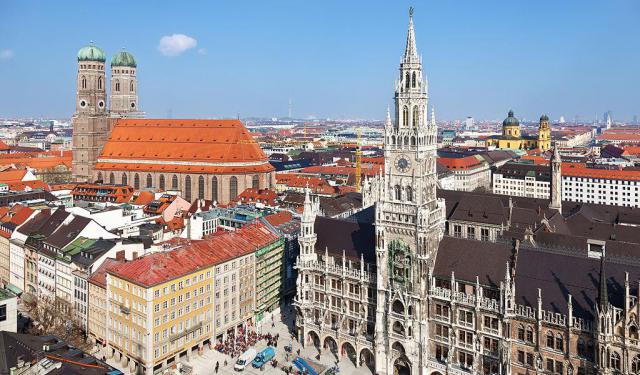
Munich City Center Walking Tour
Set along the banks of the River Isar, just north of the Bavarian Alps, Munich is a city steeped in history, where centuries-old buildings meet a rich array of cultural landmarks and modern-day energy.
The first recorded mention dates back to 1158. The name is believed to come from the Old and Middle High German word “munichen”, meaning “by the monks.” It refers to the Benedictine monks... view more
Tour Duration: 2 Hours
Travel Distance: 2.5 Km or 1.6 Miles
The first recorded mention dates back to 1158. The name is believed to come from the Old and Middle High German word “munichen”, meaning “by the monks.” It refers to the Benedictine monks... view more
Tour Duration: 2 Hours
Travel Distance: 2.5 Km or 1.6 Miles
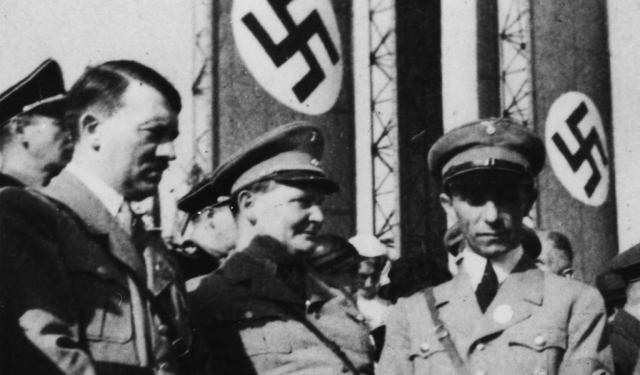
Third Reich Munich Walking Tour
In the early decades of the 20th century, Munich became the birthplace of one of history’s darkest political movements. Long before the world knew what was coming, Bavaria’s capital had already laid the groundwork for the rise of the National Socialist German Workers' Party-better known as the Nazi Party.
From 1933 to 1945, the Third Reich took hold of Germany under Adolf Hitler’s... view more
Tour Duration: 2 Hours
Travel Distance: 3.3 Km or 2.1 Miles
From 1933 to 1945, the Third Reich took hold of Germany under Adolf Hitler’s... view more
Tour Duration: 2 Hours
Travel Distance: 3.3 Km or 2.1 Miles
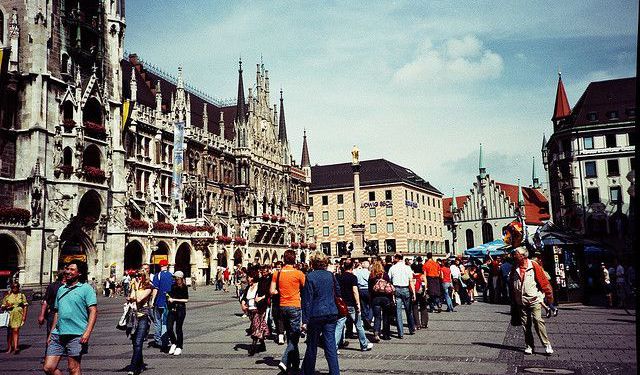
Munich Old Town Walking Tour
Munich’s Old Town, known as the Altstadt, unfolds across the western bank of the River Isar-a captivating blend of medieval charm, architectural brilliance, and deep cultural roots. As the historic heart of the Bavarian capital, it’s more than just a preserved district-it is is listed as a historical monument and is a living museum - “where the past harmonizes with the present in a grand... view more
Tour Duration: 2 Hours
Travel Distance: 2.7 Km or 1.7 Miles
Tour Duration: 2 Hours
Travel Distance: 2.7 Km or 1.7 Miles
Munich Food Tour
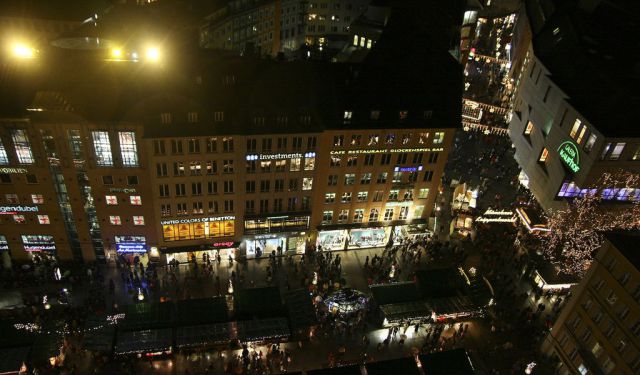
There is a long-standing Bavarian saying that goes like this: ‘Bier ist Brot.’ It translates to ‘beer is bread.’ You could not have asked for a better introduction to Munich's food scene.
In its early days as a settlement founded in 1158, Munich developed as a market town, where trade routes brought grains, meat, and salt into a growing local economy. By the late Middle Ages,... view more
Tour Duration: 1 Hour
Travel Distance: 1.3 Km or 0.8 Miles
In its early days as a settlement founded in 1158, Munich developed as a market town, where trade routes brought grains, meat, and salt into a growing local economy. By the late Middle Ages,... view more
Tour Duration: 1 Hour
Travel Distance: 1.3 Km or 0.8 Miles
Old Town Souvenir Shops
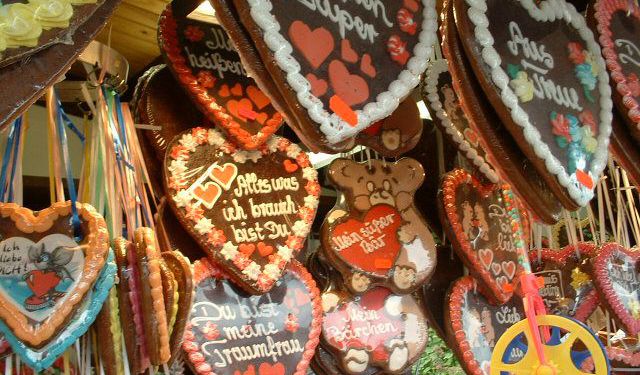
"Collect moments, not things," wise men say. In reference to travel, this may be interpreted as the prevalence of experiences and memories over material gains. Still, when it comes to travel mementos, albeit material they are, memories and experiences are primarily what these little (or not so little) tokens are all about.
And it would be a pity to leave Munich without bringing home... view more
Tour Duration: 1 Hour
Travel Distance: 1.5 Km or 0.9 Miles
And it would be a pity to leave Munich without bringing home... view more
Tour Duration: 1 Hour
Travel Distance: 1.5 Km or 0.9 Miles
Useful Travel Guides for Planning Your Trip
12 German-Made Things to Buy in Munich
The Bavarian capital Munich, much as the whole state of Bavaria, form an inseparable part of the German image, although a very unique part in its difference to the rest of the country, including the language. Bavarian beer occupies an important place in German heritage, from the infamous 1920s Beer...
Top 10 Cafes and Restaurants in Munich
While there are many restaurants and cafes in downtown Munich for a visitor to choose from, by far not all of them are truly worth visiting. Here's the solid list of quality cafes and restaurants that will add greatly to your Munich experience. Each restaurant and cafe featured here offers...