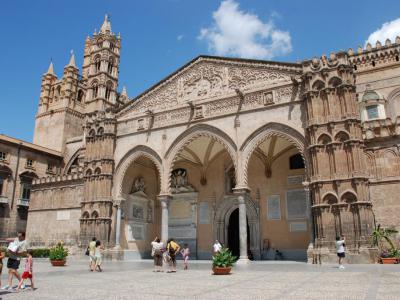


Palermo Cathedral, Palermo (must see)
In 831, Arab conquerors recorded the presence of a major Christian church on the site of today’s Palermo Cathedral, referring to it as a large “infidel temple”. They converted this structure into the Great Mosque of Palermo, which became the city’s principal place of worship during the Islamic period. In 1072, when the Normans conquered Palermo, the mosque was reconsecrated as a Christian church. This early cathedral played a ceremonial role in Norman rule, and Roger II, the first king of Sicily, was crowned here in 1130.
The present Palermo Cathedral reflects centuries of rebuilding, expansion, and restoration, resulting in an unusual mixture of architectural styles. The current structure was begun in 1185 under Walter Ophamil, the Anglo-Norman Archbishop of Palermo and a close advisor to King William II. Walter intended the new cathedral both as a statement of Norman authority and as a rival to the nearby Norman Palace. His remains are today preserved in the cathedral’s crypt.
One of the cathedral’s main entrances is located on Matteo Bonello Street, the western side of the cathedral, marked by a Gothic portal flanked by two towers. Above the portal is a niche containing a 15th-century statue of the Madonna. The most prominent entrance, however, is on the south side, where a broad Gothic-Catalan portico was added in 1465. This portico features three large arcades, decorative turrets, and rich sculptural detail.
The interior follows a Latin cross plan, with a central nave and two aisles divided by pilasters. Along the right side are chapels housing the royal tombs, including those of Roger II, Henry VI, Constance of Hauteville, and Frederick II. The cathedral’s sacred vestments, illuminated manuscripts, and the gold tiara of Constance of Aragon are preserved today in the Cathedral Treasury, located on the south side of the building, separate from the royal tombs inside the nave.
For those wishing to continue upward, access to the rooftop is located on the south-west tower, within the cathedral’s Monumental Area. A medieval stairway leads onto the roof, offering panoramic views across Palermo’s historic center.
The present Palermo Cathedral reflects centuries of rebuilding, expansion, and restoration, resulting in an unusual mixture of architectural styles. The current structure was begun in 1185 under Walter Ophamil, the Anglo-Norman Archbishop of Palermo and a close advisor to King William II. Walter intended the new cathedral both as a statement of Norman authority and as a rival to the nearby Norman Palace. His remains are today preserved in the cathedral’s crypt.
One of the cathedral’s main entrances is located on Matteo Bonello Street, the western side of the cathedral, marked by a Gothic portal flanked by two towers. Above the portal is a niche containing a 15th-century statue of the Madonna. The most prominent entrance, however, is on the south side, where a broad Gothic-Catalan portico was added in 1465. This portico features three large arcades, decorative turrets, and rich sculptural detail.
The interior follows a Latin cross plan, with a central nave and two aisles divided by pilasters. Along the right side are chapels housing the royal tombs, including those of Roger II, Henry VI, Constance of Hauteville, and Frederick II. The cathedral’s sacred vestments, illuminated manuscripts, and the gold tiara of Constance of Aragon are preserved today in the Cathedral Treasury, located on the south side of the building, separate from the royal tombs inside the nave.
For those wishing to continue upward, access to the rooftop is located on the south-west tower, within the cathedral’s Monumental Area. A medieval stairway leads onto the roof, offering panoramic views across Palermo’s historic center.
Want to visit this sight? Check out these Self-Guided Walking Tours in Palermo. Alternatively, you can download the mobile app "GPSmyCity: Walks in 1K+ Cities" from Apple App Store or Google Play Store. The app turns your mobile device to a personal tour guide and it works offline, so no data plan is needed when traveling abroad.
Download The GPSmyCity App



Palermo Cathedral on Map
Sight Name: Palermo Cathedral
Sight Location: Palermo, Italy (See walking tours in Palermo)
Sight Type: Religious
Guide(s) Containing This Sight:
Sight Location: Palermo, Italy (See walking tours in Palermo)
Sight Type: Religious
Guide(s) Containing This Sight:
Nearby Sights
Walking Tours in Palermo, Italy

Create Your Own Walk in Palermo
Creating your own self-guided walk in Palermo is easy and fun. Choose the city attractions that you want to see and a walk route map will be created just for you. You can even set your hotel as the start point of the walk.
Palaces of Palermo
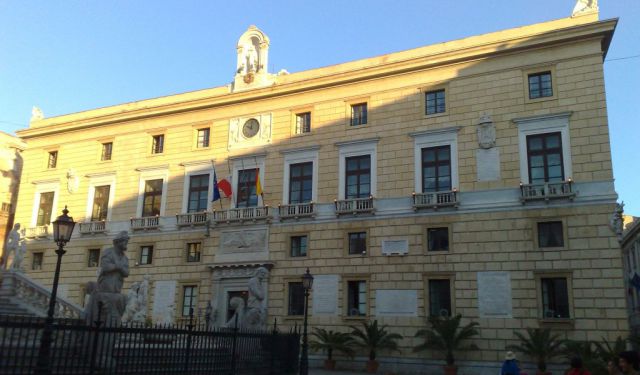
For centuries, Sicilian capital Palermo has been a focal point for the construction of noble dwellings and palaces. The latter were and still are a fine manifestation of the historical life in the region. They are a few hundred of them still in place, ranging chronologically from the medieval period to the first decades of the 20th century, and comprising an impressive collection of architectural... view more
Tour Duration: 1 Hour(s)
Travel Distance: 2.6 Km or 1.6 Miles
Tour Duration: 1 Hour(s)
Travel Distance: 2.6 Km or 1.6 Miles
A Walk In Palermo's Historic Yet Lively City Center
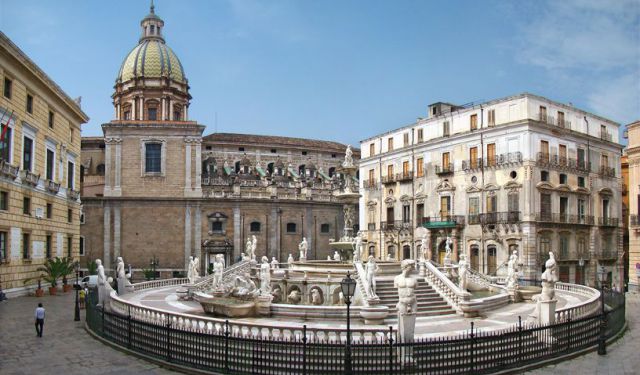
The German polymath Johann Wolfgang von Goethe, who visited Sicily in 1787, wrote: “To have seen Italy without having seen Sicily is not to have seen Italy at all, for Sicily is the key to everything.”, Palermo being his main reference point.
Palermo’s story begins with a trading post established by the ancient Phoenician civilization around the 8th century BCE. The Phoenicians called it... view more
Tour Duration: 2 Hour(s)
Travel Distance: 3.1 Km or 1.9 Miles
Palermo’s story begins with a trading post established by the ancient Phoenician civilization around the 8th century BCE. The Phoenicians called it... view more
Tour Duration: 2 Hour(s)
Travel Distance: 3.1 Km or 1.9 Miles
Historical Religious Buildings
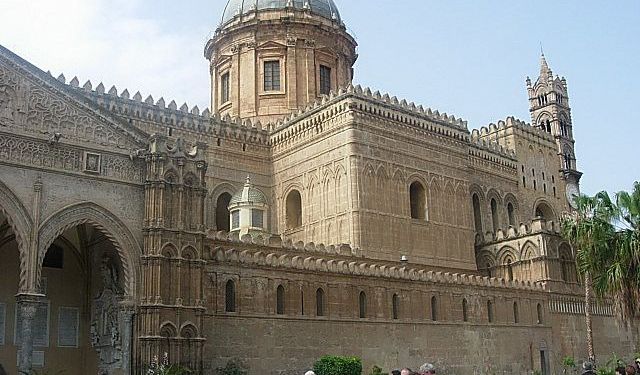
Religion has always played an important role in the lives of the Italians – and the Sicilians are no exception. Thus, it is little wonder that the main city of the island, Palermo, boasts a plethora of religious buildings. The collection of historical churches found here ranges from the Arab-Norman-Byzantine to the Medieval, Gothic, Baroque and the Renaissance.
In the course of history, many... view more
Tour Duration: 2 Hour(s)
Travel Distance: 3.2 Km or 2 Miles
In the course of history, many... view more
Tour Duration: 2 Hour(s)
Travel Distance: 3.2 Km or 2 Miles