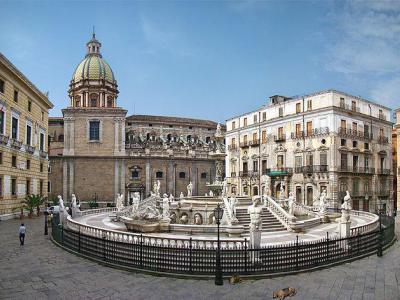


Piazza Pretoria (Pretoria Square), Palermo
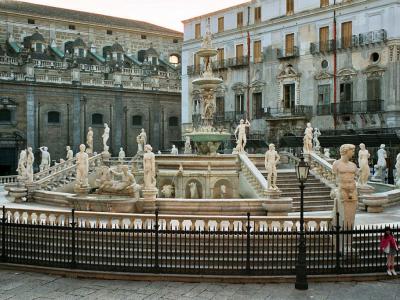
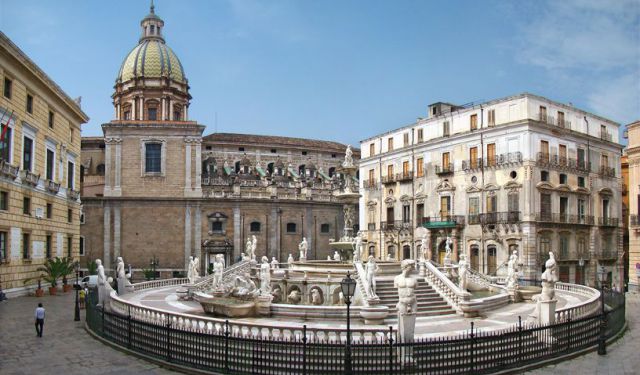
In 1573, the city senate purchased a monumental fountain originally designed for a private garden in Florence. Once reassembled, it quickly became clear that the sculpture was too large for the square. Several surrounding buildings were demolished to make room for it, leaving the fountain densely packed into the space it still occupies today.
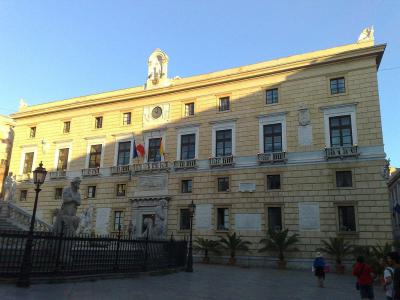
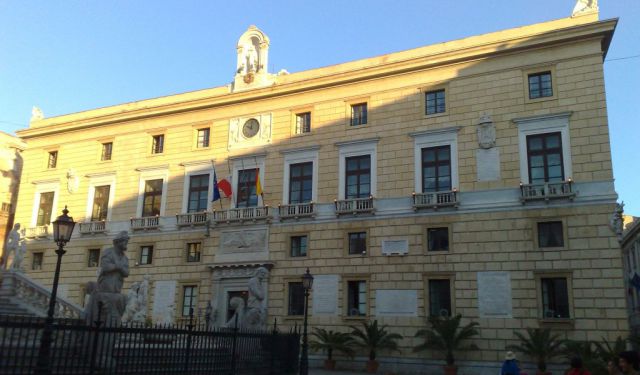
Three sides of the square are enclosed by buildings. Dominating the south side is the Praetorian Palace, Palermo’s town hall, from which the square takes its name. The building is also known as the Palace of the Eagles, after the eagle symbols associated with the city. Originally constructed between 1463 and 1478, the palace has undergone later alterations, combining late Gothic origins with Renaissance and Neoclassical elements. Today, it houses the mayor’s offices and ceremonial rooms.
The east side of the square is bordered by the Church of Saint Catherine, which stands between Pretoria Square and Bellini Square. The church’s exterior reflects a mix of Renaissance structure and later Sicilian Baroque additions, while its interior is richly Baroque. An aristocratic residence also presses tightly against the square: Bonocore Palace on the north side.
The west side of the square opens toward Maqueda Street, where stands the Church of San Giuseppe dei Teatini, a Theatine foundation whose restrained exterior contrasts with the richly layered churches opposite it.
Three sides of the square are enclosed by buildings. Dominating the south side is the Praetorian Palace, Palermo’s town hall, from which the square takes its name. The building is also known as the Palace of the Eagles, after the eagle symbols associated with the city. Originally constructed between 1463 and 1478, the palace has undergone later alterations, combining late Gothic origins with Renaissance and Neoclassical elements. Today, it houses the mayor’s offices and ceremonial rooms.
The east side of the square is bordered by the Church of Saint Catherine, which stands between Pretoria Square and Bellini Square. The church’s exterior reflects a mix of Renaissance structure and later Sicilian Baroque additions, while its interior is richly Baroque. An aristocratic residence also presses tightly against the square: Bonocore Palace on the north side.
The west side of the square opens toward Maqueda Street, where stands the Church of San Giuseppe dei Teatini, a Theatine foundation whose restrained exterior contrasts with the richly layered churches opposite it.
Want to visit this sight? Check out these Self-Guided Walking Tours in Palermo. Alternatively, you can download the mobile app "GPSmyCity: Walks in 1K+ Cities" from Apple App Store or Google Play Store. The app turns your mobile device to a personal tour guide and it works offline, so no data plan is needed when traveling abroad.
Download The GPSmyCity App



Piazza Pretoria (Pretoria Square) on Map
Sight Name: Piazza Pretoria (Pretoria Square)
Sight Location: Palermo, Italy (See walking tours in Palermo)
Sight Type: Attraction/Landmark
Guide(s) Containing This Sight:
Sight Location: Palermo, Italy (See walking tours in Palermo)
Sight Type: Attraction/Landmark
Guide(s) Containing This Sight:
Nearby Sights
Walking Tours in Palermo, Italy

Create Your Own Walk in Palermo
Creating your own self-guided walk in Palermo is easy and fun. Choose the city attractions that you want to see and a walk route map will be created just for you. You can even set your hotel as the start point of the walk.
A Walk In Palermo's Historic Yet Lively City Center
The German polymath Johann Wolfgang von Goethe, who visited Sicily in 1787, wrote: “To have seen Italy without having seen Sicily is not to have seen Italy at all, for Sicily is the key to everything.”, Palermo being his main reference point.
Palermo’s story begins with a trading post established by the ancient Phoenician civilization around the 8th century BCE. The Phoenicians called it... view more
Tour Duration: 2 Hour(s)
Travel Distance: 3.1 Km or 1.9 Miles
Palermo’s story begins with a trading post established by the ancient Phoenician civilization around the 8th century BCE. The Phoenicians called it... view more
Tour Duration: 2 Hour(s)
Travel Distance: 3.1 Km or 1.9 Miles
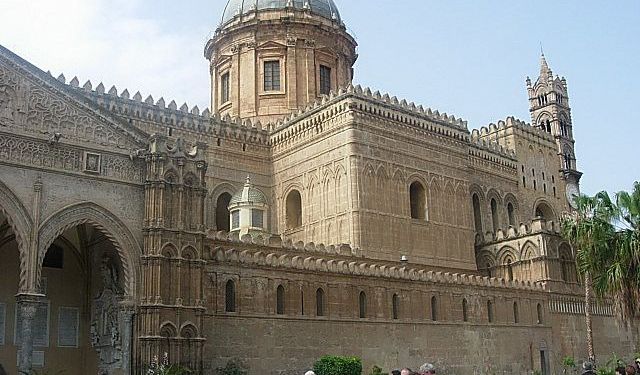
Historical Religious Buildings
Religion has always played an important role in the lives of the Italians – and the Sicilians are no exception. Thus, it is little wonder that the main city of the island, Palermo, boasts a plethora of religious buildings. The collection of historical churches found here ranges from the Arab-Norman-Byzantine to the Medieval, Gothic, Baroque and the Renaissance.
In the course of history, many... view more
Tour Duration: 2 Hour(s)
Travel Distance: 3.2 Km or 2 Miles
In the course of history, many... view more
Tour Duration: 2 Hour(s)
Travel Distance: 3.2 Km or 2 Miles
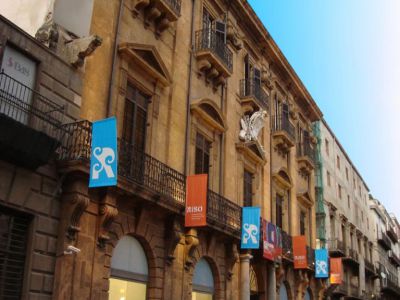
Palaces of Palermo
For centuries, Sicilian capital Palermo has been a focal point for the construction of noble dwellings and palaces. The latter were and still are a fine manifestation of the historical life in the region. They are a few hundred of them still in place, ranging chronologically from the medieval period to the first decades of the 20th century, and comprising an impressive collection of architectural... view more
Tour Duration: 1 Hour(s)
Travel Distance: 2.6 Km or 1.6 Miles
Tour Duration: 1 Hour(s)
Travel Distance: 2.6 Km or 1.6 Miles