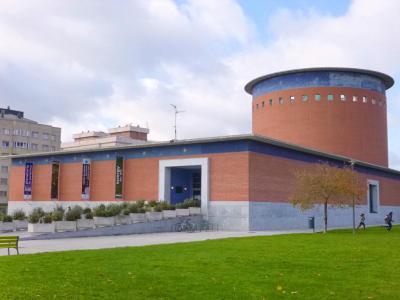


Planetario de Pamplona (Pamplona Planetarium), Pamplona
The Pamplona Planetarium, inaugurated on November 26, 1993, stands as a beacon of scientific dissemination. Part of the Navarra Public Society of Culture, Sports, and Leisure Infrastructures (NICDO), its primary mission is to inspire curiosity and knowledge about the cosmos through the exploration of the starry sky. Beyond its local impact, the productions of the Pamplona Planetarium reach audiences far and wide, being showcased in numerous planetariums across Spain and around the globe.
Nestled within the verdant surroundings of Yamaguchi Park, the planetarium's distinctive red brick building features a cylindrical structure complemented by a parallelepiped that adheres to golden proportions. This architectural gem seamlessly integrates into the park's landscape, which boasts a diverse array of tree species and a Japanese garden paying homage to Pamplona's twin city, Yamaguchi. Spanning a total useful area of 3,688 square meters, the planetarium offers a multifaceted space for scientific exploration and educational activities.
Within the planetarium's premises, visitors can partake in a wide range of activities catering to all age groups, including conferences, courses, workshops, concerts, and exhibitions. Supported by the Obra Social "la Caixa" and the Caja Navarra Foundation, these initiatives aim to foster a deeper understanding of science and culture. The planetarium's facilities include a workshop room, two classrooms, a library, a screening room, an expansive exhibition space, a shop, and a conference room, all housed within its meticulously designed interior spread across two floors.
Nestled within the verdant surroundings of Yamaguchi Park, the planetarium's distinctive red brick building features a cylindrical structure complemented by a parallelepiped that adheres to golden proportions. This architectural gem seamlessly integrates into the park's landscape, which boasts a diverse array of tree species and a Japanese garden paying homage to Pamplona's twin city, Yamaguchi. Spanning a total useful area of 3,688 square meters, the planetarium offers a multifaceted space for scientific exploration and educational activities.
Within the planetarium's premises, visitors can partake in a wide range of activities catering to all age groups, including conferences, courses, workshops, concerts, and exhibitions. Supported by the Obra Social "la Caixa" and the Caja Navarra Foundation, these initiatives aim to foster a deeper understanding of science and culture. The planetarium's facilities include a workshop room, two classrooms, a library, a screening room, an expansive exhibition space, a shop, and a conference room, all housed within its meticulously designed interior spread across two floors.
Want to visit this sight? Check out these Self-Guided Walking Tours in Pamplona. Alternatively, you can download the mobile app "GPSmyCity: Walks in 1K+ Cities" from Apple App Store or Google Play Store. The app turns your mobile device to a personal tour guide and it works offline, so no data plan is needed when traveling abroad.
Download The GPSmyCity App



Planetario de Pamplona (Pamplona Planetarium) on Map
Sight Name: Planetario de Pamplona (Pamplona Planetarium)
Sight Location: Pamplona, Spain (See walking tours in Pamplona)
Sight Type: Attraction/Landmark
Sight Location: Pamplona, Spain (See walking tours in Pamplona)
Sight Type: Attraction/Landmark
Nearby Sights
Walking Tours in Pamplona, Spain

Create Your Own Walk in Pamplona
Creating your own self-guided walk in Pamplona is easy and fun. Choose the city attractions that you want to see and a walk route map will be created just for you. You can even set your hotel as the start point of the walk.
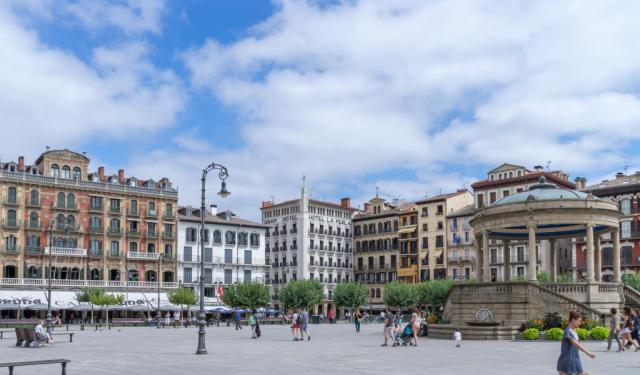
Pamplona Introduction Walking Tour
Pamplona, the capital of the autonomous region of Navarre in northern Spain, is one of the oldest cities in the country. Its history spans millennia. Originally a small Vascones settlement known as Iruña, it was transformed into a Roman city named Pompelo by the Roman commander Gnaeus Pompey in 74 BC. Over the centuries, Pamplona witnessed the rise and fall of various powers, from the Visigoths... view more
Tour Duration: 2 Hours
Travel Distance: 2.8 Km or 1.7 Miles
Tour Duration: 2 Hours
Travel Distance: 2.8 Km or 1.7 Miles
City Walks Overview
