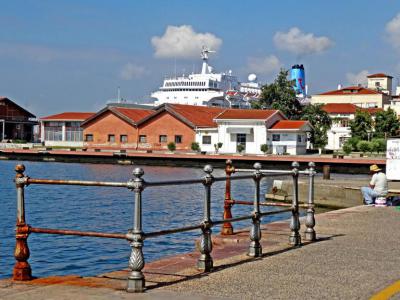


Port of Thessaloniki, Thessaloniki
The Port of Thessaloniki, situated in Thessaloniki, Greece, stands as a significant maritime hub, deeply intertwined with the city's economic history and development. Renowned for being one of the largest ports in the Eastern Mediterranean, it plays a crucial role in bridging southeastern Europe and the Balkans with maritime routes across the globe. This bustling port specializes in handling both shipping containers and general cargo, making it a pivotal point for trade in the region.
Strategically connected to both national and international rail networks, the Port of Thessaloniki ensures seamless distribution of goods, underscoring its importance in the global logistics chain. Its historical significance is also notable; during World War I, it served as a base of operations for the Allies. In a darker chapter of history, during World War II, the port was seized by Germany, which then used it as a departure point for the deportation of Thessaloniki's Jewish population to Poland.
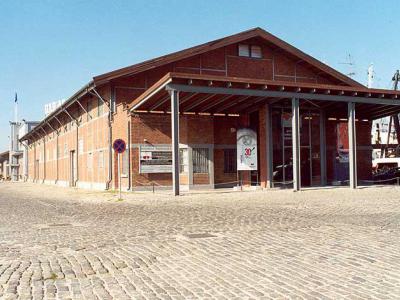
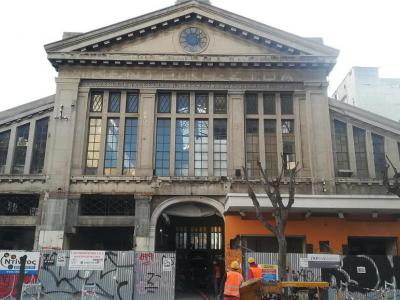
The port also boasts one of the Aegean Sea's largest passenger terminals, housed in a building steeped in history. Originally constructed in 1912 as a customs house, this building now welcomes thousands of tourists, as Thessaloniki has emerged as a favored cruise destination. Its passenger terminal's proximity to the city's main attractions further enhances its appeal, offering easy access to Thessaloniki's rich cultural and historical landmarks. The Port of Thessaloniki, thus, not only serves as a vital commercial gateway but also as a point of convergence for cultural exchanges, making it a cornerstone of Thessaloniki's vibrant identity.
Strategically connected to both national and international rail networks, the Port of Thessaloniki ensures seamless distribution of goods, underscoring its importance in the global logistics chain. Its historical significance is also notable; during World War I, it served as a base of operations for the Allies. In a darker chapter of history, during World War II, the port was seized by Germany, which then used it as a departure point for the deportation of Thessaloniki's Jewish population to Poland.
The port also boasts one of the Aegean Sea's largest passenger terminals, housed in a building steeped in history. Originally constructed in 1912 as a customs house, this building now welcomes thousands of tourists, as Thessaloniki has emerged as a favored cruise destination. Its passenger terminal's proximity to the city's main attractions further enhances its appeal, offering easy access to Thessaloniki's rich cultural and historical landmarks. The Port of Thessaloniki, thus, not only serves as a vital commercial gateway but also as a point of convergence for cultural exchanges, making it a cornerstone of Thessaloniki's vibrant identity.
Want to visit this sight? Check out these Self-Guided Walking Tours in Thessaloniki. Alternatively, you can download the mobile app "GPSmyCity: Walks in 1K+ Cities" from Apple App Store or Google Play Store. The app turns your mobile device to a personal tour guide and it works offline, so no data plan is needed when traveling abroad.
Download The GPSmyCity App



Port of Thessaloniki on Map
Sight Name: Port of Thessaloniki
Sight Location: Thessaloniki, Greece (See walking tours in Thessaloniki)
Sight Type: Attraction/Landmark
Guide(s) Containing This Sight:
Sight Location: Thessaloniki, Greece (See walking tours in Thessaloniki)
Sight Type: Attraction/Landmark
Guide(s) Containing This Sight:
Nearby Sights


Walking Tours in Thessaloniki, Greece

Create Your Own Walk in Thessaloniki
Creating your own self-guided walk in Thessaloniki is easy and fun. Choose the city attractions that you want to see and a walk route map will be created just for you. You can even set your hotel as the start point of the walk.
Thessaloniki Downtown Walking Tour
Thessaloniki has been shaped by layers of empire, trade, and migration for more than two millennia. It was founded in 315 BCE by Cassander, king of Macedon, who merged several smaller settlements around the Thermaic Gulf into a single city. He named it after his wife, Thessalonike, the half-sister of Alexander the Great. The name Thessalonikē combines Thessaloi and nikē, meaning victory,... view more
Tour Duration: 2 Hour(s)
Travel Distance: 3.7 Km or 2.3 Miles
Tour Duration: 2 Hour(s)
Travel Distance: 3.7 Km or 2.3 Miles
Thessaloniki Upper Town Walking Tour
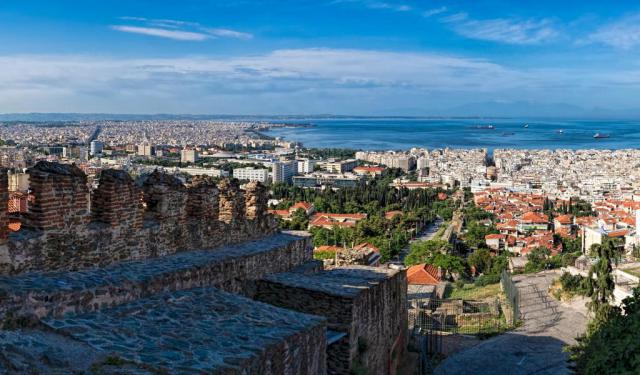
Thessaloniki’s Upper Town, known locally as Ano Poli, which literally translates as “Upper City” is the city’s oldest continuously inhabited district and the only area to survive the Great Fire of 1917 largely intact. While the lower city was rebuilt along modern, planned lines in the early 20th century, Ano Poli retained its Byzantine street layout, Ottoman-era houses, and defensive... view more
Tour Duration: 2 Hour(s)
Travel Distance: 4.0 Km or 2.5 Miles
Tour Duration: 2 Hour(s)
Travel Distance: 4.0 Km or 2.5 Miles
Thessaloniki Waterfront Tour
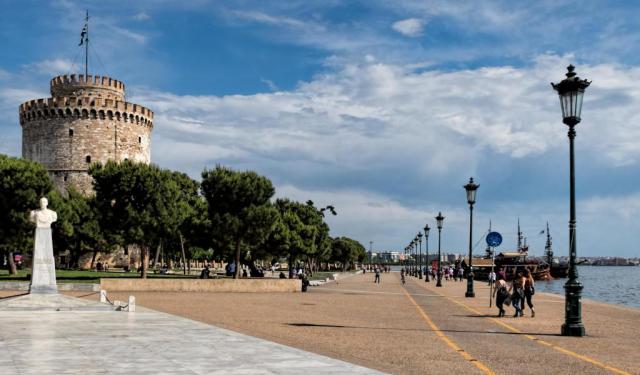
The Mediterranean has always been an integral part of Thessaloniki’s appeal. The city's orientation toward the sea is largely due to the vision of Ernest Hébrard, the French urban planner and architect, who redesigned the downtown area after the devastating fire of 1917.
To really get the taste of Thessaloniki you need to visit not just its historical landmarks, but also those spots... view more
Tour Duration: 1 Hour(s)
Travel Distance: 2.6 Km or 1.6 Miles
To really get the taste of Thessaloniki you need to visit not just its historical landmarks, but also those spots... view more
Tour Duration: 1 Hour(s)
Travel Distance: 2.6 Km or 1.6 Miles