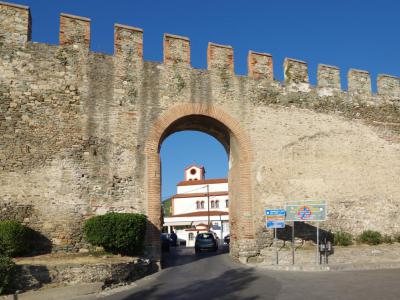


Portara (Main Gate) and Byzantine Walls of Thessaloniki, Thessaloniki
The Walls of Thessaloniki once encircled the entire city, forming a continuous defensive ring from Late Antiquity through the Ottoman period. Large sections, especially along the seafront, were dismantled between the 1860s and 1874 during Ottoman-era redevelopment aimed at opening the city toward the sea.
The surviving walls date mainly to the late 4th century, when Thessaloniki’s fortifications were extensively rebuilt in the early Byzantine period, incorporating earlier Roman defenses from the late 3rd century. They follow a typical Late Roman construction technique, with alternating courses of stone and brick designed for strength and resilience.
Today, about 2.5 miles of the walls remain, roughly half of their original length. In places, they rise 33–39 feet high and reach widths of up to 15 feet. On the northeastern side, the walls climb the slopes of the Upper Town and connect with the Acropolis and the Heptapyrgion Fortress, forming the city’s most heavily fortified zone.
Throughout the Byzantine period, the walls were repeatedly repaired and reinforced, particularly in the 14th century. The fortification system included multiple gates and posterns, the most prominent surviving example being the Main Gate, recognizable today by its layered brickwork reflecting successive phases of repair. The circuit was also punctuated by numerous towers, several of which still survive.
The Walls of Thessaloniki are included in the UNESCO World Heritage List as part of the Paleochristian and Byzantine Monuments of Thessaloniki, recognizing their role in the city’s long and continuous defensive history.
The surviving walls date mainly to the late 4th century, when Thessaloniki’s fortifications were extensively rebuilt in the early Byzantine period, incorporating earlier Roman defenses from the late 3rd century. They follow a typical Late Roman construction technique, with alternating courses of stone and brick designed for strength and resilience.
Today, about 2.5 miles of the walls remain, roughly half of their original length. In places, they rise 33–39 feet high and reach widths of up to 15 feet. On the northeastern side, the walls climb the slopes of the Upper Town and connect with the Acropolis and the Heptapyrgion Fortress, forming the city’s most heavily fortified zone.
Throughout the Byzantine period, the walls were repeatedly repaired and reinforced, particularly in the 14th century. The fortification system included multiple gates and posterns, the most prominent surviving example being the Main Gate, recognizable today by its layered brickwork reflecting successive phases of repair. The circuit was also punctuated by numerous towers, several of which still survive.
The Walls of Thessaloniki are included in the UNESCO World Heritage List as part of the Paleochristian and Byzantine Monuments of Thessaloniki, recognizing their role in the city’s long and continuous defensive history.
Want to visit this sight? Check out these Self-Guided Walking Tours in Thessaloniki. Alternatively, you can download the mobile app "GPSmyCity: Walks in 1K+ Cities" from Apple App Store or Google Play Store. The app turns your mobile device to a personal tour guide and it works offline, so no data plan is needed when traveling abroad.
Download The GPSmyCity App



Portara (Main Gate) and Byzantine Walls of Thessaloniki on Map
Sight Name: Portara (Main Gate) and Byzantine Walls of Thessaloniki
Sight Location: Thessaloniki, Greece (See walking tours in Thessaloniki)
Sight Type: Attraction/Landmark
Guide(s) Containing This Sight:
Sight Location: Thessaloniki, Greece (See walking tours in Thessaloniki)
Sight Type: Attraction/Landmark
Guide(s) Containing This Sight:
Nearby Sights
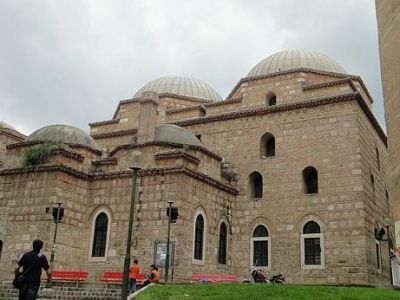
Walking Tours in Thessaloniki, Greece

Create Your Own Walk in Thessaloniki
Creating your own self-guided walk in Thessaloniki is easy and fun. Choose the city attractions that you want to see and a walk route map will be created just for you. You can even set your hotel as the start point of the walk.
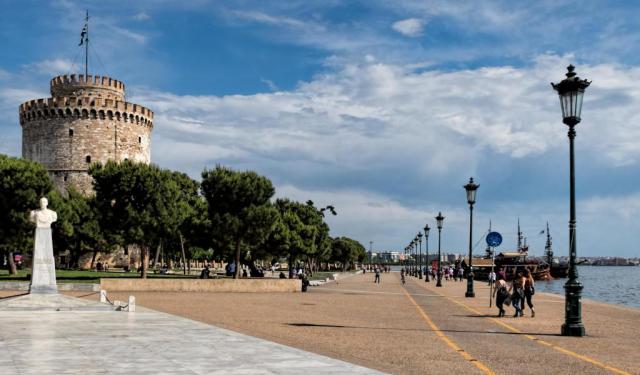
Thessaloniki Waterfront Tour
The Mediterranean has always been an integral part of Thessaloniki’s appeal. The city's orientation toward the sea is largely due to the vision of Ernest Hébrard, the French urban planner and architect, who redesigned the downtown area after the devastating fire of 1917.
To really get the taste of Thessaloniki you need to visit not just its historical landmarks, but also those spots... view more
Tour Duration: 1 Hour(s)
Travel Distance: 2.6 Km or 1.6 Miles
To really get the taste of Thessaloniki you need to visit not just its historical landmarks, but also those spots... view more
Tour Duration: 1 Hour(s)
Travel Distance: 2.6 Km or 1.6 Miles
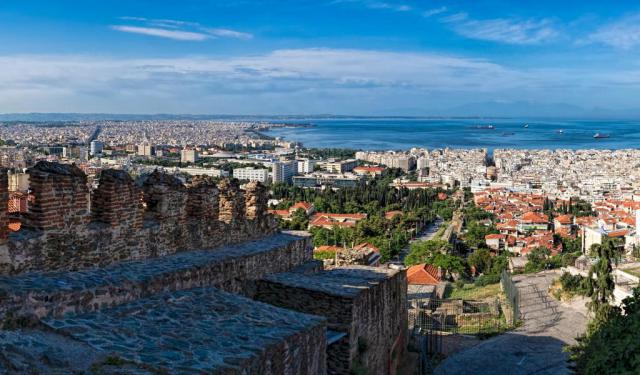
Thessaloniki Upper Town Walking Tour
Thessaloniki’s Upper Town, known locally as Ano Poli, which literally translates as “Upper City” is the city’s oldest continuously inhabited district and the only area to survive the Great Fire of 1917 largely intact. While the lower city was rebuilt along modern, planned lines in the early 20th century, Ano Poli retained its Byzantine street layout, Ottoman-era houses, and defensive... view more
Tour Duration: 2 Hour(s)
Travel Distance: 4.0 Km or 2.5 Miles
Tour Duration: 2 Hour(s)
Travel Distance: 4.0 Km or 2.5 Miles
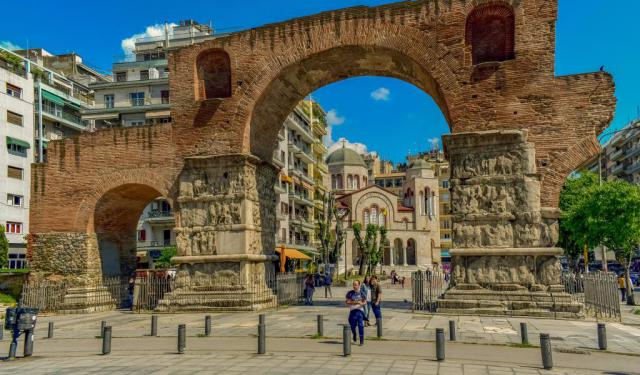
Thessaloniki Downtown Walking Tour
Thessaloniki has been shaped by layers of empire, trade, and migration for more than two millennia. It was founded in 315 BCE by Cassander, king of Macedon, who merged several smaller settlements around the Thermaic Gulf into a single city. He named it after his wife, Thessalonike, the half-sister of Alexander the Great. The name Thessalonikē combines Thessaloi and nikē, meaning victory,... view more
Tour Duration: 2 Hour(s)
Travel Distance: 3.7 Km or 2.3 Miles
Tour Duration: 2 Hour(s)
Travel Distance: 3.7 Km or 2.3 Miles