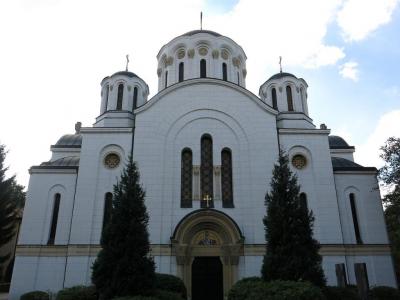


Presentation of the Virgin Mary Monastery, Belgrade
The Presentation of the Virgin Mary Monastery, a Serbian Orthodox monastery, is situated in Senjak, an urban settlement within the Savski Venac municipality in Belgrade. The foundations of this temple were consecrated on August 11, 1935, and it was officially built and consecrated on October 25, 1936. According to legend, the construction of the church is linked to a vision experienced by its founder, Perside Milenković, who dreamt thrice about building the monastery in its current location.
The monastery has significant historical and cultural value. The Holy Confessor Dositej Vasić was originally buried in the monastery gate and was later transferred to the monastery temple's ark in 2009. The monastery is recognized as an immovable cultural property and a cultural monument.
Within the monastery residence is a chapel dedicated to Saint Nicholas the Wonderworker, housing three arks containing relics of various saints. Additionally, the monastery treasury holds old manuscripts, printed liturgical books, and icons brought to Serbia by Russian nuns after the October coup. The monastery grounds include three pits containing the remains of those killed on Saint Dmitrov's Day in 1944 and victims of the Allied bombing on Easter 1944.
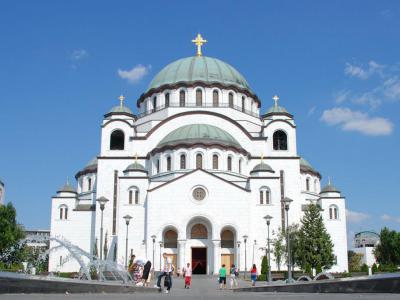
Architecturally, the monastery was designed by Petra Popović. The church is built in the shape of an inscribed cross, featuring a central dome at the intersection and four smaller domes between the arms of the cross. Its interior includes a wooden stasis, choir counters, backrests, portals for kissing icons, and a ciborium with a five-domed canopy, all decorated with shallow relief floral motifs. Simple decorations adorn the episcopal and royal wooden thrones. The central dome's interior is highlighted by a metal chandelier crafted by sculptor Slobodan Rekalić, with icons painted by Ivana Pecin.
The Presentation of the Virgin Mary Monastery stands as a significant spiritual, cultural, and historical site within Belgrade, embodying the rich traditions of the Serbian Orthodox Church.
The monastery has significant historical and cultural value. The Holy Confessor Dositej Vasić was originally buried in the monastery gate and was later transferred to the monastery temple's ark in 2009. The monastery is recognized as an immovable cultural property and a cultural monument.
Within the monastery residence is a chapel dedicated to Saint Nicholas the Wonderworker, housing three arks containing relics of various saints. Additionally, the monastery treasury holds old manuscripts, printed liturgical books, and icons brought to Serbia by Russian nuns after the October coup. The monastery grounds include three pits containing the remains of those killed on Saint Dmitrov's Day in 1944 and victims of the Allied bombing on Easter 1944.
Architecturally, the monastery was designed by Petra Popović. The church is built in the shape of an inscribed cross, featuring a central dome at the intersection and four smaller domes between the arms of the cross. Its interior includes a wooden stasis, choir counters, backrests, portals for kissing icons, and a ciborium with a five-domed canopy, all decorated with shallow relief floral motifs. Simple decorations adorn the episcopal and royal wooden thrones. The central dome's interior is highlighted by a metal chandelier crafted by sculptor Slobodan Rekalić, with icons painted by Ivana Pecin.
The Presentation of the Virgin Mary Monastery stands as a significant spiritual, cultural, and historical site within Belgrade, embodying the rich traditions of the Serbian Orthodox Church.
Want to visit this sight? Check out these Self-Guided Walking Tours in Belgrade. Alternatively, you can download the mobile app "GPSmyCity: Walks in 1K+ Cities" from Apple App Store or Google Play Store. The app turns your mobile device to a personal tour guide and it works offline, so no data plan is needed when traveling abroad.
Download The GPSmyCity App



Presentation of the Virgin Mary Monastery on Map
Sight Name: Presentation of the Virgin Mary Monastery
Sight Location: Belgrade, Serbia (See walking tours in Belgrade)
Sight Type: Religious
Sight Location: Belgrade, Serbia (See walking tours in Belgrade)
Sight Type: Religious
Nearby Sights



Walking Tours in Belgrade, Serbia

Create Your Own Walk in Belgrade
Creating your own self-guided walk in Belgrade is easy and fun. Choose the city attractions that you want to see and a walk route map will be created just for you. You can even set your hotel as the start point of the walk.
Kalemegdan Park and Belgrade Fortress Walking Tour
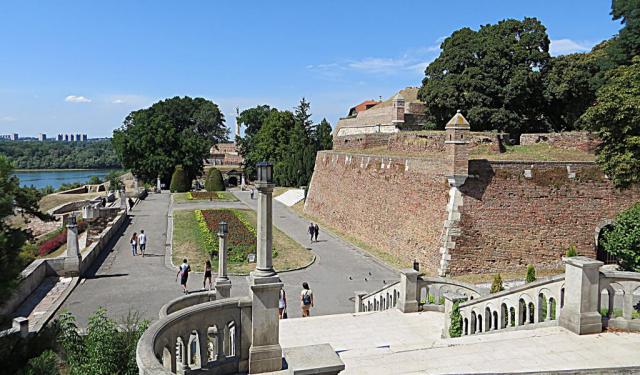
The most beautiful park in Belgrade, Kalemegdan Park, or simply Kalemegdan, is also the largest park and the most important cultural and historical complex in the city. The actual park occupies a smaller portion, in the southern corner, of another, grander monument – the Belgrade Fortress (which is some two millennia older).
The fortress itself, often erroneously referred to, even by the... view more
Tour Duration: 2 Hour(s)
Travel Distance: 2.1 Km or 1.3 Miles
The fortress itself, often erroneously referred to, even by the... view more
Tour Duration: 2 Hour(s)
Travel Distance: 2.1 Km or 1.3 Miles
Belgrade Old Town Walking Tour
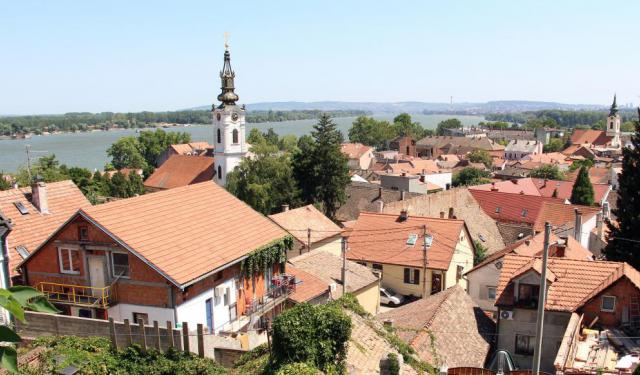
Belgrade's Old Town, also known as Zemun, spread around Gardos Hill, is one of the city's oldest parts. Throughout the centuries, as the Balkans were part first of the Roman, then the Byzantine, and then the Austro-Hungarian empires, this area transformed into a beautiful neighborhood with narrow streets, cute buildings, and breathtaking views opening from the hill onto the Old Town and... view more
Tour Duration: 2 Hour(s)
Travel Distance: 2.4 Km or 1.5 Miles
Tour Duration: 2 Hour(s)
Travel Distance: 2.4 Km or 1.5 Miles
Belgrade's Top Attractions Walking Tour
Belgrade has been a city of strategic importance for millennia with its location at the confluence of the Sava and Danube rivers. In fact, it is one of the oldest continually inhabited cities on the planet.
Nomadic tribes inhabited the area as far back as 20,000 to 50,000 years ago. Some of these may have been Neanderthals rather than modern humans. By the sixth century BC, the Vinca culture... view more
Tour Duration: 2 Hour(s)
Travel Distance: 4.0 Km or 2.5 Miles
Nomadic tribes inhabited the area as far back as 20,000 to 50,000 years ago. Some of these may have been Neanderthals rather than modern humans. By the sixth century BC, the Vinca culture... view more
Tour Duration: 2 Hour(s)
Travel Distance: 4.0 Km or 2.5 Miles