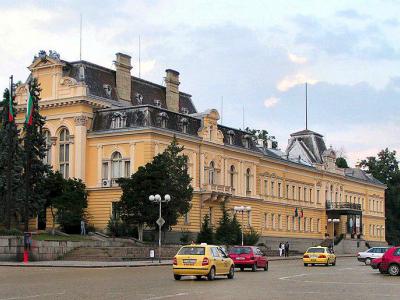


Prince Alexander of Battenberg Square, Sofia
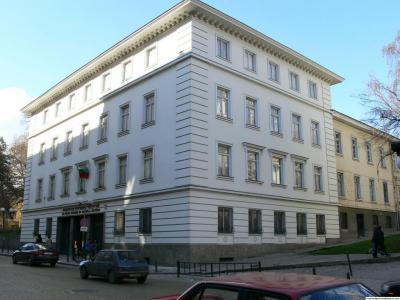
Alexander Battenberg Square has long been one of Sofia’s most prominent public spaces, evolving through several political eras and names. During the Communist period, it was known as September 9th Square, commemorating the 1944 government overthrow. Before that, it carried the name Tsar’s Square, thanks to the royal palace that stood beside it-today home to the National Art Gallery. The square also once housed the Georgi Dimitrov Mausoleum, one of the most recognizable symbols of Communist Bulgaria.
Georgi Dimitrov, the country’s first Communist leader, died in 1949 and was placed in the Mausoleum with full honours. His successor, Vasil Kolarov, who died the following year, received a niche in the east wall. From its earliest days, the Mausoleum faced repeated attempts to destroy it. After Bulgaria’s transition to democracy, the post-Communist UDF government finally demolished it, succeeding only after four separate explosive attempts.
The square’s name honours Alexander of Battenberg, the first Prince of the Principality of Bulgaria. He became prince in 1879, elected by the Bulgarian Grand National Assembly during a period when Bulgaria still held autonomous status within the waning Ottoman Empire. His refusal to conform to Russian interests eventually led to his forced abdication in 1886, but his name endures in one of Sofia’s most significant civic spaces.
Today, the square is Sofia’s premier setting for outdoor events and concerts. While military parades were common during the Communist era, the most notable modern parade held here is the Bulgarian Armed Forces Day Parade, celebrated on May 6th each year.
Georgi Dimitrov, the country’s first Communist leader, died in 1949 and was placed in the Mausoleum with full honours. His successor, Vasil Kolarov, who died the following year, received a niche in the east wall. From its earliest days, the Mausoleum faced repeated attempts to destroy it. After Bulgaria’s transition to democracy, the post-Communist UDF government finally demolished it, succeeding only after four separate explosive attempts.
The square’s name honours Alexander of Battenberg, the first Prince of the Principality of Bulgaria. He became prince in 1879, elected by the Bulgarian Grand National Assembly during a period when Bulgaria still held autonomous status within the waning Ottoman Empire. His refusal to conform to Russian interests eventually led to his forced abdication in 1886, but his name endures in one of Sofia’s most significant civic spaces.
Today, the square is Sofia’s premier setting for outdoor events and concerts. While military parades were common during the Communist era, the most notable modern parade held here is the Bulgarian Armed Forces Day Parade, celebrated on May 6th each year.
Want to visit this sight? Check out these Self-Guided Walking Tours in Sofia. Alternatively, you can download the mobile app "GPSmyCity: Walks in 1K+ Cities" from Apple App Store or Google Play Store. The app turns your mobile device to a personal tour guide and it works offline, so no data plan is needed when traveling abroad.
Download The GPSmyCity App



Prince Alexander of Battenberg Square on Map
Sight Name: Prince Alexander of Battenberg Square
Sight Location: Sofia, Bulgaria (See walking tours in Sofia)
Sight Type: Attraction/Landmark
Guide(s) Containing This Sight:
Sight Location: Sofia, Bulgaria (See walking tours in Sofia)
Sight Type: Attraction/Landmark
Guide(s) Containing This Sight:
Nearby Sights
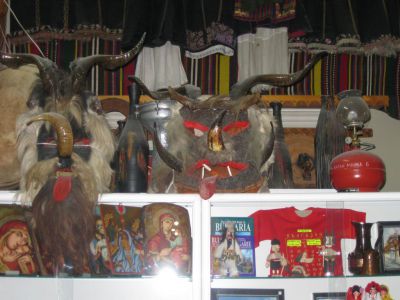
National Art Gallery Gift Shop
Image Courtesy of Pavlina Docheva.
Walking Tours in Sofia, Bulgaria

Create Your Own Walk in Sofia
Creating your own self-guided walk in Sofia is easy and fun. Choose the city attractions that you want to see and a walk route map will be created just for you. You can even set your hotel as the start point of the walk.
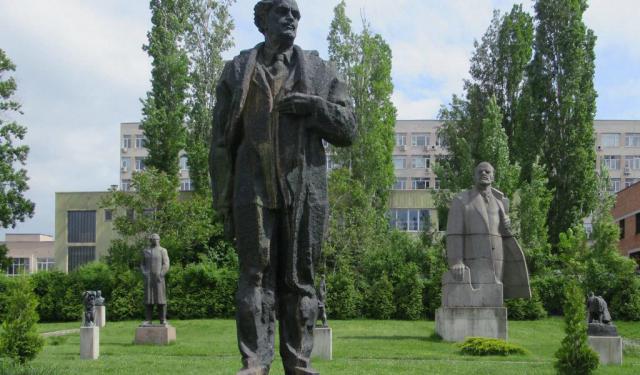
Communist Era Landmarks Walk
In the not-so-distant past Bulgaria was part of the Soviet-led Eastern Bloc. Today, this is one of the few countries where you can still find numerous relics of the Communist era manifested in monumental architectural landmarks. Concrete and metal were the main materials as a symbol of the industrialized nation, and the size was important too as a common architectural characteristic prescribed by... view more
Tour Duration: 3 Hour(s)
Travel Distance: 6.6 Km or 4.1 Miles
Tour Duration: 3 Hour(s)
Travel Distance: 6.6 Km or 4.1 Miles
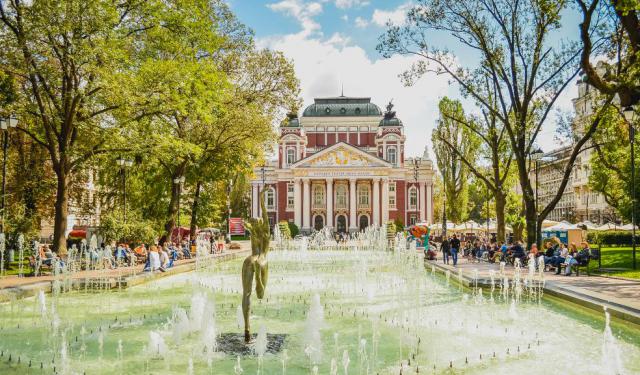
Sofia City Center Walking Tour
Sofia, the capital of Bulgaria, is one of Europe’s oldest continuously inhabited cities, with archaeological traces of settlement dating back at least 7,000 years. Its fertile valley, abundant mineral springs, and position on major east–west and north–south routes made it a natural crossroads for ancient peoples.
The Thracian tribe Serdi established a settlement here in the 1st... view more
Tour Duration: 2 Hour(s)
Travel Distance: 2.6 Km or 1.6 Miles
The Thracian tribe Serdi established a settlement here in the 1st... view more
Tour Duration: 2 Hour(s)
Travel Distance: 2.6 Km or 1.6 Miles
Useful Travel Guides for Planning Your Trip

Sofia Shopping: 15 Things To Memorize Bulgaria By
Increasingly popular tourist destination in recent years, Bulgaria has opened up to the outer world, revealing colorful identity, manifested in rich craftsmanship, culinary and cultural traditions and history. The country's capital city Sofia is a lovely alloy of Eastern and Western European...