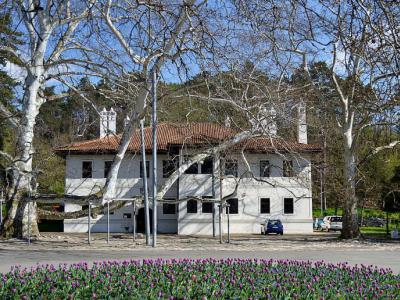


Prince Miloš's Residence, Belgrade
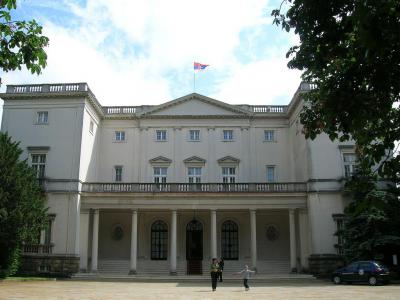
The Residence of Prince Miloš in Belgrade is a notable royal residence located in the Topčider municipality. Originally constructed in 1831 as the palace for Prince Miloš Obrenović, the building stands as a significant historical and cultural monument. Its construction followed Serbia's attainment of autonomous status within the Ottoman Empire, signaling the newfound sovereignty and prestige of the Serbian leadership.
Designed by architects Janja Mihailović and Nikola Đorđević, with construction oversight by Hadži Nikola Živković, a prominent builder of the era, the palace is an architectural testimony to the period's style and aesthetic. The interior decoration, characterized by elaborate designs on the ceilings, walls, and niches, remains partially preserved, offering insights into the opulent lifestyle and artistic preferences of the time.
During Prince Miloš Obrenović's first reign from 1815 to 1839, he used the palace only occasionally. The historical significance of the building grew over the decades, transitioning into a space of memorialization and education. By 1929, it had been transformed into the Museum of Prince Miloš and Mihailo Obrenović, focusing on hunting and forestry.
The residence's role as a cultural hub was further solidified in 1954 during the 150th anniversary of the First Serbian Uprising when it was inaugurated as the Museum of the First Serbian Uprising. This museum highlighted the broader period of the Serbian Revolution, showcasing Serbia's resistance against Ottoman rule. This establishment later contributed to the foundation of the Historical Museum of Serbia in 1963.
Recognized for its profound historical and cultural value, the Residence of Prince Miloš was declared a Monument of Culture of Exceptional Importance in 1979. This designation ensures its preservation under the protection of the government of Serbia. The residence also features a historic plane tree on its grounds, one of the oldest in Europe, believed to be at least 160 years old, adding a natural legacy to its cultural heritage.
Designed by architects Janja Mihailović and Nikola Đorđević, with construction oversight by Hadži Nikola Živković, a prominent builder of the era, the palace is an architectural testimony to the period's style and aesthetic. The interior decoration, characterized by elaborate designs on the ceilings, walls, and niches, remains partially preserved, offering insights into the opulent lifestyle and artistic preferences of the time.
During Prince Miloš Obrenović's first reign from 1815 to 1839, he used the palace only occasionally. The historical significance of the building grew over the decades, transitioning into a space of memorialization and education. By 1929, it had been transformed into the Museum of Prince Miloš and Mihailo Obrenović, focusing on hunting and forestry.
The residence's role as a cultural hub was further solidified in 1954 during the 150th anniversary of the First Serbian Uprising when it was inaugurated as the Museum of the First Serbian Uprising. This museum highlighted the broader period of the Serbian Revolution, showcasing Serbia's resistance against Ottoman rule. This establishment later contributed to the foundation of the Historical Museum of Serbia in 1963.
Recognized for its profound historical and cultural value, the Residence of Prince Miloš was declared a Monument of Culture of Exceptional Importance in 1979. This designation ensures its preservation under the protection of the government of Serbia. The residence also features a historic plane tree on its grounds, one of the oldest in Europe, believed to be at least 160 years old, adding a natural legacy to its cultural heritage.
Want to visit this sight? Check out these Self-Guided Walking Tours in Belgrade. Alternatively, you can download the mobile app "GPSmyCity: Walks in 1K+ Cities" from Apple App Store or Google Play Store. The app turns your mobile device to a personal tour guide and it works offline, so no data plan is needed when traveling abroad.
Download The GPSmyCity App



Prince Miloš's Residence on Map
Sight Name: Prince Miloš's Residence
Sight Location: Belgrade, Serbia (See walking tours in Belgrade)
Sight Type: Attraction/Landmark
Sight Location: Belgrade, Serbia (See walking tours in Belgrade)
Sight Type: Attraction/Landmark
Nearby Sights


Walking Tours in Belgrade, Serbia

Create Your Own Walk in Belgrade
Creating your own self-guided walk in Belgrade is easy and fun. Choose the city attractions that you want to see and a walk route map will be created just for you. You can even set your hotel as the start point of the walk.
Zemun Old Town Walking Tour
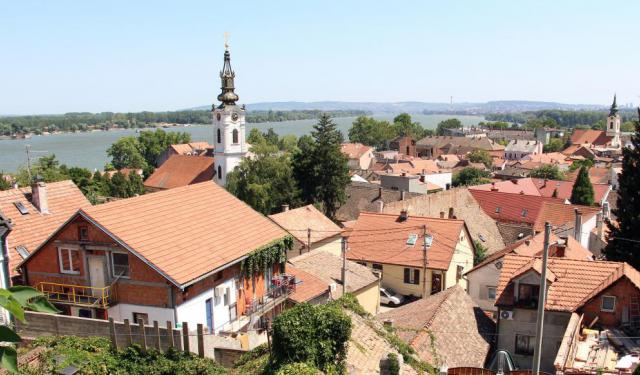
Few neighboring towns can claim to have been built from each other’s ruins. Yet during the Middle Ages, stones were carried back and forth across the rivers as rival powers repeatedly dismantled the fortifications of Zemun and Belgrade, using the remains of one to strengthen the other.
Although today it forms part of Belgrade, Zemun developed for centuries as a separate town, giving its Old... view more
Tour Duration: 2 Hours
Travel Distance: 2.4 Km or 1.5 Miles
Although today it forms part of Belgrade, Zemun developed for centuries as a separate town, giving its Old... view more
Tour Duration: 2 Hours
Travel Distance: 2.4 Km or 1.5 Miles
Belgrade's Top Attractions Walking Tour
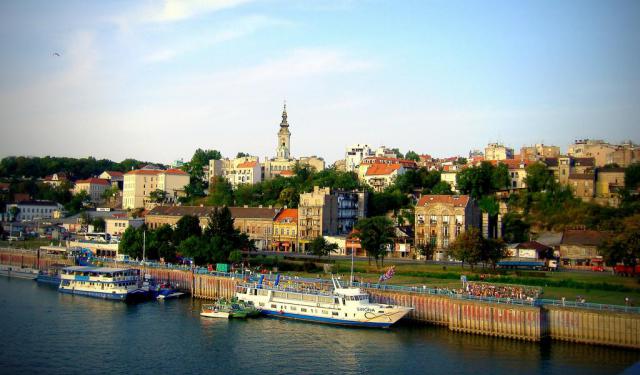
Belgrade has been a city of strategic importance for millennia with its location at the confluence of the Sava and Danube rivers. In fact, it is one of the oldest continually inhabited cities on the planet.
Nomadic tribes inhabited the area as far back as 20,000 to 50,000 years ago. Some of these may have been Neanderthals rather than modern humans. By the sixth century BC, the Vinca culture... view more
Tour Duration: 2 Hours
Travel Distance: 4 Km or 2.5 Miles
Nomadic tribes inhabited the area as far back as 20,000 to 50,000 years ago. Some of these may have been Neanderthals rather than modern humans. By the sixth century BC, the Vinca culture... view more
Tour Duration: 2 Hours
Travel Distance: 4 Km or 2.5 Miles
Kalemegdan Park and Belgrade Fortress Walking Tour
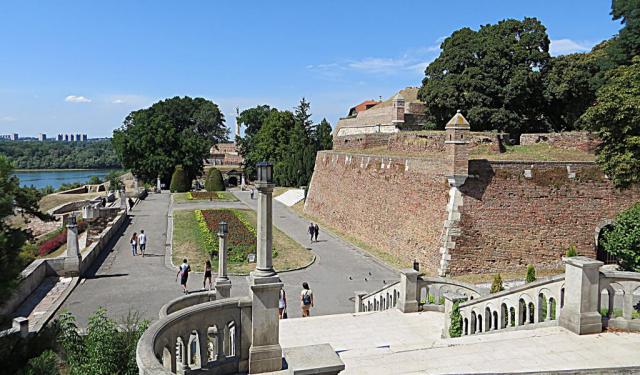
The most beautiful park in Belgrade, Kalemegdan Park, or simply Kalemegdan, is also the largest park and the most important cultural and historical complex in the city. The actual park occupies a smaller portion, in the southern corner, of another, grander monument - the Belgrade Fortress (which is some two millennia older).
The fortress itself, often erroneously referred to, even by the... view more
Tour Duration: 2 Hours
Travel Distance: 2.1 Km or 1.3 Miles
The fortress itself, often erroneously referred to, even by the... view more
Tour Duration: 2 Hours
Travel Distance: 2.1 Km or 1.3 Miles