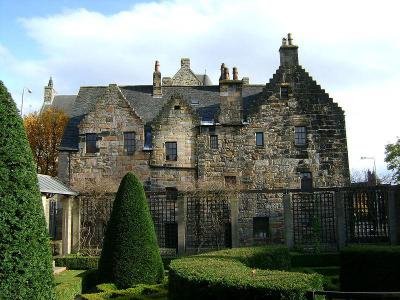


Provand's Lordship, Glasgow
Provand’s Lordship, at the top of Castle Street, is one of the rare places in Glasgow where the medieval city still feels close at hand. Built in 1471, it is the oldest surviving house in Glasgow and one of only four medieval buildings still standing in the city. It was originally constructed as part of Saint Nicholas’s Hospital, founded by Bishop Andrew Muirhead, and was likely intended for the hospital’s master before being occupied by canons from the Cathedral Chapter. The name “Provand” may come from a corruption of “prebend,” referring to an income or stipend granted to clergy.
Over the centuries, the building served different purposes, including use as a residence, shop, pub, and family home. In 1906, it was bought by a confectioner’s family, who ran a sweet shop at the front and a factory behind the house until the end of World War II. It later passed to the Provand’s Lordship Society, which worked to preserve it, before being transferred to the City of Glasgow in 1978. After restoration, it opened to the public as a museum in 1983.
A highlight in the building is its collection of 17th-century Scottish furniture located on the first floor of the house. To find it , take the winding stone staircase to the first landing; then look for the box beds and the distinctive caqueteuse, or gossip chairs. This collection reveals the domestic life of Glasgow in the 17th century. Once inside these low-ceilinged rooms, look for the heavy, dark oak frames donated by the famous collector Sir William Burrell.
Beyond the main building, Saint Nicholas Garden represents a relic of a medieval physic garden. To find this highlight, exit through the rear of the building; once outside, look for the formal layout of medicinal herbs and the Tontine Heads, a series of stone masks that once decorated the city’s 18th-century Town Hall. Notice the original stone troughs and the quiet, cloistered atmosphere, which provides a different angle on the house’s historic masonry.
Other notable features include a 16th-century-style portrait of Mary, Queen of Scots, located in the prominent first-floor chamber. To find it, look for the painting of the monarch who reportedly visited the house in 1567 to attend to her husband, Lord Darnley.
The museum also contains period rooms with timber details and stained-glass windows, giving a vivid impression of earlier domestic life.
Over the centuries, the building served different purposes, including use as a residence, shop, pub, and family home. In 1906, it was bought by a confectioner’s family, who ran a sweet shop at the front and a factory behind the house until the end of World War II. It later passed to the Provand’s Lordship Society, which worked to preserve it, before being transferred to the City of Glasgow in 1978. After restoration, it opened to the public as a museum in 1983.
A highlight in the building is its collection of 17th-century Scottish furniture located on the first floor of the house. To find it , take the winding stone staircase to the first landing; then look for the box beds and the distinctive caqueteuse, or gossip chairs. This collection reveals the domestic life of Glasgow in the 17th century. Once inside these low-ceilinged rooms, look for the heavy, dark oak frames donated by the famous collector Sir William Burrell.
Beyond the main building, Saint Nicholas Garden represents a relic of a medieval physic garden. To find this highlight, exit through the rear of the building; once outside, look for the formal layout of medicinal herbs and the Tontine Heads, a series of stone masks that once decorated the city’s 18th-century Town Hall. Notice the original stone troughs and the quiet, cloistered atmosphere, which provides a different angle on the house’s historic masonry.
Other notable features include a 16th-century-style portrait of Mary, Queen of Scots, located in the prominent first-floor chamber. To find it, look for the painting of the monarch who reportedly visited the house in 1567 to attend to her husband, Lord Darnley.
The museum also contains period rooms with timber details and stained-glass windows, giving a vivid impression of earlier domestic life.
Want to visit this sight? Check out these Self-Guided Walking Tours in Glasgow. Alternatively, you can download the mobile app "GPSmyCity: Walks in 1K+ Cities" from Apple App Store or Google Play Store. The app turns your mobile device to a personal tour guide and it works offline, so no data plan is needed when traveling abroad.
Download The GPSmyCity App



Provand's Lordship on Map
Sight Name: Provand's Lordship
Sight Location: Glasgow, Scotland (See walking tours in Glasgow)
Sight Type: Museum/Gallery
Guide(s) Containing This Sight:
Sight Location: Glasgow, Scotland (See walking tours in Glasgow)
Sight Type: Museum/Gallery
Guide(s) Containing This Sight:
Nearby Sights

Walking Tours in Glasgow, Scotland

Create Your Own Walk in Glasgow
Creating your own self-guided walk in Glasgow is easy and fun. Choose the city attractions that you want to see and a walk route map will be created just for you. You can even set your hotel as the start point of the walk.
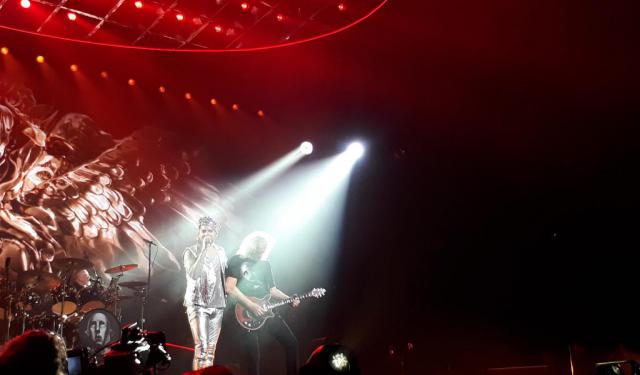
Glasgow Music Spots Walking Tour
“There’s no audience quite like a Glasgow crowd.” According to the Royal Conservatoire of Scotland, Glasgow has long been a major destination for artists, not least because the city has helped launch so many careers.
Glasgow’s live music scene grew from a mix of working-class entertainment, dance halls, pubs, theatres, clubs, and, later, a strong network of independent venues. Long... view more
Tour Duration: 2 Hours
Travel Distance: 3.5 Km or 2.2 Miles
Glasgow’s live music scene grew from a mix of working-class entertainment, dance halls, pubs, theatres, clubs, and, later, a strong network of independent venues. Long... view more
Tour Duration: 2 Hours
Travel Distance: 3.5 Km or 2.2 Miles
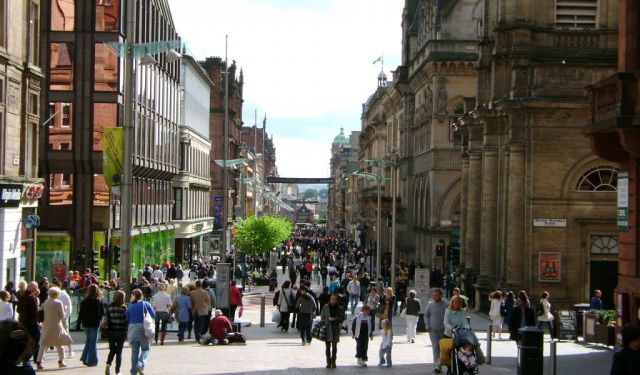
Glasgow City Center Walking Tour
English writer Daniel Defoe, visiting Glasgow in the early 18th century, famously described it as “the cleanest and beautifullest, and best-built city in Britain, London excepted.”
Glasgow, the largest city and seaport in Scotland, stands on the River Clyde. The area has been inhabited for millennia, with the river providing a natural setting for fishing, settlement, and later trade.... view more
Tour Duration: 2 Hours
Travel Distance: 3.5 Km or 2.2 Miles
Glasgow, the largest city and seaport in Scotland, stands on the River Clyde. The area has been inhabited for millennia, with the river providing a natural setting for fishing, settlement, and later trade.... view more
Tour Duration: 2 Hours
Travel Distance: 3.5 Km or 2.2 Miles
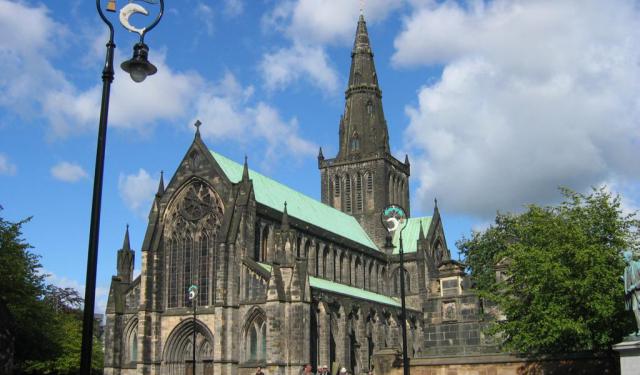
Historical Churches
The feeling of serenity and being free from stress and worries is quite precious these days. And where better to find this than inside a church? Glasgow is home to a number of great churches that are notable for their architectural design, mostly in the Gothic style.
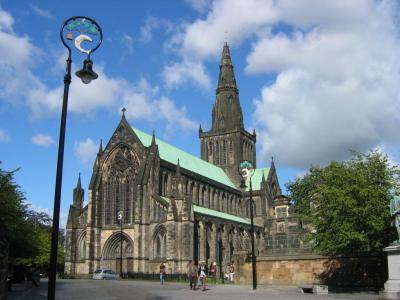
One of the city's most iconic ecclesiastical landmarks and a stunning example of Gothic architecture is Saint Mungo's... view more
Tour Duration: 2 Hours
Travel Distance: 4.1 Km or 2.5 Miles
One of the city's most iconic ecclesiastical landmarks and a stunning example of Gothic architecture is Saint Mungo's... view more
Tour Duration: 2 Hours
Travel Distance: 4.1 Km or 2.5 Miles

Glasgow West End Walking Tour
Glasgow is a home to a great number of historic, cultural and architectural landmarks, the lion's share of which are found in the West End. The adjectives applicable to this part of Glasgow speak volumes: cosmopolitan, multi-cultured, bohemian, intellectual, grand, leafy, confident, tolerant, and trendy. Indeed all of them are true, especially given that inside the area there are several... view more
Tour Duration: 2 Hours
Travel Distance: 3.4 Km or 2.1 Miles
Tour Duration: 2 Hours
Travel Distance: 3.4 Km or 2.1 Miles