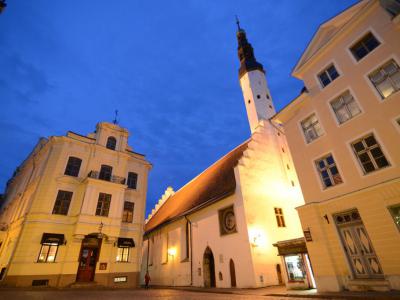


Puhavaimu Kirik (Holy Spirit Church), Tallinn
The Holy Spirit Church dates back to the 13th century and it originally served an almshouse and hospital run by the city magistrate. During the Reformation, the church gained particular importance in 1531 when it became the first in Tallinn to hold regular services in Estonian. Its pastor, Johann Koell, also helped produce one of the earliest known printed texts in Estonian, a catechism published in the 1530s together with Simon Wanradt.
From the outside, the church is modest in scale, with a white façade and a slender tower facing the street. One of its most recognizable features is the public clock mounted on the exterior, dating from the late 17th century. Inside, however, the church presents a richer visual experience, often described as a “museum of styles”, where medieval, Renaissance, and Baroque elements appear side by side.
The interior is defined by its wooden character and detailed craftsmanship. The carved altar, created in the late 15th century by master Bernt Notke, remains the focal point, depicting scenes from the life of Christ. Painted ceilings, carved galleries, and decorative pews add to the layered atmosphere, while the church bell, dating to 1433, is the oldest surviving in Estonia.
Today, the Holy Spirit Church remains an active place of worship and a welcoming stop for visitors. Its central location and smaller scale make it easy to explore, while its history offers insight into the linguistic, cultural, and religious shifts that shaped Tallinn.
From the outside, the church is modest in scale, with a white façade and a slender tower facing the street. One of its most recognizable features is the public clock mounted on the exterior, dating from the late 17th century. Inside, however, the church presents a richer visual experience, often described as a “museum of styles”, where medieval, Renaissance, and Baroque elements appear side by side.
The interior is defined by its wooden character and detailed craftsmanship. The carved altar, created in the late 15th century by master Bernt Notke, remains the focal point, depicting scenes from the life of Christ. Painted ceilings, carved galleries, and decorative pews add to the layered atmosphere, while the church bell, dating to 1433, is the oldest surviving in Estonia.
Today, the Holy Spirit Church remains an active place of worship and a welcoming stop for visitors. Its central location and smaller scale make it easy to explore, while its history offers insight into the linguistic, cultural, and religious shifts that shaped Tallinn.
Want to visit this sight? Check out these Self-Guided Walking Tours in Tallinn. Alternatively, you can download the mobile app "GPSmyCity: Walks in 1K+ Cities" from Apple App Store or Google Play Store. The app turns your mobile device to a personal tour guide and it works offline, so no data plan is needed when traveling abroad.
Download The GPSmyCity App



Puhavaimu Kirik (Holy Spirit Church) on Map
Sight Name: Puhavaimu Kirik (Holy Spirit Church)
Sight Location: Tallinn, Estonia (See walking tours in Tallinn)
Sight Type: Religious
Guide(s) Containing This Sight:
Sight Location: Tallinn, Estonia (See walking tours in Tallinn)
Sight Type: Religious
Guide(s) Containing This Sight:
Nearby Sights

Walking Tours in Tallinn, Estonia

Create Your Own Walk in Tallinn
Creating your own self-guided walk in Tallinn is easy and fun. Choose the city attractions that you want to see and a walk route map will be created just for you. You can even set your hotel as the start point of the walk.
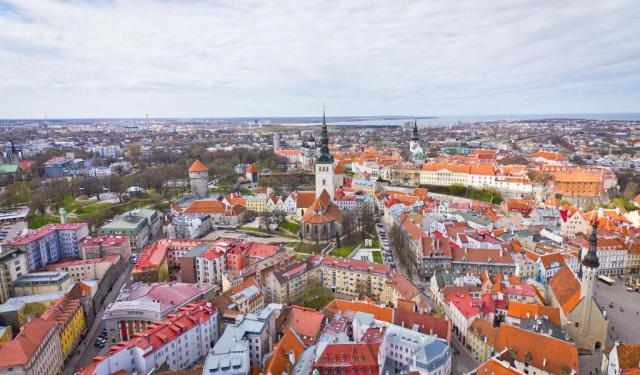
Tallinn Old Town Walking Tour
Tallinn, the capital of Estonia, has a history shaped by trade, conquest, and its strategic position along the Baltic Sea. The area has been inhabited since at least the second millennium BC, but it began to emerge as a significant settlement in the early medieval period. By the 12th century, it was known as a trading hub frequented by Scandinavian and Rus’ merchants, drawn by its sheltered... view more
Tour Duration: 3 Hour(s)
Travel Distance: 4.3 Km or 2.7 Miles
Tour Duration: 3 Hour(s)
Travel Distance: 4.3 Km or 2.7 Miles
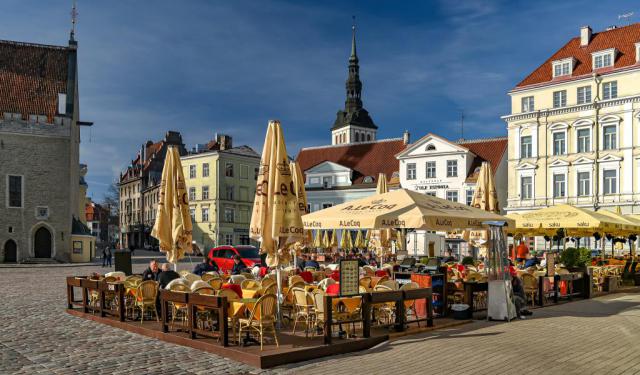
Tallinn Medieval Old Town
In medieval Tallinn, fortunes were not built by kings, but by merchants, men who believed trade could connect worlds separated by sea and distance.
Tallinn’s Medieval Old Town stands as one of the best-preserved urban ensembles in Northern Europe. Its origins trace back to at least the early medieval period, when a settlement grew around a natural harbor that attracted Scandinavian and... view more
Tour Duration: 2 Hour(s)
Travel Distance: 2.1 Km or 1.3 Miles
Tallinn’s Medieval Old Town stands as one of the best-preserved urban ensembles in Northern Europe. Its origins trace back to at least the early medieval period, when a settlement grew around a natural harbor that attracted Scandinavian and... view more
Tour Duration: 2 Hour(s)
Travel Distance: 2.1 Km or 1.3 Miles
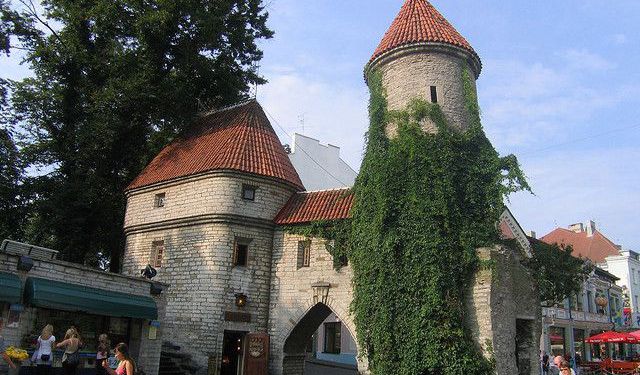
Tallinn Old Towers and Gates
Once Europe's greatest fortified city, Tallinn had 46 defense towers and approximately 4 kilometers of surrounding walls. Today, there are 26 towers and about 2 kilometers of walls still in place, making the Old Town of Tallinn one of the best-preserved systems of medieval fortifications in Europe.
Upon entering the district through the Viru Gate, whose two picturesque, ivy-covered towers... view more
Tour Duration: 2 Hour(s)
Travel Distance: 2.8 Km or 1.7 Miles
Upon entering the district through the Viru Gate, whose two picturesque, ivy-covered towers... view more
Tour Duration: 2 Hour(s)
Travel Distance: 2.8 Km or 1.7 Miles