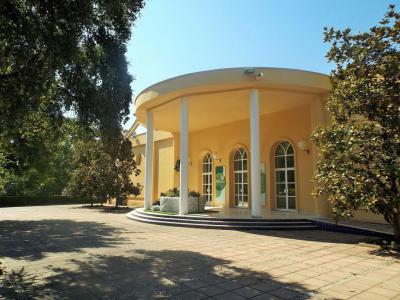


Real Jardin Botanico de Cordoba (Royal Botanical Garden of Cordoba), Cordoba
The Royal Botanical Garden of Córdoba is a beautiful garden located on the edge of the Guadalquivir river in Córdoba. It was opened in 1987 with the primary purpose of education and scientific research. The garden is divided into different sections, with plants ordered according to their phylogenetic characteristics.
One of the highlights of the garden is the arboretum, which imitates a natural forest with a large number of trees and shrubs. The garden also has several greenhouses, including the agricultural school that features collections of plants that are useful to humans, such as aromatic and medicinal herbs, fruit trees, and vegetables.
The rose garden and the main gardens are other sections of the garden that are worth visiting. The Molino de la Alegría is a palaeobotanical museum that contains some of the garden's 15,000 plant fossils. These fossils provide insight into the different plant species that have existed throughout history.
The garden's Systematic Collection is found in an area divided into rectangles, and it contains exclusively Spanish species, with a predominance of low rosemary hedges and Mediterranean hackberry trees. Near the central square is the greenhouse, divided into three modules, where the collection of endemic Canary Islands, Balearic, and Andalusian plants is exhibited.
One of the garden's unique features is the existence of a small area near the entrance dedicated to a garden for the blind, where the plants have been selected mainly for their touch and smell. The garden is a peaceful oasis in the heart of the city and is an excellent place to visit for nature lovers and those interested in scientific research.
One of the highlights of the garden is the arboretum, which imitates a natural forest with a large number of trees and shrubs. The garden also has several greenhouses, including the agricultural school that features collections of plants that are useful to humans, such as aromatic and medicinal herbs, fruit trees, and vegetables.
The rose garden and the main gardens are other sections of the garden that are worth visiting. The Molino de la Alegría is a palaeobotanical museum that contains some of the garden's 15,000 plant fossils. These fossils provide insight into the different plant species that have existed throughout history.
The garden's Systematic Collection is found in an area divided into rectangles, and it contains exclusively Spanish species, with a predominance of low rosemary hedges and Mediterranean hackberry trees. Near the central square is the greenhouse, divided into three modules, where the collection of endemic Canary Islands, Balearic, and Andalusian plants is exhibited.
One of the garden's unique features is the existence of a small area near the entrance dedicated to a garden for the blind, where the plants have been selected mainly for their touch and smell. The garden is a peaceful oasis in the heart of the city and is an excellent place to visit for nature lovers and those interested in scientific research.
Want to visit this sight? Check out these Self-Guided Walking Tours in Cordoba. Alternatively, you can download the mobile app "GPSmyCity: Walks in 1K+ Cities" from Apple App Store or Google Play Store. The app turns your mobile device to a personal tour guide and it works offline, so no data plan is needed when traveling abroad.
Download The GPSmyCity App



Real Jardin Botanico de Cordoba (Royal Botanical Garden of Cordoba) on Map
Sight Name: Real Jardin Botanico de Cordoba (Royal Botanical Garden of Cordoba)
Sight Location: Cordoba, Spain (See walking tours in Cordoba)
Sight Type: Park/Outdoor
Sight Location: Cordoba, Spain (See walking tours in Cordoba)
Sight Type: Park/Outdoor
Nearby Sights
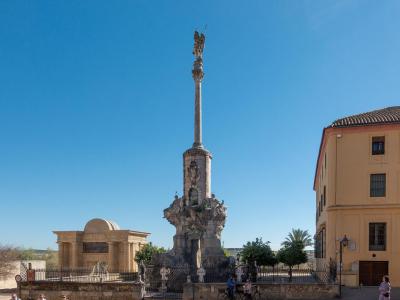
Walking Tours in Cordoba, Spain

Create Your Own Walk in Cordoba
Creating your own self-guided walk in Cordoba is easy and fun. Choose the city attractions that you want to see and a walk route map will be created just for you. You can even set your hotel as the start point of the walk.
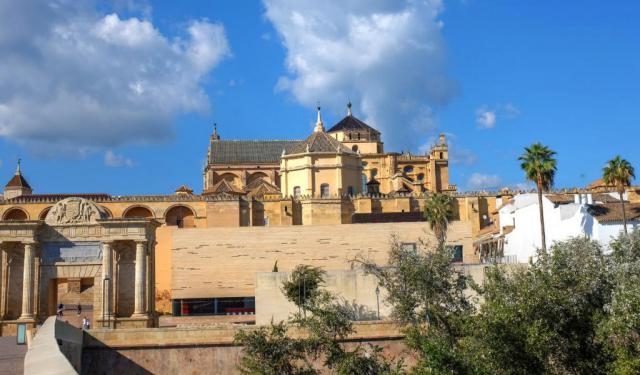
Cordoba Introduction Walking Tour
Córdoba treats history like a sculptor treats marble-layered, chiseled, and ever revealing something new. Situated in Andalusia, this city has seen empires rise, and its story spans over 2,200 years. Originally named Qart Juba by the Carthaginians, it was refounded in 206 BC by the Romans as Corduba. As the capital of the province Hispania Ulterior, it had to prove its reputation by having its... view more
Tour Duration: 2 Hours
Travel Distance: 3.3 Km or 2.1 Miles
Tour Duration: 2 Hours
Travel Distance: 3.3 Km or 2.1 Miles
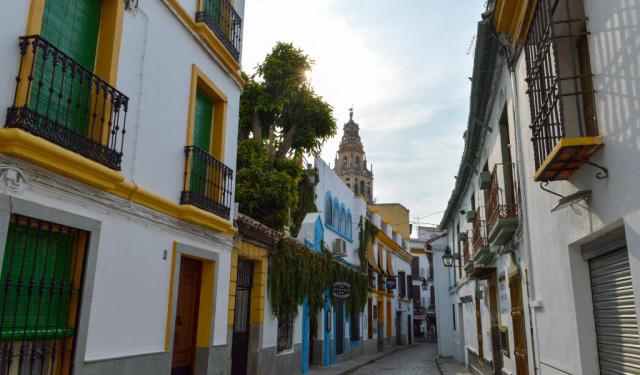
Cordoba Jewish Quarter Walk
Córdoba’s Jewish Quarter is one of the most atmospheric and historically rich districts of the city, located within the UNESCO-listed historic center. Its origins trace back to the Roman period, but it flourished most prominently during the Middle Ages, when Córdoba stood as one of the most important intellectual and cultural centers in Europe.
Under Muslim rule from the 8th to the 13th... view more
Tour Duration: 1 Hour
Travel Distance: 0.4 Km or 0.2 Miles
Under Muslim rule from the 8th to the 13th... view more
Tour Duration: 1 Hour
Travel Distance: 0.4 Km or 0.2 Miles
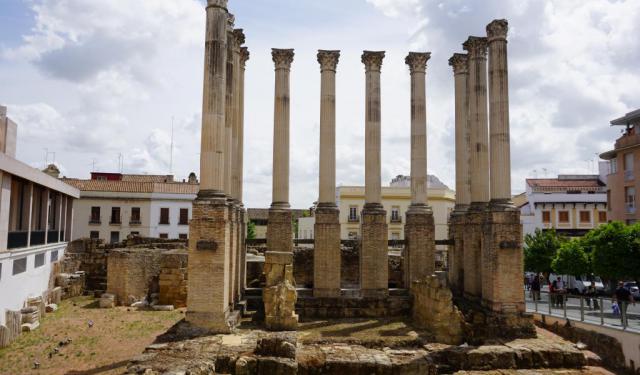
Ancient Roman Sites Walking Tour
Under all in Cordoba lies a once redoubtable Roman strongpoint. After Scipio's defeat of the Carthaginians in Llipa, the victorious Romans set up camp by the Guadalquivir River.
Under Augustus, the city gained the status of Colonia Patricia. A perimeter wall was built touching the Guadalquivir River. There were two forums, colonial and provincial. A large amphitheater has been uncovered.... view more
Tour Duration: 1 Hour
Travel Distance: 2.5 Km or 1.6 Miles
Under Augustus, the city gained the status of Colonia Patricia. A perimeter wall was built touching the Guadalquivir River. There were two forums, colonial and provincial. A large amphitheater has been uncovered.... view more
Tour Duration: 1 Hour
Travel Distance: 2.5 Km or 1.6 Miles