

Rector's Palace, Dubrovnik (must see)
Located just south of Luža Square, the Rector’s Palace-formerly the political nerve center of the Republic of Ragusa-was once a government office, official residence, and a very controlled living arrangement rolled into one.
Built in the 13th century, it served initially as the accommodation for Dubrovnik’s Rector, the city’s highest official. His term in office lasted only one month, during which the Rector abided by strict rules. In particular, he might leave the palace only for official duties, while his family resided elsewhere. One of his key responsibilities-quite literally-was safeguarding the keys to Dubrovnik’s city gates.
Still, the palace was far more than just an official dwelling. It also housed the Republic’s Major and Minor Councils, the city’s main arsenal, and even the prison. Courtrooms and government chambers operated here too, making the building the core of Dubrovnik’s political life. Personal comfort was not the priority; governance was.
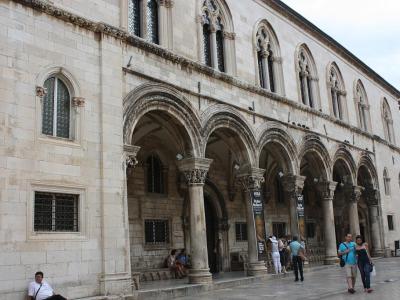
Over the centuries, the palace has survived numerous earthquakes, fires, wars, and sieges, and its architecture duly reflects that turbulent history. The original structure was Gothic, but later reconstructions introduced Renaissance and Baroque elements. After a gunpowder explosion in 1463, the building was rebuilt with the elegant atrium and portico that define its appearance today.
The western entrance features a graceful portico with carved columns and capitals. Inside, the courtyard is framed by Corinthian columns and a Baroque staircase that leads to the upper gallery. Beneath the staircase stands a small 15th-century fountain and a statue created in 1638 by sculptor Piero Paolo Giacometti. It honors Miho Pracat, a wealthy Dubrovnik merchant, who donated his entire fortune to the Republic.
The palace courtyard is known for its excellent acoustics. During the Dubrovnik Summer Festival, concerts are often held here, transforming the historic government atrium into a lively cultural stage.
Today, the building houses the Museum of Dubrovnik, which has managed the palace since 1872. Its exhibitions display artifacts from the city’s past, including furniture, portraits, coins, seals, and coats of arms. Visitors can also see the keys to the city gates and records from meetings of the Republic’s councils, along with objects connected to the 15th-century charitable hospital known as Domus Christi, the House of Christ.
Walking through the Rector’s Palace offers a glimpse into the disciplined and carefully organized world of Dubrovnik’s former republic, where power changed hands every month, but the city’s traditions remained firmly in place...
Built in the 13th century, it served initially as the accommodation for Dubrovnik’s Rector, the city’s highest official. His term in office lasted only one month, during which the Rector abided by strict rules. In particular, he might leave the palace only for official duties, while his family resided elsewhere. One of his key responsibilities-quite literally-was safeguarding the keys to Dubrovnik’s city gates.
Still, the palace was far more than just an official dwelling. It also housed the Republic’s Major and Minor Councils, the city’s main arsenal, and even the prison. Courtrooms and government chambers operated here too, making the building the core of Dubrovnik’s political life. Personal comfort was not the priority; governance was.
Over the centuries, the palace has survived numerous earthquakes, fires, wars, and sieges, and its architecture duly reflects that turbulent history. The original structure was Gothic, but later reconstructions introduced Renaissance and Baroque elements. After a gunpowder explosion in 1463, the building was rebuilt with the elegant atrium and portico that define its appearance today.
The western entrance features a graceful portico with carved columns and capitals. Inside, the courtyard is framed by Corinthian columns and a Baroque staircase that leads to the upper gallery. Beneath the staircase stands a small 15th-century fountain and a statue created in 1638 by sculptor Piero Paolo Giacometti. It honors Miho Pracat, a wealthy Dubrovnik merchant, who donated his entire fortune to the Republic.
The palace courtyard is known for its excellent acoustics. During the Dubrovnik Summer Festival, concerts are often held here, transforming the historic government atrium into a lively cultural stage.
Today, the building houses the Museum of Dubrovnik, which has managed the palace since 1872. Its exhibitions display artifacts from the city’s past, including furniture, portraits, coins, seals, and coats of arms. Visitors can also see the keys to the city gates and records from meetings of the Republic’s councils, along with objects connected to the 15th-century charitable hospital known as Domus Christi, the House of Christ.
Walking through the Rector’s Palace offers a glimpse into the disciplined and carefully organized world of Dubrovnik’s former republic, where power changed hands every month, but the city’s traditions remained firmly in place...
Want to visit this sight? Check out these Self-Guided Walking Tours in Dubrovnik. Alternatively, you can download the mobile app "GPSmyCity: Walks in 1K+ Cities" from Apple App Store or Google Play Store. The app turns your mobile device to a personal tour guide and it works offline, so no data plan is needed when traveling abroad.
Download The GPSmyCity App



Rector's Palace on Map
Sight Name: Rector's Palace
Sight Location: Dubrovnik, Croatia (See walking tours in Dubrovnik)
Sight Type: Museum/Gallery
Guide(s) Containing This Sight:
Sight Location: Dubrovnik, Croatia (See walking tours in Dubrovnik)
Sight Type: Museum/Gallery
Guide(s) Containing This Sight:
Nearby Sights

Walking Tours in Dubrovnik, Croatia

Create Your Own Walk in Dubrovnik
Creating your own self-guided walk in Dubrovnik is easy and fun. Choose the city attractions that you want to see and a walk route map will be created just for you. You can even set your hotel as the start point of the walk.
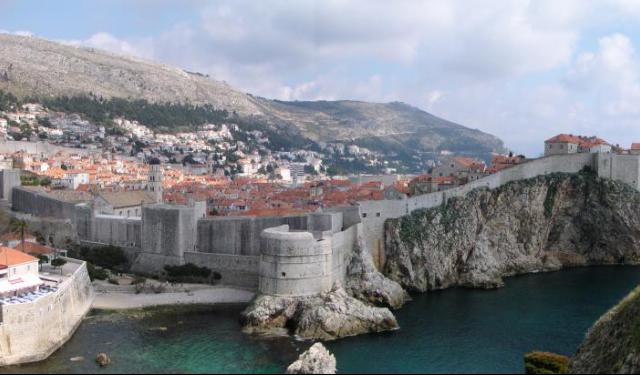
City Walls Walking Tour
If cities could wear armor, Dubrovnik would be dressed head to toe in limestone. Encircling the Old Town like a giant stone belt, the City Walls of Dubrovnik rank among the best-preserved medieval fortifications in Europe. Built and reinforced between the 12th and 17th centuries, these formidable ramparts once shielded the proud maritime Republic of Ragusa from pirates, rival powers, and the... view more
Tour Duration: 2 Hour(s)
Travel Distance: 2.4 Km or 1.5 Miles
Tour Duration: 2 Hour(s)
Travel Distance: 2.4 Km or 1.5 Miles
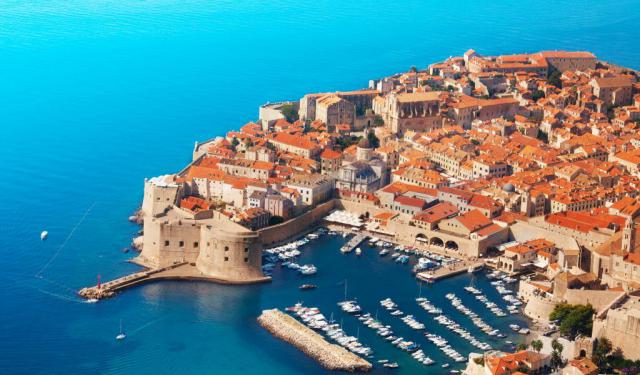
Dubrovnik Old Town Walking Tour
Dubrovnik-sitting on a rocky stretch of coast in southern Croatia-is a place where medieval walls still wrap around daily life, cafés spill onto polished stone streets, and the bright blue Adriatic glitters just beyond the rooftops. Because of its remarkable architecture, Dubrovnik was added to the UNESCO World Heritage list in 1979. Today, the city has no shortage of visitors who come here for... view more
Tour Duration: 2 Hour(s)
Travel Distance: 1.8 Km or 1.1 Miles
Tour Duration: 2 Hour(s)
Travel Distance: 1.8 Km or 1.1 Miles
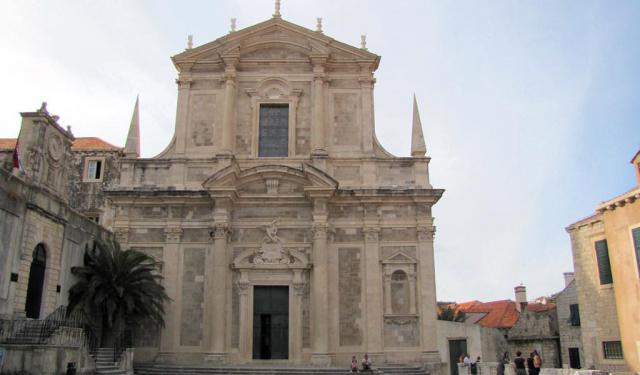
Historical Churches
Throughout history, Dubrovnik’s citizens have had plenty of causes to ask God for help. And when they got it, they never forgot to express their gratitude. Oftentimes, it came in the form of newly built churches; hence an array of religious landmarks, some truly magnificent, found in the Old Town, constructed over the centuries.
One such architectural marvel is Saint Saviour's Church,... view more
Tour Duration: 1 Hour(s)
Travel Distance: 0.8 Km or 0.5 Miles
One such architectural marvel is Saint Saviour's Church,... view more
Tour Duration: 1 Hour(s)
Travel Distance: 0.8 Km or 0.5 Miles
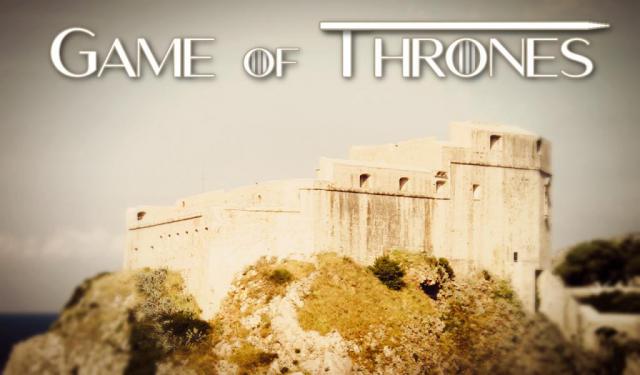
Game of Thrones Filming Sites Tour
Dubrovnik has a habit of looking like it belongs on a movie set. Terracotta rooftops spill down toward the sea, massive stone walls guard the Old Town, and steep cliffs rise above the glittering Adriatic. It’s the sort of scenery that already feels cinematic-so when the creators of the HBO series Game of Thrones went searching for the perfect stand-in for King’s Landing, Dubrovnik practically... view more
Tour Duration: 2 Hour(s)
Travel Distance: 2.7 Km or 1.7 Miles
Tour Duration: 2 Hour(s)
Travel Distance: 2.7 Km or 1.7 Miles