

Game of Thrones Filming Sites Tour (Self Guided), Dubrovnik
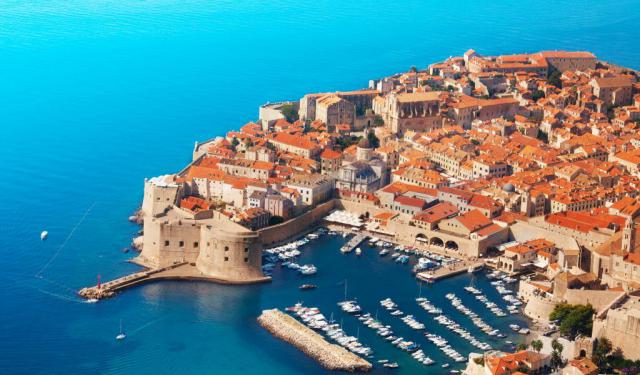
Dubrovnik has a habit of looking like it belongs on a movie set. Terracotta rooftops spill down toward the sea, massive stone walls guard the Old Town, and steep cliffs rise above the glittering Adriatic. It’s the sort of scenery that already feels cinematic—so when the creators of the HBO series Game of Thrones went searching for the perfect stand-in for King’s Landing, Dubrovnik practically volunteered. The city’s UNESCO-listed Old Town, wrapped in mighty medieval walls and threaded with narrow limestone streets, turned out to be exactly what the capital of Westeros needed.
Filming began here in the early 2010s, and before long, Dubrovnik became one of the most recognizable real-world locations in the entire series. Many scenes unfold around the historic center, beginning at Pile Gate. This grand entrance to the Old Town doubled as a gateway to King’s Landing. At the same time, the nearby harbor and surrounding streets provided the setting for busy markets, royal arrivals, and the occasional tense encounter.
Now, shift your attention to Fort Lovrijenac, standing boldly on a rocky cliff just outside the city walls. In the series, this fortress became the Red Keep—the seat of royal power overlooking Blackwater Bay. Not far away sits Fort Bokar, another defensive stronghold that helped shape the city's on-screen fortifications.
Inside the Old Town, the drama continues. The elegant Rector’s Palace hosted scenes of courtly intrigue, while the grand Jesuit Staircase became unforgettable as the setting for one of the show’s most talked-about moments. Wander along Saint Dominic Street, and you’ll recognize the bustling market atmosphere used for several scenes, while the Gate of Ploče helped portray another entrance to the fictional capital.
Further highlights include Minceta Tower, which appeared as the mysterious House of the Undying in Qarth, and Dubrovnik West Harbour, instantly recognizable as Blackwater Bay during several memorable moments. Nearby, Gradac Park also appeared in scenes overlooking the city.
All of this unfolds beneath the mighty Walls of Dubrovnik, which frame the entire Old Town and helped create the epic scale audiences associate with King’s Landing.
So, if you’ve ever wondered what it feels like to walk through Westeros—this is your chance. Take this self-guided tour around the streets, gates, and fortresses used in the series, and discover how Dubrovnik’s real history quietly stepped in to play one of television’s most famous fictional cities.
Filming began here in the early 2010s, and before long, Dubrovnik became one of the most recognizable real-world locations in the entire series. Many scenes unfold around the historic center, beginning at Pile Gate. This grand entrance to the Old Town doubled as a gateway to King’s Landing. At the same time, the nearby harbor and surrounding streets provided the setting for busy markets, royal arrivals, and the occasional tense encounter.
Now, shift your attention to Fort Lovrijenac, standing boldly on a rocky cliff just outside the city walls. In the series, this fortress became the Red Keep—the seat of royal power overlooking Blackwater Bay. Not far away sits Fort Bokar, another defensive stronghold that helped shape the city's on-screen fortifications.
Inside the Old Town, the drama continues. The elegant Rector’s Palace hosted scenes of courtly intrigue, while the grand Jesuit Staircase became unforgettable as the setting for one of the show’s most talked-about moments. Wander along Saint Dominic Street, and you’ll recognize the bustling market atmosphere used for several scenes, while the Gate of Ploče helped portray another entrance to the fictional capital.
Further highlights include Minceta Tower, which appeared as the mysterious House of the Undying in Qarth, and Dubrovnik West Harbour, instantly recognizable as Blackwater Bay during several memorable moments. Nearby, Gradac Park also appeared in scenes overlooking the city.
All of this unfolds beneath the mighty Walls of Dubrovnik, which frame the entire Old Town and helped create the epic scale audiences associate with King’s Landing.
So, if you’ve ever wondered what it feels like to walk through Westeros—this is your chance. Take this self-guided tour around the streets, gates, and fortresses used in the series, and discover how Dubrovnik’s real history quietly stepped in to play one of television’s most famous fictional cities.
How it works: Download the app "GPSmyCity: Walks in 1K+ Cities" from Apple App Store or Google Play Store to your mobile phone or tablet. The app turns your mobile device into a personal tour guide and its built-in GPS navigation functions guide you from one tour stop to next. The app works offline, so no data plan is needed when traveling abroad.
Game of Thrones Filming Sites Tour Map
Guide Name: Game of Thrones Filming Sites Tour
Guide Location: Croatia » Dubrovnik (See other walking tours in Dubrovnik)
Guide Type: Self-guided Walking Tour (Sightseeing)
# of Attractions: 11
Tour Duration: 2 Hour(s)
Travel Distance: 2.7 Km or 1.7 Miles
Author: emma
Sight(s) Featured in This Guide:
Guide Location: Croatia » Dubrovnik (See other walking tours in Dubrovnik)
Guide Type: Self-guided Walking Tour (Sightseeing)
# of Attractions: 11
Tour Duration: 2 Hour(s)
Travel Distance: 2.7 Km or 1.7 Miles
Author: emma
Sight(s) Featured in This Guide:
- Pile Gate
- Fort Bokar
- Dubrovnik Ethnographic Museum (Rupe)
- Jesuit Stairs
- Rector's Palace
- St. Dominic Street
- Gate of Ploče
- Minceta Tower
- Dubrovnik West Harbour and Pier
- Fort Lovrijenac
- Gradac Park
1) Pile Gate (must see)
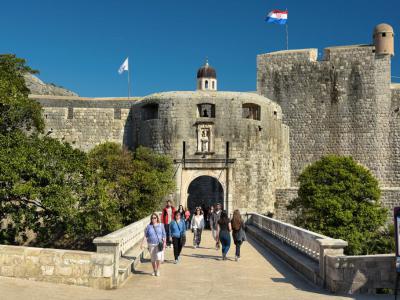
"Kill them, kill them all!" King Joffrey is under attack by an angry mob when he returns to Red Keep. Dramatic scene, plenty of shouting… except there's a thing or two missing. There's no King Joffrey here, and definitely no Red Keep. What you’re seeing is Pile Gate. Television magic simply turned this Croatian gateway into one of the most famous locations in “Game of Thrones,” particularly in Season 2, Episode 6, when Joffrey discovers that ruling a kingdom does not always guarantee popularity.
The name Pile comes from the Greek word pylaj, meaning “gate,” which is quite fitting for what has been Dubrovnik’s main doorway for centuries. Most visitors begin their walk through the Old City right here. The gate sits on the western side of the city walls and leads directly onto Stradun Street, Dubrovnik’s main promenade.
But Pile Gate is not just one gate—it is actually two. The inner gate was built in 1460, while the outer gate was added in 1537. Together, they formed part of a carefully designed defensive system. Protecting the approach was the cylindrical Fort Bokar, along with a deep moat that once surrounded the outer wall. Today, the moat is dry and has been transformed into a green strip of landscaped parkland between the walls.
To reach the gate, visitors cross a stone bridge with elegant Gothic arches. Designed in 1471, this bridge connected to a wooden drawbridge over the moat. Each night, the drawbridge was raised, sealing the entrance and keeping the city secure.
Above the gateway arch stands a statue of Saint Blaise, the patron saint of Dubrovnik. He holds a small model of the city in his hand, as if quietly keeping watch over the place he protects.
Beyond the gate lies one of the most impressive defensive systems in Europe. Dubrovnik’s city walls stretch for nearly two kilometers and in some sections rise as high as 82 feet. The land-facing side is reinforced with ten circular bastions and a powerful fortress. The two main entrances to the city are Pile Gate in the west and Ploče Gate in the east.
So, as you walk through Pile Gate, remember: you’re not entering King’s Landing, but stepping into one of the best-preserved medieval cities in the world. And thankfully, today the only crowds waiting here are tourists—not angry mobs...
The name Pile comes from the Greek word pylaj, meaning “gate,” which is quite fitting for what has been Dubrovnik’s main doorway for centuries. Most visitors begin their walk through the Old City right here. The gate sits on the western side of the city walls and leads directly onto Stradun Street, Dubrovnik’s main promenade.
But Pile Gate is not just one gate—it is actually two. The inner gate was built in 1460, while the outer gate was added in 1537. Together, they formed part of a carefully designed defensive system. Protecting the approach was the cylindrical Fort Bokar, along with a deep moat that once surrounded the outer wall. Today, the moat is dry and has been transformed into a green strip of landscaped parkland between the walls.
To reach the gate, visitors cross a stone bridge with elegant Gothic arches. Designed in 1471, this bridge connected to a wooden drawbridge over the moat. Each night, the drawbridge was raised, sealing the entrance and keeping the city secure.
Above the gateway arch stands a statue of Saint Blaise, the patron saint of Dubrovnik. He holds a small model of the city in his hand, as if quietly keeping watch over the place he protects.
Beyond the gate lies one of the most impressive defensive systems in Europe. Dubrovnik’s city walls stretch for nearly two kilometers and in some sections rise as high as 82 feet. The land-facing side is reinforced with ten circular bastions and a powerful fortress. The two main entrances to the city are Pile Gate in the west and Ploče Gate in the east.
So, as you walk through Pile Gate, remember: you’re not entering King’s Landing, but stepping into one of the best-preserved medieval cities in the world. And thankfully, today the only crowds waiting here are tourists—not angry mobs...
2) Fort Bokar
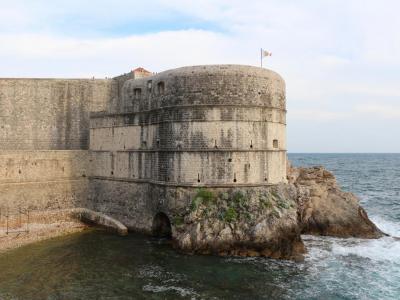
Just outside the Pile Gate stands Fort Bokar, a fortress that looks as though it grew straight out of the city walls. Also known as Zvjezdan, this fort was designed in the 15th century by the Italian architect Michelozzo di Bartolomeo. Construction began in 1461, and the structure was strengthened a little over a century later, in 1570. Together with the nearby Minčeta Tower, it guarded the vulnerable western land approach to the city, ensuring that anyone arriving from this direction would be watched very carefully.
Fort Bokar is a two-story casemate fort, built with thick stone walls designed to hold heavy artillery. Its round shape pushes outward from Dubrovnik’s medieval fortifications, almost like a stone bubble attached to the wall. Part of the fortress rests on arched supports above a rugged rock outcrop, while the Adriatic Sea rolls beneath it—exactly as it has done for more than five centuries. It’s the kind of structure that quietly reminds you just how serious Dubrovnik once was about defense.
These days, however, the fort has exchanged cannon smoke for stage lights. Every summer, it becomes one of the dramatic venues of the Dubrovnik Summer Festival, held between July 10 and August 25. During this time, the historic city transforms into a giant open-air theater, hosting around seventy performances of classical music, opera, drama, and ballet.
Fort Bokar has also found a second career in the world of television. Fans of “Game of Thrones” may recognize these walls as part of King’s Landing. The fortress appears in several scenes along the city walls, including a memorable moment in Season 2 when Tyrion Lannister and Varys stand overlooking the sea while discussing the defense of the capital.
Today, Fort Bokar is an easy stop while exploring Dubrovnik’s western walls. Take a moment here, look out over the water, and picture the centuries of soldiers, sailors, actors, and camera crews who have all used this same dramatic stage above the Adriatic.
Fort Bokar is a two-story casemate fort, built with thick stone walls designed to hold heavy artillery. Its round shape pushes outward from Dubrovnik’s medieval fortifications, almost like a stone bubble attached to the wall. Part of the fortress rests on arched supports above a rugged rock outcrop, while the Adriatic Sea rolls beneath it—exactly as it has done for more than five centuries. It’s the kind of structure that quietly reminds you just how serious Dubrovnik once was about defense.
These days, however, the fort has exchanged cannon smoke for stage lights. Every summer, it becomes one of the dramatic venues of the Dubrovnik Summer Festival, held between July 10 and August 25. During this time, the historic city transforms into a giant open-air theater, hosting around seventy performances of classical music, opera, drama, and ballet.
Fort Bokar has also found a second career in the world of television. Fans of “Game of Thrones” may recognize these walls as part of King’s Landing. The fortress appears in several scenes along the city walls, including a memorable moment in Season 2 when Tyrion Lannister and Varys stand overlooking the sea while discussing the defense of the capital.
Today, Fort Bokar is an easy stop while exploring Dubrovnik’s western walls. Take a moment here, look out over the water, and picture the centuries of soldiers, sailors, actors, and camera crews who have all used this same dramatic stage above the Adriatic.
3) Dubrovnik Ethnographic Museum (Rupe)
Let’s step away from battlements and royal intrigue for a moment and duck into a place that tells a quieter story of Dubrovnik. The Dubrovnik Ethnographic Museum—better known simply as Rupe—offers a glimpse into everyday life from centuries past.
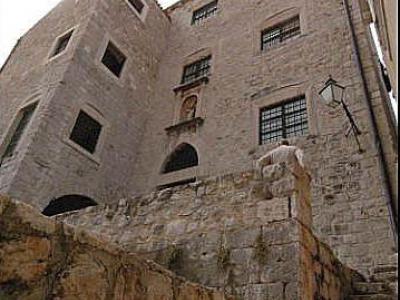
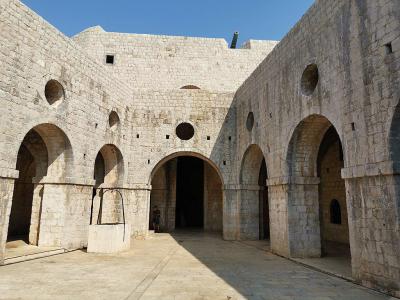
The museum occupies a sturdy stone building that began its life in the late 16th century as the city’s granary. Dubrovnik took food storage seriously, especially in times of siege, so the floor was carved with deep pits in the rock—called rupe, which means “holes.” These silos once held precious grain reserves that could keep the city alive during war or famine. Remarkably, the pits are still visible today, giving visitors a sense of just how carefully the Republic guarded its supplies.
Inside, the focus shifts from survival to tradition. The museum’s exhibits explore the cultural life of Dubrovnik and the surrounding countryside through objects people used every day. Traditional costumes are among the highlights, decorated with delicate embroidery and subtle regional patterns that once signaled where someone came from.
You’ll also see tools, household items, and farming equipment that hint at how families worked the land, fished the sea, and managed life in a rugged coastal environment. Recreated interiors—kitchens, workshops, and small domestic spaces—help bring those centuries-old routines into focus. Lacework, pottery, jewelry, and textiles add another layer to the story, revealing how practical objects could also carry beauty and craftsmanship.
And now for a twist worthy of Westeros. Fans of Game of Thrones may recognize this old granary for a very different reason. In Season 4, Episode 1—titled “Two Swords”—the building appears as Littlefinger’s brothel in King’s Landing. It’s the setting where Tyrion Lannister meets the fiery Prince Oberyn Martell, who has arrived in the capital with vengeance very much on his mind. Quite a transformation for a place that once stored grain to feed an entire city...
The museum occupies a sturdy stone building that began its life in the late 16th century as the city’s granary. Dubrovnik took food storage seriously, especially in times of siege, so the floor was carved with deep pits in the rock—called rupe, which means “holes.” These silos once held precious grain reserves that could keep the city alive during war or famine. Remarkably, the pits are still visible today, giving visitors a sense of just how carefully the Republic guarded its supplies.
Inside, the focus shifts from survival to tradition. The museum’s exhibits explore the cultural life of Dubrovnik and the surrounding countryside through objects people used every day. Traditional costumes are among the highlights, decorated with delicate embroidery and subtle regional patterns that once signaled where someone came from.
You’ll also see tools, household items, and farming equipment that hint at how families worked the land, fished the sea, and managed life in a rugged coastal environment. Recreated interiors—kitchens, workshops, and small domestic spaces—help bring those centuries-old routines into focus. Lacework, pottery, jewelry, and textiles add another layer to the story, revealing how practical objects could also carry beauty and craftsmanship.
And now for a twist worthy of Westeros. Fans of Game of Thrones may recognize this old granary for a very different reason. In Season 4, Episode 1—titled “Two Swords”—the building appears as Littlefinger’s brothel in King’s Landing. It’s the setting where Tyrion Lannister meets the fiery Prince Oberyn Martell, who has arrived in the capital with vengeance very much on his mind. Quite a transformation for a place that once stored grain to feed an entire city...
4) Jesuit Stairs
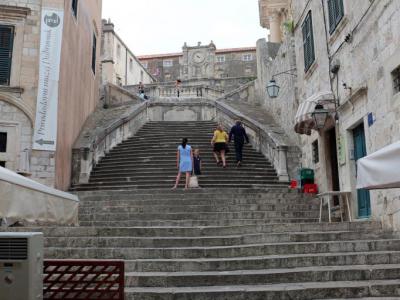
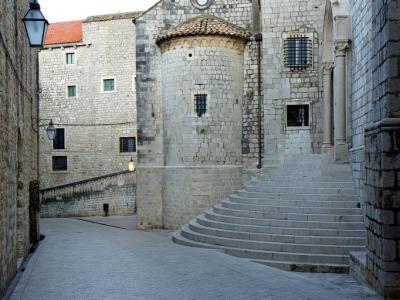
Designed by Roman architect Pietro Passalacqua, the Jesuit Stairs are one of Dubrovnik’s most elegant Baroque flourishes. Built in 1738, the sweeping staircase rises in broad stone steps that strongly resemble Rome’s famous Spanish Steps—only here the setting comes with Adriatic air and limestone streets polished smooth by centuries of footsteps.
Climb the stairs, and you’ll arrive on Uz Jezuite Street, where the Church of St. Ignatius of Loyola and the former Jesuit College, known as the Collegium Ragusinum (or Ragusa College), occupy pride of place. The staircase was deliberately planned to draw the eye upward, emphasizing the importance of the church and the college in the Baroque layout of this part of the Old Town.
At the foot of the stairs lies Gundulić Square, a lively market space where local vendors sell fruit, vegetables, honey, and other produce brought in from nearby villages. The atmosphere is cheerful and busy most mornings. But if you happen to be here right as the clock tower strikes noon, prepare for a rather theatrical moment. Within seconds, the square fills with a sudden flurry of wings as dozens—sometimes hundreds—of pigeons descend to feast on the grain scattered here daily. The spectacle can feel a bit like stepping into a scene from Hitchcock’s The Birds movie, only with fewer screams and more curious onlookers...
And then, of course, there’s the moment that made these steps famous far beyond Dubrovnik. The Jesuit Stairs doubled as the steps of the Great Sept of Baelor in the HBO series Game of Thrones. This is where Cersei Lannister begins her infamous Walk of Atonement in Season 5, Episode 10, titled “Mother’s Mercy.” From here, her uneasy journey through King’s Landing unfolds across several Old Town locations. After descending these very steps, the route continues along Od Margarite Street, then through Saint Dominic Street, and finally toward Ploče Gate.
So, as you stand here, you’re not merely looking at a fine piece of Baroque urban design—you’re standing at the starting point of one of television’s most unforgettable walks. Just thankfully without the chanting crowd...
Climb the stairs, and you’ll arrive on Uz Jezuite Street, where the Church of St. Ignatius of Loyola and the former Jesuit College, known as the Collegium Ragusinum (or Ragusa College), occupy pride of place. The staircase was deliberately planned to draw the eye upward, emphasizing the importance of the church and the college in the Baroque layout of this part of the Old Town.
At the foot of the stairs lies Gundulić Square, a lively market space where local vendors sell fruit, vegetables, honey, and other produce brought in from nearby villages. The atmosphere is cheerful and busy most mornings. But if you happen to be here right as the clock tower strikes noon, prepare for a rather theatrical moment. Within seconds, the square fills with a sudden flurry of wings as dozens—sometimes hundreds—of pigeons descend to feast on the grain scattered here daily. The spectacle can feel a bit like stepping into a scene from Hitchcock’s The Birds movie, only with fewer screams and more curious onlookers...
And then, of course, there’s the moment that made these steps famous far beyond Dubrovnik. The Jesuit Stairs doubled as the steps of the Great Sept of Baelor in the HBO series Game of Thrones. This is where Cersei Lannister begins her infamous Walk of Atonement in Season 5, Episode 10, titled “Mother’s Mercy.” From here, her uneasy journey through King’s Landing unfolds across several Old Town locations. After descending these very steps, the route continues along Od Margarite Street, then through Saint Dominic Street, and finally toward Ploče Gate.
So, as you stand here, you’re not merely looking at a fine piece of Baroque urban design—you’re standing at the starting point of one of television’s most unforgettable walks. Just thankfully without the chanting crowd...
5) Rector's Palace (must see)
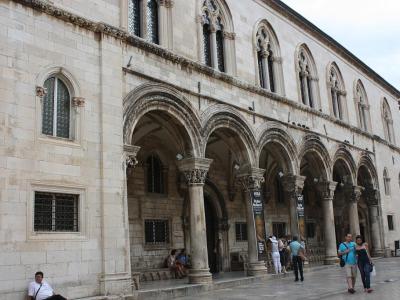
Located just south of Luža Square, the Rector’s Palace—formerly the political nerve center of the Republic of Ragusa—was once a government office, official residence, and a very controlled living arrangement rolled into one.
Built in the 13th century, it served initially as the accommodation for Dubrovnik’s Rector, the city’s highest official. His term in office lasted only one month, during which the Rector abided by strict rules. In particular, he might leave the palace only for official duties, while his family resided elsewhere. One of his key responsibilities—quite literally—was safeguarding the keys to Dubrovnik’s city gates.
Still, the palace was far more than just an official dwelling. It also housed the Republic’s Major and Minor Councils, the city’s main arsenal, and even the prison. Courtrooms and government chambers operated here too, making the building the core of Dubrovnik’s political life. Personal comfort was not the priority; governance was.
Over the centuries, the palace has survived numerous earthquakes, fires, wars, and sieges, and its architecture duly reflects that turbulent history. The original structure was Gothic, but later reconstructions introduced Renaissance and Baroque elements. After a gunpowder explosion in 1463, the building was rebuilt with the elegant atrium and portico that define its appearance today.
The western entrance features a graceful portico with carved columns and capitals. Inside, the courtyard is framed by Corinthian columns and a Baroque staircase that leads to the upper gallery. Beneath the staircase stands a small 15th-century fountain and a statue created in 1638 by sculptor Piero Paolo Giacometti. It honors Miho Pracat, a wealthy Dubrovnik merchant, who donated his entire fortune to the Republic.
The palace courtyard is known for its excellent acoustics. During the Dubrovnik Summer Festival, concerts are often held here, transforming the historic government atrium into a lively cultural stage.
Today, the building houses the Museum of Dubrovnik, which has managed the palace since 1872. Its exhibitions display artifacts from the city’s past, including furniture, portraits, coins, seals, and coats of arms. Visitors can also see the keys to the city gates and records from meetings of the Republic’s councils, along with objects connected to the 15th-century charitable hospital known as Domus Christi, the House of Christ.
Walking through the Rector’s Palace offers a glimpse into the disciplined and carefully organized world of Dubrovnik’s former republic, where power changed hands every month, but the city’s traditions remained firmly in place...
Built in the 13th century, it served initially as the accommodation for Dubrovnik’s Rector, the city’s highest official. His term in office lasted only one month, during which the Rector abided by strict rules. In particular, he might leave the palace only for official duties, while his family resided elsewhere. One of his key responsibilities—quite literally—was safeguarding the keys to Dubrovnik’s city gates.
Still, the palace was far more than just an official dwelling. It also housed the Republic’s Major and Minor Councils, the city’s main arsenal, and even the prison. Courtrooms and government chambers operated here too, making the building the core of Dubrovnik’s political life. Personal comfort was not the priority; governance was.
Over the centuries, the palace has survived numerous earthquakes, fires, wars, and sieges, and its architecture duly reflects that turbulent history. The original structure was Gothic, but later reconstructions introduced Renaissance and Baroque elements. After a gunpowder explosion in 1463, the building was rebuilt with the elegant atrium and portico that define its appearance today.
The western entrance features a graceful portico with carved columns and capitals. Inside, the courtyard is framed by Corinthian columns and a Baroque staircase that leads to the upper gallery. Beneath the staircase stands a small 15th-century fountain and a statue created in 1638 by sculptor Piero Paolo Giacometti. It honors Miho Pracat, a wealthy Dubrovnik merchant, who donated his entire fortune to the Republic.
The palace courtyard is known for its excellent acoustics. During the Dubrovnik Summer Festival, concerts are often held here, transforming the historic government atrium into a lively cultural stage.
Today, the building houses the Museum of Dubrovnik, which has managed the palace since 1872. Its exhibitions display artifacts from the city’s past, including furniture, portraits, coins, seals, and coats of arms. Visitors can also see the keys to the city gates and records from meetings of the Republic’s councils, along with objects connected to the 15th-century charitable hospital known as Domus Christi, the House of Christ.
Walking through the Rector’s Palace offers a glimpse into the disciplined and carefully organized world of Dubrovnik’s former republic, where power changed hands every month, but the city’s traditions remained firmly in place...
6) St. Dominic Street
Running between Ploče Gate and Dubrovnik’s main promenade, the Stradun, Saint Dominic Street takes its name from the nearby Dominican Monastery that rises beside it. At first glance, it may seem like just another narrow lane threading through the Old Town. But for fans of the HBO series Game of Thrones, this modest street has become one of Dubrovnik’s most recognizable filming locations.
In the world of Westeros, Saint Dominic Street transformed into one of the busiest corners of King’s Landing. Market stalls filled the space, townsfolk gathered, and the City Watch—those unmistakable Gold Cloaks—patrolled the area. One particularly grim scene unfolds here when the guards carry out the brutal killing of one of King Robert’s illegitimate sons—a gruesome reminder that life in the capital could turn dangerous in a heartbeat...
The street appears again in Season 2, Episode 5, titled “The Ghost of Harrenhal.” Standing nearby, Tyrion Lannister and his companion Bronn watch as an angry crowd gathers and a fiery protest speech erupts from the monastery steps. The speaker loudly condemns the ruling Lannisters and even labels King Joffrey the “fruit of incest”—a bold accusation in a city where speaking too freely could quickly cost you your head.
Then comes one of the series’ most unforgettable moments. In Season 5, Episode 10, “Mother’s Mercy,” this very street becomes the path for Cersei Lannister’s infamous naked walk of atonement. As the disgraced queen makes her slow, humiliating journey through the crowd, Saint Dominic Street turns into a stage for one of the most dramatic scenes in the entire series.
So, when you pass through this narrow stone corridor today, it’s worth remembering that beneath its quiet façade lies a street that once hosted markets, protests, royal scandals, and some of the most unforgettable moments in King’s Landing. In other words—just another busy day in Westeros...
In the world of Westeros, Saint Dominic Street transformed into one of the busiest corners of King’s Landing. Market stalls filled the space, townsfolk gathered, and the City Watch—those unmistakable Gold Cloaks—patrolled the area. One particularly grim scene unfolds here when the guards carry out the brutal killing of one of King Robert’s illegitimate sons—a gruesome reminder that life in the capital could turn dangerous in a heartbeat...
The street appears again in Season 2, Episode 5, titled “The Ghost of Harrenhal.” Standing nearby, Tyrion Lannister and his companion Bronn watch as an angry crowd gathers and a fiery protest speech erupts from the monastery steps. The speaker loudly condemns the ruling Lannisters and even labels King Joffrey the “fruit of incest”—a bold accusation in a city where speaking too freely could quickly cost you your head.
Then comes one of the series’ most unforgettable moments. In Season 5, Episode 10, “Mother’s Mercy,” this very street becomes the path for Cersei Lannister’s infamous naked walk of atonement. As the disgraced queen makes her slow, humiliating journey through the crowd, Saint Dominic Street turns into a stage for one of the most dramatic scenes in the entire series.
So, when you pass through this narrow stone corridor today, it’s worth remembering that beneath its quiet façade lies a street that once hosted markets, protests, royal scandals, and some of the most unforgettable moments in King’s Landing. In other words—just another busy day in Westeros...
7) Gate of Ploče
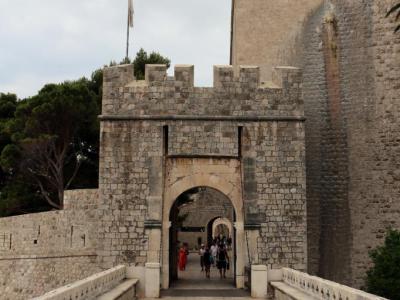
The Gate of Ploče is arguably one of the most dramatic ways to arrive in Dubrovnik’s Old Town. Built in the Romanesque style, this gate is not just a single doorway but a small defensive sequence. First comes the outer gate, then a wooden drawbridge, followed by a graceful double-arched stone bridge crossing what was once a protective ditch.
Beyond that rises the imposing Revelin Fortress, standing guard like a stone bodyguard for the city. In short, entering here was never meant to be a casual stroll.
The outer section of the gate was completed in 1628. But the elegant bridges you cross today date even further back, to the 15th century, when master builder Paskoje Miličević designed them. If they look familiar, that’s no coincidence—Miličević also created the bridges at the city’s western entrance, Pile Gate. Think of it as Dubrovnik’s medieval version of brand consistency: two entrances, same architectural signature, both designed to impress visitors and discourage invaders.
And just like at Pile Gate, there’s an important figure keeping watch above the entrance. Look up, and you’ll see a statue of Saint Blaise, the city’s patron saint. For centuries, locals believed Saint Blaise protected Dubrovnik from danger, and placing his statue above the gate was a symbolic way of welcoming friends—and quietly warning enemies that the city had divine backup.
Now jump ahead a few centuries, because this gate also found its way into the fantasy world of Game of Thrones. The Ploče Gate appeared in several episodes, including “The Ghost of Harrenhal” and “Mother’s Mercy.” In one of the show’s most memorable moments, the character Cersei Lannister enters the Red Keep through this very gateway after her infamous Walk of Shame—turning Dubrovnik’s historic entrance into a dramatic piece of television history.
So, whenever you walk through Ploče Gate today, you’re crossing a threshold shaped by centuries of Dubrovnik’s history—while also stepping onto a spot that briefly doubled as the streets of King’s Landing...
Beyond that rises the imposing Revelin Fortress, standing guard like a stone bodyguard for the city. In short, entering here was never meant to be a casual stroll.
The outer section of the gate was completed in 1628. But the elegant bridges you cross today date even further back, to the 15th century, when master builder Paskoje Miličević designed them. If they look familiar, that’s no coincidence—Miličević also created the bridges at the city’s western entrance, Pile Gate. Think of it as Dubrovnik’s medieval version of brand consistency: two entrances, same architectural signature, both designed to impress visitors and discourage invaders.
And just like at Pile Gate, there’s an important figure keeping watch above the entrance. Look up, and you’ll see a statue of Saint Blaise, the city’s patron saint. For centuries, locals believed Saint Blaise protected Dubrovnik from danger, and placing his statue above the gate was a symbolic way of welcoming friends—and quietly warning enemies that the city had divine backup.
Now jump ahead a few centuries, because this gate also found its way into the fantasy world of Game of Thrones. The Ploče Gate appeared in several episodes, including “The Ghost of Harrenhal” and “Mother’s Mercy.” In one of the show’s most memorable moments, the character Cersei Lannister enters the Red Keep through this very gateway after her infamous Walk of Shame—turning Dubrovnik’s historic entrance into a dramatic piece of television history.
So, whenever you walk through Ploče Gate today, you’re crossing a threshold shaped by centuries of Dubrovnik’s history—while also stepping onto a spot that briefly doubled as the streets of King’s Landing...
8) Minceta Tower (must see)
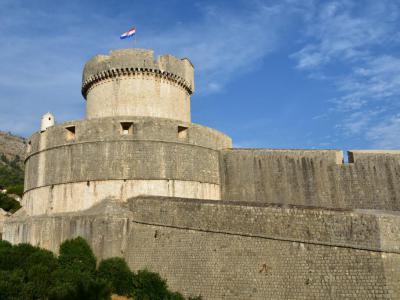
Built in 1463, Minčeta Tower rose at a time when Dubrovnik had good reason to keep a careful eye on the horizon. The Ottoman Empire was expanding across the region, and the city needed a fortress that meant business. Local architect Nicifor Ranjina designed the original structure, with the help of Italian engineers sent by Pope Pius II. At first, the tower was a sturdy four-sided stronghold. Its name came from the Menčetić family, who once owned the land where it stands today.
Before long, Dubrovnik’s leaders decided the tower needed an upgrade. In the mid-15th century, Italian architect and sculptor Michelozzo di Bartolomeo Michelozzi stepped in and redesigned it as a powerful round tower better suited to the artillery warfare of the time. Thick walls—about six meters across—were equipped with protected gun ports, while low defensive walls were added to strengthen the surrounding fortifications.
Further improvements came from the Dalmatian master builder Giorgio da Sebenico. By the time construction finished in 1464, the structure had taken on the tall, narrow, circular form crowned with battlements that still defines Dubrovnik’s skyline today.
As the highest point in the city’s land defenses, Minčeta Tower quickly became a symbol of Dubrovnik’s determination to remain independent and well protected. Beneath the tower lies another fascinating discovery: the Upper Tower area, where archaeologists uncovered the remains of a 16th-century cannon foundry after extensive excavations. Today, the tower functions as part of the city’s historic museum complex, allowing visitors to explore both its architecture and the story of Dubrovnik’s defensive ingenuity.
Climb to the top, and the reward is immediate. From the tower’s lookout along the Walls of Dubrovnik, the view opens over a sea of terracotta roofs, narrow streets, and the deep blue Adriatic stretching toward the horizon. Few spots capture Dubrovnik’s past and present quite so clearly.
Minčeta Tower also stepped into global pop culture thanks to Game of Thrones. In Season 2, Episode 10, it appeared as the mysterious House of the Undying in the city of Qarth, where Daenerys Targaryen searches for her stolen dragons. With its imposing round shape and fortress-like exterior, the tower proved to be the perfect setting for one of the series’ most surreal moments.
Before long, Dubrovnik’s leaders decided the tower needed an upgrade. In the mid-15th century, Italian architect and sculptor Michelozzo di Bartolomeo Michelozzi stepped in and redesigned it as a powerful round tower better suited to the artillery warfare of the time. Thick walls—about six meters across—were equipped with protected gun ports, while low defensive walls were added to strengthen the surrounding fortifications.
Further improvements came from the Dalmatian master builder Giorgio da Sebenico. By the time construction finished in 1464, the structure had taken on the tall, narrow, circular form crowned with battlements that still defines Dubrovnik’s skyline today.
As the highest point in the city’s land defenses, Minčeta Tower quickly became a symbol of Dubrovnik’s determination to remain independent and well protected. Beneath the tower lies another fascinating discovery: the Upper Tower area, where archaeologists uncovered the remains of a 16th-century cannon foundry after extensive excavations. Today, the tower functions as part of the city’s historic museum complex, allowing visitors to explore both its architecture and the story of Dubrovnik’s defensive ingenuity.
Climb to the top, and the reward is immediate. From the tower’s lookout along the Walls of Dubrovnik, the view opens over a sea of terracotta roofs, narrow streets, and the deep blue Adriatic stretching toward the horizon. Few spots capture Dubrovnik’s past and present quite so clearly.
Minčeta Tower also stepped into global pop culture thanks to Game of Thrones. In Season 2, Episode 10, it appeared as the mysterious House of the Undying in the city of Qarth, where Daenerys Targaryen searches for her stolen dragons. With its imposing round shape and fortress-like exterior, the tower proved to be the perfect setting for one of the series’ most surreal moments.
9) Dubrovnik West Harbour and Pier
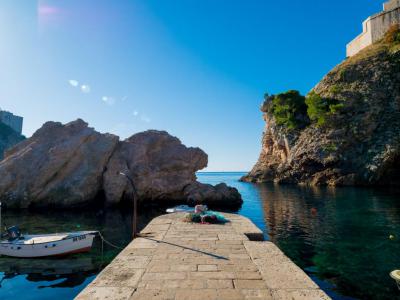
Dubrovnik’s West Harbour and Pier, known locally as Kolorina, is one of those places where history and scenery casually share the same stage. Tucked beneath the imposing Fort Lovrijenac and just a short stroll from Pile Gate, this small harbor once served as the main maritime entrance to the walled city. For centuries, fishermen and merchant boats slipped into these calm waters, tying up along sturdy stone quays before heading into Dubrovnik’s bustling streets. Even today, Kolorina remains a working mooring spot, though the atmosphere is far more relaxed—gentle waves, a few boats bobbing in the water, and visitors pausing to admire the view...
Then came television fame. When producers of the HBO hit Game of Thrones arrived in Dubrovnik, Kolorina stepped effortlessly into the role of Blackwater Bay, the harbor of King’s Landing. Suddenly, this quiet waterfront found itself hosting epic drama. Fans may recognize the location from the explosive Battle of Blackwater Bay in Season 2, when wildfire lit up the harbor and chaos ruled the screen.
But Kolorina also played host to quieter, more suspenseful moments—Sansa and Shae watching the ships, Littlefinger sharing one of his carefully measured conversations, and Myrcella Baratheon departing for Dorne. Even a deleted scene featuring Tywin Lannister and Pycelle was filmed here, proving the harbor was practically a regular cast member...
Of course, Kolorina doesn’t need television to impress. From the pier, the view is hard to beat: the fortress walls rising dramatically overhead, Dubrovnik’s western defenses stretching along the coast, and the Adriatic shimmering beyond. It’s a favorite gathering place for photographers chasing the perfect shot, kayakers paddling along the shoreline, and visitors who simply want to sit for a moment and watch the sea. Quiet, scenic, and layered with stories both real and fictional, Kolorina captures Dubrovnik’s long relationship with the Adriatic—and, apparently, its unexpected talent for playing a starring role on screen.
Then came television fame. When producers of the HBO hit Game of Thrones arrived in Dubrovnik, Kolorina stepped effortlessly into the role of Blackwater Bay, the harbor of King’s Landing. Suddenly, this quiet waterfront found itself hosting epic drama. Fans may recognize the location from the explosive Battle of Blackwater Bay in Season 2, when wildfire lit up the harbor and chaos ruled the screen.
But Kolorina also played host to quieter, more suspenseful moments—Sansa and Shae watching the ships, Littlefinger sharing one of his carefully measured conversations, and Myrcella Baratheon departing for Dorne. Even a deleted scene featuring Tywin Lannister and Pycelle was filmed here, proving the harbor was practically a regular cast member...
Of course, Kolorina doesn’t need television to impress. From the pier, the view is hard to beat: the fortress walls rising dramatically overhead, Dubrovnik’s western defenses stretching along the coast, and the Adriatic shimmering beyond. It’s a favorite gathering place for photographers chasing the perfect shot, kayakers paddling along the shoreline, and visitors who simply want to sit for a moment and watch the sea. Quiet, scenic, and layered with stories both real and fictional, Kolorina captures Dubrovnik’s long relationship with the Adriatic—and, apparently, its unexpected talent for playing a starring role on screen.
10) Fort Lovrijenac (must see)
Fort Lovrijenac—often nicknamed the “Gibraltar of Dubrovnik”—rises boldly from a 37-meter cliff just outside the city’s western walls, looking as though it was placed there specifically to intimidate anyone arriving by sea. The fortress dates back to the early 11th century and was built to keep a watchful eye on Venice, Dubrovnik’s powerful maritime rival.
According to local legend, the Venetians once intended to build their own fort on this exact rock. Dubrovnik’s citizens, not exactly thrilled with that idea, reportedly rushed to construct Lovrijenac first—and finished it so quickly that Venice never had the chance. Since then, the fortress has stood as a proud symbol of the city’s independence and determination to remain its own master.
The structure itself reflects pure strategic thinking. Lovrijenac is triangular in shape, with walls reaching an impressive 12 meters thick on the seaward side, while the landward walls are just 60 centimeters thick—thin enough that defenders inside could deal with trouble approaching from the city, if needed. Its position allowed guards to control both land and sea routes into Dubrovnik, making the fortress a crucial piece of the city’s defenses.
Above the entrance, you’ll notice a Latin inscription: Non Bene Pro Toto Libertas Venditur Auro, which means, quite simply, “Freedom is not sold for all the gold in the world.” It’s a motto that perfectly sums up Dubrovnik’s long-standing reputation for independence.
These days, Fort Lovrijenac has traded cannon smoke for theater lights. During the Dubrovnik Summer Festival, the fortress regularly becomes the dramatic stage for Shakespeare’s Hamlet, where the stone walls and open sea create a setting no theater designer could hope to improve.
And if the place looks familiar, that’s because it also played a starring role in the HBO series Game of Thrones. In the show, Lovrijenac served as the Red Keep of King’s Landing. Several memorable scenes were filmed here, including King Joffrey’s tournament celebration in Season 2, Episode 1, “The North Remembers.” In that same episode, the fortress setting hosted a tense exchange between Cersei and Littlefinger—when the famous line “Knowledge is power” is swiftly corrected with Cersei’s reply: “Power is power.”
Indeed, this fortress is one of those rare spots where the city’s long military history, dramatic setting, and television fantasy all come together on the same dramatic cliff.
According to local legend, the Venetians once intended to build their own fort on this exact rock. Dubrovnik’s citizens, not exactly thrilled with that idea, reportedly rushed to construct Lovrijenac first—and finished it so quickly that Venice never had the chance. Since then, the fortress has stood as a proud symbol of the city’s independence and determination to remain its own master.
The structure itself reflects pure strategic thinking. Lovrijenac is triangular in shape, with walls reaching an impressive 12 meters thick on the seaward side, while the landward walls are just 60 centimeters thick—thin enough that defenders inside could deal with trouble approaching from the city, if needed. Its position allowed guards to control both land and sea routes into Dubrovnik, making the fortress a crucial piece of the city’s defenses.
Above the entrance, you’ll notice a Latin inscription: Non Bene Pro Toto Libertas Venditur Auro, which means, quite simply, “Freedom is not sold for all the gold in the world.” It’s a motto that perfectly sums up Dubrovnik’s long-standing reputation for independence.
These days, Fort Lovrijenac has traded cannon smoke for theater lights. During the Dubrovnik Summer Festival, the fortress regularly becomes the dramatic stage for Shakespeare’s Hamlet, where the stone walls and open sea create a setting no theater designer could hope to improve.
And if the place looks familiar, that’s because it also played a starring role in the HBO series Game of Thrones. In the show, Lovrijenac served as the Red Keep of King’s Landing. Several memorable scenes were filmed here, including King Joffrey’s tournament celebration in Season 2, Episode 1, “The North Remembers.” In that same episode, the fortress setting hosted a tense exchange between Cersei and Littlefinger—when the famous line “Knowledge is power” is swiftly corrected with Cersei’s reply: “Power is power.”
Indeed, this fortress is one of those rare spots where the city’s long military history, dramatic setting, and television fantasy all come together on the same dramatic cliff.
11) Gradac Park
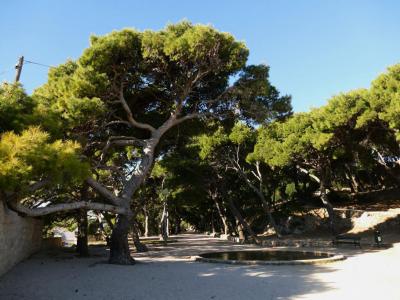
Gradac Park, sitting just beyond Dubrovnik’s mighty stone walls and high above the Adriatic, is one of the city’s most pleasant green hideaways. Created in 1898, it’s among Dubrovnik’s oldest public parks—though you might not guess it from the way many visitors rush straight past it on their way through the Old Town. Those who do wander in are rewarded with winding paths, fragrant Mediterranean plants, and plenty of shade beneath tall pine trees. On a warm Dubrovnik afternoon, it feels less like a sightseeing stop and more like the city quietly offering you a breather.
Follow the park’s gently curving paths, and you’ll notice how the scenery keeps changing. Some trails run along the cliff edge, while others pass through leafy avenues where the sea breeze rustles the branches overhead. Eventually, you’ll reach the western terrace near the fountain, where the view opens wide: the terracotta rooftops of the Old Town spread below, the rugged outline of Fort Lovrijenac rises dramatically nearby, and the Adriatic stretches out in shimmering shades of blue. It’s the kind of view that practically asks for a photo—several, in fact...
Below the park lies the rocky Danče Beach, reached by a narrow path that winds down from the cliffs. Just above the beach stands the Church of Saint Mary, part of a Gothic-Renaissance complex dating to the 15th century. Together, the park, the beach, and this historic church form a layered corner of Dubrovnik where nature and history quietly share the same stage.
Lately, Gradac Park has undergone a well-deserved refresh—its first major renovation in more than a century. The project included restoring paths, improving lighting, and adding new features such as a playground and an outdoor amphitheater.
And yes, fans of Game of Thrones might also recognize the setting. Gradac Park appeared in Season 4 during the unforgettable “Purple Wedding,” where King Joffrey’s lavish feast takes a deadly turn. In the following episode, the same park becomes the stage for Sansa Stark’s dramatic escape from King’s Landing. It turns out, even in a quiet Dubrovnik park, history—and television—can get a little dramatic...
Follow the park’s gently curving paths, and you’ll notice how the scenery keeps changing. Some trails run along the cliff edge, while others pass through leafy avenues where the sea breeze rustles the branches overhead. Eventually, you’ll reach the western terrace near the fountain, where the view opens wide: the terracotta rooftops of the Old Town spread below, the rugged outline of Fort Lovrijenac rises dramatically nearby, and the Adriatic stretches out in shimmering shades of blue. It’s the kind of view that practically asks for a photo—several, in fact...
Below the park lies the rocky Danče Beach, reached by a narrow path that winds down from the cliffs. Just above the beach stands the Church of Saint Mary, part of a Gothic-Renaissance complex dating to the 15th century. Together, the park, the beach, and this historic church form a layered corner of Dubrovnik where nature and history quietly share the same stage.
Lately, Gradac Park has undergone a well-deserved refresh—its first major renovation in more than a century. The project included restoring paths, improving lighting, and adding new features such as a playground and an outdoor amphitheater.
And yes, fans of Game of Thrones might also recognize the setting. Gradac Park appeared in Season 4 during the unforgettable “Purple Wedding,” where King Joffrey’s lavish feast takes a deadly turn. In the following episode, the same park becomes the stage for Sansa Stark’s dramatic escape from King’s Landing. It turns out, even in a quiet Dubrovnik park, history—and television—can get a little dramatic...
Walking Tours in Dubrovnik, Croatia
Create Your Own Walk in Dubrovnik
Creating your own self-guided walk in Dubrovnik is easy and fun. Choose the city attractions that you want to see and a walk route map will be created just for you. You can even set your hotel as the start point of the walk.
City Walls Walking Tour
If cities could wear armor, Dubrovnik would be dressed head to toe in limestone. Encircling the Old Town like a giant stone belt, the City Walls of Dubrovnik rank among the best-preserved medieval fortifications in Europe. Built and reinforced between the 12th and 17th centuries, these formidable ramparts once shielded the proud maritime Republic of Ragusa from pirates, rival powers, and the... view more
Tour Duration: 2 Hour(s)
Travel Distance: 2.4 Km or 1.5 Miles
Tour Duration: 2 Hour(s)
Travel Distance: 2.4 Km or 1.5 Miles
Dubrovnik Introduction Walking Tour
Dubrovnik—sitting on a rocky stretch of coast in southern Croatia—is a place where medieval walls still wrap around daily life, cafés spill onto polished stone streets, and the bright blue Adriatic glitters just beyond the rooftops. Because of its remarkable architecture, Dubrovnik was added to the UNESCO World Heritage list in 1979. Today, the city has no shortage of visitors who come here... view more
Tour Duration: 2 Hour(s)
Travel Distance: 1.8 Km or 1.1 Miles
Tour Duration: 2 Hour(s)
Travel Distance: 1.8 Km or 1.1 Miles
Historical Churches
Throughout history, Dubrovnik’s citizens have had plenty of causes to ask God for help. And when they got it, they never forgot to express their gratitude. Oftentimes, it came in the form of newly built churches; hence an array of religious landmarks, some truly magnificent, found in the Old Town, constructed over the centuries.
One such architectural marvel is Saint Saviour's Church,... view more
Tour Duration: 1 Hour(s)
Travel Distance: 0.8 Km or 0.5 Miles
One such architectural marvel is Saint Saviour's Church,... view more
Tour Duration: 1 Hour(s)
Travel Distance: 0.8 Km or 0.5 Miles
The Most Popular Cities
/ view all