

City Walls Walking Tour, Dubrovnik

City Walls Walking Tour (Self Guided), Dubrovnik

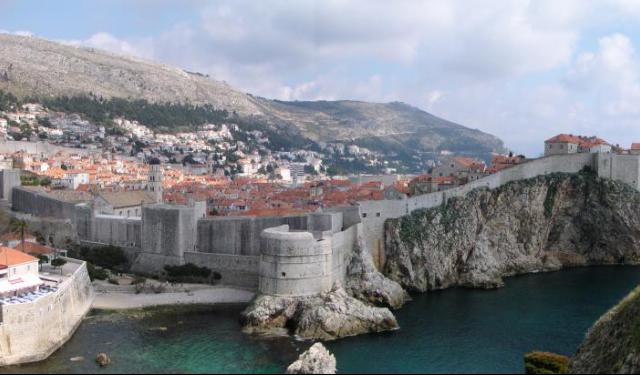
If cities could wear armor, Dubrovnik would be dressed head to toe in limestone. Encircling the Old Town like a giant stone belt, the City Walls of Dubrovnik rank among the best-preserved medieval fortifications in Europe. Built and reinforced between the 12th and 17th centuries, these formidable ramparts once shielded the proud maritime Republic of Ragusa from pirates, rival powers, and the occasional ambitious empire. Today, the cannons are silent, but the views are spectacular—spilling out over terracotta rooftops, polished marble streets, and the shimmering blue Adriatic.

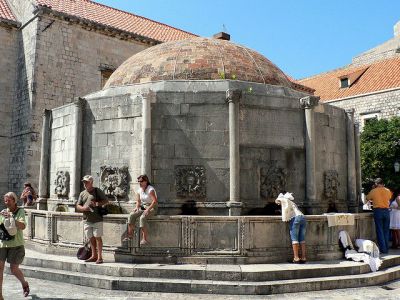
Most wall walks begin near Pile Gate, the historic western entrance to the Old Town. Just inside stands Large Onofrio’s Fountain, completed in the 15th century as part of Dubrovnik’s remarkably advanced water system. In its day, this fountain kept the city hydrated; today, it mostly keeps cameras busy.

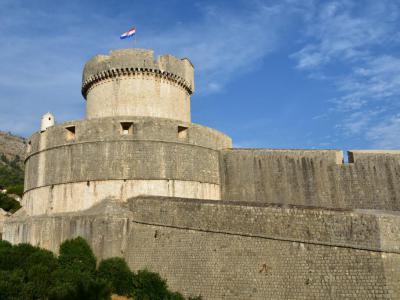
Climb up to the walls, and the skyline suddenly opens up. Soon you’ll pass Fort Bokar, one of Europe’s oldest surviving casemate forts, built to guard the western approach. A little farther along rises Minceta Tower, the highest and most commanding point on the walls—perfect for scanning the city, the coastline, and perhaps imagining yourself as a very vigilant medieval lookout.

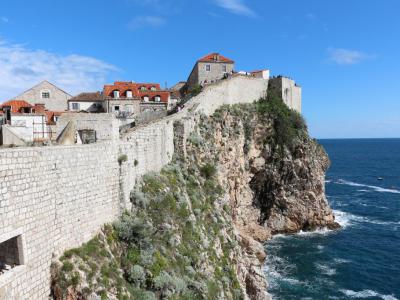
Continue along the northern and eastern stretches, and the defensive logic of Dubrovnik becomes clear. Bastions and towers appear at carefully chosen points, including Kula Sveti Peter, also known as Fort Saint Peter, and Fort Saint Margaret, both once responsible for keeping watch over the city’s more vulnerable corners. On the seaward side, the scenery shifts dramatically: cliffs plunge toward the Adriatic, and below you’ll spot the legendary Buza Bar and nearby Blaze Beach, where locals and travelers gather for sunset drinks and daring jumps into the sea.

As the walls curve toward the harbor, they connect with Saint John Fortress, which historically guarded Dubrovnik’s bustling maritime gateway. From there, the route passes Fort Saint Stephen before reaching the eastern entrance at the Gate of Ploče, completing the city’s once-formidable defensive ring.

Walking Dubrovnik’s city walls is a sightseeing activity combined with the step-by-step unfolding of the city’s story. Whilst at it, take your time, stop at the towers, and enjoy the views. After all, Dubrovnik is impressive from its streets… but from the walls, it’s simply unforgettable.
How it works: Download the app "GPSmyCity: Walks in 1K+ Cities" from Apple App Store or Google Play Store to your mobile phone or tablet. The app turns your mobile device into a personal tour guide and its built-in GPS navigation functions guide you from one tour stop to next. The app works offline, so no data plan is needed when traveling abroad.

Download The GPSmyCity App

City Walls Walking Tour Map

Guide Name: City Walls Walking Tour
Guide Location: Croatia » Dubrovnik (See other walking tours in Dubrovnik)
Guide Type: Self-guided Walking Tour (Sightseeing)
# of Attractions: 10
Tour Duration: 2 Hour(s)
Travel Distance: 2.4 Km or 1.5 Miles
Author: emma
Sight(s) Featured in This Guide:
  • Pile Gate
  • Fort Bokar
  • Kula Sveti Peter (Fort Saint Peter)
  • Buza Bar and Blaze Beach
  • Fort Saint Margaret
  • Fort Saint Stephen
  • Saint John Fortress
  • Gate of Ploče
  • Minceta Tower
  • Large Onofrio's Fountain
1
Pile Gate

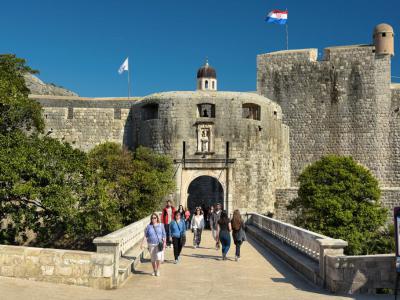
1) Pile Gate (must see)

"Kill them, kill them all!" King Joffrey is under attack by an angry mob when he returns to Red Keep. Dramatic scene, plenty of shouting… except there's a thing or two missing. There's no King Joffrey here, and definitely no Red Keep. What you’re seeing is Pile Gate. Television magic simply turned this Croatian gateway into one of the most famous locations in “Game of Thrones,” particularly in Season 2, Episode 6, when Joffrey discovers that ruling a kingdom does not always guarantee popularity.

The name Pile comes from the Greek word pylaj, meaning “gate,” which is quite fitting for what has been Dubrovnik’s main doorway for centuries. Most visitors begin their walk through the Old City right here. The gate sits on the western side of the city walls and leads directly onto Stradun Street, Dubrovnik’s main promenade.

But Pile Gate is not just one gate—it is actually two. The inner gate was built in 1460, while the outer gate was added in 1537. Together, they formed part of a carefully designed defensive system. Protecting the approach was the cylindrical Fort Bokar, along with a deep moat that once surrounded the outer wall. Today, the moat is dry and has been transformed into a green strip of landscaped parkland between the walls.

To reach the gate, visitors cross a stone bridge with elegant Gothic arches. Designed in 1471, this bridge connected to a wooden drawbridge over the moat. Each night, the drawbridge was raised, sealing the entrance and keeping the city secure.

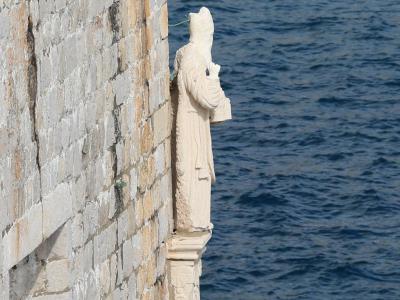
Above the gateway arch stands a statue of Saint Blaise, the patron saint of Dubrovnik. He holds a small model of the city in his hand, as if quietly keeping watch over the place he protects.

Beyond the gate lies one of the most impressive defensive systems in Europe. Dubrovnik’s city walls stretch for nearly two kilometers and in some sections rise as high as 82 feet. The land-facing side is reinforced with ten circular bastions and a powerful fortress. The two main entrances to the city are Pile Gate in the west and Ploče Gate in the east.

So, as you walk through Pile Gate, remember: you’re not entering King’s Landing, but stepping into one of the best-preserved medieval cities in the world. And thankfully, today the only crowds waiting here are tourists—not angry mobs...
2
Fort Bokar

2) Fort Bokar

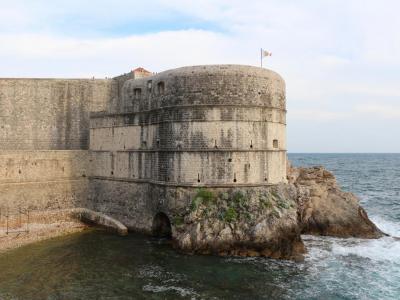
Just outside the Pile Gate stands Fort Bokar, a fortress that looks as though it grew straight out of the city walls. Also known as Zvjezdan, this fort was designed in the 15th century by the Italian architect Michelozzo di Bartolomeo. Construction began in 1461, and the structure was strengthened a little over a century later, in 1570. Together with the nearby Minčeta Tower, it guarded the vulnerable western land approach to the city, ensuring that anyone arriving from this direction would be watched very carefully.

Fort Bokar is a two-story casemate fort, built with thick stone walls designed to hold heavy artillery. Its round shape pushes outward from Dubrovnik’s medieval fortifications, almost like a stone bubble attached to the wall. Part of the fortress rests on arched supports above a rugged rock outcrop, while the Adriatic Sea rolls beneath it—exactly as it has done for more than five centuries. It’s the kind of structure that quietly reminds you just how serious Dubrovnik once was about defense.

These days, however, the fort has exchanged cannon smoke for stage lights. Every summer, it becomes one of the dramatic venues of the Dubrovnik Summer Festival, held between July 10 and August 25. During this time, the historic city transforms into a giant open-air theater, hosting around seventy performances of classical music, opera, drama, and ballet.

Fort Bokar has also found a second career in the world of television. Fans of “Game of Thrones” may recognize these walls as part of King’s Landing. The fortress appears in several scenes along the city walls, including a memorable moment in Season 2 when Tyrion Lannister and Varys stand overlooking the sea while discussing the defense of the capital.

Today, Fort Bokar is an easy stop while exploring Dubrovnik’s western walls. Take a moment here, look out over the water, and picture the centuries of soldiers, sailors, actors, and camera crews who have all used this same dramatic stage above the Adriatic.
3
Kula Sveti Peter (Fort Saint Peter)

3) Kula Sveti Peter (Fort Saint Peter)

Fort Saint Peter—known locally as Kula Sveti Peter—may not be the biggest or most dramatic fort in Dubrovnik, but don’t let its modest size mislead you. Built in the 14th century, this sturdy tower played a serious role in the city’s defense strategy. Positioned right at the entrance to the Old Port, it helped keep watch over the harbor traffic—welcoming merchant ships and fishing boats while keeping a cautious eye out for anything less friendly approaching from the Adriatic.

Like many of Dubrovnik’s fortifications, Fort Saint Peter doubled as a lookout post. From here, guards scanned the horizon for trouble long before it reached the city walls. Its design is straightforward—thick stone, minimal decoration, built for strength rather than style. Working together with nearby defenses such as Saint Luke’s Tower and the powerful Revelin Fortress, it formed part of a strategic triangle protecting the harbor, turning Dubrovnik into one of the most secure ports in the Mediterranean.

Today, the fort sits quietly beside the water, often overlooked, as visitors hurry past toward larger landmarks. Yet it offers a small but meaningful reminder of how carefully Dubrovnik protected its independence as a maritime republic. Pause here for a moment and watch the boats drifting in and out of the Old Port—the scene may feel modern, but the rhythm of harbor life hasn’t changed all that much since the days when vigilant guards stood right here, scanning the sea for sails on the horizon...
4
Buza Bar and Blaze Beach

4) Buza Bar and Blaze Beach

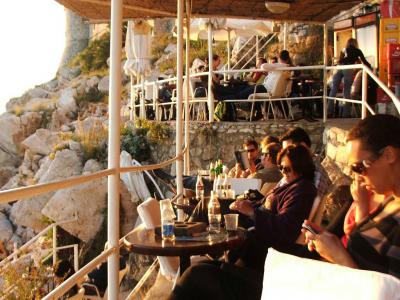
About twenty minutes into your walk along Dubrovnik’s walls, you’ll reach one of the city’s most unusual hangouts: Buza Bar. The name “buza” literally means “hole,” and that’s exactly how you get there—through a small opening in the wall that suddenly reveals a terrace clinging to the cliffs above the Adriatic. Instead of marble streets and medieval towers, the view here is all open sea. Tables and chairs are lined up along the rocks, perfectly positioned for a slow drink while watching the horizon stretch out in every direction.

But Buza Bar isn’t only about sitting back with a cold beverage. A short path leads down toward the edge of the cliffs, where the more adventurous visitors gather. From here, some people decide that simply admiring the water isn’t enough—and take the plunge straight into the clear water below. It’s a spontaneous tradition that has become almost as famous as the bar itself.

Just beside the cliffs lies a rocky stretch known as Blaze Beach. It’s not a sandy resort beach, but rather a natural platform where locals and visitors spread out on the warm stones, slip into the sea for a swim, or explore the shoreline with a snorkel.

So, whether you’re pausing for a drink, cooling off with a quick dip, or just watching brave jumpers make their splash, Buza Bar and Blaze Beach offer a refreshing break from Dubrovnik’s centuries-old fortifications—and a reminder that the Adriatic is never far away...
5
Fort Saint Margaret

5) Fort Saint Margaret

Slide down to the southernmost tip of Dubrovnik’s mighty city walls, and you’ll arrive at Fort Saint Margaret, a stone outpost that seems to lean confidently into the Adriatic. From here, the view becomes a moving postcard: fishing boats, ferries, and sleek yachts drift in and out of Dubrovnik’s busy harbor like actors crossing a well-rehearsed stage.

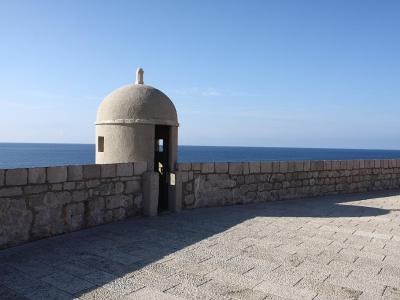
Look up toward the guard tower—there, you’ll notice the Statue of St. Blaise, the city’s patron saint, keeping a watchful eye over the scene—because in Dubrovnik, even the saints apparently enjoy a good sea view...

The fort itself dates to the 16th-century Renaissance, when Dubrovnik fortified nearly every corner of its coastline. Its clean stone lines and dramatic position make it a favorite stop for photographers, who quickly realize that almost every angle here produces a postcard-worthy shot. On the one side, the rooftops of the Old Town cluster tightly beneath the walls; on the other, the Adriatic stretches outward in a brilliant sweep of blue.

And then there’s Lokrum Island, resting just offshore like a green, mysterious neighbor. From this vantage point, you can clearly see its wooded slopes rising above the water—a reminder that Dubrovnik’s story has always been tied to the sea and the islands beyond.

Most sections of the city walls encourage you to keep moving—after all, there’s a lot to see. But Fort Saint Margaret has a different effect. This is the spot where people slow down, lean on the stone parapet, and let the view do the talking. So, take a moment here. Watch the harbor traffic glide past, breathe in the sea air, and enjoy Dubrovnik from one of its most dramatic viewpoints.
6
Fort Saint Stephen

6) Fort Saint Stephen

Now let’s pause for a moment at Fort Saint Stephen, one of the younger members of Dubrovnik’s otherwise very seasoned defensive family. Compared to some sections of the city walls—whose origins reach as far back as the 7th century—this fortification is practically the “new kid on the block.” It dates “only” to the 1600s, arriving centuries after Dubrovnik had already begun building the formidable ring of stone that still encircles the Old Town today.

But “young” doesn’t mean unimportant. By the time Fort Saint Stephen appeared, Dubrovnik had already spent hundreds of years refining its defenses. The walls had grown thicker, towers taller, and bastions stronger, all in response to the constant need to protect this wealthy maritime republic. Each new structure added another layer of security—and another chapter to the city’s architectural story.

So, while Fort Saint Stephen may not be the oldest stone along the walls, it represents the same enduring idea that shaped Dubrovnik for centuries: if you’re going to guard a city this valuable, you keep improving the defenses. Consider it the final polish on a fortification system that had been evolving for nearly half a millennium...
7
Saint John Fortress

7) Saint John Fortress

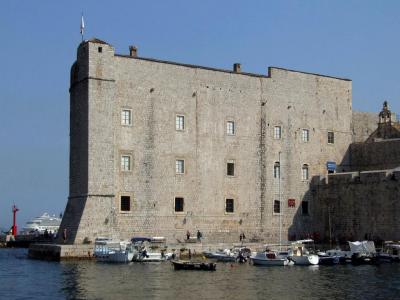
At the southeastern edge of Dubrovnik’s Old Town harbor stands Saint John Fortress, or Sveti Ivan as the locals call it—a sturdy guardian that has been keeping watch over the port for centuries. Sometimes also called Mulo Tower, this imposing complex began life in the mid-14th century. Like many long-serving defenders, it was upgraded several times during the 15th and 16th centuries, as Dubrovnik refined its coastal defenses.

A glimpse of how it once looked survives in a painted triptych by artist Nikola Božidarević, preserved in the Dominican Monastery. In that artwork, the city’s patron, Saint Blaise, looks on—perhaps approvingly—over the fortress that helped keep Dubrovnik safe.

Back in its working days, Saint John Fortress was the port’s vigilant gatekeeper. Pirates, rival fleets, or anyone arriving with questionable intentions quickly discovered that Dubrovnik took security very seriously.

When danger appeared on the horizon, the city’s defenders stretched heavy chains across the harbor entrance between the fortress and the Kaše jetty, effectively locking the port like a medieval drawbridge. And just to be absolutely certain, the entrances to the nearby Great Arsenal could be sealed as well. Dubrovnik’s merchants might have loved trade, but they preferred their trading partners unarmed and polite.

These days, the fortress guards something a bit friendlier than pirate ships. The ground floor hosts an aquarium, where tanks filled with Adriatic fish offer a closer look at the marine life swimming just beyond the harbor walls. Climb upstairs, and you’ll find the Maritime Museum, which traces Dubrovnik’s long relationship with the sea—from the proud days of the Republic’s merchant fleets, through the Age of Steam, and even into the turbulent years of the Second World War. Exhibits on navigation techniques and traditional shipbuilding reveal just how much skill went into keeping Dubrovnik connected to the wider world.

One highlight is the story of the nearby Pelješac Peninsula, whose maritime traditions stretch back to Roman times. The museum brings that legacy to life, reminding visitors that Dubrovnik’s fortunes were always tied to the sea—and that this fortress once stood at the very front line of protecting them.
8
Gate of Ploče

8) Gate of Ploče

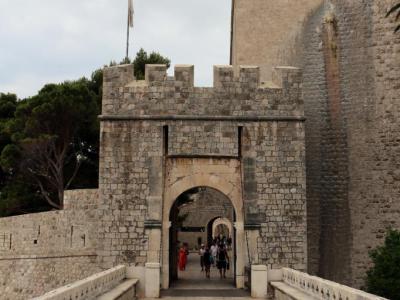
The Gate of Ploče is arguably one of the most dramatic ways to arrive in Dubrovnik’s Old Town. Built in the Romanesque style, this gate is not just a single doorway but a small defensive sequence. First comes the outer gate, then a wooden drawbridge, followed by a graceful double-arched stone bridge crossing what was once a protective ditch.

Beyond that rises the imposing Revelin Fortress, standing guard like a stone bodyguard for the city. In short, entering here was never meant to be a casual stroll.

The outer section of the gate was completed in 1628. But the elegant bridges you cross today date even further back, to the 15th century, when master builder Paskoje Miličević designed them. If they look familiar, that’s no coincidence—Miličević also created the bridges at the city’s western entrance, Pile Gate. Think of it as Dubrovnik’s medieval version of brand consistency: two entrances, same architectural signature, both designed to impress visitors and discourage invaders.

And just like at Pile Gate, there’s an important figure keeping watch above the entrance. Look up, and you’ll see a statue of Saint Blaise, the city’s patron saint. For centuries, locals believed Saint Blaise protected Dubrovnik from danger, and placing his statue above the gate was a symbolic way of welcoming friends—and quietly warning enemies that the city had divine backup.

Now jump ahead a few centuries, because this gate also found its way into the fantasy world of Game of Thrones. The Ploče Gate appeared in several episodes, including “The Ghost of Harrenhal” and “Mother’s Mercy.” In one of the show’s most memorable moments, the character Cersei Lannister enters the Red Keep through this very gateway after her infamous Walk of Shame—turning Dubrovnik’s historic entrance into a dramatic piece of television history.

So, whenever you walk through Ploče Gate today, you’re crossing a threshold shaped by centuries of Dubrovnik’s history—while also stepping onto a spot that briefly doubled as the streets of King’s Landing...
9
Minceta Tower

9) Minceta Tower (must see)

Built in 1463, Minčeta Tower rose at a time when Dubrovnik had good reason to keep a careful eye on the horizon. The Ottoman Empire was expanding across the region, and the city needed a fortress that meant business. Local architect Nicifor Ranjina designed the original structure, with the help of Italian engineers sent by Pope Pius II. At first, the tower was a sturdy four-sided stronghold. Its name came from the Menčetić family, who once owned the land where it stands today.

Before long, Dubrovnik’s leaders decided the tower needed an upgrade. In the mid-15th century, Italian architect and sculptor Michelozzo di Bartolomeo Michelozzi stepped in and redesigned it as a powerful round tower better suited to the artillery warfare of the time. Thick walls—about six meters across—were equipped with protected gun ports, while low defensive walls were added to strengthen the surrounding fortifications.

Further improvements came from the Dalmatian master builder Giorgio da Sebenico. By the time construction finished in 1464, the structure had taken on the tall, narrow, circular form crowned with battlements that still defines Dubrovnik’s skyline today.

As the highest point in the city’s land defenses, Minčeta Tower quickly became a symbol of Dubrovnik’s determination to remain independent and well protected. Beneath the tower lies another fascinating discovery: the Upper Tower area, where archaeologists uncovered the remains of a 16th-century cannon foundry after extensive excavations. Today, the tower functions as part of the city’s historic museum complex, allowing visitors to explore both its architecture and the story of Dubrovnik’s defensive ingenuity.

Climb to the top, and the reward is immediate. From the tower’s lookout along the Walls of Dubrovnik, the view opens over a sea of terracotta roofs, narrow streets, and the deep blue Adriatic stretching toward the horizon. Few spots capture Dubrovnik’s past and present quite so clearly.

Minčeta Tower also stepped into global pop culture thanks to Game of Thrones. In Season 2, Episode 10, it appeared as the mysterious House of the Undying in the city of Qarth, where Daenerys Targaryen searches for her stolen dragons. With its imposing round shape and fortress-like exterior, the tower proved to be the perfect setting for one of the series’ most surreal moments.
10
Large Onofrio's Fountain

10) Large Onofrio's Fountain

Having passed through the Pile Gate, you immediately arrive on Stradun Street, which runs through Dubrovnik’s Old Town. Just to the right stands a rather sturdy-looking structure that might remind you of a stone drum wearing a small red cap. This sixteen-sided fountain, fitted with sixteen water taps, is known as Large Onofrio’s Fountain, the grand finale of Dubrovnik’s medieval water system.

The fountain dates back to 1438 and was designed by a Neapolitan architect with a very practical talent for plumbing—Onofrio di Giordano della Cava. This man was responsible not solely for the fountain itself, but also planned the city's entire water supply. His system carried fresh water about 7.5 miles from Knezica Spring straight into the Old Town. Along the way, Onofrio added two fountains: the big one you see near the Pile Gate, and a smaller one in Luža Square.

Take a closer look at the stone panels around the fountain. Each of the sixteen sides features a carved mask, called a maskeron, where water flows out. And up on the rim sits a small statue of a dog named Kuchak, which literally means “fountain dog.” The one you see here is a replica—the original was badly damaged during Dubrovnik’s enormous earthquake of 1667. Like many corners of the Old Town, the fountain has also enjoyed a little modern fame, appearing in scenes from the television series Game of Thrones.

For centuries, fountains like this were Dubrovnik’s main source of drinking water, serving residents up until the late 19th century. The taps still run today, and yes—the water is perfectly drinkable. This is one of the reasons this spot has long been a natural meeting place. Locals gather here, visitors refill their bottles, and travelers pause for a moment before continuing down Stradun into the heart of Dubrovnik.

Walking Tours in Dubrovnik, Croatia

Create Your Own Walk in Dubrovnik

Create Your Own Walk in Dubrovnik

Creating your own self-guided walk in Dubrovnik is easy and fun. Choose the city attractions that you want to see and a walk route map will be created just for you. You can even set your hotel as the start point of the walk.
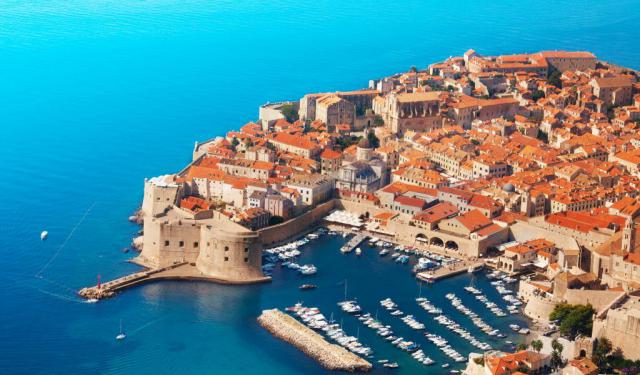
Historical Churches

Historical Churches

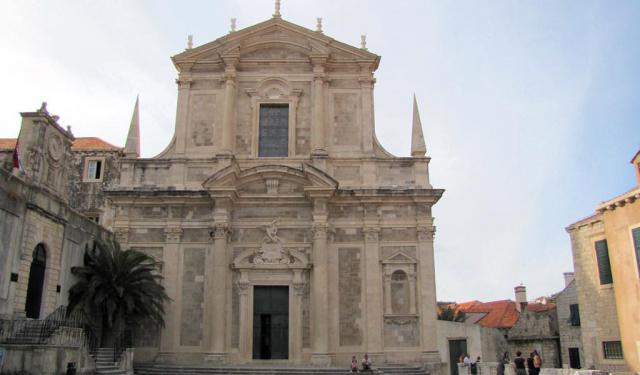
Throughout history, Dubrovnik’s citizens have had plenty of causes to ask God for help. And when they got it, they never forgot to express their gratitude. Oftentimes, it came in the form of newly built churches; hence an array of religious landmarks, some truly magnificent, found in the Old Town, constructed over the centuries.

One such architectural marvel is Saint Saviour's Church,...  view more

Tour Duration: 1 Hour(s)
Travel Distance: 0.8 Km or 0.5 Miles
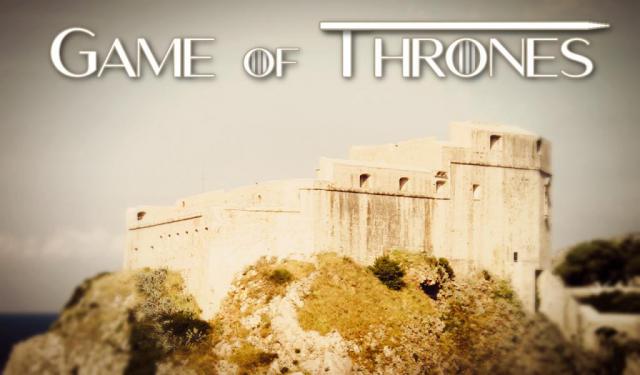
Game of Thrones Filming Sites Tour

Game of Thrones Filming Sites Tour

Dubrovnik has a habit of looking like it belongs on a movie set. Terracotta rooftops spill down toward the sea, massive stone walls guard the Old Town, and steep cliffs rise above the glittering Adriatic. It’s the sort of scenery that already feels cinematic—so when the creators of the HBO series Game of Thrones went searching for the perfect stand-in for King’s Landing, Dubrovnik...  view more

Tour Duration: 2 Hour(s)
Travel Distance: 2.7 Km or 1.7 Miles
Dubrovnik Introduction Walking Tour

Dubrovnik Introduction Walking Tour

Dubrovnik—sitting on a rocky stretch of coast in southern Croatia—is a place where medieval walls still wrap around daily life, cafés spill onto polished stone streets, and the bright blue Adriatic glitters just beyond the rooftops. Because of its remarkable architecture, Dubrovnik was added to the UNESCO World Heritage list in 1979. Today, the city has no shortage of visitors who come here...  view more

Tour Duration: 2 Hour(s)
Travel Distance: 1.8 Km or 1.1 Miles