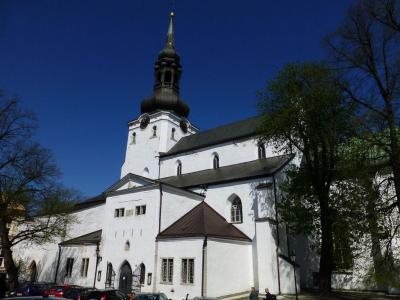


Saint Mary Cathedral, Tallinn
Saint Mary’s Cathedral is the oldest church in Tallinn and the principal Lutheran cathedral of Estonia. Its origins date back to 1219, when a wooden church was established following the Danish conquest. In the early 13th century, this structure was replaced by a stone building, completed around 1240 and dedicated to the Virgin Mary. Over time, the cathedral became closely associated with the Baltic German nobility, reflecting its role within the upper town’s political and social life.
Originally Gothic in form, the cathedral was enlarged during the 14th century and later heavily damaged in the great fire of 1684. Much of the interior woodwork was lost, and subsequent restoration introduced Baroque elements that still define parts of the church today. The tower, added later, dates largely from the 18th century, while the exterior retains a relatively restrained appearance compared to other major churches in Tallinn. If the tower is open, access is typically through a staircase inside the church, usually near the entrance area, and leads to views over Toompea and the Old Town.
Once inside, begin by walking down the central aisle. The walls on both sides are lined with an extensive collection of coats of arms belonging to noble families, many of whom were buried here. As you walk, look down at the floor, stone tomb slabs are set into the paving, marking burial sites. Continue toward the front of the church to reach the main altar. Here, you will find the Baroque altarpiece created by the 17th century German sculptor Christian Ackermann. Before turning back, look to your right-hand side as you face the altar to see the richly decorated Baroque pulpit, another of Ackermann’s works.
After exiting the cathedral, you can step into the surrounding churchyard, which is accessible directly from the church grounds. This area contains historic burial sites and memorials. Among those associated with the cathedral are Adam Johann von Krusenstern, a naval explorer known for leading Russia’s first circumnavigation, and Samuel Greig, a naval commander of Scottish origin who served in the Russian fleet.
Originally Gothic in form, the cathedral was enlarged during the 14th century and later heavily damaged in the great fire of 1684. Much of the interior woodwork was lost, and subsequent restoration introduced Baroque elements that still define parts of the church today. The tower, added later, dates largely from the 18th century, while the exterior retains a relatively restrained appearance compared to other major churches in Tallinn. If the tower is open, access is typically through a staircase inside the church, usually near the entrance area, and leads to views over Toompea and the Old Town.
Once inside, begin by walking down the central aisle. The walls on both sides are lined with an extensive collection of coats of arms belonging to noble families, many of whom were buried here. As you walk, look down at the floor, stone tomb slabs are set into the paving, marking burial sites. Continue toward the front of the church to reach the main altar. Here, you will find the Baroque altarpiece created by the 17th century German sculptor Christian Ackermann. Before turning back, look to your right-hand side as you face the altar to see the richly decorated Baroque pulpit, another of Ackermann’s works.
After exiting the cathedral, you can step into the surrounding churchyard, which is accessible directly from the church grounds. This area contains historic burial sites and memorials. Among those associated with the cathedral are Adam Johann von Krusenstern, a naval explorer known for leading Russia’s first circumnavigation, and Samuel Greig, a naval commander of Scottish origin who served in the Russian fleet.
Want to visit this sight? Check out these Self-Guided Walking Tours in Tallinn. Alternatively, you can download the mobile app "GPSmyCity: Walks in 1K+ Cities" from Apple App Store or Google Play Store. The app turns your mobile device to a personal tour guide and it works offline, so no data plan is needed when traveling abroad.
Download The GPSmyCity App



Saint Mary Cathedral on Map
Sight Name: Saint Mary Cathedral
Sight Location: Tallinn, Estonia (See walking tours in Tallinn)
Sight Type: Religious
Guide(s) Containing This Sight:
Sight Location: Tallinn, Estonia (See walking tours in Tallinn)
Sight Type: Religious
Guide(s) Containing This Sight:
Nearby Sights
Walking Tours in Tallinn, Estonia

Create Your Own Walk in Tallinn
Creating your own self-guided walk in Tallinn is easy and fun. Choose the city attractions that you want to see and a walk route map will be created just for you. You can even set your hotel as the start point of the walk.
Tallinn Old Towers and Gates
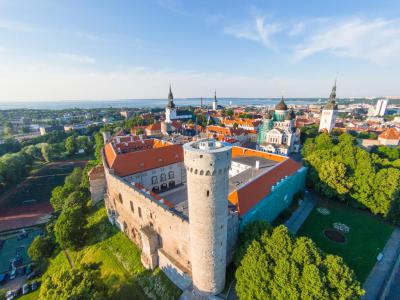
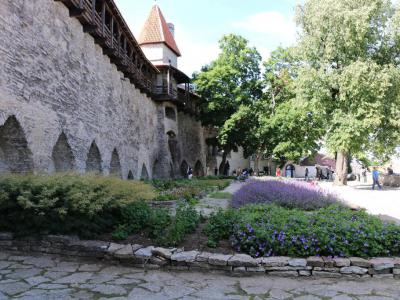
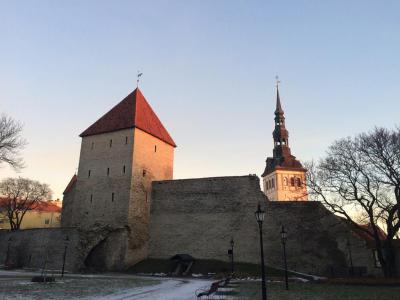
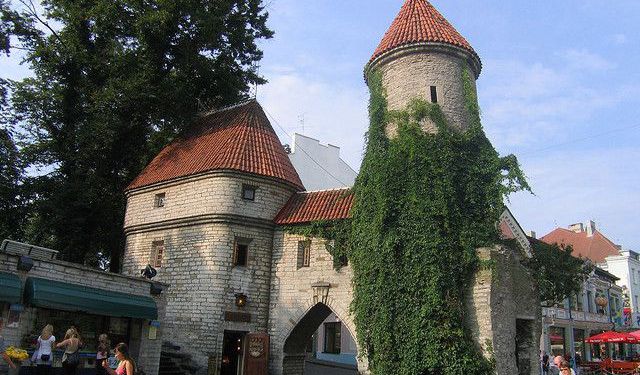
Once Europe's greatest fortified city, Tallinn had 46 defense towers and approximately 4 kilometers of surrounding walls. Today, there are 26 towers and about 2 kilometers of walls still in place, making the Old Town of Tallinn one of the best-preserved systems of medieval fortifications in Europe.
Upon entering the district through the Viru Gate, whose two picturesque, ivy-covered towers... view more
Tour Duration: 2 Hour(s)
Travel Distance: 2.8 Km or 1.7 Miles
Upon entering the district through the Viru Gate, whose two picturesque, ivy-covered towers... view more
Tour Duration: 2 Hour(s)
Travel Distance: 2.8 Km or 1.7 Miles
Tallinn Old Town Walking Tour
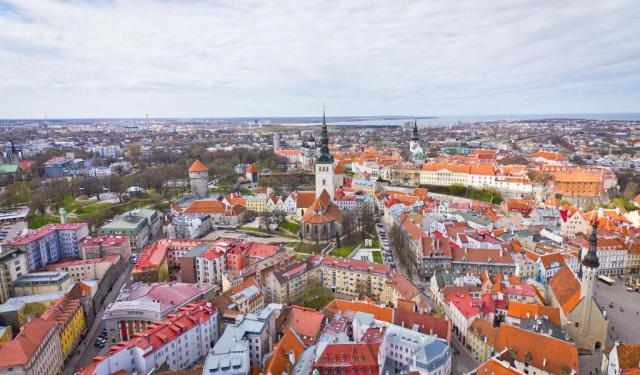
Tallinn, the capital of Estonia, has a history shaped by trade, conquest, and its strategic position along the Baltic Sea. The area has been inhabited since at least the second millennium BC, but it began to emerge as a significant settlement in the early medieval period. By the 12th century, it was known as a trading hub frequented by Scandinavian and Rus’ merchants, drawn by its sheltered... view more
Tour Duration: 3 Hour(s)
Travel Distance: 4.3 Km or 2.7 Miles
Tour Duration: 3 Hour(s)
Travel Distance: 4.3 Km or 2.7 Miles
Tallinn Medieval Old Town
In medieval Tallinn, fortunes were not built by kings, but by merchants, men who believed trade could connect worlds separated by sea and distance.
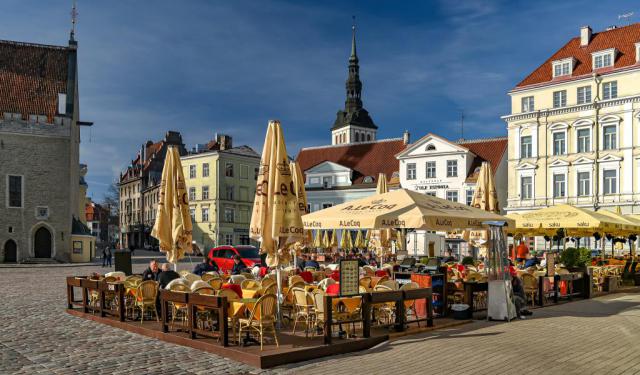
Tallinn’s Medieval Old Town stands as one of the best-preserved urban ensembles in Northern Europe. Its origins trace back to at least the early medieval period, when a settlement grew around a natural harbor that attracted Scandinavian and... view more
Tour Duration: 2 Hour(s)
Travel Distance: 2.1 Km or 1.3 Miles
Tallinn’s Medieval Old Town stands as one of the best-preserved urban ensembles in Northern Europe. Its origins trace back to at least the early medieval period, when a settlement grew around a natural harbor that attracted Scandinavian and... view more
Tour Duration: 2 Hour(s)
Travel Distance: 2.1 Km or 1.3 Miles