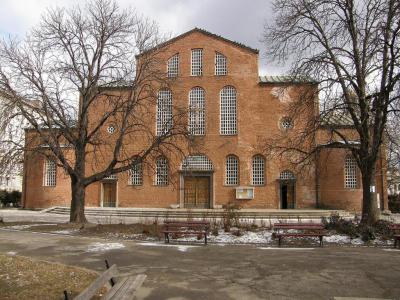


Saint Sofia Church, Sofia (must see)
Saint Sofia Church dates to the 6th century, built during the reign of the Byzantine emperor Justinian I, placing it in the same era as Constantinople’s Hagia Sophia. Like its famous counterpart, it was turned into a mosque under Ottoman rule-yet unlike Hagia Sophia, it eventually returned to Christian worship, reclaiming its original identity.
It is the second-oldest church in the Bulgarian capital. In the 14th century, its name-Sofia, meaning “Wisdom”-was adopted by the city itself. If you are admiring the church from the outside, you'll see its rectangular basilica form, with undecorated walls made from red brick and small, evenly spaced window openings. You can notice a simple construction, with a low and pitched roofline, without domes, towers, or a bell tower.
During its conversion into a mosque in the 16th century, the church gained two minarets. In the 19th century, two earthquakes struck the building-one minaret collapsed, and the mosque was abandoned soon after. Large-scale restoration only began in 1900, following the end of Ottoman rule.
When you step inside the church, you’ll see the same simple red-brick walls. During the Ottoman period, when the church was converted into a mosque, its medieval frescoes were lost. Head to the Underground Museum, where layers of buildings from across the centuries are exposed, reaching back as far as the 3rd century AD. Here, excavations have revealed an extensive necropolis beneath and around the basilica, with numerous tombs, crypts, and remnants of earlier sanctuaries now accessible to visitors. Pay attention to the floors decorated with early Christian mosaics featuring detailed animal and floral patterns.
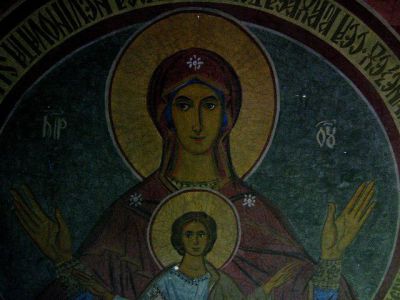
For centuries, local tradition has held that Saint Sofia’s protective power guarded the church through invasions, epidemics, and natural disasters-perhaps part of the reason it remains so well preserved today. In Orthodox iconography, Sofia appears as a woman symbolizing Divine Wisdom, standing above the allegorical figures of Faith, Hope, and Love, linking the church’s name to one of Christianity’s most enduring spiritual ideals.
It is the second-oldest church in the Bulgarian capital. In the 14th century, its name-Sofia, meaning “Wisdom”-was adopted by the city itself. If you are admiring the church from the outside, you'll see its rectangular basilica form, with undecorated walls made from red brick and small, evenly spaced window openings. You can notice a simple construction, with a low and pitched roofline, without domes, towers, or a bell tower.
During its conversion into a mosque in the 16th century, the church gained two minarets. In the 19th century, two earthquakes struck the building-one minaret collapsed, and the mosque was abandoned soon after. Large-scale restoration only began in 1900, following the end of Ottoman rule.
When you step inside the church, you’ll see the same simple red-brick walls. During the Ottoman period, when the church was converted into a mosque, its medieval frescoes were lost. Head to the Underground Museum, where layers of buildings from across the centuries are exposed, reaching back as far as the 3rd century AD. Here, excavations have revealed an extensive necropolis beneath and around the basilica, with numerous tombs, crypts, and remnants of earlier sanctuaries now accessible to visitors. Pay attention to the floors decorated with early Christian mosaics featuring detailed animal and floral patterns.
For centuries, local tradition has held that Saint Sofia’s protective power guarded the church through invasions, epidemics, and natural disasters-perhaps part of the reason it remains so well preserved today. In Orthodox iconography, Sofia appears as a woman symbolizing Divine Wisdom, standing above the allegorical figures of Faith, Hope, and Love, linking the church’s name to one of Christianity’s most enduring spiritual ideals.
Want to visit this sight? Check out these Self-Guided Walking Tours in Sofia. Alternatively, you can download the mobile app "GPSmyCity: Walks in 1K+ Cities" from Apple App Store or Google Play Store. The app turns your mobile device to a personal tour guide and it works offline, so no data plan is needed when traveling abroad.
Download The GPSmyCity App



Saint Sofia Church on Map
Sight Name: Saint Sofia Church
Sight Location: Sofia, Bulgaria (See walking tours in Sofia)
Sight Type: Religious
Guide(s) Containing This Sight:
Sight Location: Sofia, Bulgaria (See walking tours in Sofia)
Sight Type: Religious
Guide(s) Containing This Sight:
Nearby Sights
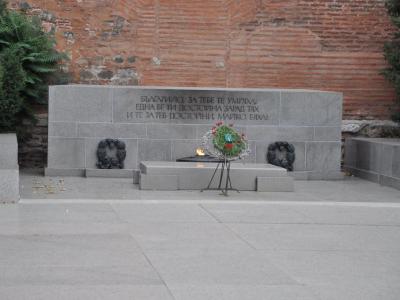

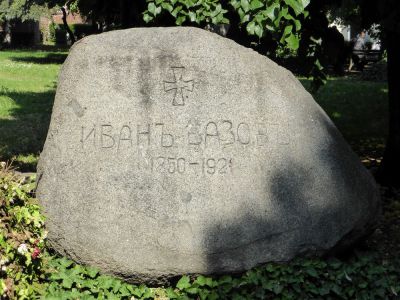
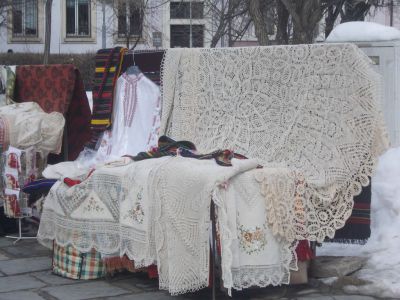
Alexander Nevski Square Street Vendors
Image Courtesy of Pavlina Docheva.
Walking Tours in Sofia, Bulgaria

Create Your Own Walk in Sofia
Creating your own self-guided walk in Sofia is easy and fun. Choose the city attractions that you want to see and a walk route map will be created just for you. You can even set your hotel as the start point of the walk.
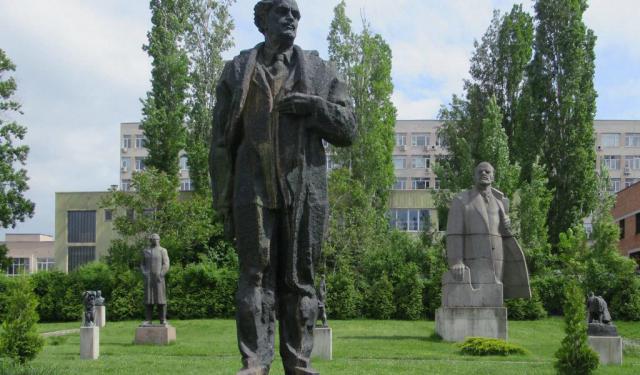
Communist Era Landmarks Walk
In the not-so-distant past Bulgaria was part of the Soviet-led Eastern Bloc. Today, this is one of the few countries where you can still find numerous relics of the Communist era manifested in monumental architectural landmarks. Concrete and metal were the main materials as a symbol of the industrialized nation, and the size was important too as a common architectural characteristic prescribed by... view more
Tour Duration: 3 Hour(s)
Travel Distance: 6.6 Km or 4.1 Miles
Tour Duration: 3 Hour(s)
Travel Distance: 6.6 Km or 4.1 Miles
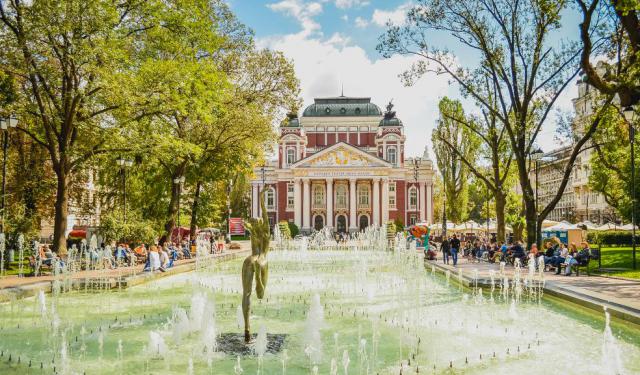
Sofia City Center Walking Tour
Sofia, the capital of Bulgaria, is one of Europe’s oldest continuously inhabited cities, with archaeological traces of settlement dating back at least 7,000 years. Its fertile valley, abundant mineral springs, and position on major east–west and north–south routes made it a natural crossroads for ancient peoples.
The Thracian tribe Serdi established a settlement here in the 1st... view more
Tour Duration: 2 Hour(s)
Travel Distance: 2.6 Km or 1.6 Miles
The Thracian tribe Serdi established a settlement here in the 1st... view more
Tour Duration: 2 Hour(s)
Travel Distance: 2.6 Km or 1.6 Miles
Useful Travel Guides for Planning Your Trip

Sofia Shopping: 15 Things To Memorize Bulgaria By
Increasingly popular tourist destination in recent years, Bulgaria has opened up to the outer world, revealing colorful identity, manifested in rich craftsmanship, culinary and cultural traditions and history. The country's capital city Sofia is a lovely alloy of Eastern and Western European...