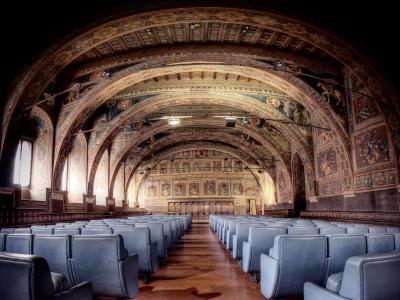


Sala dei Notari (Notaries’ Hall), Perugia
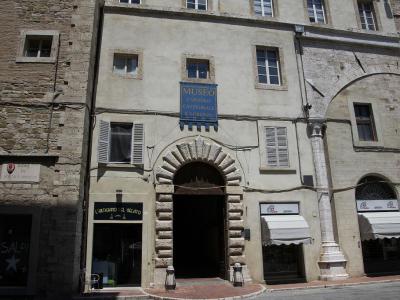
The Notaries' Hall (Sala dei Notari) in Perugia is a historical chamber within the grand Palace of the Priors (Palazzo dei Priori), historically significant as a gathering place for the town's nobility and, later, as the center for public meetings and classical music concerts. This room, characterized by its vast Romanesque arches and a collection of paintings and frescoes, traces its origins back to the Free Commune period when it served as a venue for people’s assemblies.
Initially known as the People's Room, it was repurposed in 1582 when it became the headquarters for the "Art of Notaries," an influential guild of notaries, acquiring its present name. The hall is structurally magnificent, supported by eight robust arches and adorned with remnants of frescoes from the late 13th to the 14th century, though many originals were lost or painted over during renovations, particularly those by Matteo Tassi in 1885.
The various coats of arms from different periods, including those of significant historical figures such as Braccio Fortebraccio, a prominent lord in Perugia during the 15th and 16th centuries, are noteworthy within the hall. These elements, combined with the stories and legends depicted, contribute to the room’s rich tapestry of history and art.
Having undergone numerous alterations during three centuries of Papal rule, the Notaries' Hall was restored to its former medieval state post-1860, preserving its architectural and artistic heritage. Today, it continues to be a pivotal space for creative, theatrical, and musical events, embodying a blend of historical reverence and contemporary cultural use. The entrance to this iconic hall faces the IV November Square, offering an inviting gateway to this emblematic piece of Perugia's cultural and political history.
Initially known as the People's Room, it was repurposed in 1582 when it became the headquarters for the "Art of Notaries," an influential guild of notaries, acquiring its present name. The hall is structurally magnificent, supported by eight robust arches and adorned with remnants of frescoes from the late 13th to the 14th century, though many originals were lost or painted over during renovations, particularly those by Matteo Tassi in 1885.
The various coats of arms from different periods, including those of significant historical figures such as Braccio Fortebraccio, a prominent lord in Perugia during the 15th and 16th centuries, are noteworthy within the hall. These elements, combined with the stories and legends depicted, contribute to the room’s rich tapestry of history and art.
Having undergone numerous alterations during three centuries of Papal rule, the Notaries' Hall was restored to its former medieval state post-1860, preserving its architectural and artistic heritage. Today, it continues to be a pivotal space for creative, theatrical, and musical events, embodying a blend of historical reverence and contemporary cultural use. The entrance to this iconic hall faces the IV November Square, offering an inviting gateway to this emblematic piece of Perugia's cultural and political history.
Want to visit this sight? Check out these Self-Guided Walking Tours in Perugia. Alternatively, you can download the mobile app "GPSmyCity: Walks in 1K+ Cities" from Apple App Store or Google Play Store. The app turns your mobile device to a personal tour guide and it works offline, so no data plan is needed when traveling abroad.
Download The GPSmyCity App



Sala dei Notari (Notaries’ Hall) on Map
Sight Name: Sala dei Notari (Notaries’ Hall)
Sight Location: Perugia, Italy (See walking tours in Perugia)
Sight Type: Attraction/Landmark
Sight Location: Perugia, Italy (See walking tours in Perugia)
Sight Type: Attraction/Landmark
Nearby Sights



Walking Tours in Perugia, Italy

Create Your Own Walk in Perugia
Creating your own self-guided walk in Perugia is easy and fun. Choose the city attractions that you want to see and a walk route map will be created just for you. You can even set your hotel as the start point of the walk.
A Walk Through Perugia's Medieval Old Town
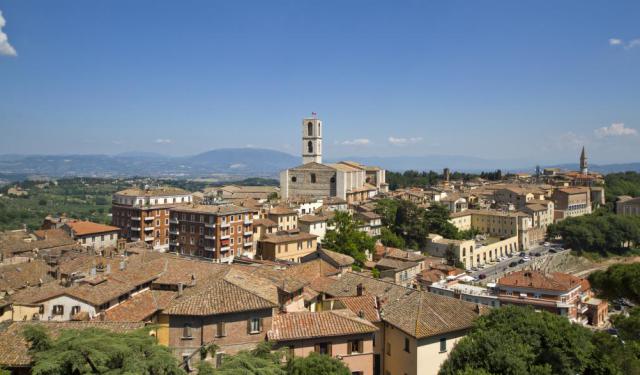
Perugia was one of the twelve foremost cities of the Etruscan Federation. It was mentioned by Quintus Fabius Pictor, a Roman historian. He tells of a military expedition of Fabius Maximus Rullianus against the Etruscan League and Perugia in 309 BC.
By 216 BC, Perugia had seen the light and allied itself with Rome in the Second Punic War against Carthage. Things went swimmingly until 41 BC.... view more
Tour Duration: 2 Hour(s)
Travel Distance: 2.1 Km or 1.3 Miles
By 216 BC, Perugia had seen the light and allied itself with Rome in the Second Punic War against Carthage. Things went swimmingly until 41 BC.... view more
Tour Duration: 2 Hour(s)
Travel Distance: 2.1 Km or 1.3 Miles
Perugino and Renaissance Art Walk
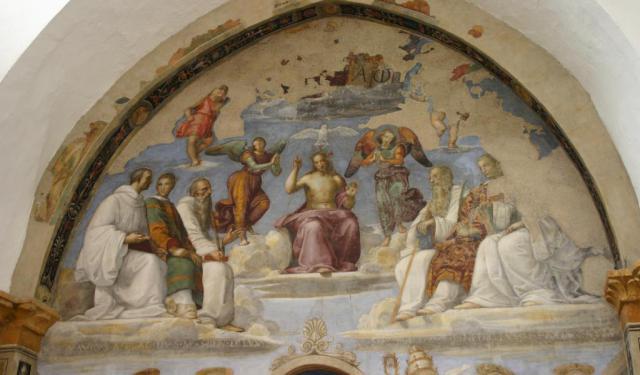
Perugia today is a well-known cultural and artistic center in Italy that regularly plays host to a multitude of annual festivals and events. The most glorious period in the history of the city, from an artistic standpoint, lasted from the 13th to the 16th centuries.
Perugia’s most celebrated artist, Pietro Vannucci (1450–1523), better known as “il Perugino”, nicknamed so after his... view more
Tour Duration: 1 Hour(s)
Travel Distance: 2.3 Km or 1.4 Miles
Perugia’s most celebrated artist, Pietro Vannucci (1450–1523), better known as “il Perugino”, nicknamed so after his... view more
Tour Duration: 1 Hour(s)
Travel Distance: 2.3 Km or 1.4 Miles