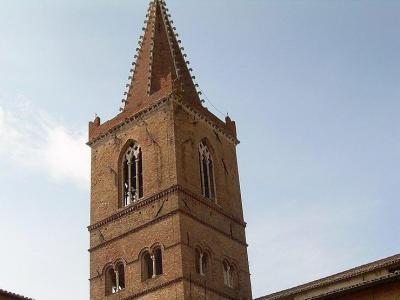


Santa Giuliana Church, Perugia
The Santa Giuliana Church and its adjoining convent, located near the Eburnea Gate at the end of Piazza Partigiani's gardens in Perugia, is a masterpiece of Cistercian architecture and an integral piece of the city's rich religious history. Founded in 1253 by Cardinal Giovanni da Toledo, a proponent of the Cistercian reform, the complex became one of the wealthiest and most significant religious institutions in Perugia, earning the protection of Pope Innocent IV, who granted indulgences to its visitors.
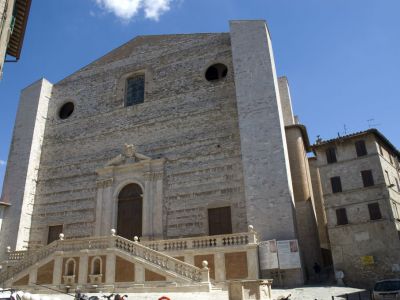
The church's façade, dating back to the 14th century, showcases striking geometric patterns of pink and white marble and is adorned with a Gothic rose window and an elegant portal. Inside, the single nave with wooden trusses preserves remnants of original frescoes. Notable works include a 13th-century fresco of the Last Supper, now displayed on the left wall, and the Coronation of the Virgin by Marzolini, positioned in the apse. The triumphal arch features fresco fragments from the late 13th and early 14th centuries.
Once a monastery and now housing the Italian Army's Foreign Language School, the complex features a cloister by Matteo Gattaponi (1376), celebrated for its Cistercian design with striped arches and ornate capitals. After a 16th-century decline under the bishop’s control, it was repurposed as a granary during Napoleonic times.
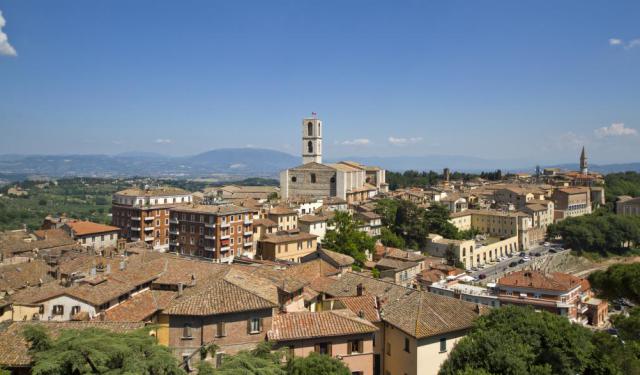
Though no longer part of traditional tourist itineraries, Santa Giuliana remains a cherished site among locals. Its Gothic bell tower, visible from the Carducci Gardens, rises above the surrounding trees, providing a glimpse of the complex's historical grandeur. Visitors by appointment can admire its storied cloister and reflect on its layers of history, from its Cistercian origins to its transformation into state property after Italy's unification in 1861.
The church's façade, dating back to the 14th century, showcases striking geometric patterns of pink and white marble and is adorned with a Gothic rose window and an elegant portal. Inside, the single nave with wooden trusses preserves remnants of original frescoes. Notable works include a 13th-century fresco of the Last Supper, now displayed on the left wall, and the Coronation of the Virgin by Marzolini, positioned in the apse. The triumphal arch features fresco fragments from the late 13th and early 14th centuries.
Once a monastery and now housing the Italian Army's Foreign Language School, the complex features a cloister by Matteo Gattaponi (1376), celebrated for its Cistercian design with striped arches and ornate capitals. After a 16th-century decline under the bishop’s control, it was repurposed as a granary during Napoleonic times.
Though no longer part of traditional tourist itineraries, Santa Giuliana remains a cherished site among locals. Its Gothic bell tower, visible from the Carducci Gardens, rises above the surrounding trees, providing a glimpse of the complex's historical grandeur. Visitors by appointment can admire its storied cloister and reflect on its layers of history, from its Cistercian origins to its transformation into state property after Italy's unification in 1861.
Want to visit this sight? Check out these Self-Guided Walking Tours in Perugia. Alternatively, you can download the mobile app "GPSmyCity: Walks in 1K+ Cities" from Apple App Store or Google Play Store. The app turns your mobile device to a personal tour guide and it works offline, so no data plan is needed when traveling abroad.
Download The GPSmyCity App



Santa Giuliana Church on Map
Sight Name: Santa Giuliana Church
Sight Location: Perugia, Italy (See walking tours in Perugia)
Sight Type: Religious
Sight Location: Perugia, Italy (See walking tours in Perugia)
Sight Type: Religious
Nearby Sights


Walking Tours in Perugia, Italy

Create Your Own Walk in Perugia
Creating your own self-guided walk in Perugia is easy and fun. Choose the city attractions that you want to see and a walk route map will be created just for you. You can even set your hotel as the start point of the walk.
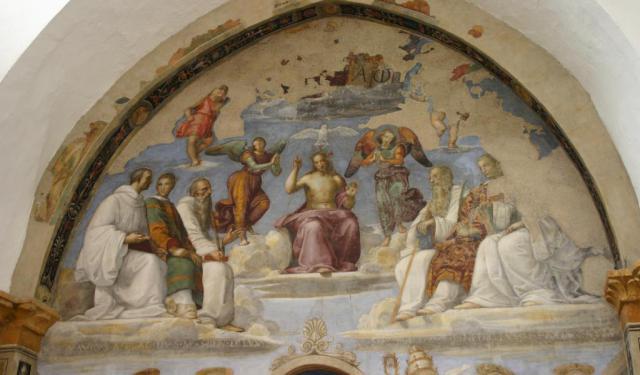
Perugino and Renaissance Art Walk
Perugia today is a well-known cultural and artistic center in Italy that regularly plays host to a multitude of annual festivals and events. The most glorious period in the history of the city, from an artistic standpoint, lasted from the 13th to the 16th centuries.
Perugia’s most celebrated artist, Pietro Vannucci (1450-1523), better known as “il Perugino”, nicknamed so after his... view more
Tour Duration: 1 Hour
Travel Distance: 2.3 Km or 1.4 Miles
Perugia’s most celebrated artist, Pietro Vannucci (1450-1523), better known as “il Perugino”, nicknamed so after his... view more
Tour Duration: 1 Hour
Travel Distance: 2.3 Km or 1.4 Miles
A Walk Through Perugia's Medieval Old Town
Perugia was one of the twelve foremost cities of the Etruscan Federation. It was mentioned by Quintus Fabius Pictor, a Roman historian. He tells of a military expedition of Fabius Maximus Rullianus against the Etruscan League and Perugia in 309 BC.
By 216 BC, Perugia had seen the light and allied itself with Rome in the Second Punic War against Carthage. Things went swimmingly until 41 BC.... view more
Tour Duration: 2 Hours
Travel Distance: 2.1 Km or 1.3 Miles
By 216 BC, Perugia had seen the light and allied itself with Rome in the Second Punic War against Carthage. Things went swimmingly until 41 BC.... view more
Tour Duration: 2 Hours
Travel Distance: 2.1 Km or 1.3 Miles
City Walks Overview
