


Sarajevo Synagogue, Sarajevo
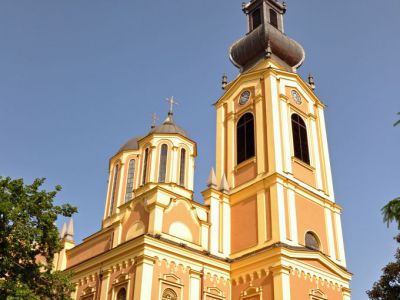
The Sarajevo Synagogue, often called the Ashkenazi Synagogue, welcomes visitors into one of the city’s most serenely beautiful interiors. Built in the early 20th century during the Austro-Hungarian period, it blends Moorish-Revival arches with elegant stained glass and a richly painted ceiling. The building reflects a moment when Sarajevo was knitting together many cultures and faiths, and it remains one of the few active synagogues in Bosnia and Herzegovina.
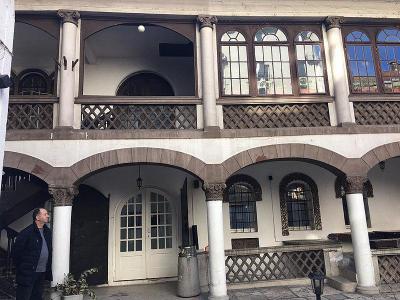
Sarajevo’s Jewish story runs deep. Sephardic Jews arrived in the 16th century after expulsion from Spain, and later Ashkenazi families came with imperial administrators and traders. The synagogue symbolizes this later wave, while the nearby Old Synagogue (today the Jewish Museum, in Bascarsija) preserves the earlier Sephardic heritage. Visiting both offers a compact journey through five centuries of Jewish life in the city.
Travelers typically step from the riverfront into a quiet sanctuary fragrant with old wood and candle wax. Look up to appreciate the decorative dome and geometric patterns, then notice the marble bimah and the women’s gallery above. It’s a small space, but details reward unhurried attention, especially the Hebrew inscriptions and delicate metalwork that survived turbulent times and patient restorations.
The synagogue is a working house of worship, so dress modestly, keep your voices low, and avoid photography during services. Hours can be limited and may vary around Jewish holidays; a small entrance fee or donation supports the local community’s preservation efforts. Combine your visit with a stroll to the Latin Bridge and the Austro-Hungarian facades along the embankment for a sense of the neighborhood’s layered history.
Sarajevo’s Jewish story runs deep. Sephardic Jews arrived in the 16th century after expulsion from Spain, and later Ashkenazi families came with imperial administrators and traders. The synagogue symbolizes this later wave, while the nearby Old Synagogue (today the Jewish Museum, in Bascarsija) preserves the earlier Sephardic heritage. Visiting both offers a compact journey through five centuries of Jewish life in the city.
Travelers typically step from the riverfront into a quiet sanctuary fragrant with old wood and candle wax. Look up to appreciate the decorative dome and geometric patterns, then notice the marble bimah and the women’s gallery above. It’s a small space, but details reward unhurried attention, especially the Hebrew inscriptions and delicate metalwork that survived turbulent times and patient restorations.
The synagogue is a working house of worship, so dress modestly, keep your voices low, and avoid photography during services. Hours can be limited and may vary around Jewish holidays; a small entrance fee or donation supports the local community’s preservation efforts. Combine your visit with a stroll to the Latin Bridge and the Austro-Hungarian facades along the embankment for a sense of the neighborhood’s layered history.
Want to visit this sight? Check out these Self-Guided Walking Tours in Sarajevo. Alternatively, you can download the mobile app "GPSmyCity: Walks in 1K+ Cities" from Apple App Store or Google Play Store. The app turns your mobile device to a personal tour guide and it works offline, so no data plan is needed when traveling abroad.
Download The GPSmyCity App



Sarajevo Synagogue on Map
Sight Name: Sarajevo Synagogue
Sight Location: Sarajevo, Bosnia-Herzegovina (See walking tours in Sarajevo)
Sight Type: Religious
Sight Location: Sarajevo, Bosnia-Herzegovina (See walking tours in Sarajevo)
Sight Type: Religious
Nearby Sights
Walking Tours in Sarajevo, Bosnia-Herzegovina

Create Your Own Walk in Sarajevo
Creating your own self-guided walk in Sarajevo is easy and fun. Choose the city attractions that you want to see and a walk route map will be created just for you. You can even set your hotel as the start point of the walk.
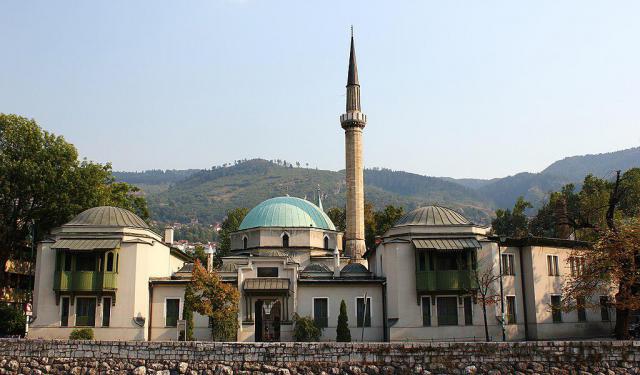
Ottoman Empire Landmarks Walk
The capital of Bosnia and Herzegovina, Sarajevo, was founded in 1461 after the Ottoman Empire conquered the region. Hence, the city's history is closely intertwined with the Ottoman legacy reflected in its landmarks.
One such is the Old Bazaar, a bustling market square dating back to the 15th century. Here, one can immerse oneself in the vibrant atmosphere of traditional crafts, authentic... view more
Tour Duration: 1 Hour(s)
Travel Distance: 1.0 Km or 0.6 Miles
One such is the Old Bazaar, a bustling market square dating back to the 15th century. Here, one can immerse oneself in the vibrant atmosphere of traditional crafts, authentic... view more
Tour Duration: 1 Hour(s)
Travel Distance: 1.0 Km or 0.6 Miles
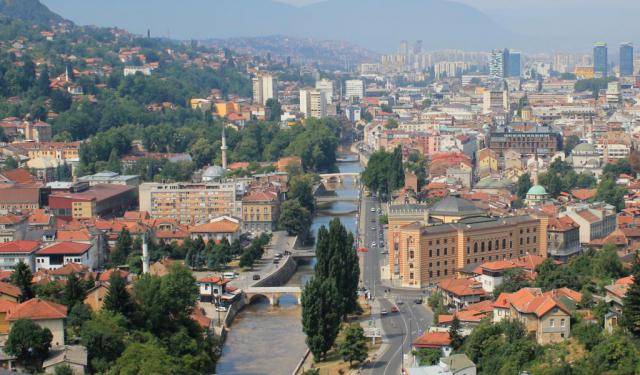
Sarajevo Introduction Walking Tour
Sarajevo is the capital of Bosnia and Herzegovina. It is also the country's largest city. This historical and picturesque city is surrounded by the Dinaric Alps and rests along both banks of the Miljacka River.
The city was established by the Ottoman Empire around 1461. It was named "Sarajevo," which means "the plains around the palace." The name is derived from the... view more
Tour Duration: 2 Hour(s)
Travel Distance: 2.7 Km or 1.7 Miles
The city was established by the Ottoman Empire around 1461. It was named "Sarajevo," which means "the plains around the palace." The name is derived from the... view more
Tour Duration: 2 Hour(s)
Travel Distance: 2.7 Km or 1.7 Miles
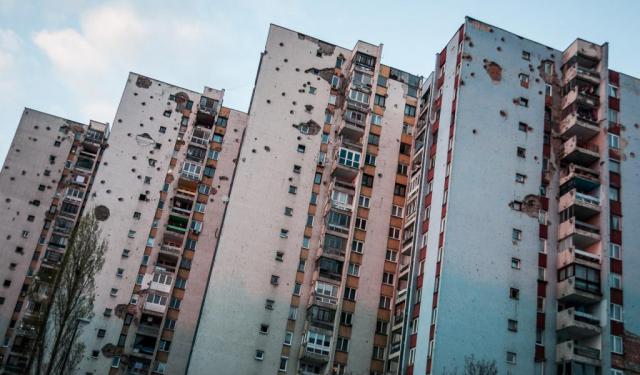
Siege of Sarajevo Walking Tour
The Siege of Sarajevo was an extended battle in the city during the Bosnian War from 1992 to 1996. It is known to be the most prolonged siege of a capital city, having lasted several months longer than the early 20th century Siege of Madrid.
The Bosnian War began when Bosnia and Herzegovina declared independence from Yugoslavia. The city was blockaded by the Serbs and bombarded by bombs, tanks,... view more
Tour Duration: 2 Hour(s)
Travel Distance: 3.0 Km or 1.9 Miles
The Bosnian War began when Bosnia and Herzegovina declared independence from Yugoslavia. The city was blockaded by the Serbs and bombarded by bombs, tanks,... view more
Tour Duration: 2 Hour(s)
Travel Distance: 3.0 Km or 1.9 Miles