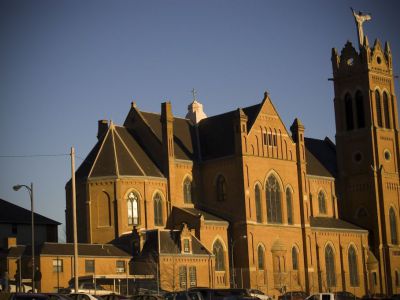


St. Benedict the Moor Church, Pittsburgh
Saint Benedict the Moor Catholic Church is a pivotal institution within the Black Catholic community in the Hill District neighborhood of Pittsburgh. This church, with its rich history and cultural significance, stands as a beacon of faith and heritage for African-American Catholics in the region.
Constructed in 1894, the building initially served as Holy Trinity Church before its suppression in 1958. In a notable transformation during the 1960s, Saint Benedict's parish, originally established in 1889, amalgamated with this church and two other parishes, marking a new chapter in its history. This merger not only expanded its congregation but also reinforced its role in the community.
A significant highlight of the church is the 18-foot tall statue of Saint Benedict the Moor, crafted by Frederick Charles Shrady, which was installed atop its tower in 1968. This statue not only enhances the architectural grandeur of the building but also symbolizes the parish's dedication to its patron saint, reflecting the enduring faith and resilience of the Black Catholic community.
The church's historical and cultural importance was officially recognized in 1998 when it was added to the List of Pittsburgh History and Landmarks Foundation Historic Landmarks. This designation underscores the building's architectural and social significance, preserving its legacy for future generations.
In a historic move in June 2020, Bishop David Zubik of Pittsburgh announced the designation of Saint Benedict the Moor Church as a personal parish for African-Americans. This formal recognition came after decades of the church serving informally as a central place of worship for the Black Catholic community. This decision affirms the church's role in nurturing the spiritual and social well-being of its congregation, ensuring that it remains a vital center for faith, culture, and community engagement in Pittsburgh.
Constructed in 1894, the building initially served as Holy Trinity Church before its suppression in 1958. In a notable transformation during the 1960s, Saint Benedict's parish, originally established in 1889, amalgamated with this church and two other parishes, marking a new chapter in its history. This merger not only expanded its congregation but also reinforced its role in the community.
A significant highlight of the church is the 18-foot tall statue of Saint Benedict the Moor, crafted by Frederick Charles Shrady, which was installed atop its tower in 1968. This statue not only enhances the architectural grandeur of the building but also symbolizes the parish's dedication to its patron saint, reflecting the enduring faith and resilience of the Black Catholic community.
The church's historical and cultural importance was officially recognized in 1998 when it was added to the List of Pittsburgh History and Landmarks Foundation Historic Landmarks. This designation underscores the building's architectural and social significance, preserving its legacy for future generations.
In a historic move in June 2020, Bishop David Zubik of Pittsburgh announced the designation of Saint Benedict the Moor Church as a personal parish for African-Americans. This formal recognition came after decades of the church serving informally as a central place of worship for the Black Catholic community. This decision affirms the church's role in nurturing the spiritual and social well-being of its congregation, ensuring that it remains a vital center for faith, culture, and community engagement in Pittsburgh.
Want to visit this sight? Check out these Self-Guided Walking Tours in Pittsburgh. Alternatively, you can download the mobile app "GPSmyCity: Walks in 1K+ Cities" from Apple App Store or Google Play Store. The app turns your mobile device to a personal tour guide and it works offline, so no data plan is needed when traveling abroad.
Download The GPSmyCity App



St. Benedict the Moor Church on Map
Sight Name: St. Benedict the Moor Church
Sight Location: Pittsburgh, USA (See walking tours in Pittsburgh)
Sight Type: Religious
Guide(s) Containing This Sight:
Sight Location: Pittsburgh, USA (See walking tours in Pittsburgh)
Sight Type: Religious
Guide(s) Containing This Sight:
Nearby Sights


Walking Tours in Pittsburgh, Pennsylvania

Create Your Own Walk in Pittsburgh
Creating your own self-guided walk in Pittsburgh is easy and fun. Choose the city attractions that you want to see and a walk route map will be created just for you. You can even set your hotel as the start point of the walk.
Oakland District Walking Tour
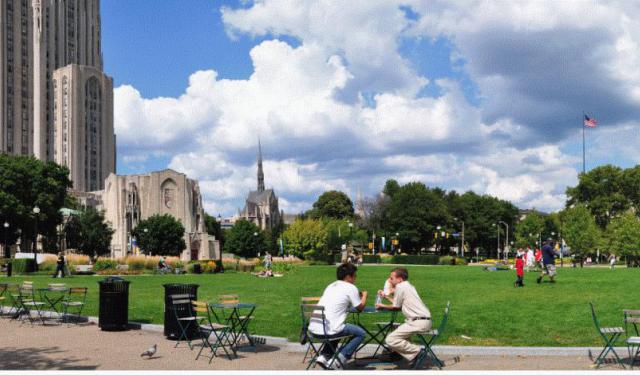
Welcome to Oakland, an academic and cultural center of Pittsburgh! Representing a harmonious blend of intellectual prowess, cultural marvels, and natural splendor, this captivating neighborhood brims with attractions to overlook which would be a terrible miss!
As a manifestation of the transformative power of knowledge and creativity, Oakland, in large part, owes its status to the 19th-century... view more
Tour Duration: 2 Hour(s)
Travel Distance: 2.8 Km or 1.7 Miles
As a manifestation of the transformative power of knowledge and creativity, Oakland, in large part, owes its status to the 19th-century... view more
Tour Duration: 2 Hour(s)
Travel Distance: 2.8 Km or 1.7 Miles

Mount Washington Walking Tour
Rising above the southern bank of the Monongahela River, Mount Washington has long occupied a strategic and symbolic place in Pittsburgh’s story. Before it became known for beautiful skyline views and hillside restaurants, the neighborhood was valued for something far more practical: coal.
In the late eighteenth and early nineteenth centuries, the hill was called “Coal Hill”, a name tied... view more
Tour Duration: 1 Hour(s)
Travel Distance: 1.8 Km or 1.1 Miles
In the late eighteenth and early nineteenth centuries, the hill was called “Coal Hill”, a name tied... view more
Tour Duration: 1 Hour(s)
Travel Distance: 1.8 Km or 1.1 Miles
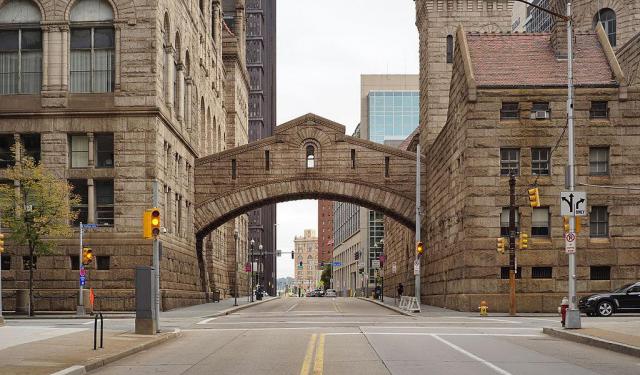
Downtown Architectural Jewels
Pittsburgh's Downtown is laden with an array of stylish architectural gems. Scattered throughout the city's urban core, these landmarks, some of which date back as far as the 18th century, collectively evoke an air of grandeur and historical significance.
The Fort Pitt Blockhouse, an emblem of resilience and frontier spirit, is the oldest extant structure in Western Pennsylvania,... view more
Tour Duration: 2 Hour(s)
Travel Distance: 2.6 Km or 1.6 Miles
The Fort Pitt Blockhouse, an emblem of resilience and frontier spirit, is the oldest extant structure in Western Pennsylvania,... view more
Tour Duration: 2 Hour(s)
Travel Distance: 2.6 Km or 1.6 Miles
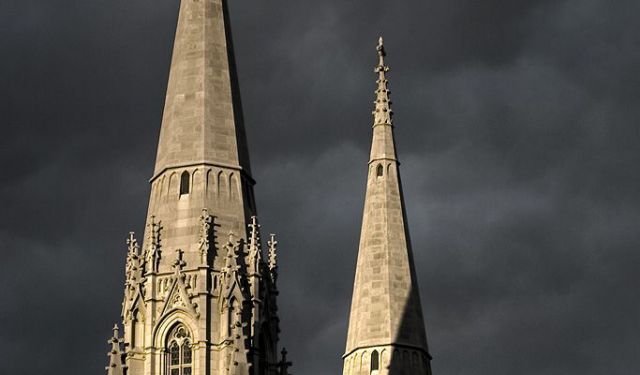
Pittsburgh's Historical Churches
Pittsburgh's storied landscape is interwoven with the resplendent charm of its historical churches. Apart from being testaments to the city's rich religious heritage and the enduring spirit of faith, these abodes of worship stand as venerable monuments, whose architectural splendor etched an indelible mark on Pittsburgh.
Foremost among them is the First Presbyterian Church. This... view more
Tour Duration: 1 Hour(s)
Travel Distance: 1.4 Km or 0.9 Miles
Foremost among them is the First Presbyterian Church. This... view more
Tour Duration: 1 Hour(s)
Travel Distance: 1.4 Km or 0.9 Miles

Pittsburgh Downtown Walking Tour
Author Annie Dillard, who grew up in Pittsburgh, wrote vividly about the city’s atmosphere in her memoir “An American Childhood”. She recalled the smoky skies, steep streets, and neighborhood life of mid-20th century Pittsburgh, capturing the sense of a layered and irregular city, with homes, churches, and old industrial buildings tucked into valleys or perched above the water.
... view more
Tour Duration: 2 Hour(s)
Travel Distance: 3.2 Km or 2 Miles
... view more
Tour Duration: 2 Hour(s)
Travel Distance: 3.2 Km or 2 Miles