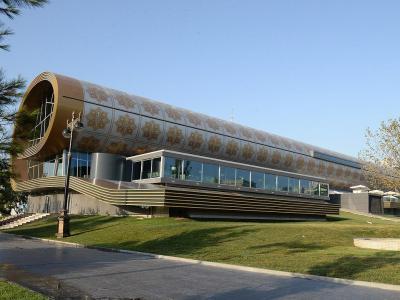


State Carpet Museum, Baku (must see)
The State Carpet Museum, established in 1967 on the initiative of prominent carpet scholar and artist Latif Karimov, is devoted to preserving and presenting Azerbaijan’s long tradition of carpet weaving. Although the museum was founded in 1967, its first permanent exhibition opened in 1972 in the Juma Mosque in Baku’s Old City.
In 1992, the museum moved to the second floor of the Baku Museum Center, a building that had previously housed the Lenin Museum. As the collection continued to grow, a purpose-built museum was planned for the seafront. The present building opened in 2014 and was designed by Austrian architect Franz Janz to resemble a rolled carpet, making the museum itself one of Baku’s most recognizable modern landmarks.
The State Carpet Museum holds the world’s largest collection of Azerbaijani carpets, with thousands of examples representing different regional traditions, weaving techniques, patterns, and materials. The displays include both pile and pileless carpets, as well as ceramics, jewelry, traditional clothing, embroidery, metalwork, and other forms of decorative art.
Visitors can also learn how carpets were used in everyday life and ceremonies, and how particular colors, motifs, and designs reflected local traditions and beliefs. Live weaving demonstrations help explain techniques that have been passed from one generation to another. Traditional Azerbaijani carpet weaving was added to UNESCO’s Representative List of the Intangible Cultural Heritage of Humanity in 2010.
A section of the museum is devoted to Latif Karimov, whose research helped classify and document the different schools and traditions of Azerbaijani carpet making. Along with displaying finished works, the museum therefore presents carpet weaving as a living craft closely connected with Azerbaijan’s history, family traditions, and cultural identity.
Want to visit this sight? Check out these Self-Guided Walking Tours in Baku. Alternatively, you can download the mobile app "GPSmyCity: Walks in 1K+ Cities" from Apple App Store or Google Play Store. The app turns your mobile device to a personal tour guide and it works offline, so no data plan is needed when traveling abroad.
Download The GPSmyCity App



State Carpet Museum on Map
Sight Name: State Carpet Museum
Sight Location: Baku, Azerbaijan (See walking tours in Baku)
Sight Type: Museum/Gallery
Guide(s) Containing This Sight:
Sight Location: Baku, Azerbaijan (See walking tours in Baku)
Sight Type: Museum/Gallery
Guide(s) Containing This Sight:
Nearby Sights




Walking Tours in Baku, Azerbaijan

Create Your Own Walk in Baku
Creating your own self-guided walk in Baku is easy and fun. Choose the city attractions that you want to see and a walk route map will be created just for you. You can even set your hotel as the start point of the walk.
A Walk Through Baku Old City
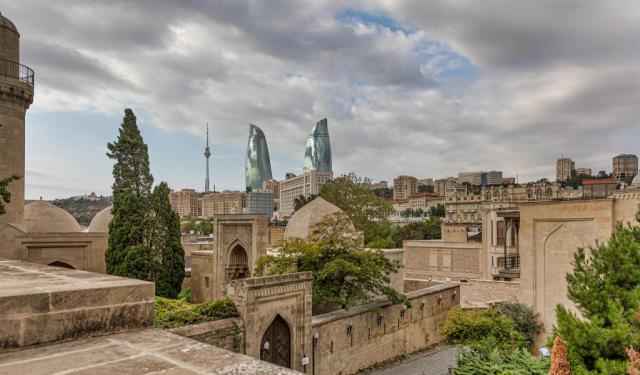
Baku's "Ichari Shahar", which literally means "Inner City," is also often referred to by foreigners as the Old City. Its unique architecture differs considerably from other ancient places in Azerbaijan and is replete with fascinating historical monuments. The most prominent of them are the 12th-century, 97-foot Maiden Tower-the most distinctive symbol of the country,... view more
Tour Duration: 1 Hour
Travel Distance: 1 Km or 0.6 Miles
Tour Duration: 1 Hour
Travel Distance: 1 Km or 0.6 Miles
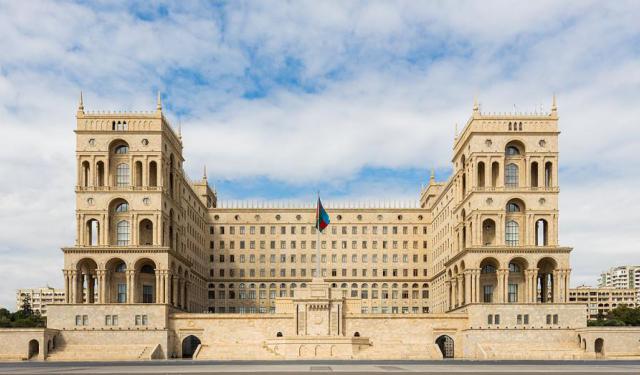
A Walking Guide to Baku's Architectural Jewels
The city of Baku is an architectural marvel that delights with its historic buildings, grand mansions and cultural diversity. The Old City, for example, is full of fantastic old mosques and palaces that are listed as heritage monuments by UNESCO. The city is especially beautiful at night when it is wonderfully illuminated. Follow this self-guided walking tour to see the most impressive... view more
Tour Duration: 2 Hours
Travel Distance: 3.8 Km or 2.4 Miles
Tour Duration: 2 Hours
Travel Distance: 3.8 Km or 2.4 Miles
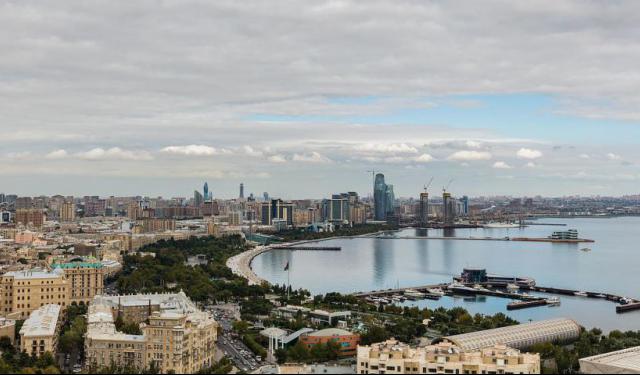
Explore Baku's Top Attractions on Foot
When French novelist Alexandre Dumas arrived here in 1858, he came looking for something Baku had been famous for long before oil derricks and skyscrapers-the mysterious fires that seemed to rise straight out of the earth.
The origin of the name Baku is uncertain. A popular explanation derives the name from the Persian Badkube, meaning roughly “wind-beaten” or “pounded by the wind,” an... view more
Tour Duration: 2 Hours
Travel Distance: 4.1 Km or 2.5 Miles
The origin of the name Baku is uncertain. A popular explanation derives the name from the Persian Badkube, meaning roughly “wind-beaten” or “pounded by the wind,” an... view more
Tour Duration: 2 Hours
Travel Distance: 4.1 Km or 2.5 Miles