


The Church of St Martin-le-Grand, Dover
The Church of Saint Martin-le-Grand in Dover has a history dating back to the 7th century. Initially founded as part of a Kentish monastery within the Roman Saxon-Shore Fort, it was destroyed by Viking raids in the 9th century. The Canons of Saint Martin relocated to Castle Hill, where a new church, later known as Saint Mary-in-Castro, was built. By the Norman Conquest, this site became central to the canons' operations, but the construction of Dover Castle prompted their relocation to a site in the town below.
Construction of the new church began around 1070 on the western side of the present Market Square. Work was halted in the early 12th century due to disputes over control, as the Canons of Saint Martin were subject only to the King and the Pope. Archbishop of Canterbury Corboil ultimately persuaded King Henry I to transfer the church's estates to Canterbury. By 1139, a new priory for the canons was established outside Dover, and the partially completed structure evolved into the parish church of Saint Martin-le-Grand.
During the late Middle Ages, the church housed three combined parishes-Saint Martin, Saint Nicholas, and Saint John the Baptist-under one roof. The interior featured numerous altars and chapels, as described in wills from the 15th and 16th centuries. However, the church fell into decline by the Reformation. By 1546, its altars were removed, parts were converted into shops and residences, and the graveyard remained in use until the 19th century.
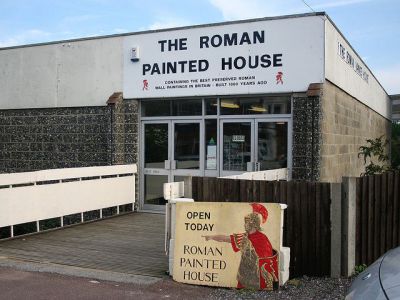
Severely damaged during World War II, the church remains in ruins today. Small sections of its walls survive near Dover’s Market Square, adjacent to the Dover Discovery Centre and the Roman Painted House. These remnants serve as a testament to the church’s centuries of significance, from its founding in the 7th century to its decline and eventual destruction.
Construction of the new church began around 1070 on the western side of the present Market Square. Work was halted in the early 12th century due to disputes over control, as the Canons of Saint Martin were subject only to the King and the Pope. Archbishop of Canterbury Corboil ultimately persuaded King Henry I to transfer the church's estates to Canterbury. By 1139, a new priory for the canons was established outside Dover, and the partially completed structure evolved into the parish church of Saint Martin-le-Grand.
During the late Middle Ages, the church housed three combined parishes-Saint Martin, Saint Nicholas, and Saint John the Baptist-under one roof. The interior featured numerous altars and chapels, as described in wills from the 15th and 16th centuries. However, the church fell into decline by the Reformation. By 1546, its altars were removed, parts were converted into shops and residences, and the graveyard remained in use until the 19th century.
Severely damaged during World War II, the church remains in ruins today. Small sections of its walls survive near Dover’s Market Square, adjacent to the Dover Discovery Centre and the Roman Painted House. These remnants serve as a testament to the church’s centuries of significance, from its founding in the 7th century to its decline and eventual destruction.
Want to visit this sight? Check out these Self-Guided Walking Tours in Dover. Alternatively, you can download the mobile app "GPSmyCity: Walks in 1K+ Cities" from Apple App Store or Google Play Store. The app turns your mobile device to a personal tour guide and it works offline, so no data plan is needed when traveling abroad.
Download The GPSmyCity App



The Church of St Martin-le-Grand on Map
Sight Name: The Church of St Martin-le-Grand
Sight Location: Dover, England (See walking tours in Dover)
Sight Type: Attraction/Landmark
Sight Location: Dover, England (See walking tours in Dover)
Sight Type: Attraction/Landmark
Nearby Sights
Walking Tours in Dover, England

Create Your Own Walk in Dover
Creating your own self-guided walk in Dover is easy and fun. Choose the city attractions that you want to see and a walk route map will be created just for you. You can even set your hotel as the start point of the walk.
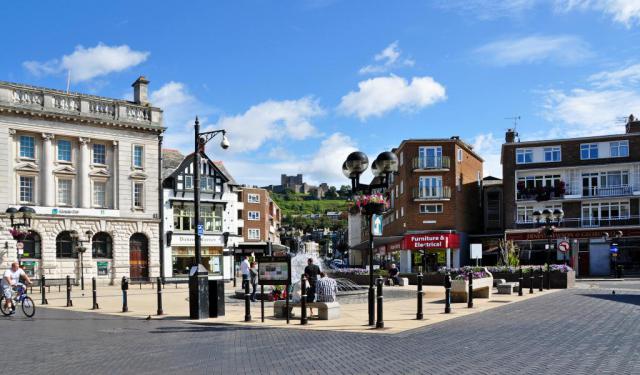
Dover Castle and City Center Walking Tour
The lovely coastal town of Dover in Kent, England, overlooking the English Channel from the height of the striking white chalk cliffs, has long been a major sea gate to the country. It is to this iconic landmark, known as the "White Cliffs of Dover", that the isle of Great Britain owes its nickname, the Albion.
According to archaeological findings, this location at the narrowest... view more
Tour Duration: 1 Hour(s)
Travel Distance: 2.8 Km or 1.7 Miles
According to archaeological findings, this location at the narrowest... view more
Tour Duration: 1 Hour(s)
Travel Distance: 2.8 Km or 1.7 Miles
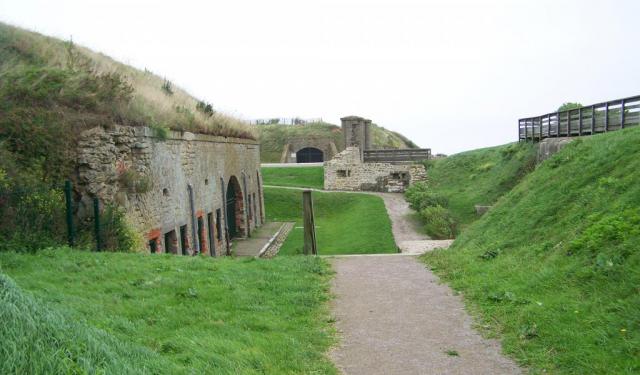
Dover's Western Heights Walking Tour
The Western Heights of Dover is an impressive fortification built for protection against invaders. Construction took place at the time of the Napoleonic Wars, with improvements continuing during the 19th century. This immense hilltop fortress features an incredible network of forts, barracks, tunnels, ramparts, and massive ditches.
There are two forts at Western Heights, the Drop Redoubt and... view more
Tour Duration: 1 Hour(s)
Travel Distance: 1.9 Km or 1.2 Miles
There are two forts at Western Heights, the Drop Redoubt and... view more
Tour Duration: 1 Hour(s)
Travel Distance: 1.9 Km or 1.2 Miles