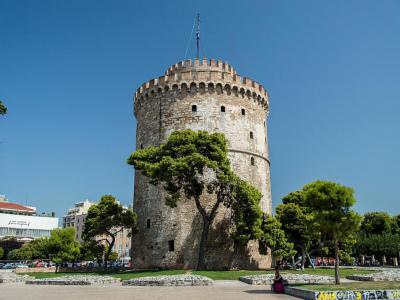


White Tower of Thessaloniki, Thessaloniki (must see)
Rising to a height of approximately 112 feet, the White Tower was constructed by the Ottomans in the 15th century, shortly after their capture of the city in 1430. It formed part of the coastal fortifications and was originally integrated into a broader defensive system that included walls and artillery platforms protecting the harbor.
From the outset, the tower served a military purpose and was incorporated into the city’s defensive perimeter. Over time, it became closely associated with imprisonment and punishment. By the 17th century, it functioned as a garrison and later as a prison. During the Ottoman period, it acquired the grim name Tower of Blood or Red Tower, reflecting its role as a site of executions. In 1826, during the suppression of the Janissaries ordered by the Ottoman sultan Mahmud II, imprisoned Janissaries in Thessaloniki were executed, further cementing the tower’s fearsome reputation.
In 1890, the tower was painted white and officially renamed the White Tower. Many historians interpret this act as a symbolic attempt by the Ottoman authorities to erase-or at least soften-the memory of the tower’s violent past, though no definitive explanation survives. Regardless of intent, the new name endured and became firmly established.
The area around the tower has also witnessed pivotal moments in modern Greek history. In 1913, King George I of Greece was assassinated near the tower, marking another dramatic episode linked to the site. During World War I, the tower was used by Allied forces as a communications center, and the surrounding defensive walls were dismantled. At the same time, the tower served as a secure repository for important antiquities.
Throughout the 20th century, the White Tower continued to serve practical functions. Thessaloniki’s air defense operated from the tower between 1912 and 1983, and it also housed a meteorological laboratory. Today, the tower is home to a museum dedicated to the city’s history, presenting exhibitions that trace Thessaloniki’s development from its founding in 316 BC to the present day. Visitors who climb to the upper level are rewarded with views across the city and the Thermaic Gulf.
From the outset, the tower served a military purpose and was incorporated into the city’s defensive perimeter. Over time, it became closely associated with imprisonment and punishment. By the 17th century, it functioned as a garrison and later as a prison. During the Ottoman period, it acquired the grim name Tower of Blood or Red Tower, reflecting its role as a site of executions. In 1826, during the suppression of the Janissaries ordered by the Ottoman sultan Mahmud II, imprisoned Janissaries in Thessaloniki were executed, further cementing the tower’s fearsome reputation.
In 1890, the tower was painted white and officially renamed the White Tower. Many historians interpret this act as a symbolic attempt by the Ottoman authorities to erase-or at least soften-the memory of the tower’s violent past, though no definitive explanation survives. Regardless of intent, the new name endured and became firmly established.
The area around the tower has also witnessed pivotal moments in modern Greek history. In 1913, King George I of Greece was assassinated near the tower, marking another dramatic episode linked to the site. During World War I, the tower was used by Allied forces as a communications center, and the surrounding defensive walls were dismantled. At the same time, the tower served as a secure repository for important antiquities.
Throughout the 20th century, the White Tower continued to serve practical functions. Thessaloniki’s air defense operated from the tower between 1912 and 1983, and it also housed a meteorological laboratory. Today, the tower is home to a museum dedicated to the city’s history, presenting exhibitions that trace Thessaloniki’s development from its founding in 316 BC to the present day. Visitors who climb to the upper level are rewarded with views across the city and the Thermaic Gulf.
Want to visit this sight? Check out these Self-Guided Walking Tours in Thessaloniki. Alternatively, you can download the mobile app "GPSmyCity: Walks in 1K+ Cities" from Apple App Store or Google Play Store. The app turns your mobile device to a personal tour guide and it works offline, so no data plan is needed when traveling abroad.
Download The GPSmyCity App



White Tower of Thessaloniki on Map
Sight Name: White Tower of Thessaloniki
Sight Location: Thessaloniki, Greece (See walking tours in Thessaloniki)
Sight Type: Attraction/Landmark
Guide(s) Containing This Sight:
Sight Location: Thessaloniki, Greece (See walking tours in Thessaloniki)
Sight Type: Attraction/Landmark
Guide(s) Containing This Sight:
Nearby Sights
Walking Tours in Thessaloniki, Greece

Create Your Own Walk in Thessaloniki
Creating your own self-guided walk in Thessaloniki is easy and fun. Choose the city attractions that you want to see and a walk route map will be created just for you. You can even set your hotel as the start point of the walk.
Thessaloniki Upper Town Walking Tour
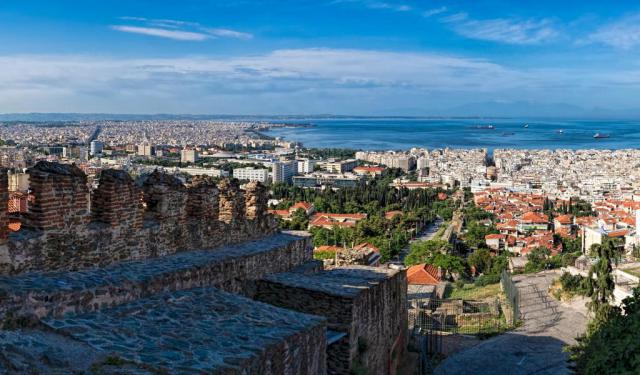
Thessaloniki’s Upper Town, known locally as Ano Poli, which literally translates as “Upper City” is the city’s oldest continuously inhabited district and the only area to survive the Great Fire of 1917 largely intact. While the lower city was rebuilt along modern, planned lines in the early 20th century, Ano Poli retained its Byzantine street layout, Ottoman-era houses, and defensive... view more
Tour Duration: 2 Hours
Travel Distance: 4 Km or 2.5 Miles
Tour Duration: 2 Hours
Travel Distance: 4 Km or 2.5 Miles
Thessaloniki Downtown Walking Tour
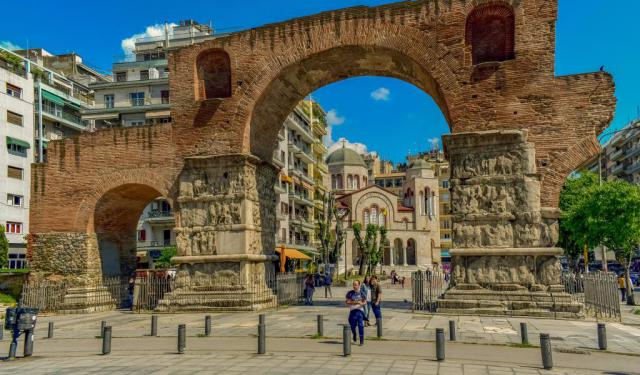
Thessaloniki has been shaped by layers of empire, trade, and migration for more than two millennia. It was founded in 315 BCE by Cassander, king of Macedon, who merged several smaller settlements around the Thermaic Gulf into a single city. He named it after his wife, Thessalonike, the half-sister of Alexander the Great. The name Thessalonikē combines Thessaloi and nikē, meaning victory,... view more
Tour Duration: 2 Hours
Travel Distance: 3.7 Km or 2.3 Miles
Tour Duration: 2 Hours
Travel Distance: 3.7 Km or 2.3 Miles
Thessaloniki Waterfront Tour
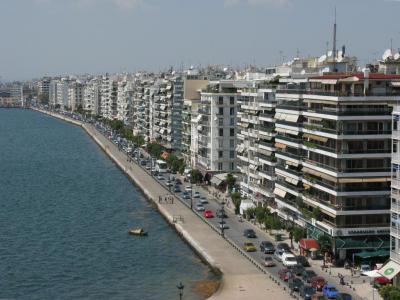
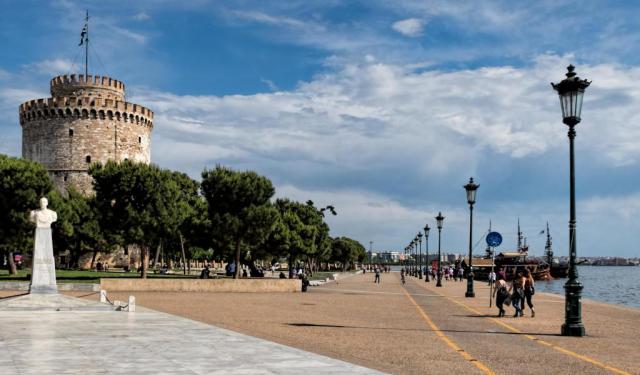
The Mediterranean has always been an integral part of Thessaloniki’s appeal. The city's orientation toward the sea is largely due to the vision of Ernest Hébrard, the French urban planner and architect, who redesigned the downtown area after the devastating fire of 1917.
To really get the taste of Thessaloniki you need to visit not just its historical landmarks, but also those spots... view more
Tour Duration: 1 Hour
Travel Distance: 2.6 Km or 1.6 Miles
To really get the taste of Thessaloniki you need to visit not just its historical landmarks, but also those spots... view more
Tour Duration: 1 Hour
Travel Distance: 2.6 Km or 1.6 Miles