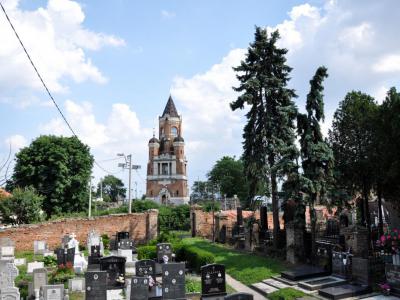


Zemun Cemetery, Belgrade
Zemun Cemetery, situated on picturesque Gardoš Hill, is an important cultural and historical landmark that reflects the diverse communities that have shaped Zemun over the centuries.
The origins of the cemetery date to the period after 1717, when Zemun passed from Ottoman to Habsburg control. Initially established for the Catholic population, the cemetery expanded by the late 18th century to accommodate the Orthodox community as well.
Over the centuries, Zemun Cemetery became the final resting place of numerous prominent local figures, artists, scientists and soldiers. By the mid-20th century, it had largely reached its present size, leading to plans for additional burial grounds elsewhere. Today, the historic cemetery remains in use, primarily serving families with existing burial plots.
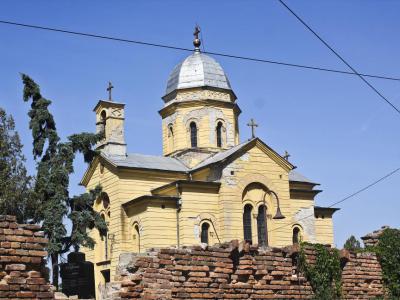
As you explore, notice how the cemetery is divided into sections reflecting Zemun’s different religious communities. The Orthodox section contains several notable monuments, including the Church of Saint Demetrius, erected in 1876 as an endowment of the Petrović-Hariš merchant family, and a chapel belonging to the Spirta family dating from around 1911. You can also find a monument commemorating Serbian soldiers from World War I, along with historically and artistically significant graves decorated with sculptures.
The Catholic section contains a chapel dating from 1763, as well as the stylized Treščik family chapel from 1909. Look for the striking Neo-Gothic Crucifixion and the graves of nuns who contributed to Zemun’s hospitals and schools.
Particularly noteworthy is the Jewish cemetery, one of the oldest in Serbia and in continuous use since 1739. Its varied stone memorials range from traditional inscribed slabs to more modern tombstones, together preserving another important layer of Zemun’s multicultural history.
The origins of the cemetery date to the period after 1717, when Zemun passed from Ottoman to Habsburg control. Initially established for the Catholic population, the cemetery expanded by the late 18th century to accommodate the Orthodox community as well.
Over the centuries, Zemun Cemetery became the final resting place of numerous prominent local figures, artists, scientists and soldiers. By the mid-20th century, it had largely reached its present size, leading to plans for additional burial grounds elsewhere. Today, the historic cemetery remains in use, primarily serving families with existing burial plots.
As you explore, notice how the cemetery is divided into sections reflecting Zemun’s different religious communities. The Orthodox section contains several notable monuments, including the Church of Saint Demetrius, erected in 1876 as an endowment of the Petrović-Hariš merchant family, and a chapel belonging to the Spirta family dating from around 1911. You can also find a monument commemorating Serbian soldiers from World War I, along with historically and artistically significant graves decorated with sculptures.
The Catholic section contains a chapel dating from 1763, as well as the stylized Treščik family chapel from 1909. Look for the striking Neo-Gothic Crucifixion and the graves of nuns who contributed to Zemun’s hospitals and schools.
Particularly noteworthy is the Jewish cemetery, one of the oldest in Serbia and in continuous use since 1739. Its varied stone memorials range from traditional inscribed slabs to more modern tombstones, together preserving another important layer of Zemun’s multicultural history.
Want to visit this sight? Check out these Self-Guided Walking Tours in Belgrade. Alternatively, you can download the mobile app "GPSmyCity: Walks in 1K+ Cities" from Apple App Store or Google Play Store. The app turns your mobile device to a personal tour guide and it works offline, so no data plan is needed when traveling abroad.
Download The GPSmyCity App



Zemun Cemetery on Map
Sight Name: Zemun Cemetery
Sight Location: Belgrade, Serbia (See walking tours in Belgrade)
Sight Type: Attraction/Landmark
Guide(s) Containing This Sight:
Sight Location: Belgrade, Serbia (See walking tours in Belgrade)
Sight Type: Attraction/Landmark
Guide(s) Containing This Sight:
Nearby Sights
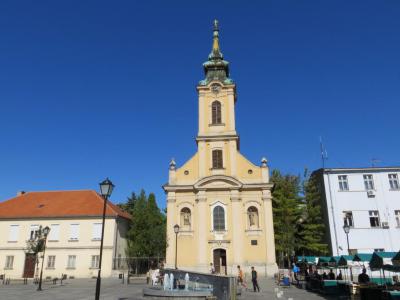
Walking Tours in Belgrade, Serbia

Create Your Own Walk in Belgrade
Creating your own self-guided walk in Belgrade is easy and fun. Choose the city attractions that you want to see and a walk route map will be created just for you. You can even set your hotel as the start point of the walk.
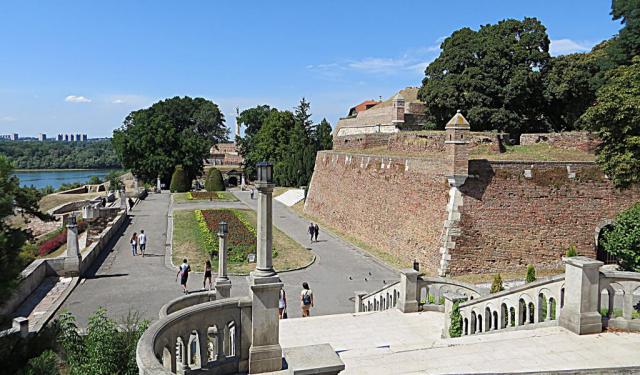
Kalemegdan Park and Belgrade Fortress Walking Tour
The most beautiful park in Belgrade, Kalemegdan Park, or simply Kalemegdan, is also the largest park and the most important cultural and historical complex in the city. The actual park occupies a smaller portion, in the southern corner, of another, grander monument - the Belgrade Fortress (which is some two millennia older).
The fortress itself, often erroneously referred to, even by the... view more
Tour Duration: 2 Hours
Travel Distance: 2.1 Km or 1.3 Miles
The fortress itself, often erroneously referred to, even by the... view more
Tour Duration: 2 Hours
Travel Distance: 2.1 Km or 1.3 Miles
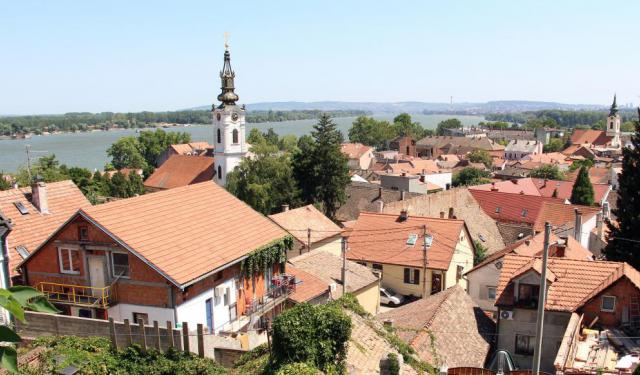
Zemun Old Town Walking Tour
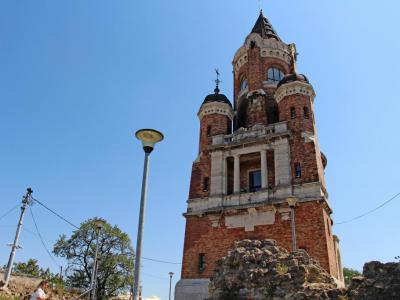
Belgrade's Old Town, also known as Zemun, spread around Gardos Hill, is one of the city's oldest parts. Throughout the centuries, as the Balkans were part first of the Roman, then the Byzantine, and then the Austro-Hungarian empires, this area transformed into a beautiful neighborhood with narrow streets, cute buildings, and breathtaking views opening from the hill onto the Old Town and... view more
Tour Duration: 2 Hours
Travel Distance: 2.4 Km or 1.5 Miles
Tour Duration: 2 Hours
Travel Distance: 2.4 Km or 1.5 Miles
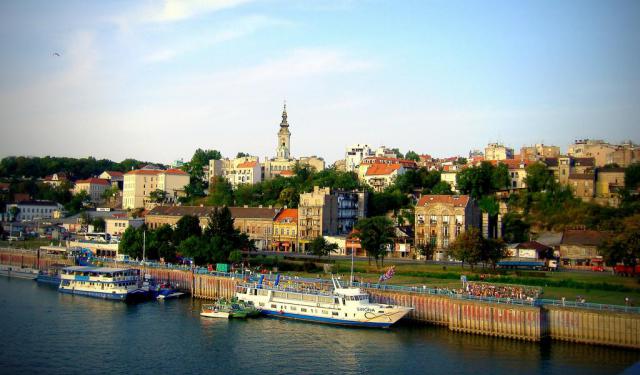
Belgrade's Top Attractions Walking Tour
Belgrade has been a city of strategic importance for millennia with its location at the confluence of the Sava and Danube rivers. In fact, it is one of the oldest continually inhabited cities on the planet.
Nomadic tribes inhabited the area as far back as 20,000 to 50,000 years ago. Some of these may have been Neanderthals rather than modern humans. By the sixth century BC, the Vinca culture... view more
Tour Duration: 2 Hours
Travel Distance: 4 Km or 2.5 Miles
Nomadic tribes inhabited the area as far back as 20,000 to 50,000 years ago. Some of these may have been Neanderthals rather than modern humans. By the sixth century BC, the Vinca culture... view more
Tour Duration: 2 Hours
Travel Distance: 4 Km or 2.5 Miles