Custom Walk in San Jose, Costa Rica by davisglen1377434 created on 2023-03-22
Guide Location: Costa Rica » San Jose
Guide Type: Custom Walk
# of Sights: 6
Tour Duration: 2 Hour(s)
Travel Distance: 3.8 Km or 2.4 Miles
Share Key: 26D2V
Guide Type: Custom Walk
# of Sights: 6
Tour Duration: 2 Hour(s)
Travel Distance: 3.8 Km or 2.4 Miles
Share Key: 26D2V
How It Works
Please retrieve this walk in the GPSmyCity app. Once done, the app will guide you from one tour stop to the next as if you had a personal tour guide. If you created the walk on this website or come to the page via a link, please follow the instructions below to retrieve the walk in the app.
Retrieve This Walk in App
Step 1. Download the app "GPSmyCity: Walks in 1K+ Cities" on Apple App Store or Google Play Store.



Step 2. In the GPSmyCity app, download(or launch) the guide "San Jose Map and Walking Tours".
Step 3. Tap the menu button located at upper right corner of the "Walks" screen and select "Retrieve custom walk". Enter the share key: 26D2V
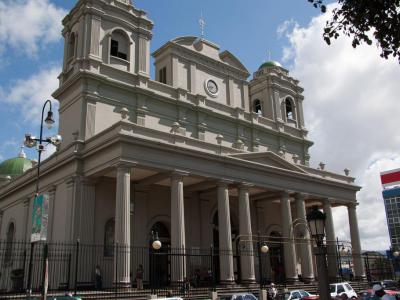
1) Catedral Metropolitana (Metropolitan Cathedral ) (must see)
The Metropolitan Cathedral of San José, originally constructed in 1802, has long served as the spiritual heart of the city’s Catholic community. The early church, however, did not escape the region’s seismic activity—an earthquake in the early 1800s left the building damaged, prompting a major reconstruction in 1871.
The cathedral’s current design is a unique blend of Greek Orthodox, Neo-Classical, and Baroque styles, reflecting both European influence and local craftsmanship. Doric pilasters, a neo-classical pediment, and side steeples elegantly combine to honor the church’s historical origins while presenting a grand façade to the city.
Inside, the cathedral continues to impress with its finely tiled Colonial floors and beautifully crafted stained-glass windows, each depicting vivid biblical stories. Intricate wooden cherubs hover near the altar, where a carefully carved figure of Christ commands attention.
Beyond the artistic beauty, the cathedral is steeped in historical significance. In 1983, Pope John Paul II visited San José, leaving a lasting mark with a marble statue that now stands in the north garden, commemorating his presence. The cathedral’s crypt also holds historical treasures: the remains of two former archbishops and a Costa Rican president rest here, connecting the church not only to spiritual life but also to the nation’s political and cultural heritage.
Tip:
Although not technically part of the cathedral complex, a small statue of Holocaust victim Anne Frank graces the pedestrian mall on the building's south side. It was donated by the Embassy of the Netherlands.
The cathedral’s current design is a unique blend of Greek Orthodox, Neo-Classical, and Baroque styles, reflecting both European influence and local craftsmanship. Doric pilasters, a neo-classical pediment, and side steeples elegantly combine to honor the church’s historical origins while presenting a grand façade to the city.
Inside, the cathedral continues to impress with its finely tiled Colonial floors and beautifully crafted stained-glass windows, each depicting vivid biblical stories. Intricate wooden cherubs hover near the altar, where a carefully carved figure of Christ commands attention.
Beyond the artistic beauty, the cathedral is steeped in historical significance. In 1983, Pope John Paul II visited San José, leaving a lasting mark with a marble statue that now stands in the north garden, commemorating his presence. The cathedral’s crypt also holds historical treasures: the remains of two former archbishops and a Costa Rican president rest here, connecting the church not only to spiritual life but also to the nation’s political and cultural heritage.
Tip:
Although not technically part of the cathedral complex, a small statue of Holocaust victim Anne Frank graces the pedestrian mall on the building's south side. It was donated by the Embassy of the Netherlands.
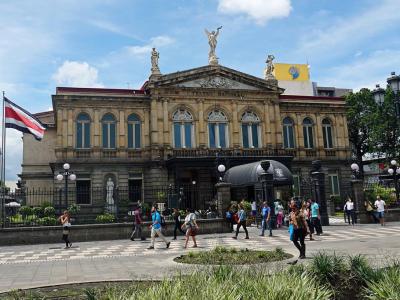
2) Teatro Nacional (National Theater) (must see)
The National Theater of Costa Rica stands as one of San José’s crown jewels, a monument to the city’s golden age of coffee wealth and cultural ambition. Construction began in 1891, and by 1897 the curtain rose on Goethe’s Faust, inaugurating what would become a symbol of national pride. Its creation was fueled, quite literally, by coffee — when export profits soared, a tax on the trade helped finance this grand temple of the arts.
Inside, the theater impresses with marble staircases, gilded ceilings, and ornate furnishings that would feel at home in Paris or Vienna. Every inch of its interior whispers of a time when San José dreamed big and refused to settle for provincial charm. The blend of European opulence and Costa Rican craftsmanship creates a stage that’s as captivating as any performance held there.
Outside, the statues of playwright Calderón de la Barca and composer Ludwig van Beethoven stand watch at the entrance, immortalized not only in bronze but also on the country’s currency. Today, the theater remains an active venue, hosting regular performances that keep its grand spirit alive — proof that art, like coffee, continues to be one of Costa Rica’s finest exports.
Tip:
If you have a ticket for a performance, ask for the free English tour included in the ticket price to learn a bit of history about the place.
Inside, the theater impresses with marble staircases, gilded ceilings, and ornate furnishings that would feel at home in Paris or Vienna. Every inch of its interior whispers of a time when San José dreamed big and refused to settle for provincial charm. The blend of European opulence and Costa Rican craftsmanship creates a stage that’s as captivating as any performance held there.
Outside, the statues of playwright Calderón de la Barca and composer Ludwig van Beethoven stand watch at the entrance, immortalized not only in bronze but also on the country’s currency. Today, the theater remains an active venue, hosting regular performances that keep its grand spirit alive — proof that art, like coffee, continues to be one of Costa Rica’s finest exports.
Tip:
If you have a ticket for a performance, ask for the free English tour included in the ticket price to learn a bit of history about the place.
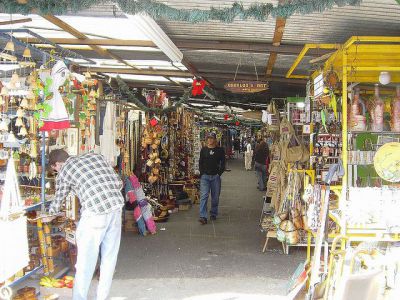
3) Mercado Municipal de Artesania (Municipal Market of Handcrafts) (must see)
The Municipal Craft Market in San José is a lively open-air hub where the city’s rich artisan traditions come to life. Colorful stalls brim with handcrafted jewelry, wood carvings, baskets, pottery, t-shirts, and decorative art, many of which can be admired while watching skilled artisans at work.
Unlike other markets in the city, the focus here leans strongly toward authentic handcrafts rather than mass-produced souvenirs, offering a more genuine glimpse into Costa Rican creativity. With room for 88 vendors and plenty of space to stroll, the market invites leisurely exploration amid its vibrant displays and tempting wares.
Beyond shopping, the atmosphere is part of the charm: the bustling stalls, the scent of local foods, and the occasional performance or demonstration create a dynamic, sensory experience that captures the essence of San José’s cultural heart.
Unlike other markets in the city, the focus here leans strongly toward authentic handcrafts rather than mass-produced souvenirs, offering a more genuine glimpse into Costa Rican creativity. With room for 88 vendors and plenty of space to stroll, the market invites leisurely exploration amid its vibrant displays and tempting wares.
Beyond shopping, the atmosphere is part of the charm: the bustling stalls, the scent of local foods, and the occasional performance or demonstration create a dynamic, sensory experience that captures the essence of San José’s cultural heart.
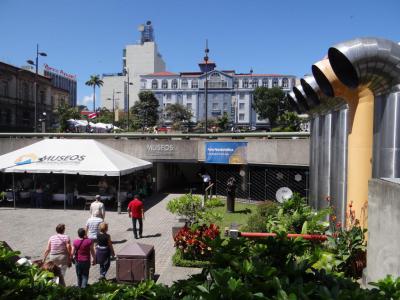
4) Museo del Oro Precolombino (Pre-Columbian Gold Museum) (must see)
Hidden beneath Culture Square in downtown San José, the Pre-Columbian Gold Museum sparkles as one of Costa Rica’s true underground treasures. Managed by the Central Bank of Costa Rica, this fascinating space houses more than 1,600 gold artifacts dating back to 500 AD, each one gleaming with stories of artistry, power, and ancient prestige.
The exhibits range from delicate amulets, earrings, and animal figurines—especially frogs, symbols of fertility and transformation—to a few bold erotic statuettes. The highlight is The Warrior, a life-sized gold figure magnificently adorned with ornaments and displayed in a glass case, embodying the splendor of Costa Rica’s pre-Columbian heritage.
A replica of a pre-Columbian grave, discovered on a banana plantation in the 1950s, adds a touch of archaeological drama. Filled with 88 gold objects, it captures the ritual and reverence of a long-vanished world.
Just above, the National Coin Museum continues the journey through time, tracing the evolution of currency from 1236 AD to the present. Its displays feature everything from the nation’s first coin, the Media Escudo of 1825, to coffee tokens and rare banknotes. Highlights also include the early coins of the Mexican Mint, founded in 1535—the first in the Americas—whose silver eight-real pieces and pesos became the ancestors of modern currencies, including the U.S. Dollar.
Though modest in size, the museum offers an impressive window into Costa Rica’s economic history. Blending glittering craftsmanship with cultural insight, it remains one of San José’s most captivating and distinctive attractions.
The exhibits range from delicate amulets, earrings, and animal figurines—especially frogs, symbols of fertility and transformation—to a few bold erotic statuettes. The highlight is The Warrior, a life-sized gold figure magnificently adorned with ornaments and displayed in a glass case, embodying the splendor of Costa Rica’s pre-Columbian heritage.
A replica of a pre-Columbian grave, discovered on a banana plantation in the 1950s, adds a touch of archaeological drama. Filled with 88 gold objects, it captures the ritual and reverence of a long-vanished world.
Just above, the National Coin Museum continues the journey through time, tracing the evolution of currency from 1236 AD to the present. Its displays feature everything from the nation’s first coin, the Media Escudo of 1825, to coffee tokens and rare banknotes. Highlights also include the early coins of the Mexican Mint, founded in 1535—the first in the Americas—whose silver eight-real pieces and pesos became the ancestors of modern currencies, including the U.S. Dollar.
Though modest in size, the museum offers an impressive window into Costa Rica’s economic history. Blending glittering craftsmanship with cultural insight, it remains one of San José’s most captivating and distinctive attractions.
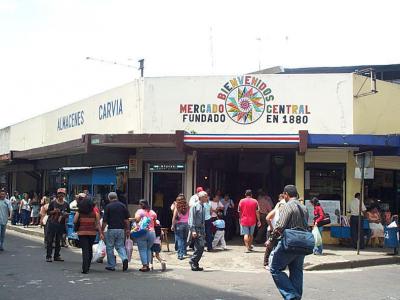
5) Mercado Central (Central Market) (must see)
The Central Market buzzes with activity in the heart of San José, occupying an entire city block and serving as a cornerstone of local life since 1880. Narrow aisles are packed with stalls offering a dizzying variety of goods, from fresh fish and fragrant flowers to local breads, fruits, vegetables, and the rich aroma of freshly ground coffee. Add a local beer, and a full Costa Rican meal can be assembled from the market’s bounty.
Souvenir hunters gravitate toward the famous Costa Rican coffee beans—whole beans are best, as the pre-ground version tends to be too fine for most home coffee makers. Beyond ingredients to take home, the market also offers prepared local dishes for those eager to sample traditional flavors on the spot.
Open daily from dawn to dusk, the Central Market is as much an experience as a shopping destination. Its labyrinthine layout means it’s easy to wander far from the entrance, so a map of the surrounding area comes in handy when navigating the bustling, vibrant corridors.
Tip:
Give the traditional ice cream flavor a try! Otherwise, eat where you see the most locals, as they know where the best foods are.
Souvenir hunters gravitate toward the famous Costa Rican coffee beans—whole beans are best, as the pre-ground version tends to be too fine for most home coffee makers. Beyond ingredients to take home, the market also offers prepared local dishes for those eager to sample traditional flavors on the spot.
Open daily from dawn to dusk, the Central Market is as much an experience as a shopping destination. Its labyrinthine layout means it’s easy to wander far from the entrance, so a map of the surrounding area comes in handy when navigating the bustling, vibrant corridors.
Tip:
Give the traditional ice cream flavor a try! Otherwise, eat where you see the most locals, as they know where the best foods are.
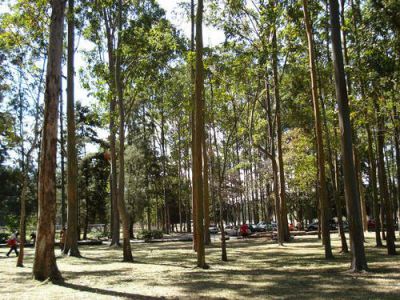
6) Parque Metropolitano La Sabana (must see)
La Sabana Metroplitan Park is one of San Jose, Costa Rica’s biggest and most prominent parks. It is 72 hectares in size. It is very near all the city’s core districts, so it offers a real needed green space for this busy city. The locals often call it the “lungs of San Jose” just because of the green space here.
The park was officially opened to the public in 1977, though its origins go back two centuries. A local priest of the 1700s, named Mata Redonda actually donated the land to the city that year. It has been used by people for relaxation and sports since. It has now, then, had over 150 years to develop the location. For a while, the country had its first international airport located here, which was called the La Sabana International Airport. It has since been moved elsewhere. The park now contains the country’s National Museum and Art Museum.
For the sports enthusiast, this may be your location in town. It has several athletic fields, a shooting range, and a running and skating track. There is certainly something for everyone here.
Why You Should Visit:
Great spot to view the river and Cork Harbour
Tip:
Visit over the weekend and you'll find there are numerous sports games going on and hundreds of people just enjoying the park – great atmosphere!
Don't miss the outdoor sculpture garden as it is quite large and interesting as well.
Note: Women are advised not to go alone into the wood areas or in the evenings, around or after sunset.
The park was officially opened to the public in 1977, though its origins go back two centuries. A local priest of the 1700s, named Mata Redonda actually donated the land to the city that year. It has been used by people for relaxation and sports since. It has now, then, had over 150 years to develop the location. For a while, the country had its first international airport located here, which was called the La Sabana International Airport. It has since been moved elsewhere. The park now contains the country’s National Museum and Art Museum.
For the sports enthusiast, this may be your location in town. It has several athletic fields, a shooting range, and a running and skating track. There is certainly something for everyone here.
Why You Should Visit:
Great spot to view the river and Cork Harbour
Tip:
Visit over the weekend and you'll find there are numerous sports games going on and hundreds of people just enjoying the park – great atmosphere!
Don't miss the outdoor sculpture garden as it is quite large and interesting as well.
Note: Women are advised not to go alone into the wood areas or in the evenings, around or after sunset.
