Custom Walk in Seville, Spain by ana_doresic25833 created on 2023-03-22
Guide Location: Spain » Seville
Guide Type: Custom Walk
# of Sights: 6
Tour Duration: 2 Hour(s)
Travel Distance: 4.5 Km or 2.8 Miles
Share Key: HK3EJ
Guide Type: Custom Walk
# of Sights: 6
Tour Duration: 2 Hour(s)
Travel Distance: 4.5 Km or 2.8 Miles
Share Key: HK3EJ
How It Works
Please retrieve this walk in the GPSmyCity app. Once done, the app will guide you from one tour stop to the next as if you had a personal tour guide. If you created the walk on this website or come to the page via a link, please follow the instructions below to retrieve the walk in the app.
Retrieve This Walk in App
Step 1. Download the app "GPSmyCity: Walks in 1K+ Cities" on Apple App Store or Google Play Store.



Step 2. In the GPSmyCity app, download(or launch) the guide "Seville Map and Walking Tours".
Step 3. Tap the menu button located at upper right corner of the "Walks" screen and select "Retrieve custom walk". Enter the share key: HK3EJ

1) sevilla santa justa
This custom location is created on gpsmycity.com website.
2) Seville Cathedral & Giralda Tower (must see)
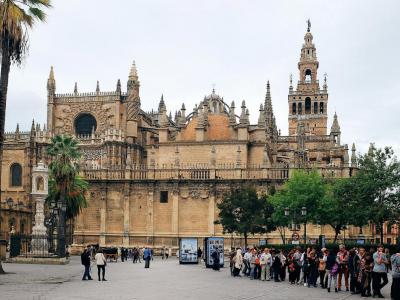
The Seville Cathedral is standing on the Great Mosque. In 1248 the city was conquered by Ferdinand III. The Cathedral replaced the Mosque in the 14th century but not the minaret. The minaret is called the Giralda Tower for the weather vane at its peak. The minaret has no stairs, only ramps so the sultan could ride his horse to the top and enjoy the view.
The cathedral is accessed through the Plaza Virgen de los Reyes. It has five naves. The main nave is 118 feet high. The floor measures 380 feet long and 249 feet wide. The transept rises to 131 feet. Seville Cathedral is also known as the Cathedral of Saint Mary of the Sea. It is listed as one of UNESCO World Heritage sites since 1987.
It is told that when the church plan was presented to the church elders, they said "Let us build a church so beautiful and so grand that those who see it finished will think we are mad." Christopher Columbus and his son are buried here. When Hagia Sofia became a mosque the Cathedral of Seville became the tallest cathedral known.
The Giralda Tower was built using local bricks and scrap marble left from Umayyad construction. It was made to resemble the minaret of the Koutoubia Mosque of Marrakesh, Morocco. The tower 342 feet high and it is still one of the most memorable symbols of old Seville.
Why you should visit:
Ride the ramp up the minaret like the sultan of old and admire the city.
Tip:
Come early or go online to book the rooftop tour! You can also climb up the Giralda Tower (free on Mondays) to get an eagle's eye view of Sevilla. Don't miss the tomb of Columbus right off the altar, and consider buying the combined ticket with Divino Salvador Church, which is a marvel by itself.
The cathedral is accessed through the Plaza Virgen de los Reyes. It has five naves. The main nave is 118 feet high. The floor measures 380 feet long and 249 feet wide. The transept rises to 131 feet. Seville Cathedral is also known as the Cathedral of Saint Mary of the Sea. It is listed as one of UNESCO World Heritage sites since 1987.
It is told that when the church plan was presented to the church elders, they said "Let us build a church so beautiful and so grand that those who see it finished will think we are mad." Christopher Columbus and his son are buried here. When Hagia Sofia became a mosque the Cathedral of Seville became the tallest cathedral known.
The Giralda Tower was built using local bricks and scrap marble left from Umayyad construction. It was made to resemble the minaret of the Koutoubia Mosque of Marrakesh, Morocco. The tower 342 feet high and it is still one of the most memorable symbols of old Seville.
Why you should visit:
Ride the ramp up the minaret like the sultan of old and admire the city.
Tip:
Come early or go online to book the rooftop tour! You can also climb up the Giralda Tower (free on Mondays) to get an eagle's eye view of Sevilla. Don't miss the tomb of Columbus right off the altar, and consider buying the combined ticket with Divino Salvador Church, which is a marvel by itself.
3) Real Alcazar de Sevilla (Royal Palace of Seville) (must see)
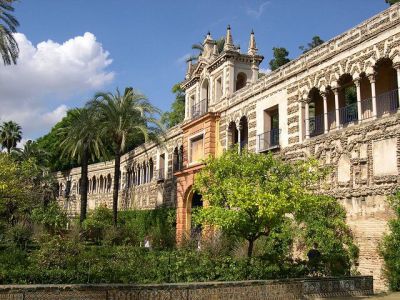
In the year 712, Seville was conquered by the Umayyad Caliphate. Then began 700 years of Arab rule in Andalusia. In 913 Abd al-Rahman III built a fort over a Visigothic church.
This construction was expanded in the 11th century by an addition called "Al Mubarak", The Blessed. Seville became the capital of Al-Andalus and there followed a period of demolishing and rebuilding until twelve palaces had been built one over the other. In 1366 Pedro I built Mudejar Palace. Ferdinand and Isabella made the top floor the royal residence.
Styles followed one another over the years until no hint remained of the original design. They refashioned with Islamic, Gothic, Romanesque and Renaissance influences. Then came Baroque, with Islamic overtones. Did we mention tiles? Majolica and arista? Ceramic tiles, Seville had more than anyone. More cigars and more tiles.
La Puerta de Leon (Lion Gate) is the main gate to the palace. It is named for the tile inlay above the entrance depicting a lion holding a cross and a banner in Latin which could be translated as "ready for anything". With all the architectural changes to the palace since 913, the scroll is true wit.
Visit the gardens. All the old Andalusian palaces had gardens which featured fruit trees, vegetables and flowers. They not only provided food but also visual and esthetic pleasure. Water was plentiful in fountains and ponds. In the 16th century the old Muslim wall was turned into a loggia to admire the view of the palace gardens.
Must see items in the palace are the patios and rooms. Some of the names are intriguing. Courtyard of the Dolls, Bedroom of the Moorish Kings, Justice Room, Prince's Room, Courtyard of the Maidens, and there are at least thirteen gardens.
This construction was expanded in the 11th century by an addition called "Al Mubarak", The Blessed. Seville became the capital of Al-Andalus and there followed a period of demolishing and rebuilding until twelve palaces had been built one over the other. In 1366 Pedro I built Mudejar Palace. Ferdinand and Isabella made the top floor the royal residence.
Styles followed one another over the years until no hint remained of the original design. They refashioned with Islamic, Gothic, Romanesque and Renaissance influences. Then came Baroque, with Islamic overtones. Did we mention tiles? Majolica and arista? Ceramic tiles, Seville had more than anyone. More cigars and more tiles.
La Puerta de Leon (Lion Gate) is the main gate to the palace. It is named for the tile inlay above the entrance depicting a lion holding a cross and a banner in Latin which could be translated as "ready for anything". With all the architectural changes to the palace since 913, the scroll is true wit.
Visit the gardens. All the old Andalusian palaces had gardens which featured fruit trees, vegetables and flowers. They not only provided food but also visual and esthetic pleasure. Water was plentiful in fountains and ponds. In the 16th century the old Muslim wall was turned into a loggia to admire the view of the palace gardens.
Must see items in the palace are the patios and rooms. Some of the names are intriguing. Courtyard of the Dolls, Bedroom of the Moorish Kings, Justice Room, Prince's Room, Courtyard of the Maidens, and there are at least thirteen gardens.
4) Jardines de los Reales Alcazares (Royal Palace Gardens) (must see)
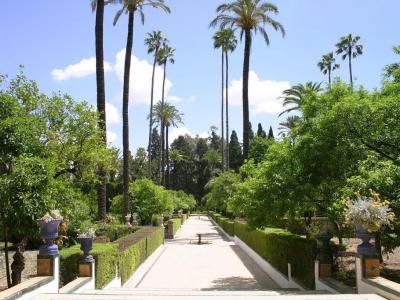
The gardens of the Royal Palace of Seville are the grandest late- medieval gardens anywhere in Europe and possibly, the world. After 1248, the year of the Christian Reconquista of Andalusia, the craftsmen and artisans of Seville developed the style known as Mudejar. "Mudejar" means "allowed to stay." The Moorish styles remained.
During the 16th century Seville was the richest city in Spain. The designers of Charles V focused on Renaissance styles when creating follies and gardens. The old garden spaces remained but the pavilions, gazebos and labyrinths were another matter. The alcazar gardens of Peter I enclosed pools, fountains, and niches of glazed tiles.
The plantings of the gardens include palms, cypress, myrtle, berries, magnolia and citrus trees. When the orange trees drop their oranges, the air is filled with the scent of jasmine and oranges. The Alcazar gardens are a cluster of mazes, pools and intimate paths, palm trees and fountains. It is almost too much sweetness to bear.
During the 16th century Seville was the richest city in Spain. The designers of Charles V focused on Renaissance styles when creating follies and gardens. The old garden spaces remained but the pavilions, gazebos and labyrinths were another matter. The alcazar gardens of Peter I enclosed pools, fountains, and niches of glazed tiles.
The plantings of the gardens include palms, cypress, myrtle, berries, magnolia and citrus trees. When the orange trees drop their oranges, the air is filled with the scent of jasmine and oranges. The Alcazar gardens are a cluster of mazes, pools and intimate paths, palm trees and fountains. It is almost too much sweetness to bear.
5) Plaza de Espana (Spain Square) (must see)
Some say Seville was founded by Hercules. Hercules could not be reached for verification. Waves of Carthaginians, Romans, Goths, Vandals, and Moors have seen Seville since Hercules. None of them have seen the Spain Square.
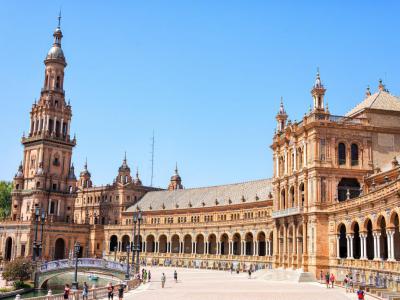
The square is situated at the edge of Maria Louisa Park, Seville's largest green area. In 1914 Anibal Gonzales, architect, began work in preparation for the Ibero-American Exposition of 1929. Using the styles of Art Deco and Spanish Renaissance Revival, Spanish Baroque Revival and Neo-Mudejar, Anibal created the Spain Square.
The square is embraced by a semi-circle of exotic buildings and towers bordering a moat. The moat encloses a vast open space. In the center of the space is the Vicente Traver fountain. The buildings are reached by four bridges that stretch over the moat. Take a boat ride in the moat and view the square around you. It's like floating in a dream.
The four bridges represent Castile, Leon, Aragon, and Navarre, the four ancient kingdoms of Spain. Around the edges of the square are 52 niches or alcoves. Each is a tiny pavilion of colorful azulejo tiles, depicting a province of Spain. Each alcove has shelves used as a lending library, offering books on the provinces.
The Ibero-American Exposition was meant to show a reconciliation between Spain and her former American colonies and territories. There was a great need to build a modern state and reestablish economic and cultural ties to the New World. The square holds this vision of a glorious past and a promising future, embracing it in the heart of Spain.
Why you should visit:
To experience the soul and grandeur of this city.
The square is situated at the edge of Maria Louisa Park, Seville's largest green area. In 1914 Anibal Gonzales, architect, began work in preparation for the Ibero-American Exposition of 1929. Using the styles of Art Deco and Spanish Renaissance Revival, Spanish Baroque Revival and Neo-Mudejar, Anibal created the Spain Square.
The square is embraced by a semi-circle of exotic buildings and towers bordering a moat. The moat encloses a vast open space. In the center of the space is the Vicente Traver fountain. The buildings are reached by four bridges that stretch over the moat. Take a boat ride in the moat and view the square around you. It's like floating in a dream.
The four bridges represent Castile, Leon, Aragon, and Navarre, the four ancient kingdoms of Spain. Around the edges of the square are 52 niches or alcoves. Each is a tiny pavilion of colorful azulejo tiles, depicting a province of Spain. Each alcove has shelves used as a lending library, offering books on the provinces.
The Ibero-American Exposition was meant to show a reconciliation between Spain and her former American colonies and territories. There was a great need to build a modern state and reestablish economic and cultural ties to the New World. The square holds this vision of a glorious past and a promising future, embracing it in the heart of Spain.
Why you should visit:
To experience the soul and grandeur of this city.
6) Parque de María Luisa (María Luisa Park) (must see)
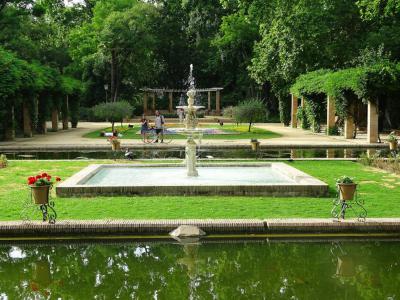
You shouldn't miss a visit to María Luisa Park before leaving Seville. It's a stunning location that stretches along the Guadalquivir River and serves as the city's main green space. Most of the park used to be the gardens of the Palace of San Telmo. In 1893, Infanta Luisa Fernanda, Duchess of Montpensier, generously donated these grounds to the city of Seville to create a public park. The gardens, as we see them today, were redesigned by Jean-Claude Nicolas Forestier, starting in 1911. Subsequently, the park played a crucial role in the Ibero-American Exposition of 1929, contributing to its impressive architectural setting.
To prepare for the exhibition, the entire southern part of the city underwent redevelopment, transforming into an expansive area filled with gardens and grand boulevards. At its heart lies the Parque de María Luisa, designed in a "Moorish paradise style" and featuring a half-mile of tiled fountains, pavilions, walls, ponds, benches, and exedras. You'll find abundant plantings of palms, orange trees, Mediterranean pines, and carefully designed flower beds, some of which are hidden by vines.
María Luisa Park also serves as a botanical garden, showcasing a wide variety of plant species, both native and exotic, with informative panels to educate visitors. The park is home to numerous bird species, particularly doves (so much so that a part of Plaza de América is known as "Parque de las Palomas" or Dove Park). Additionally, you'll spot green parrots living in the park's center, as well as ducks and swans in the fountains and lakes.
Why You Should Visit:
The historic buildings, sculptures, and water features make this a unique work of garden landscaping and leafy beauty. There is always something new to explore or do!
At various points, you can join different experiences, such as feeding the birds (Plaza de America), riding a bike (including family cycles), or entertaining yourself taking photos of the incomparable Plaza de España.
Tip:
Make sure you visit during the "golden hour" when the light is the most beautiful in Sevilla (in July it would be around 8-9pm)!
To prepare for the exhibition, the entire southern part of the city underwent redevelopment, transforming into an expansive area filled with gardens and grand boulevards. At its heart lies the Parque de María Luisa, designed in a "Moorish paradise style" and featuring a half-mile of tiled fountains, pavilions, walls, ponds, benches, and exedras. You'll find abundant plantings of palms, orange trees, Mediterranean pines, and carefully designed flower beds, some of which are hidden by vines.
María Luisa Park also serves as a botanical garden, showcasing a wide variety of plant species, both native and exotic, with informative panels to educate visitors. The park is home to numerous bird species, particularly doves (so much so that a part of Plaza de América is known as "Parque de las Palomas" or Dove Park). Additionally, you'll spot green parrots living in the park's center, as well as ducks and swans in the fountains and lakes.
Why You Should Visit:
The historic buildings, sculptures, and water features make this a unique work of garden landscaping and leafy beauty. There is always something new to explore or do!
At various points, you can join different experiences, such as feeding the birds (Plaza de America), riding a bike (including family cycles), or entertaining yourself taking photos of the incomparable Plaza de España.
Tip:
Make sure you visit during the "golden hour" when the light is the most beautiful in Sevilla (in July it would be around 8-9pm)!
