Custom Walk in Budapest, Hungary by hvandervis_fff43 created on 2023-10-21
Guide Location: Hungary » Budapest
Guide Type: Custom Walk
# of Sights: 6
Tour Duration: 3 Hour(s)
Travel Distance: 8.2 Km or 5.1 Miles
Share Key: 2GZCC
Guide Type: Custom Walk
# of Sights: 6
Tour Duration: 3 Hour(s)
Travel Distance: 8.2 Km or 5.1 Miles
Share Key: 2GZCC
How It Works
Please retrieve this walk in the GPSmyCity app. Once done, the app will guide you from one tour stop to the next as if you had a personal tour guide. If you created the walk on this website or come to the page via a link, please follow the instructions below to retrieve the walk in the app.
Retrieve This Walk in App
Step 1. Download the app "GPSmyCity: Walks in 1K+ Cities" on Apple App Store or Google Play Store.



Step 2. In the GPSmyCity app, download(or launch) the guide "Budapest Map and Walking Tours".
Step 3. Tap the menu button located at upper right corner of the "Walks" screen and select "Retrieve custom walk". Enter the share key: 2GZCC
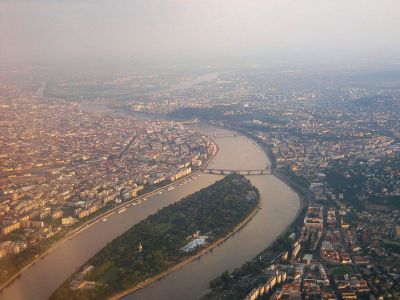
1) Margaret Island (Margitsziget) (must see)
Margaret Island (Margitsziget) is a 2.5-kilometer long island situated in the middle of the Danube River in central Budapest. It spans an area of 0.965 square kilometers and measures 500 meters in width. The island is a popular recreational destination, characterized by extensive landscape parks that cover most of its surface.
Margaret Island holds historical significance, with medieval ruins serving as reminders of its past as a religious center during the Middle Ages. The island is positioned between the Margaret Bridge to the south and the Árpád Bridge to the north. In earlier times, it was referred to as the "Island of Rabbits" due to its abundance of rabbits. Initially belonging to the 13th district, the island is now under the direct control of the city administration.
Over time, the island's current appearance took shape by merging three distinct islands: the Festő (Painter), the Fürdő (Bath), and the Nyulak (Rabbits). This amalgamation was carried out in the late 19th century to regulate the flow of the Danube. Originally, the island's elevation stood at 102.5 meters above sea level. However, it has been artificially elevated to 104.85 meters above sea level as a flood control measure.
Why You Should Visit:
Beautiful and well-kept park to enjoy nature, the Danube, hire buggies/bikes or have a long walk around the area; has a nice 5km running track for joggers... and is free!
Tip:
On a warm day take a boat trip to this island and bring your bathing suits for the water park!
Margaret Island holds historical significance, with medieval ruins serving as reminders of its past as a religious center during the Middle Ages. The island is positioned between the Margaret Bridge to the south and the Árpád Bridge to the north. In earlier times, it was referred to as the "Island of Rabbits" due to its abundance of rabbits. Initially belonging to the 13th district, the island is now under the direct control of the city administration.
Over time, the island's current appearance took shape by merging three distinct islands: the Festő (Painter), the Fürdő (Bath), and the Nyulak (Rabbits). This amalgamation was carried out in the late 19th century to regulate the flow of the Danube. Originally, the island's elevation stood at 102.5 meters above sea level. However, it has been artificially elevated to 104.85 meters above sea level as a flood control measure.
Why You Should Visit:
Beautiful and well-kept park to enjoy nature, the Danube, hire buggies/bikes or have a long walk around the area; has a nice 5km running track for joggers... and is free!
Tip:
On a warm day take a boat trip to this island and bring your bathing suits for the water park!
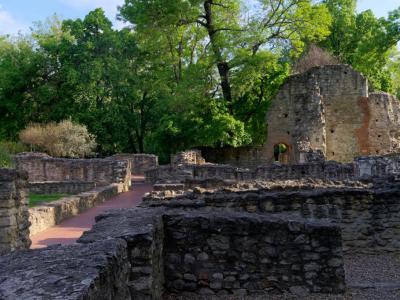
2) Medieval Ruins
Margaret Island – known as the Isle of Rabbits, or Hares Island during the Middle Ages – has been the home of many religious orders throughout history. Popular with photographers, the 13th-century Dominican nunnery here, built to honor Virgin Mary, is perhaps one of the most classic examples of Medieval monastic complexes. The nunnery and order proper were very wealthy and powerful, with many miracles supposedly performed by Margit (or Margaret), daughter of King Béla IV, and the convent quickly became the place to be for aristocracy.
The king also founded a friary (one of the two remaining in Budapest) and monastery nearby. The façade and sidewall of an old Gothic church still remain standing – though, sadly, much of the stone was lost in 1796, during the Turkish Occupation, in order to build the palatine's villa. In slightly better shape, the small chapel from the Premonstratensian monastery dates back to 1225 and was reconstructed by Karoly Lux after an excavation of the area.
Margaret Island has been described as a "strange alchemy of geography and history", and this impressive set of ruins certainly adds to its mystical aura.
The king also founded a friary (one of the two remaining in Budapest) and monastery nearby. The façade and sidewall of an old Gothic church still remain standing – though, sadly, much of the stone was lost in 1796, during the Turkish Occupation, in order to build the palatine's villa. In slightly better shape, the small chapel from the Premonstratensian monastery dates back to 1225 and was reconstructed by Karoly Lux after an excavation of the area.
Margaret Island has been described as a "strange alchemy of geography and history", and this impressive set of ruins certainly adds to its mystical aura.
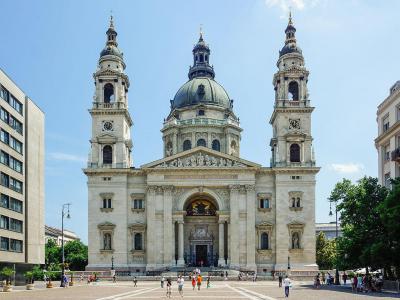
3) St. Stephen's Basilica (must see)
Overlooking its namesake square, Saint Stephen’s Basilica is one of Budapest’s crown jewels-both spiritually and architecturally. Dedicated to King István, Hungary’s first monarch who brought Christianity to the country, the church holds an unusual and revered relic: the king’s mummified right fist, encased in a glass box. Pilgrims from all across Hungary come to see it, although casual visitors might easily walk right past. Also laid to rest here is Ferenc Puskás, the legendary soccer player hailed as one of the greatest in history.
For many Hungarians, Saint Stephen’s is the most important religious site, much as it is a key local attraction for tourists. The building can hold up to 8,500 people at a time and rises 96 meters into the air, matching the height of the Parliament Building-a record legally reserved for Budapest’s most iconic structures.
To create this Neoclassical marvel took the work of three architects, including the renowned Miklós Ybl. Adorned with a bust of Saint István right above the doorway, the facade features a huge arched portal with Ionian columns, flanked on both sides with huge bell towers. Topping the right tower is the heaviest and largest bell in the country, tipping the scales at nine tonnes!
Entry to Saint Stephen's Basilica requires a paid ticket, which grants access to all parts of the building, including the treasury and the dome. Visitors can reach the top by stairs or elevator, where they are rewarded with one of the city's best panoramic views. Inside, the basilica features richly decorated interiors with marble surfaces, gilded details, stained glass windows, and detailed mosaics and frescoes. At the main altar stands a statue of Saint Stephen, surrounded by works from some of Hungary’s most renowned artists.
Another unforgettable highlight here is the grand pipe organ. Music lovers should keep an ear out for concerts-hearing it in action is nothing short of an awe-inspiring experience.
Tip: After visiting, take some time to relax in the square-a great place to enjoy coffee at open-air cafes while soaking up the view.
For many Hungarians, Saint Stephen’s is the most important religious site, much as it is a key local attraction for tourists. The building can hold up to 8,500 people at a time and rises 96 meters into the air, matching the height of the Parliament Building-a record legally reserved for Budapest’s most iconic structures.
To create this Neoclassical marvel took the work of three architects, including the renowned Miklós Ybl. Adorned with a bust of Saint István right above the doorway, the facade features a huge arched portal with Ionian columns, flanked on both sides with huge bell towers. Topping the right tower is the heaviest and largest bell in the country, tipping the scales at nine tonnes!
Entry to Saint Stephen's Basilica requires a paid ticket, which grants access to all parts of the building, including the treasury and the dome. Visitors can reach the top by stairs or elevator, where they are rewarded with one of the city's best panoramic views. Inside, the basilica features richly decorated interiors with marble surfaces, gilded details, stained glass windows, and detailed mosaics and frescoes. At the main altar stands a statue of Saint Stephen, surrounded by works from some of Hungary’s most renowned artists.
Another unforgettable highlight here is the grand pipe organ. Music lovers should keep an ear out for concerts-hearing it in action is nothing short of an awe-inspiring experience.
Tip: After visiting, take some time to relax in the square-a great place to enjoy coffee at open-air cafes while soaking up the view.
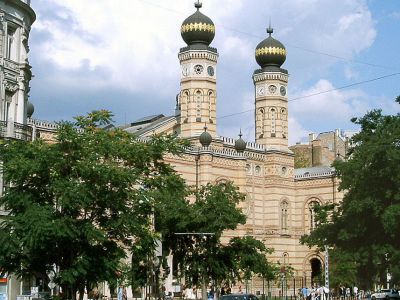
4) Great Synagogue (Dohany Street Synagogue) (must see)
Built in the 1850s for the Neolog Jewish community, this synagogue ranks as the second-largest in the world, second only to Temple Emanu-El in New York. Much like the one on nearby Rumbach Street, it was designed by Viennese architect Ludwig Forster, embracing a richly detailed Moorish Revival style. The building forms part of a larger Jewish Quarter complex that includes the Heroes’ Temple, a graveyard, a Holocaust memorial, and the Jewish Museum. During World War II, Dohány Street marked the boundary of the Budapest Ghetto, and even today, the area carries a profound sense of remembrance.
The synagogue suffered heavy damage during the war and endured years of neglect under communist rule. It wasn’t until the 1990s that an extensive restoration finally returned it to its former grandeur. The twin octagonal towers, flanking the main entrance and crowned with onion domes, now make this structure visible all over the city. Inside, the vast nave stretches nearly 40 feet high, revealing Gothic, Romantic, and Byzantine influences. A new mechanical organ fills the space, replacing the original one crafted in the 19th century.
As is traditional, the ground floor seating is reserved for men, while women are seated in the upper galleries. In all, the building can accommodate up to 3,000 worshippers.
Those curious about Jewish history will find much to explore here. Next door is the Jewish Heroes’ Mausoleum, and upstairs, the museum and archives offer informative and thought-provoking exhibits. In the adjacent graveyard, victims of the Holocaust are laid to rest alongside non-Jews who risked their lives to save others. The neighboring park holds a memorial honoring these courageous individuals.
Tip: The synagogue offers guided group tours in several languages. Visitors are asked to observe a modest dress code; if needed, special coverings are provided at the entrance.
The synagogue suffered heavy damage during the war and endured years of neglect under communist rule. It wasn’t until the 1990s that an extensive restoration finally returned it to its former grandeur. The twin octagonal towers, flanking the main entrance and crowned with onion domes, now make this structure visible all over the city. Inside, the vast nave stretches nearly 40 feet high, revealing Gothic, Romantic, and Byzantine influences. A new mechanical organ fills the space, replacing the original one crafted in the 19th century.
As is traditional, the ground floor seating is reserved for men, while women are seated in the upper galleries. In all, the building can accommodate up to 3,000 worshippers.
Those curious about Jewish history will find much to explore here. Next door is the Jewish Heroes’ Mausoleum, and upstairs, the museum and archives offer informative and thought-provoking exhibits. In the adjacent graveyard, victims of the Holocaust are laid to rest alongside non-Jews who risked their lives to save others. The neighboring park holds a memorial honoring these courageous individuals.
Tip: The synagogue offers guided group tours in several languages. Visitors are asked to observe a modest dress code; if needed, special coverings are provided at the entrance.
5) New York Palace
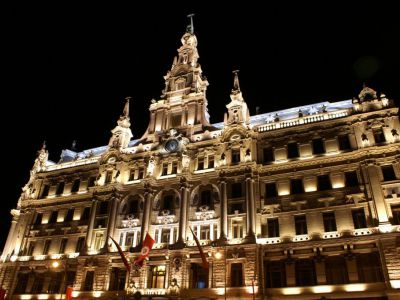
The New York Palace is a famous luxury hotel that is located in the 7th district of Budapest, Hungary. It was built by the New York Life Insurance Company, which gave the place its rather famous American name. There is also a café located on the first floor of the building which also carries the name of the company. For many years, this place was a center for Hungarian literature and poetry, as many famous people performed here from its opening in 1894, till its closure in 2001.
The café reopened its doors on May 5, 2006 showing the original ambiance, along with the entire building.
The architect assigned to this project was Alajos Hauszmann. The many statues and other ornamental features of the building's front are the work of Karoly Senvey. The devilish fauns are very famous.
The hotel currently has 107 luxury rooms. The original café is also back in business, and is still on the ground floor. Much of the renovation that was necessary was caused by the structure being taken over by the Communists during that era. The local Communist regime used the building for national offices and functions. It was in February 2001 that the Boscolo Hotels of Italy purchased the property, and restored it to its original beauty.
The café reopened its doors on May 5, 2006 showing the original ambiance, along with the entire building.
The architect assigned to this project was Alajos Hauszmann. The many statues and other ornamental features of the building's front are the work of Karoly Senvey. The devilish fauns are very famous.
The hotel currently has 107 luxury rooms. The original café is also back in business, and is still on the ground floor. Much of the renovation that was necessary was caused by the structure being taken over by the Communists during that era. The local Communist regime used the building for national offices and functions. It was in February 2001 that the Boscolo Hotels of Italy purchased the property, and restored it to its original beauty.
6) Holocaust Memorial Center
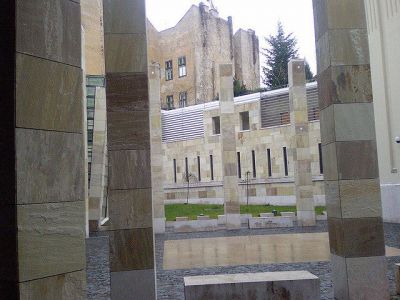
Housed in a striking, fortress-like building, the superb Memorial Center opened in 2004, with the mission of presenting and preserving a permanent history of the Holocaust, and the role that the Hungarian people played in this part of World War II history, which saw over 500,000 Jews killed by the Nazis and 50,000 Roma executed during the oppression.
The Center does a careful, persistent job of drawing visitors into the lives of individuals, as well as the more impersonal political and legal processes that were involved. The narrative is compelling, illustrated with a multitude of documents, as well as audio-visual and print narratives and resources.
Physically, you are taken on a journey that descents and ascends through the overall story, culminating in a reconstructed synagogue where some time to reflect and be aware of the empty chairs is an appropriate endpoint.
The overall presentation provides an excellent context for how this process, and its bureaucratic implementation, took place not only in Hungary but more broadly. This institution tells the story well, and is worth the time and effort to visit.
The Center does a careful, persistent job of drawing visitors into the lives of individuals, as well as the more impersonal political and legal processes that were involved. The narrative is compelling, illustrated with a multitude of documents, as well as audio-visual and print narratives and resources.
Physically, you are taken on a journey that descents and ascends through the overall story, culminating in a reconstructed synagogue where some time to reflect and be aware of the empty chairs is an appropriate endpoint.
The overall presentation provides an excellent context for how this process, and its bureaucratic implementation, took place not only in Hungary but more broadly. This institution tells the story well, and is worth the time and effort to visit.
