Custom Walk in Bridgetown, Barbados by wegahata_abed_b3e39 created on 2024-10-19
Guide Location: Barbados » Bridgetown
Guide Type: Custom Walk
# of Sights: 7
Tour Duration: 2 Hour(s)
Travel Distance: 5.6 Km or 3.5 Miles
Share Key: 2YHAN
Guide Type: Custom Walk
# of Sights: 7
Tour Duration: 2 Hour(s)
Travel Distance: 5.6 Km or 3.5 Miles
Share Key: 2YHAN
How It Works
Please retrieve this walk in the GPSmyCity app. Once done, the app will guide you from one tour stop to the next as if you had a personal tour guide. If you created the walk on this website or come to the page via a link, please follow the instructions below to retrieve the walk in the app.
Retrieve This Walk in App
Step 1. Download the app "GPSmyCity: Walks in 1K+ Cities" on Apple App Store or Google Play Store.



Step 2. In the GPSmyCity app, download(or launch) the guide "Bridgetown Map and Walking Tours".
Step 3. Tap the menu button located at upper right corner of the "Walks" screen and select "Retrieve custom walk". Enter the share key: 2YHAN

1) Mount Gay Rum Refinery & Gift Shop
Barbados and rum go hand in hand, and no place embodies this legacy better than Mount Gay, the world’s oldest commercial rum distillery. Established in 1703, this historic refinery has been perfecting the art of distillation for over three centuries, using coral-filtered water, Barbadian molasses, and a blend of copper pot and column stills to craft its renowned spirits.
Located on the northern edge of Bridgetown, the Mount Gay Visitor Centre offers an immersive experience of the island’s rum-making traditions. The tour begins with a short film on the distillery’s rich history before leading visitors through the aging facility, where barrels of rum rest patiently in American whiskey, bourbon, and cognac casks. Along the way, expert guides break down the intricate process of distilling, aging, and blending Mount Gay’s signature rums.
Of course, no visit would be complete without a tasting. Sip on Mount Gay’s finest selections-including the classic Eclipse, the award-winning XO, and their terroir-driven Single Estate Series-while learning about the flavors that have made Barbadian rum legendary.
Before you leave, be sure to stop by the on-site gift shop, where you can purchase bottles of Mount Gay rum alongside a selection of branded merchandise and island-inspired souvenirs. Whether you're a connoisseur or a casual enthusiast, a visit to Mount Gay is a must for anyone looking to experience the spirit of Barbados-literally.
Located on the northern edge of Bridgetown, the Mount Gay Visitor Centre offers an immersive experience of the island’s rum-making traditions. The tour begins with a short film on the distillery’s rich history before leading visitors through the aging facility, where barrels of rum rest patiently in American whiskey, bourbon, and cognac casks. Along the way, expert guides break down the intricate process of distilling, aging, and blending Mount Gay’s signature rums.
Of course, no visit would be complete without a tasting. Sip on Mount Gay’s finest selections-including the classic Eclipse, the award-winning XO, and their terroir-driven Single Estate Series-while learning about the flavors that have made Barbadian rum legendary.
Before you leave, be sure to stop by the on-site gift shop, where you can purchase bottles of Mount Gay rum alongside a selection of branded merchandise and island-inspired souvenirs. Whether you're a connoisseur or a casual enthusiast, a visit to Mount Gay is a must for anyone looking to experience the spirit of Barbados-literally.
2) Pelican Craft Centre
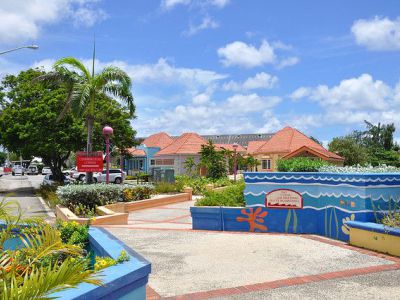
Located along the Princess Alice Highway, near the Bridgetown Port, the Pelican Craft Centre is the largest arts and crafts hub in Barbados-and indeed, the entire Caribbean. More than just a shopping destination, this modern facility is a vibrant showcase of Barbadian creativity, where traditional craftsmanship meets contemporary design.
Spanning an impressive 262,945 square feet, the Centre features 25 retail shops, 14 workshops, an art gallery, an artist wall, a wine bar and bistro, and a restaurant. Visitors can explore an extensive range of 100% Barbadian-made items, from exquisite mahogany carvings and flame glass art to handwoven textiles, pottery, jewelry, and batik. For those in search of authentic souvenirs or one-of-a-kind home décor, Pelican Craft Centre offers a diverse selection of locally crafted goods.
One of the most captivating aspects of the Centre is its live craft demonstrations. Here, artisans bring their work to life before your eyes, whether through basket weaving, molded figure-making, metal and wirecraft, or even cigar rolling. The experience is immersive, offering a glimpse into the island’s rich artistic traditions.
Beyond shopping, the Pelican Craft Centre is also a cultural hub, hosting Pelican Dooflicky, a carnival-style event featuring Barbadian music, dance, and cuisine. This lively celebration, held during the peak tourist season, invites visitors to revel in the festive atmosphere and experience the spirit of Barbados firsthand.
Easily accessible from the Princess Alice Bus Terminal, the Centre boasts air-conditioned shops, disabled-friendly facilities, and ample parking. Whether you’re in search of handmade keepsakes, Caribbean fashion, or a taste of local flavors, the Pelican Craft Centre is a must-visit stop in Bridgetown.
Spanning an impressive 262,945 square feet, the Centre features 25 retail shops, 14 workshops, an art gallery, an artist wall, a wine bar and bistro, and a restaurant. Visitors can explore an extensive range of 100% Barbadian-made items, from exquisite mahogany carvings and flame glass art to handwoven textiles, pottery, jewelry, and batik. For those in search of authentic souvenirs or one-of-a-kind home décor, Pelican Craft Centre offers a diverse selection of locally crafted goods.
One of the most captivating aspects of the Centre is its live craft demonstrations. Here, artisans bring their work to life before your eyes, whether through basket weaving, molded figure-making, metal and wirecraft, or even cigar rolling. The experience is immersive, offering a glimpse into the island’s rich artistic traditions.
Beyond shopping, the Pelican Craft Centre is also a cultural hub, hosting Pelican Dooflicky, a carnival-style event featuring Barbadian music, dance, and cuisine. This lively celebration, held during the peak tourist season, invites visitors to revel in the festive atmosphere and experience the spirit of Barbados firsthand.
Easily accessible from the Princess Alice Bus Terminal, the Centre boasts air-conditioned shops, disabled-friendly facilities, and ample parking. Whether you’re in search of handmade keepsakes, Caribbean fashion, or a taste of local flavors, the Pelican Craft Centre is a must-visit stop in Bridgetown.
3) Swan Street
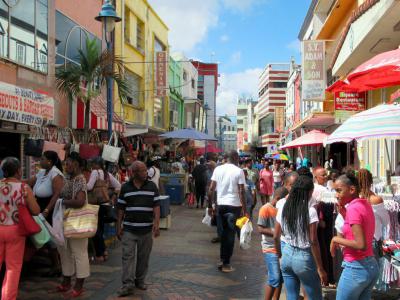
Swan Street parallels Broad Street to the north. It's a narrow alleyway of a street lined with shops and restaurants. It's pedestrian-only, so while it can be quite crowded, it's a great place to wander to meet the locals. There are several electronics stores, home goods, a shopping mall, and takeaway restaurants.
The buildings on Swan Street are traditional homes, with the businesses built on the lower levels. At one time, the street was known as Jew's Street because of the community's successful Jewish merchants. Many of the shopkeepers lived in the upper stories of the buildings. Unfortunately, a major fire swept through the area in 1845. After which, the street was part of what the locals dubbed the Burnt District.
Today, you'll see businesses and haberdasheries from around the world here. But the upper levels are no longer homes. Instead, they are mostly used as warehouses now.
Historians are unsure how the street got its official name. Some suggest that there was an inn named The Swan. Others say it was s tribute to a local surveyor, Captain Swan.
It's a busy place, favored by the locals more than the tourists. Swan Street is a must-see if you're looking for island goods and good prices. This street keeps the Barbadian spirit alive--you can find everything here, from fresh fruit and veggies to local island jewelry and crafts.
The buildings on Swan Street are traditional homes, with the businesses built on the lower levels. At one time, the street was known as Jew's Street because of the community's successful Jewish merchants. Many of the shopkeepers lived in the upper stories of the buildings. Unfortunately, a major fire swept through the area in 1845. After which, the street was part of what the locals dubbed the Burnt District.
Today, you'll see businesses and haberdasheries from around the world here. But the upper levels are no longer homes. Instead, they are mostly used as warehouses now.
Historians are unsure how the street got its official name. Some suggest that there was an inn named The Swan. Others say it was s tribute to a local surveyor, Captain Swan.
It's a busy place, favored by the locals more than the tourists. Swan Street is a must-see if you're looking for island goods and good prices. This street keeps the Barbadian spirit alive--you can find everything here, from fresh fruit and veggies to local island jewelry and crafts.
4) Broad Street
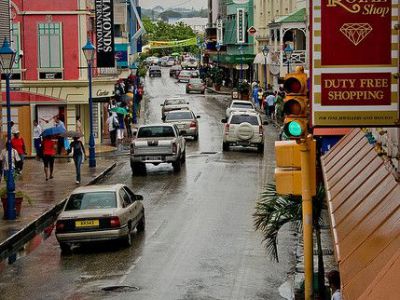
Located in the heart of Bridgetown, Broad Street serves as the city’s central commercial artery, bustling with activity and rich in history. This prominent thoroughfare is the epicenter of shopping, finance, and dining, making it a prime destination for both locals and visitors.
Historically, Broad Street was once part of a longer and narrower street known as Cheapside. Today, Cheapside lies at the western end of the city, home to the General Post Office and Cheapside Market. Broad Street itself has evolved into a vibrant commercial hub, drawing in shoppers with its array of duty-free stores, high-end jewelry boutiques, and major department stores. Well-known retailers such as Cave Shepherd & Company, Harrisons, Diamonds International, Colombian Emeralds, and Little Switzerland line the street, offering everything from luxury goods to everyday essentials.
In addition to its reputation as a shopping destination, Broad Street houses several key financial institutions. Major commercial banks, including the Royal Bank of Canada, Republic Bank of Trinidad and Tobago, FirstCaribbean International Bank Ltd, Barbados National Bank Ltd, Bank of Nova Scotia, and Butterfield Bank, have their main branches here. The presence of these institutions solidifies Broad Street’s role as a financial hub in the capital city.
Broad Street is also an architectural showcase, featuring a mix of modern and historic buildings. It is divided into Upper and Lower Broad Street, with Upper Broad Street near the well-known Lord Nelson Statue and Lower Broad Street situated near the Old Mutual Building, an architectural landmark that now houses a branch of Butterfield Bank. The street stretches from Saint Mary’s Church and the Old Town Hall on its western side to Bridge Street, close to National Heroes Square and the Parliament Buildings. Running parallel to Constitution River, it offers easy access to harbor cruises and boat rides along the waterfront.
A hive of daily activity, Broad Street is particularly popular among tourists, many of whom arrive from the nearby cruise ship port. However, visitors should note that most shops close on Sundays. Despite this, the street remains an essential part of the Bridgetown experience, offering a seamless blend of commerce, history, and vibrant city life.
Historically, Broad Street was once part of a longer and narrower street known as Cheapside. Today, Cheapside lies at the western end of the city, home to the General Post Office and Cheapside Market. Broad Street itself has evolved into a vibrant commercial hub, drawing in shoppers with its array of duty-free stores, high-end jewelry boutiques, and major department stores. Well-known retailers such as Cave Shepherd & Company, Harrisons, Diamonds International, Colombian Emeralds, and Little Switzerland line the street, offering everything from luxury goods to everyday essentials.
In addition to its reputation as a shopping destination, Broad Street houses several key financial institutions. Major commercial banks, including the Royal Bank of Canada, Republic Bank of Trinidad and Tobago, FirstCaribbean International Bank Ltd, Barbados National Bank Ltd, Bank of Nova Scotia, and Butterfield Bank, have their main branches here. The presence of these institutions solidifies Broad Street’s role as a financial hub in the capital city.
Broad Street is also an architectural showcase, featuring a mix of modern and historic buildings. It is divided into Upper and Lower Broad Street, with Upper Broad Street near the well-known Lord Nelson Statue and Lower Broad Street situated near the Old Mutual Building, an architectural landmark that now houses a branch of Butterfield Bank. The street stretches from Saint Mary’s Church and the Old Town Hall on its western side to Bridge Street, close to National Heroes Square and the Parliament Buildings. Running parallel to Constitution River, it offers easy access to harbor cruises and boat rides along the waterfront.
A hive of daily activity, Broad Street is particularly popular among tourists, many of whom arrive from the nearby cruise ship port. However, visitors should note that most shops close on Sundays. Despite this, the street remains an essential part of the Bridgetown experience, offering a seamless blend of commerce, history, and vibrant city life.
5) Independence Square
Independence Square, situated on the waterfront in the heart of Bridgetown, offers a serene environment to relax and absorb the city's historic ambiance. Visitors can rest on benches lining the waterfront, providing picturesque views of notable landmarks such as the Parliament Buildings and National Heroes Square.
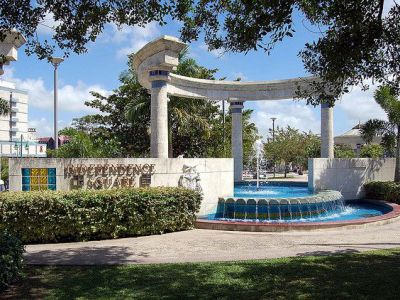
At the western end of the square, local vendors display crafts and offer light refreshments on the bridge, presenting an opportunity to purchase unique souvenirs. Adjacent to this area stands the Independence Arch, gracefully spanning the Chamberlain Bridge and serving as a symbolic gateway into the square.
To the west, the wooden Bridgetown boardwalk traces the waterfront, inviting strolls along its path. Independence Square itself is adorned with an amphitheater, two large fountains, intricate paving mosaics, and a statue honoring National Hero, the Right Excellent Errol Walton Barrow. Notably, during November, which marks Barbados' independence celebrations, the square is illuminated in the national colors of blue and gold. The festive decor continues into the Christmas season, with numerous illuminated Christmas trees enhancing the square's charm.
Originally one of Bridgetown's busiest car parks, Independence Square was redesigned and reopened to the public in 2007. Today, it serves as a recreational haven, featuring stone benches, mature trees providing ample shade, and a tranquil view of the river with boats gently bobbing on the water. The prominent statue of Errol Walton Barrow stands at the center, gazing across the river toward National Heroes Square.
Whether visiting during the vibrant independence festivities or at another time of year, Independence Square offers a blend of historical significance and contemporary leisure, making it a must-visit destination in Bridgetown.
At the western end of the square, local vendors display crafts and offer light refreshments on the bridge, presenting an opportunity to purchase unique souvenirs. Adjacent to this area stands the Independence Arch, gracefully spanning the Chamberlain Bridge and serving as a symbolic gateway into the square.
To the west, the wooden Bridgetown boardwalk traces the waterfront, inviting strolls along its path. Independence Square itself is adorned with an amphitheater, two large fountains, intricate paving mosaics, and a statue honoring National Hero, the Right Excellent Errol Walton Barrow. Notably, during November, which marks Barbados' independence celebrations, the square is illuminated in the national colors of blue and gold. The festive decor continues into the Christmas season, with numerous illuminated Christmas trees enhancing the square's charm.
Originally one of Bridgetown's busiest car parks, Independence Square was redesigned and reopened to the public in 2007. Today, it serves as a recreational haven, featuring stone benches, mature trees providing ample shade, and a tranquil view of the river with boats gently bobbing on the water. The prominent statue of Errol Walton Barrow stands at the center, gazing across the river toward National Heroes Square.
Whether visiting during the vibrant independence festivities or at another time of year, Independence Square offers a blend of historical significance and contemporary leisure, making it a must-visit destination in Bridgetown.
6) Carlisle Bay Beaches (must see)
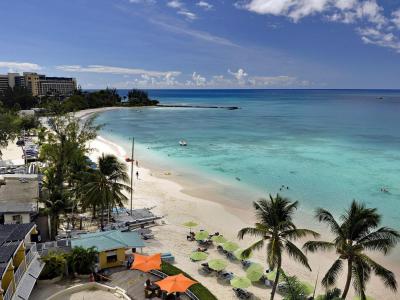
Carlisle Bay stretches from the cruise ship port to the north down to Needham's Point, the location of the Hilton Barbados Resort. The bay is a natural harbor and was Bridgetown's primary anchorage and port location in the early days. You'll likely still see visiting yachts anchored here, but it was full of British Navy and merchant ships back in the day. The location is mostly protected from the prevailing easterly trade winds.
The bay is named after the Earl of Carlisle, James Hay. In the 1600s, he was the Lord Proprietor of Barbados.
South of the river known as the Careenage, the bay's shoreline is one unbroken beautiful sandy beach. You will find many beach clubs and resorts along the shore. The Bay Street Esplanade is a landscaped path that follows the bay's shore. Locals love to gather here after work and watch the sunset.
There is a marine park located in Carlisle Bay that is popular for scuba diving and snorkeling. Along with an abundance of sea life and coral reefs, six shipwrecks lie on the bottom of the bay. You can find the wrecks between 12 and 65 feet below the surface.
Browne's Beach is a calm-water beach with soft sand. It's the perfect spot for sunbathing, swimming, or just relaxing in the sun. The Boatyard is a popular spot if you want to try some watersports, like renting a jetski or trying a sea trampoline.
The bay is named after the Earl of Carlisle, James Hay. In the 1600s, he was the Lord Proprietor of Barbados.
South of the river known as the Careenage, the bay's shoreline is one unbroken beautiful sandy beach. You will find many beach clubs and resorts along the shore. The Bay Street Esplanade is a landscaped path that follows the bay's shore. Locals love to gather here after work and watch the sunset.
There is a marine park located in Carlisle Bay that is popular for scuba diving and snorkeling. Along with an abundance of sea life and coral reefs, six shipwrecks lie on the bottom of the bay. You can find the wrecks between 12 and 65 feet below the surface.
Browne's Beach is a calm-water beach with soft sand. It's the perfect spot for sunbathing, swimming, or just relaxing in the sun. The Boatyard is a popular spot if you want to try some watersports, like renting a jetski or trying a sea trampoline.
7) Barbados Museum & Historical Society (must see)
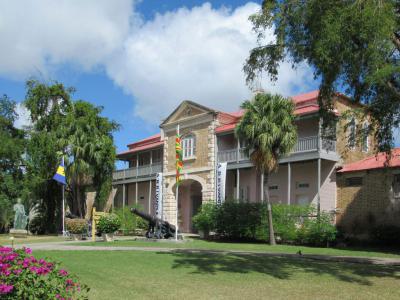
The Barbados Museum & Historical Society is a cornerstone of cultural preservation in Bridgetown. Established in 1933, this non-profit institution was born out of a community-driven effort to safeguard and share the island’s rich history. It stands today as the premier authority on Barbados’ past, with a mandate to collect, document, and conserve the nation’s cultural, historical, and environmental heritage.
Housed in a former military prison built in 1818, the museum is located within Saint Ann’s Garrison, a significant part of the UNESCO-listed Historic Bridgetown and its Garrison. The building itself is a relic of colonial military history, lending an atmospheric backdrop to the vast collection inside.
The museum boasts seven permanent galleries, showcasing over 500,000 artifacts, although only a fraction is publicly displayed. These exhibits cover a wide range of topics, from Barbados’ indigenous cultures, colonial history, and African heritage to the island’s natural environment and coral reef structures. One particularly engaging exhibit, "Yesterday’s Children," offers a historical perspective through the eyes of young Barbadians.
For researchers and history enthusiasts, the Shilstone Memorial Library houses a rare collection of historical maps, manuscripts, and genealogical records, while the Newton Slave Burial Ground, acquired by the museum in 1993, serves as an important site of memory and reflection on Barbados' enslaved past.
Beyond exhibitions, the museum actively engages with the community through educational programs, research services, cultural events, and guided tours, making it an essential resource for scholars, genealogists, and curious visitors alike. With its blend of traditional displays and evolving programming, the Barbados Museum & Historical Society remains an enduring guardian of the island’s heritage.
Housed in a former military prison built in 1818, the museum is located within Saint Ann’s Garrison, a significant part of the UNESCO-listed Historic Bridgetown and its Garrison. The building itself is a relic of colonial military history, lending an atmospheric backdrop to the vast collection inside.
The museum boasts seven permanent galleries, showcasing over 500,000 artifacts, although only a fraction is publicly displayed. These exhibits cover a wide range of topics, from Barbados’ indigenous cultures, colonial history, and African heritage to the island’s natural environment and coral reef structures. One particularly engaging exhibit, "Yesterday’s Children," offers a historical perspective through the eyes of young Barbadians.
For researchers and history enthusiasts, the Shilstone Memorial Library houses a rare collection of historical maps, manuscripts, and genealogical records, while the Newton Slave Burial Ground, acquired by the museum in 1993, serves as an important site of memory and reflection on Barbados' enslaved past.
Beyond exhibitions, the museum actively engages with the community through educational programs, research services, cultural events, and guided tours, making it an essential resource for scholars, genealogists, and curious visitors alike. With its blend of traditional displays and evolving programming, the Barbados Museum & Historical Society remains an enduring guardian of the island’s heritage.
