Custom Walk in Seoul, South Korea by beecee2825_c9ad4 created on 2025-05-19
Guide Location: South Korea » Seoul
Guide Type: Custom Walk
# of Sights: 6
Tour Duration: 3 Hour(s)
Travel Distance: 8.6 Km or 5.3 Miles
Share Key: VLZXK
Guide Type: Custom Walk
# of Sights: 6
Tour Duration: 3 Hour(s)
Travel Distance: 8.6 Km or 5.3 Miles
Share Key: VLZXK
How It Works
Please retrieve this walk in the GPSmyCity app. Once done, the app will guide you from one tour stop to the next as if you had a personal tour guide. If you created the walk on this website or come to the page via a link, please follow the instructions below to retrieve the walk in the app.
Retrieve This Walk in App
Step 1. Download the app "GPSmyCity: Walks in 1K+ Cities" on Apple App Store or Google Play Store.



Step 2. In the GPSmyCity app, download(or launch) the guide "Seoul Map and Walking Tours".
Step 3. Tap the menu button located at upper right corner of the "Walks" screen and select "Retrieve custom walk". Enter the share key: VLZXK

1) 58 Sejong-daero, Jung District, Seoul, South Korea
This custom location is created on gpsmycity.com website.
2) Myong-dong Shopping Street (must see)
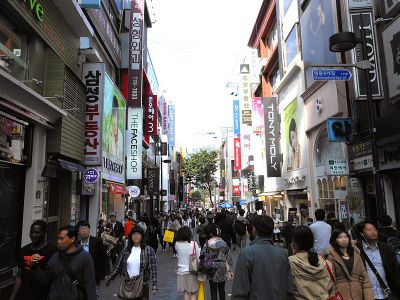
Myeongdong is Korea's best-known shopping district. You will find mid-priced malls, high-end flagship stores, Korean brands, and international designer brands. Add in a smorgasbord of street food, cafes, restaurants, and night-life, and you have an exciting destination that will leave you dazzled.
During the Joseon Dynasty, this was a residential area. It became more commercial during the Japanese era. As the economy boomed after the Korean War, this area became the extensive shopping center that it is today. It's consistently named as one of the most expensive shopping districts in the world.
Myeongdong Shopping Street has every brand and item you could want. Shop international brands such as Polo Ralph Lauren and Louis Vuitton. Popular Korean cosmetic brands include Missha and The Face Shop. There are hotels, restaurants, cinemas, and theaters to keep you entertained.
Lotte Department Store, a Korean brand, is an impressive 14 stories tall. It features western styles as well as traditional Korean goods and has a food court.
If the weather is getting you down, keep going down to the Myeongdong Underground Shopping Center. The prices go down too--you'll find discount brands, cosmetics, and salons.
The Myeongdong Festival is held twice a year, in spring and autumn. Parades, live music, dance performances, and fashion shows are sure to impress.
Myeongdong Cathedral is a Catholic church that was dedicated in 1898. This beautiful church features a 45-meter steeple and ornate stained-glass windows.
Why You Should Visit:
Myeongdong is the shopping mecca of Seoul. Come during the day for retail therapy. At night, enjoy the city night-life and street food.
Tips:
Visit in the evening and try as much street food as you can devour. You'll find savory chicken, spicy options, and an array of desserts.
During the Joseon Dynasty, this was a residential area. It became more commercial during the Japanese era. As the economy boomed after the Korean War, this area became the extensive shopping center that it is today. It's consistently named as one of the most expensive shopping districts in the world.
Myeongdong Shopping Street has every brand and item you could want. Shop international brands such as Polo Ralph Lauren and Louis Vuitton. Popular Korean cosmetic brands include Missha and The Face Shop. There are hotels, restaurants, cinemas, and theaters to keep you entertained.
Lotte Department Store, a Korean brand, is an impressive 14 stories tall. It features western styles as well as traditional Korean goods and has a food court.
If the weather is getting you down, keep going down to the Myeongdong Underground Shopping Center. The prices go down too--you'll find discount brands, cosmetics, and salons.
The Myeongdong Festival is held twice a year, in spring and autumn. Parades, live music, dance performances, and fashion shows are sure to impress.
Myeongdong Cathedral is a Catholic church that was dedicated in 1898. This beautiful church features a 45-meter steeple and ornate stained-glass windows.
Why You Should Visit:
Myeongdong is the shopping mecca of Seoul. Come during the day for retail therapy. At night, enjoy the city night-life and street food.
Tips:
Visit in the evening and try as much street food as you can devour. You'll find savory chicken, spicy options, and an array of desserts.
3) Gyeongbokgung Palace (must see)
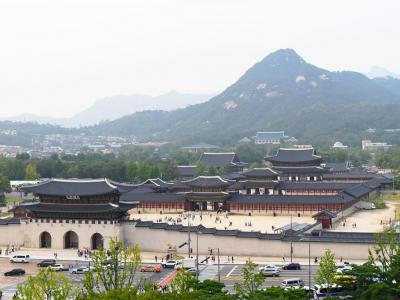
Gyeongbokgung Palace was built in 1395 by the Joseon Dynasty. This impressive complex served as the Joseon Dynasty's main palace and is the largest of the Five Grand Palaces.
It was destroyed by fire during the Imjin War in 1592 and sat abandoned for over two centuries. In 1867, the palace was reconstructed with 330 buildings and 5,792 rooms. In 1895, Japanese agents assassinated Empress Myeongseong. Emperor Gojong, her husband, left the palace and never returned.
In the early 20th century, Japan's colonial government destroyed palace buildings and constructed the enormous Japanese General Government Building outside the throne hall.
Only a few 19th-century buildings survived the Japanese government and the Korean War. These buildings include Geunjeongjeon (the Imperial Throne Hall), Hyangwonjeong Pavilion, Gyeonghoeru Pavilion, Sujeongjeon Hall, Jagyeongjeon Hall, Sajeongjeon Hall, and Jibokjae Hall.
In 1989, reconstruction began to restore the palace to its former glory. About 40 percent of the building have since been reconstructed or restored.
Geunjeongjeon, the Imperial Throne Hall, is truly impressive. Its constructed mainly of wood and sits in a courtyard lined with stones. Known as rank stones, they indicated where officials of different ranks could stand during ceremonies. The entire courtyard is cloistered.
Gyeongbokgung Palace features dozens of architecturally interesting buildings. Hyangwonjeong, a beautiful hexagonal pavilion, sits attractively on an island.
Why You Should Visit:
Gyeongbokgung Palace is the largest and grandest of the Five Grand Palaces. Visit the National Folk Museum of Korea on the palace grounds to learn about the history of the Korean people. The National Palace Museum of Korea is also located on the palace grounds and houses priceless 14th century Joseon dynasty treasures.
Tips:
You can rent traditional costumes to immerse yourself in 14th-century royal Korea.
For a memorable experience, sign up for a night tour and see the palace lit up. Gyeonghoeru looks spectacular as its warm lights are reflected in the pond.
For a once in a lifetime experience, take part in a Gyeongbokgung Royal Dining event. Sample royal food and watch a traditional performance.
It was destroyed by fire during the Imjin War in 1592 and sat abandoned for over two centuries. In 1867, the palace was reconstructed with 330 buildings and 5,792 rooms. In 1895, Japanese agents assassinated Empress Myeongseong. Emperor Gojong, her husband, left the palace and never returned.
In the early 20th century, Japan's colonial government destroyed palace buildings and constructed the enormous Japanese General Government Building outside the throne hall.
Only a few 19th-century buildings survived the Japanese government and the Korean War. These buildings include Geunjeongjeon (the Imperial Throne Hall), Hyangwonjeong Pavilion, Gyeonghoeru Pavilion, Sujeongjeon Hall, Jagyeongjeon Hall, Sajeongjeon Hall, and Jibokjae Hall.
In 1989, reconstruction began to restore the palace to its former glory. About 40 percent of the building have since been reconstructed or restored.
Geunjeongjeon, the Imperial Throne Hall, is truly impressive. Its constructed mainly of wood and sits in a courtyard lined with stones. Known as rank stones, they indicated where officials of different ranks could stand during ceremonies. The entire courtyard is cloistered.
Gyeongbokgung Palace features dozens of architecturally interesting buildings. Hyangwonjeong, a beautiful hexagonal pavilion, sits attractively on an island.
Why You Should Visit:
Gyeongbokgung Palace is the largest and grandest of the Five Grand Palaces. Visit the National Folk Museum of Korea on the palace grounds to learn about the history of the Korean people. The National Palace Museum of Korea is also located on the palace grounds and houses priceless 14th century Joseon dynasty treasures.
Tips:
You can rent traditional costumes to immerse yourself in 14th-century royal Korea.
For a memorable experience, sign up for a night tour and see the palace lit up. Gyeonghoeru looks spectacular as its warm lights are reflected in the pond.
For a once in a lifetime experience, take part in a Gyeongbokgung Royal Dining event. Sample royal food and watch a traditional performance.
4) Bukchon Hanok Village (must see)
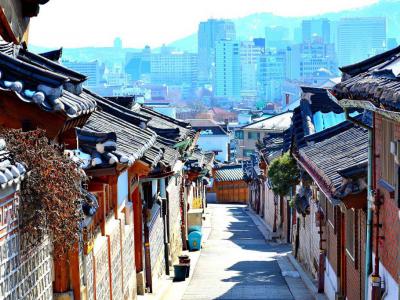
The Bukchon Hanbok Village represents construction methods over 600 years old. The location is on a hilltop, with Changdeok Palace Gyeongbok Palace, and the Jongmyo Royal Shrine surrounding the site. In addition to the hanok-style houses, the village also boasts a network of alleys.
One of the attractions in the village is the Baek In-je's House Museum. This house museum allows you to easily see how these hanok houses are designed and appreciate the traditional features. The museum is easy to tour in 15 to 20 minutes, leaving you with plenty of time to enjoy the rest of the village, filled with exciting photo opportunities.
These houses feature an architectural style not seen in modern homes. Many of these buildings house businesses that are important to the cultural life of the village. Some of these buildings serve as restaurants where you can sample traditional foods, including dishes with ingredients fresh from nearby farms.
Tea houses are also an essential part of local life that you will not want to miss. When you visit a tea house, you can witness tea served in a traditional style. These locations are an essential part of local social life and provide another exciting glimpse into local culture.
Why You Should Visit:
See the centuries-old, unique architecture and take part in unique cultural experiences, a definition of a living history exhibit.
Tips:
Remember that Bukchon Hanok Village is an inhabited residential area today and that not all of the buildings are open to the public. But since many hanoks have been converted to restaurants and tea houses, you can pop-in to order a tea or a meal while enjoy the traditional architecture.
One of the attractions in the village is the Baek In-je's House Museum. This house museum allows you to easily see how these hanok houses are designed and appreciate the traditional features. The museum is easy to tour in 15 to 20 minutes, leaving you with plenty of time to enjoy the rest of the village, filled with exciting photo opportunities.
These houses feature an architectural style not seen in modern homes. Many of these buildings house businesses that are important to the cultural life of the village. Some of these buildings serve as restaurants where you can sample traditional foods, including dishes with ingredients fresh from nearby farms.
Tea houses are also an essential part of local life that you will not want to miss. When you visit a tea house, you can witness tea served in a traditional style. These locations are an essential part of local social life and provide another exciting glimpse into local culture.
Why You Should Visit:
See the centuries-old, unique architecture and take part in unique cultural experiences, a definition of a living history exhibit.
Tips:
Remember that Bukchon Hanok Village is an inhabited residential area today and that not all of the buildings are open to the public. But since many hanoks have been converted to restaurants and tea houses, you can pop-in to order a tea or a meal while enjoy the traditional architecture.
5) Changdeokgung Palace (must see)
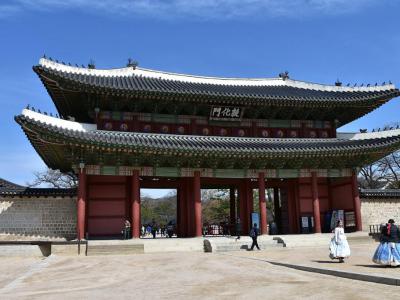
Changdeokgung Palace, also known as Prospering Virtue Palace, has a beautiful setting in one of Seoul's parks. The palace enjoys status as one of the Joseon Dynasty's Five Grand Palaces. One of the noteworthy things about this 15th-century palace is that it blends into the natural topography in a way not commonly seen in other buildings.
The Donhwamun Gate and Geumcheongyo Bridge are two of the oldest structures on the property built in the 15th century. Injeongjeon Hall served as an area for coronations, as well as the reception of envoys. Seonjeongjeon Hall was the location for daily meetings with the king and government ministers, while Juhamnu Pavilion was once the royal library.
Huijeongdang Hall, a residence for the king, and Daejojeon Hall, the queen's residence, are also noteworthy. Yeon-gyeongdang Residence is an 1827 audience hall. Huwon is a garden consisting of 78 acres in the back of the palace.
Changdeokgung Palace is a UNESCO World Heritage Site.
Why You Should Visit:
Although sometimes referred as a 'backup' palace to Gyeongbokgung, the interior is actually more complete. As such, you will be able to have a better understanding of how life in a palace is like. The "Secret Garden" is a must-see.
Tip:
Those wearing 'hanbok' can enter the palace free. You can also buy the Royal Palace Pass that gives you free entrance to 5 palaces (including the 'Secret Garden', which is a highlight of this palace visit).
The Donhwamun Gate and Geumcheongyo Bridge are two of the oldest structures on the property built in the 15th century. Injeongjeon Hall served as an area for coronations, as well as the reception of envoys. Seonjeongjeon Hall was the location for daily meetings with the king and government ministers, while Juhamnu Pavilion was once the royal library.
Huijeongdang Hall, a residence for the king, and Daejojeon Hall, the queen's residence, are also noteworthy. Yeon-gyeongdang Residence is an 1827 audience hall. Huwon is a garden consisting of 78 acres in the back of the palace.
Changdeokgung Palace is a UNESCO World Heritage Site.
Why You Should Visit:
Although sometimes referred as a 'backup' palace to Gyeongbokgung, the interior is actually more complete. As such, you will be able to have a better understanding of how life in a palace is like. The "Secret Garden" is a must-see.
Tip:
Those wearing 'hanbok' can enter the palace free. You can also buy the Royal Palace Pass that gives you free entrance to 5 palaces (including the 'Secret Garden', which is a highlight of this palace visit).
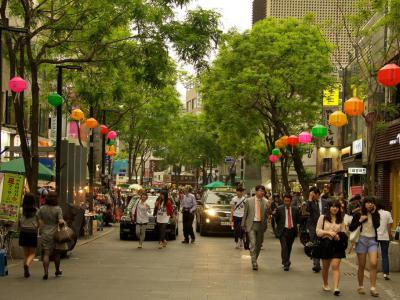
6) Insadong Shopping Street (must see)
The abundance of wooden tea houses (nearly 40), boutique galleries and street vendors offering traditional Korean snacks makes Insa-dong street in Seoul a true magnet for visitors of the Korean capital. Alongside the free entertainment the area is famous for, Insa-dong is also one of the key destinations in the city for buying traditional Korean art, products and souvenirs, such as hanbok (traditional clothing), hanji (traditional paper), traditional teas, pottery, and folk crafts.
There is a plethora of antique shops (more than 50), art galleries (80+), traditional stationery shops, handicraft shops, pottery and porcelain shops, bookstores, and art supply stores. On top of that, there are almost 100 restaurants specialized in traditional Korean cuisine. With such a variety on offer, one is really bound to be spoilt for choice here.
On Sundays the street turns pedestrian-only and is flooded with street performers, buskers and the lively crowds of young and old rushing to enjoy one of Seoul’s most exiting and creative neighborhoods. The tastefully decorated traditional teashops invite passers-by to relax in a calm zen-like atmosphere. For those interested in Korean traditional culture and crafts, Insa-dong is undoubtedly a must-see attraction which will leave imprint of Seoul in one's memory for the years to come.
There is a plethora of antique shops (more than 50), art galleries (80+), traditional stationery shops, handicraft shops, pottery and porcelain shops, bookstores, and art supply stores. On top of that, there are almost 100 restaurants specialized in traditional Korean cuisine. With such a variety on offer, one is really bound to be spoilt for choice here.
On Sundays the street turns pedestrian-only and is flooded with street performers, buskers and the lively crowds of young and old rushing to enjoy one of Seoul’s most exiting and creative neighborhoods. The tastefully decorated traditional teashops invite passers-by to relax in a calm zen-like atmosphere. For those interested in Korean traditional culture and crafts, Insa-dong is undoubtedly a must-see attraction which will leave imprint of Seoul in one's memory for the years to come.
