Custom Walk in Monte-Carlo, Monaco by lindsayhowell1_e3892 created on 2025-03-23
Guide Location: Monaco » Monte-Carlo
Guide Type: Custom Walk
# of Sights: 11
Tour Duration: 3 Hour(s)
Travel Distance: 5.8 Km or 3.6 Miles
Share Key: YKKWH
Guide Type: Custom Walk
# of Sights: 11
Tour Duration: 3 Hour(s)
Travel Distance: 5.8 Km or 3.6 Miles
Share Key: YKKWH
How It Works
Please retrieve this walk in the GPSmyCity app. Once done, the app will guide you from one tour stop to the next as if you had a personal tour guide. If you created the walk on this website or come to the page via a link, please follow the instructions below to retrieve the walk in the app.
Retrieve This Walk in App
Step 1. Download the app "GPSmyCity: Walks in 1K+ Cities" on Apple App Store or Google Play Store.



Step 2. In the GPSmyCity app, download(or launch) the guide "Monte-Carlo Map and Walking Tours".
Step 3. Tap the menu button located at upper right corner of the "Walks" screen and select "Retrieve custom walk". Enter the share key: YKKWH
1) Cafe de Paris and Casino (must see)
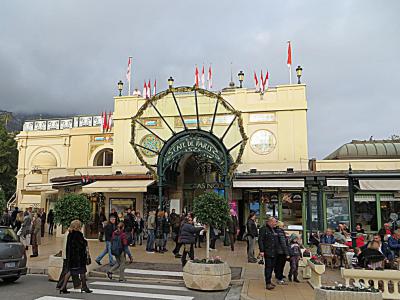
Cafe de Paris and Casino date back to 1868. The most recent renovation in 1988 gave the Cafe a Belle Époque style that mimics many Parisian bistros from the early 1900s. The cafe features two modular terraces with views of the nearby hotel that has impressive antique cars on display.
If you enjoy high-end gambling, Cafe de Paris and Casino is one of the top places to go in Monaco. There are over 140,000 square feet of gaming rooms, giving you plenty of opportunities to enjoy the games that you want. The gaming area's setting has been inspired by the Historic Grand Prix.
When you dine here, you'll be enjoying an exciting brasserie setting. Some of the most popular types of foods include pasta, fresh fish, beef dishes that include steak tartare and veal, and delicious desserts including pastries. There is also a full alcohol menu offering everything from wine to cocktails.
If you enjoy high-end gambling, Cafe de Paris and Casino is one of the top places to go in Monaco. There are over 140,000 square feet of gaming rooms, giving you plenty of opportunities to enjoy the games that you want. The gaming area's setting has been inspired by the Historic Grand Prix.
When you dine here, you'll be enjoying an exciting brasserie setting. Some of the most popular types of foods include pasta, fresh fish, beef dishes that include steak tartare and veal, and delicious desserts including pastries. There is also a full alcohol menu offering everything from wine to cocktails.
2) Place du Casino (Casino Square) (must see)
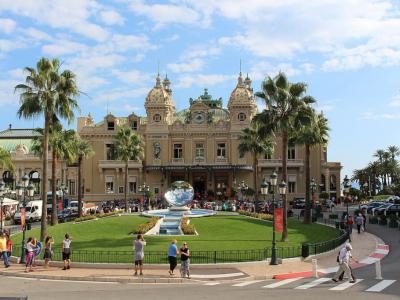
Casino Square is the lively focal point of Monte-Carlo and one of the most photographed plazas in the world. Surrounded by graceful Belle Époque architecture, luxury boutiques, and carefully maintained gardens, it embodies the glamour that lifted Monaco from a small principality to a destination synonymous with prestige and sophistication.
The square takes its name from the legendary Monte Carlo Casino, established in the mid-19th century to attract Europe’s elite and revive Monaco’s fortunes. Its ornate façade, complete with sculptural detail and grand arches, creates an impressive backdrop for visitors arriving to test their luck or simply admire one of the world’s most famous casinos.
Until the early 20th century, Monégasque citizens were forbidden to gamble in the very casino that made their country famous — a rule introduced to ensure that the gaming profits came entirely from wealthy foreign visitors. The tradition remains: locals can work in the casino but are not allowed to play.
Bordering the plaza, the Hotel of Paris and the Paris Café enhance the sense of refined enjoyment. The daily parade of luxury cars, polished terraces, and stylish passersby gives the square a distinct cinematic feel, that many Hollywood films and TV series have showcased this very setting. At its centre, a circular fountain paired with the Sky Mirror sculpture creates a favourite photo spot.
Just beyond the open space, the Boulingrins Gardens offer shaded pathways and greenery. Steps away, the One Monte-Carlo district delivers high-end shopping with exclusive fashion and jewellery boutiques. Even without entering the casino, sitting at a café and watching the lively surroundings can be one of the most enjoyable ways to experience Monte-Carlo’s unique atmosphere.
The square takes its name from the legendary Monte Carlo Casino, established in the mid-19th century to attract Europe’s elite and revive Monaco’s fortunes. Its ornate façade, complete with sculptural detail and grand arches, creates an impressive backdrop for visitors arriving to test their luck or simply admire one of the world’s most famous casinos.
Until the early 20th century, Monégasque citizens were forbidden to gamble in the very casino that made their country famous — a rule introduced to ensure that the gaming profits came entirely from wealthy foreign visitors. The tradition remains: locals can work in the casino but are not allowed to play.
Bordering the plaza, the Hotel of Paris and the Paris Café enhance the sense of refined enjoyment. The daily parade of luxury cars, polished terraces, and stylish passersby gives the square a distinct cinematic feel, that many Hollywood films and TV series have showcased this very setting. At its centre, a circular fountain paired with the Sky Mirror sculpture creates a favourite photo spot.
Just beyond the open space, the Boulingrins Gardens offer shaded pathways and greenery. Steps away, the One Monte-Carlo district delivers high-end shopping with exclusive fashion and jewellery boutiques. Even without entering the casino, sitting at a café and watching the lively surroundings can be one of the most enjoyable ways to experience Monte-Carlo’s unique atmosphere.
3) Casino de Monte-Carlo (must see)
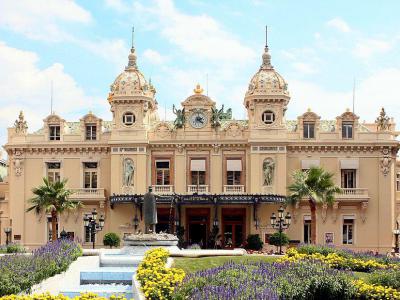
The Monte Carlo Casino is perhaps the world's most famous gambling venue, owned and operated by the Société des bains de mer de Monaco. At some point, in the 1950s, it was controlled by Aristotle Onassis.
The idea to open a gambling business in Monaco came from Princess Caroline in the late 1840s. She saw this as a chance for the Principality to avoid bankruptcy after the loss of tax proceeds from the breakaway towns of Menton and Roquebrune.
In the 1850s, Monaco was not much of a fancy place. It didn't have sufficient road link to the neighboring Nice and the rest of Europe, no suitable accommodation or any other amenities for visitors. The casino changed several managers before it started to gain profit, in 1859.
In 1863 it was taken over by François Blanc who had used his entrepreneurial skills to raise a required capital for a massive development of the area, launched in 1858. Among those who first invested in the project were Bishop of Monaco and the future Pope Leo XIII. The new casino complex, designed in a distinct Beaux Arts style by architect Charles Garnier, author of the Paris Opéra building, was finished in 1863. The area, previously known as Les Spelugues (The Caves), was renamed to Monte Carlo in honor of Prince Charles, the then ruler of Monaco. In 1879, an opera and ballet theatre, known as the Salle Garnier, was added to the complex.
For many years, the Monte Carlo Casino remained the key source of income for Monaco's economy, yet its own citizens have always been banned from gambling. It is for this reason that all visitors to the casino must present their IDs to ensure that no locals get inside.
A lot of fictional, as well as factual, peculiar events have been associated with the Monte Carlo Casino over the years. Among them the James Bond movies, partially set in and filmed on the location, and the Monaco Grand Prix (the Circuit de Monaco) Formula-1 race, passing by the casino building each year.
The idea to open a gambling business in Monaco came from Princess Caroline in the late 1840s. She saw this as a chance for the Principality to avoid bankruptcy after the loss of tax proceeds from the breakaway towns of Menton and Roquebrune.
In the 1850s, Monaco was not much of a fancy place. It didn't have sufficient road link to the neighboring Nice and the rest of Europe, no suitable accommodation or any other amenities for visitors. The casino changed several managers before it started to gain profit, in 1859.
In 1863 it was taken over by François Blanc who had used his entrepreneurial skills to raise a required capital for a massive development of the area, launched in 1858. Among those who first invested in the project were Bishop of Monaco and the future Pope Leo XIII. The new casino complex, designed in a distinct Beaux Arts style by architect Charles Garnier, author of the Paris Opéra building, was finished in 1863. The area, previously known as Les Spelugues (The Caves), was renamed to Monte Carlo in honor of Prince Charles, the then ruler of Monaco. In 1879, an opera and ballet theatre, known as the Salle Garnier, was added to the complex.
For many years, the Monte Carlo Casino remained the key source of income for Monaco's economy, yet its own citizens have always been banned from gambling. It is for this reason that all visitors to the casino must present their IDs to ensure that no locals get inside.
A lot of fictional, as well as factual, peculiar events have been associated with the Monte Carlo Casino over the years. Among them the James Bond movies, partially set in and filmed on the location, and the Monaco Grand Prix (the Circuit de Monaco) Formula-1 race, passing by the casino building each year.
4) Larvotto Beach (must see)
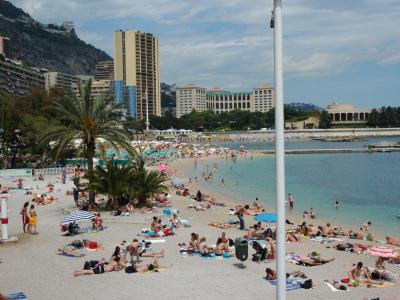
Monaco's primary shoreline, Larvotto Beach, is a public beach accessible to everyone and situated just a short distance from Monte Carlo, along Avenue Princesse Grace, known as one of the world's most opulent streets. Larvotto Beach boasts stunning turquoise waters, picturesque coastal views, and an ambiance that's hard to match. Despite its close proximity to the bustling city of Monte Carlo and the rest of Monaco, the beach maintains a peaceful atmosphere and offers excellent swimming conditions.
The Larvotto Beach complex covers an expansive area of more than 14,000 square meters, encompassing both the beach itself and a pine-shaded promenade. It is home to various amenities, including 24-hour cafes, bars, and restaurants. Among these establishments, you can find the well-established ice cream parlor called Mullot, as well as a childcare facility, the Larvotto Gym Centre, and the L'Académie Monégasque de la Mer diving school.
Smoking and vaping are strictly prohibited on the beach, and locals appreciate the presence of protective jellyfish nets. Travelers often recommend this sandy beach for visitors of all ages and physical abilities because of its shallow, calm waters and wheelchair accessibility. However, families should be aware that, similar to practices in France, some beachgoers here sunbathe topless. Additionally, it's worth noting that Larvotto Beach features pebbles rather than fine sand, so it's advisable to wear sturdy footwear.
Given its popularity, it's advisable to arrive early if you want to secure a spot on the sand. Alternatively, you can rent a lounger at one of the four private beaches nearby: La Rose des Vents, Le Neptune, La Note Bleue, and Le Miami. These private beaches also offer food service for your convenience.
The Larvotto Beach complex covers an expansive area of more than 14,000 square meters, encompassing both the beach itself and a pine-shaded promenade. It is home to various amenities, including 24-hour cafes, bars, and restaurants. Among these establishments, you can find the well-established ice cream parlor called Mullot, as well as a childcare facility, the Larvotto Gym Centre, and the L'Académie Monégasque de la Mer diving school.
Smoking and vaping are strictly prohibited on the beach, and locals appreciate the presence of protective jellyfish nets. Travelers often recommend this sandy beach for visitors of all ages and physical abilities because of its shallow, calm waters and wheelchair accessibility. However, families should be aware that, similar to practices in France, some beachgoers here sunbathe topless. Additionally, it's worth noting that Larvotto Beach features pebbles rather than fine sand, so it's advisable to wear sturdy footwear.
Given its popularity, it's advisable to arrive early if you want to secure a spot on the sand. Alternatively, you can rent a lounger at one of the four private beaches nearby: La Rose des Vents, Le Neptune, La Note Bleue, and Le Miami. These private beaches also offer food service for your convenience.
5) Jardin Japonais de Monaco (Japanese Garden) (must see)
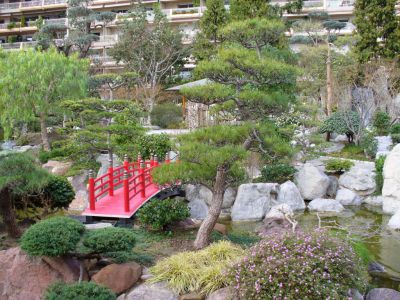
The Japanese Garden of Monaco is an oasis of tranquillity amid the atmosphere of Monte-Carlo. Designed by Japanese landscape architect Yasuo Beppu at the request of Prince Rainier III, the garden opened in 1994 as a way to honour Princess Grace’s long-held wish to bring a peaceful, natural refuge to the principality.
In keeping with Japanese garden tradition, the layout is asymmetrical and designed to feel quasi-natural, drawing the eye along winding paths and over varied terrain. The vegetation includes plant species from numerous regions — the Mediterranean, Asia, South America, Australia, and Africa — creating a harmonious landscape rooted in international diversity. At its heart lies an artificial lake of around 1,100 square metres, providing calming reflections and a sense of serenity. Among its quiet corners, visitors sometimes notice a discreet plaque honouring Princess Grace.
One of the garden’s most intriguing features is its unexpected setting: it is built on the roof of a parking structure, cleverly disguised beneath lush greenery and traditional design elements. All architectural features — including gates, lanterns, tiles, and fences — were crafted in Japan and transported to Monaco, ensuring authenticity in every detail.
Look closely at the lake — it is home to colourful koi carp, which are believed in Japanese culture to symbolise strength, resilience, and good fortune. Another interesting detail: the waterfall is designed to create a soft, constant sound to “mask” the noise of the city. Offering shade, water features, and quiet corners for reflection, the Japanese Garden provides a peaceful contrast to the surrounding stone, steel, and glass of Monte-Carlo.
In keeping with Japanese garden tradition, the layout is asymmetrical and designed to feel quasi-natural, drawing the eye along winding paths and over varied terrain. The vegetation includes plant species from numerous regions — the Mediterranean, Asia, South America, Australia, and Africa — creating a harmonious landscape rooted in international diversity. At its heart lies an artificial lake of around 1,100 square metres, providing calming reflections and a sense of serenity. Among its quiet corners, visitors sometimes notice a discreet plaque honouring Princess Grace.
One of the garden’s most intriguing features is its unexpected setting: it is built on the roof of a parking structure, cleverly disguised beneath lush greenery and traditional design elements. All architectural features — including gates, lanterns, tiles, and fences — were crafted in Japan and transported to Monaco, ensuring authenticity in every detail.
Look closely at the lake — it is home to colourful koi carp, which are believed in Japanese culture to symbolise strength, resilience, and good fortune. Another interesting detail: the waterfall is designed to create a soft, constant sound to “mask” the noise of the city. Offering shade, water features, and quiet corners for reflection, the Japanese Garden provides a peaceful contrast to the surrounding stone, steel, and glass of Monte-Carlo.
6) Monte Carlo Harbor (must see)
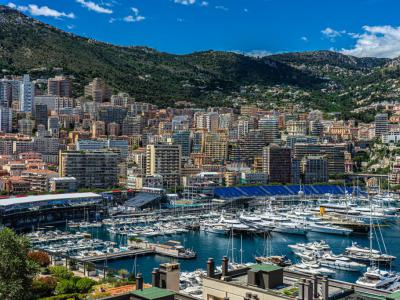
Monte-Carlo Harbor is known for its calm blue waters and the frequent arrival of yachts from around the world. Surrounded by hills and waterfront buildings, it reflects Monaco’s long connection with the sea. Although modern in appearance, the harbour has a long history of serving sailors and traders. In the 20th century, it was expanded to accommodate contemporary vessels, making it both a practical port and a representation of Monaco’s maritime character.
Officially named Port Hercules, the harbour’s title dates back to ancient Greek sailors, who believed the mythological hero Hercules protected this coastline. They referred to the area as Port Hercules, linking it to a sanctuary believed to stand nearby. While locals and official signs still use this historic name, many visitors call it Monte-Carlo Harbor, since it sits within the famous district and is closely connected to Monte-Carlo’s coastal life.
The harbour is famous for its views, especially from higher terraces overlooking the water. It’s also part of the Monaco Grand Prix circuit, where Formula One cars race past the docks every May. During major yacht shows and international sporting events, the harbour becomes an exclusive floating neighbourhood where some vessels even include helipads, swimming pools, and private cinemas.
Today, the harbour can accommodate some of the largest yachts in the world. Visitors can walk along the promenade, stop at cafés and restaurants by the water, or simply enjoy the peaceful movement of the boats. Food stalls along the quay offer burgers, hot dogs, paninis, crêpes, and churros. The area also features pleasant walking paths and gardens, with scenic views of both the sea and the surrounding cityscape.
Officially named Port Hercules, the harbour’s title dates back to ancient Greek sailors, who believed the mythological hero Hercules protected this coastline. They referred to the area as Port Hercules, linking it to a sanctuary believed to stand nearby. While locals and official signs still use this historic name, many visitors call it Monte-Carlo Harbor, since it sits within the famous district and is closely connected to Monte-Carlo’s coastal life.
The harbour is famous for its views, especially from higher terraces overlooking the water. It’s also part of the Monaco Grand Prix circuit, where Formula One cars race past the docks every May. During major yacht shows and international sporting events, the harbour becomes an exclusive floating neighbourhood where some vessels even include helipads, swimming pools, and private cinemas.
Today, the harbour can accommodate some of the largest yachts in the world. Visitors can walk along the promenade, stop at cafés and restaurants by the water, or simply enjoy the peaceful movement of the boats. Food stalls along the quay offer burgers, hot dogs, paninis, crêpes, and churros. The area also features pleasant walking paths and gardens, with scenic views of both the sea and the surrounding cityscape.
7) Circuit de Monaco
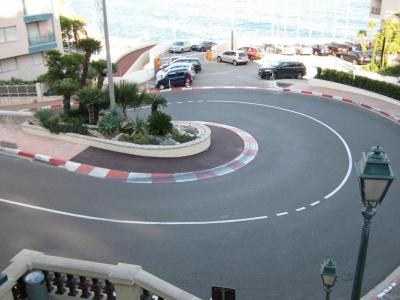
The Circuit de Monaco is a racing track situated on the streets of Monte Carlo and La Condamine, wrapping around the harbor of Monaco. It's commonly known as "Monte Carlo" because it's mostly located within the Monte Carlo neighborhood of Monaco. This circuit is used once a year in May to host the Formula One Monaco Grand Prix. Alongside Formula One, various feeder series like F2, Formula 3000, and currently GP2 also race on this track during the same weekend.
The concept of having a Grand Prix race on the streets of Monaco was conceived by Antony Noghès, the president of the Monegasque car club and a close friend of the ruling Grimaldi family. The very first race took place in 1929 and was won by William Grover-Williams driving a Bugatti. Constructing the circuit takes approximately six weeks, while dismantling it after the race takes another three weeks.
This race track is known for its challenging characteristics, including significant changes in elevation, tight corners, and narrow sections. It's often regarded as one of the most demanding tracks in Formula One racing. Despite several alterations over the years, it remains the ultimate test of a Formula One driver's skills. The circuit features both the slowest corner in Formula One, the Fairmont Hairpin, which is navigated at just 48 kilometers per hour (30 miles per hour), and one of the fastest sections, the flat-out kink in the tunnel, located three turns past the hairpin, taken at a staggering 260 kilometers per hour (160 miles per hour).
The concept of having a Grand Prix race on the streets of Monaco was conceived by Antony Noghès, the president of the Monegasque car club and a close friend of the ruling Grimaldi family. The very first race took place in 1929 and was won by William Grover-Williams driving a Bugatti. Constructing the circuit takes approximately six weeks, while dismantling it after the race takes another three weeks.
This race track is known for its challenging characteristics, including significant changes in elevation, tight corners, and narrow sections. It's often regarded as one of the most demanding tracks in Formula One racing. Despite several alterations over the years, it remains the ultimate test of a Formula One driver's skills. The circuit features both the slowest corner in Formula One, the Fairmont Hairpin, which is navigated at just 48 kilometers per hour (30 miles per hour), and one of the fastest sections, the flat-out kink in the tunnel, located three turns past the hairpin, taken at a staggering 260 kilometers per hour (160 miles per hour).
8) Chocolaterie de Monaco
The path for chocolate enthusiasts leads to the renowned Chocolaterie de Monaco, a local institution founded in 1920 that received a prestigious recognition in 1999 when it was officially granted the title of "Patented Supplier of the Prince's Palace" by Prince Rainier III. This charming boutique is situated in the Monaco-Ville district, also known as the Rocher, right on the spacious Place de la Visitation. It's conveniently close to the Oceanographic Museum and can be reached through the winding streets that lead to the Palace.
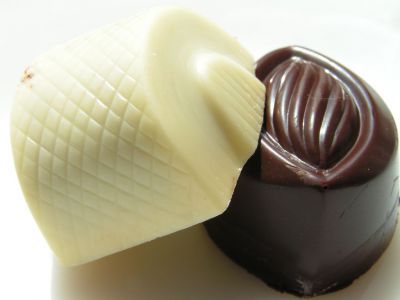
Inside the boutique, you'll discover an impressive assortment of both classic chocolate treats and specialized products designed for special occasions. These delectable creations are elegantly presented in various forms, including gift boxes, ballotins (available in single, double, and quartet configurations), and small bags, which are particularly popular. Some of the specialties on offer include Couronnes Monégasques, reminiscent of old-fashioned pralines coated with either milk or dark chocolate; Rochers Princiers, hazelnut pralines adorned with caramelized almond chips and enveloped in a rich chocolate coating; Crospies, featuring crispy puffed rice cloaked in caramelized and sugar-coated white chocolate; Ganache, a heavenly combination of creamy dark chocolate drizzled with cocoa; as well as Bears, Orangettes, Mendiants, and Truffles, available in various soft textures to suit your preferences.
These delightful chocolates have deep historical ties, particularly the connection to the wedding of Prince Rainier III and Princess Grace Kelly in April 1956, immortalizing the role of chocolates in their love story. The Monegasque Crowns, on the other hand, are associated with royal life and the ascension of H.S.H. Prince Albert II to the throne in 2005. With a century of experience and a true art of living, these chocolatiers are veritable masters of their craft.
Inside the boutique, you'll discover an impressive assortment of both classic chocolate treats and specialized products designed for special occasions. These delectable creations are elegantly presented in various forms, including gift boxes, ballotins (available in single, double, and quartet configurations), and small bags, which are particularly popular. Some of the specialties on offer include Couronnes Monégasques, reminiscent of old-fashioned pralines coated with either milk or dark chocolate; Rochers Princiers, hazelnut pralines adorned with caramelized almond chips and enveloped in a rich chocolate coating; Crospies, featuring crispy puffed rice cloaked in caramelized and sugar-coated white chocolate; Ganache, a heavenly combination of creamy dark chocolate drizzled with cocoa; as well as Bears, Orangettes, Mendiants, and Truffles, available in various soft textures to suit your preferences.
These delightful chocolates have deep historical ties, particularly the connection to the wedding of Prince Rainier III and Princess Grace Kelly in April 1956, immortalizing the role of chocolates in their love story. The Monegasque Crowns, on the other hand, are associated with royal life and the ascension of H.S.H. Prince Albert II to the throne in 2005. With a century of experience and a true art of living, these chocolatiers are veritable masters of their craft.
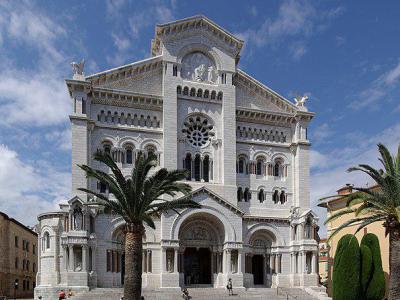
9) Monaco Cathedral (must see)
Monaco Cathedral — also known as Saint Nicholas Cathedral — is the seat of the Roman Catholic Archdiocese of Monaco and the burial place of many members of the princely Grimaldi family, including Princess Grace and Prince Rainier III. It is one of the most visited landmarks in the Old Town.
The current cathedral was built between 1875 and 1903, then consecrated in 1911, on the site of Monaco’s original parish church dating back to 1252, which was dedicated to Saint Nicholas. Constructed from white limestone from La Turbie, the exterior stands out for its solid Romanesque-Revival design, while the interior includes notable artworks such as a circa-1500 retable near the transept, the Great Altar, and the Episcopal Throne, all carved from white Carrara marble.
Major religious celebrations take place here, including the Feast of Saint Devota on 27 January — the patron saint of Monaco — and the National Day on 19 November. During special services and concerts, visitors may hear the cathedral’s impressive four-keyboard organ, inaugurated in 1976, known for its rich acoustic presence.
From September through June, the Cathedral Choir School performs during Sunday Mass at 10:00 am, continuing a centuries-old choral tradition linked to the princely court. Another annual celebration occurs on 6 December, when children gather for a festive Mass honouring Saint Nicholas.
This cathedral was the setting for some of Monaco’s most significant royal moments — including the wedding ceremony of Prince Rainier III and Grace Kelly in 1956. Visitors often pause near the royal tombs in a spirit of respect. Despite their international fame, Princess Grace and Prince Rainier III chose simple, modest gravestones, reflecting their personal values and a strong bond with the people of Monaco.
The current cathedral was built between 1875 and 1903, then consecrated in 1911, on the site of Monaco’s original parish church dating back to 1252, which was dedicated to Saint Nicholas. Constructed from white limestone from La Turbie, the exterior stands out for its solid Romanesque-Revival design, while the interior includes notable artworks such as a circa-1500 retable near the transept, the Great Altar, and the Episcopal Throne, all carved from white Carrara marble.
Major religious celebrations take place here, including the Feast of Saint Devota on 27 January — the patron saint of Monaco — and the National Day on 19 November. During special services and concerts, visitors may hear the cathedral’s impressive four-keyboard organ, inaugurated in 1976, known for its rich acoustic presence.
From September through June, the Cathedral Choir School performs during Sunday Mass at 10:00 am, continuing a centuries-old choral tradition linked to the princely court. Another annual celebration occurs on 6 December, when children gather for a festive Mass honouring Saint Nicholas.
This cathedral was the setting for some of Monaco’s most significant royal moments — including the wedding ceremony of Prince Rainier III and Grace Kelly in 1956. Visitors often pause near the royal tombs in a spirit of respect. Despite their international fame, Princess Grace and Prince Rainier III chose simple, modest gravestones, reflecting their personal values and a strong bond with the people of Monaco.
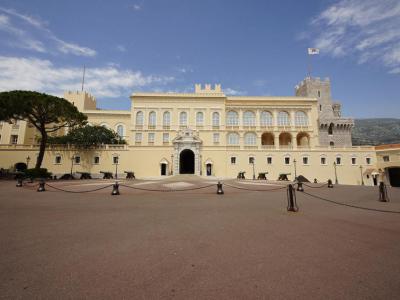
10) Prince's Palace of Monaco (must see)
The official residence of the Sovereign Prince of Monaco, the Prince’s Palace was originally built in 1191 as a Genoese fortress. Throughout its long and sometimes turbulent history, it has been bombarded and besieged by foreign powers. The Grimaldi family first captured the fortress in 1297, and it has remained their seat ever since — first as feudal lords and, from the 17th century onward, as sovereign princes. Their authority, however, often depended on delicate alliances with larger neighbouring states.
While many European rulers constructed lavish Renaissance and Baroque palaces, Monaco’s princes were required to maintain strong fortifications for protection. This unusual circumstance resulted in a palace that combines fortified medieval elements with later decorative additions, making it one of the more distinctive royal residences in Europe. When the defensive structures were finally eased in the late 18th century, the palace was seized during the French Revolution, looted, and left in a state of decline while the Grimaldi family lived in exile for more than twenty years.
In the 19th and early 20th centuries, both the palace and its rulers became associated with the emerging glamour of Monte-Carlo and the French Riviera. That aura only grew in 1956, when American film star Grace Kelly married Prince Rainier III and became Princess Grace, bringing worldwide attention and cinematic charm to the palace.
Today, the Prince’s Palace remains the official home of the reigning monarch and is open to the public during the summer months. Visitors can explore several state rooms — richly decorated with fine tapestries, frescoes, and period furnishings — and enjoy views over the harbour and city.
Tip:
Combined tickets are available that include the Prince’s Car Collection or the Oceanographic Museum. In July and August, the palace courtyard hosts open-air concerts.
While many European rulers constructed lavish Renaissance and Baroque palaces, Monaco’s princes were required to maintain strong fortifications for protection. This unusual circumstance resulted in a palace that combines fortified medieval elements with later decorative additions, making it one of the more distinctive royal residences in Europe. When the defensive structures were finally eased in the late 18th century, the palace was seized during the French Revolution, looted, and left in a state of decline while the Grimaldi family lived in exile for more than twenty years.
In the 19th and early 20th centuries, both the palace and its rulers became associated with the emerging glamour of Monte-Carlo and the French Riviera. That aura only grew in 1956, when American film star Grace Kelly married Prince Rainier III and became Princess Grace, bringing worldwide attention and cinematic charm to the palace.
Today, the Prince’s Palace remains the official home of the reigning monarch and is open to the public during the summer months. Visitors can explore several state rooms — richly decorated with fine tapestries, frescoes, and period furnishings — and enjoy views over the harbour and city.
Tip:
Combined tickets are available that include the Prince’s Car Collection or the Oceanographic Museum. In July and August, the palace courtyard hosts open-air concerts.
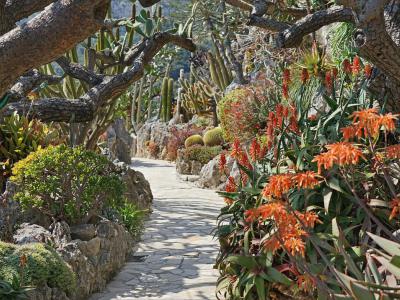
11) Jardin Exotique de Monaco (Exotic Garden of Monaco) (must see)
The Exotic Garden of Monaco (Jardin Exotique de Monaco), situated on a cliffside in Monaco, is a botanical garden spanning approximately 15,000 square meters. This unique garden boasts a diverse collection of around a thousand cacti and other succulent plants characterized by water-storing stems or hypertrophic leaves. These plants, originally hailing from semi-arid regions across the planet, continue to flourish with abundant flower displays. Notably, South African succulents like Aloe and Crassula bloom during the winter months (January to February), while cacti, native to the Americas, grace the garden with their blossoms during the spring and summer.
The garden's mature trees, lining its pathways, offer a glimpse into the collection's history, serving as the foundation for the garden's creation. Opened to the public in February 1933, and further enriched in the 1960s with the addition of a botanical center and a specialized tree nursery, this garden ranks among the most popular tourist attractions in the Principality of Monaco.
Back in 1912, Albert I, Prince of Monaco, acquired a piece of land in Les Moneghetti. He entrusted Louis Notari, Monaco's Chief Engineer, with the task of constructing a new garden featuring footbridges. During the construction process in 1916, an unexpected discovery was made: a grotto beneath the site. Despite this, the garden was completed in 1933. The inaugural director of the garden from 1933 to 1969 was Louis Vatrican, a Monegasque agronomist, who expanded the collection by introducing African succulents alongside the existing South American flora. After his retirement in 1969, Marcel Kroenlein succeeded him.
The grotto was made accessible to the public in 1950 but can only be explored with the assistance of specialized guides. Remarkably, the cave has yielded evidence of prehistoric human habitation, and within the Exotic Garden, a Museum of Prehistoric Anthropology, established by Prince Albert I in 1902, proudly exhibits many of these ancient relics.
The garden's mature trees, lining its pathways, offer a glimpse into the collection's history, serving as the foundation for the garden's creation. Opened to the public in February 1933, and further enriched in the 1960s with the addition of a botanical center and a specialized tree nursery, this garden ranks among the most popular tourist attractions in the Principality of Monaco.
Back in 1912, Albert I, Prince of Monaco, acquired a piece of land in Les Moneghetti. He entrusted Louis Notari, Monaco's Chief Engineer, with the task of constructing a new garden featuring footbridges. During the construction process in 1916, an unexpected discovery was made: a grotto beneath the site. Despite this, the garden was completed in 1933. The inaugural director of the garden from 1933 to 1969 was Louis Vatrican, a Monegasque agronomist, who expanded the collection by introducing African succulents alongside the existing South American flora. After his retirement in 1969, Marcel Kroenlein succeeded him.
The grotto was made accessible to the public in 1950 but can only be explored with the assistance of specialized guides. Remarkably, the cave has yielded evidence of prehistoric human habitation, and within the Exotic Garden, a Museum of Prehistoric Anthropology, established by Prince Albert I in 1902, proudly exhibits many of these ancient relics.
