Custom Walk in Hanoi, Vietnam by reena_amin84_966a6 created on 2025-03-24
Guide Location: Vietnam » Hanoi
Guide Type: Custom Walk
# of Sights: 5
Tour Duration: 2 Hour(s)
Travel Distance: 5.6 Km or 3.5 Miles
Share Key: KDW4H
Guide Type: Custom Walk
# of Sights: 5
Tour Duration: 2 Hour(s)
Travel Distance: 5.6 Km or 3.5 Miles
Share Key: KDW4H
How It Works
Please retrieve this walk in the GPSmyCity app. Once done, the app will guide you from one tour stop to the next as if you had a personal tour guide. If you created the walk on this website or come to the page via a link, please follow the instructions below to retrieve the walk in the app.
Retrieve This Walk in App
Step 1. Download the app "GPSmyCity: Walks in 1K+ Cities" on Apple App Store or Google Play Store.



Step 2. In the GPSmyCity app, download(or launch) the guide "Hanoi Map and Walking Tours".
Step 3. Tap the menu button located at upper right corner of the "Walks" screen and select "Retrieve custom walk". Enter the share key: KDW4H
1) Hoàn Kiếm Lake (must see)
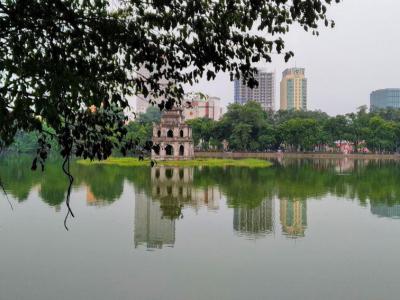
Hoàn Kiếm Lake holds a storied place at the heart of Hanoi. Also known as Sword Lake, this 12-hectare freshwater lake is a central feature of the city's public and historical life. Located in Hanoi's historical center, the lake is not only a major scenic spot but also a focal point for the city's public life, surrounded by vibrant streets and bustling local markets.
Originally named Green Water Lake (Hồ Lục Thủy) for its distinctive watercolor, the lake's present name, which means "Lake of the Returned Sword," is derived from a legendary event. The tale recounts that Emperor Lê Lợi, after defeating Ming China, was approached by a Golden Turtle God (Kim Qui) while boating on the lake. The turtle god requested the return of a magical sword, Heaven's Will, given to Lợi by the Dragon King (Long Vương) to aid in his battle against the Chinese. Acknowledging that his mission was accomplished, Lợi returned the sword to the turtle. This pivotal event led to the renaming of the lake to commemorate the sword's return.
The Turtle Tower (Tháp Rùa), situated on a small island near the center of the lake, is a prominent landmark associated with this legend. It stands as a silent reminder of the lake's mythological past. The lake was once home to the large soft-shell turtle species Rafetus leloi, named in honor of the emperor. Although the last known specimen was found deceased in 2016, the species remains emblematic of the lake's rich biodiversity.
To the north, the Jade Islet is connected to the lake's shore by the striking vermilion-red Thê Húc Bridge, which means "Perch of the Morning Sunlight". Atop the islet sits the Temple of the Jade Mountain (Ngoc Son), erected in the 18th century. This temple honors notable historical figures such as Tran Hung Dao, a military leader known for his victories over Mongol invaders; Van Xuong, a revered scholar; and Nguyen Van Sieu, a renowned writer who refurbished the temple in 1864, lending it its current appearance.
Today, Hoàn Kiếm Lake remains a vital part of Hanoi’s cultural fabric, attracting visitors with its serene beauty and rich history, encapsulating a blend of natural charm and cultural significance.
Originally named Green Water Lake (Hồ Lục Thủy) for its distinctive watercolor, the lake's present name, which means "Lake of the Returned Sword," is derived from a legendary event. The tale recounts that Emperor Lê Lợi, after defeating Ming China, was approached by a Golden Turtle God (Kim Qui) while boating on the lake. The turtle god requested the return of a magical sword, Heaven's Will, given to Lợi by the Dragon King (Long Vương) to aid in his battle against the Chinese. Acknowledging that his mission was accomplished, Lợi returned the sword to the turtle. This pivotal event led to the renaming of the lake to commemorate the sword's return.
The Turtle Tower (Tháp Rùa), situated on a small island near the center of the lake, is a prominent landmark associated with this legend. It stands as a silent reminder of the lake's mythological past. The lake was once home to the large soft-shell turtle species Rafetus leloi, named in honor of the emperor. Although the last known specimen was found deceased in 2016, the species remains emblematic of the lake's rich biodiversity.
To the north, the Jade Islet is connected to the lake's shore by the striking vermilion-red Thê Húc Bridge, which means "Perch of the Morning Sunlight". Atop the islet sits the Temple of the Jade Mountain (Ngoc Son), erected in the 18th century. This temple honors notable historical figures such as Tran Hung Dao, a military leader known for his victories over Mongol invaders; Van Xuong, a revered scholar; and Nguyen Van Sieu, a renowned writer who refurbished the temple in 1864, lending it its current appearance.
Today, Hoàn Kiếm Lake remains a vital part of Hanoi’s cultural fabric, attracting visitors with its serene beauty and rich history, encapsulating a blend of natural charm and cultural significance.

2) Tràng Tiền Ice-Cream
Tràng Tiền Ice-Cream is a beloved Hanoian tradition that dates back to 1958, located on Tràng Tiền Street in the heart of Vietnam's capital. Originally introduced by French colonists during the colonial period as a luxury item at the Grand Hotel, ice cream was out of reach for most locals until the establishment of Tràng Tiền Ice-Cream. This local vendor transformed ice cream from an inaccessible luxury to a popular treat and a cultural icon in Hanoi.
The ice cream parlor is renowned for maintaining the high quality and unique flavors that have captivated locals and tourists alike for over 65 years. Featuring natural fragrances and a tender texture that melts instantly in the mouth, Tràng Tiền Ice-Cream offers a variety of flavors such as chocolate, green rice, and green bean, each crafted using traditional handicraft production methods and natural ingredients. This approach not only enhances the taste but also ensures the product's healthiness.
One of the highlights is the Tràng Tiền Ice Cream Cone, a favorite among patrons. This treat combines freshly made, mildly sweet ice cream with a crunchy, cinnamon-scented cone, providing a delightful sensory experience. The ice cream's perfect storage temperature ensures it is neither too cold nor too hard, making it enjoyable throughout the year.
Today, Tràng Tiền Ice-Cream is not just a place to enjoy a tasty snack; it is a cultural landmark and a must-visit destination in Hanoi for anyone looking to experience the authentic flavors and traditions of this historic city.
The ice cream parlor is renowned for maintaining the high quality and unique flavors that have captivated locals and tourists alike for over 65 years. Featuring natural fragrances and a tender texture that melts instantly in the mouth, Tràng Tiền Ice-Cream offers a variety of flavors such as chocolate, green rice, and green bean, each crafted using traditional handicraft production methods and natural ingredients. This approach not only enhances the taste but also ensures the product's healthiness.
One of the highlights is the Tràng Tiền Ice Cream Cone, a favorite among patrons. This treat combines freshly made, mildly sweet ice cream with a crunchy, cinnamon-scented cone, providing a delightful sensory experience. The ice cream's perfect storage temperature ensures it is neither too cold nor too hard, making it enjoyable throughout the year.
Today, Tràng Tiền Ice-Cream is not just a place to enjoy a tasty snack; it is a cultural landmark and a must-visit destination in Hanoi for anyone looking to experience the authentic flavors and traditions of this historic city.
3) Hoa Lo Prison (must see)
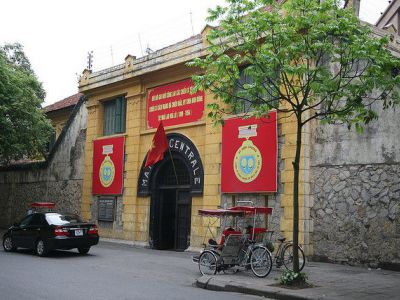
The Hoa Lo prison in Hanoi, sarcastically referred to as the Hanoi Hilton by American POWs in the 2nd Indochina War, is a vast prison complex built by the French in the style of the Maison Centrales a euphemism used for prisons in France. At first it was used as a prison, detention and torture center for revolutionaries struggling for independence from France. During the Vietnam War, the prison was used to house several American pilots whose planes were shot down by Vietnamese forces.
The Hoa Lo prison was built by the French between 1886 and 1901. Hoa Lo means fiery furnace or stove in Vietnamese. The facility was built to house 450 inmates. During the freedom struggle, the prison had more than 2000 Vietnamese inmates living in sub human conditions. Several tools of torture used by the French are preserved including a Guillotine used to behead early Vietnamese freedom fighters. From 1964 to 1973, the prison was a major POW detention facility and earned its name, the Hanoi Hilton. Well known inmates included Senator John McCain, the 2008 Presidential nominee of the Republican Party and Pete Peterson, who later became ambassador to Vietnam.
A small part of the original facility is preserved. The other part has now become a modern office and residential complex called the Hanoi Towers. Hanoi Hilton is located near the French quarter.
The Hoa Lo prison was built by the French between 1886 and 1901. Hoa Lo means fiery furnace or stove in Vietnamese. The facility was built to house 450 inmates. During the freedom struggle, the prison had more than 2000 Vietnamese inmates living in sub human conditions. Several tools of torture used by the French are preserved including a Guillotine used to behead early Vietnamese freedom fighters. From 1964 to 1973, the prison was a major POW detention facility and earned its name, the Hanoi Hilton. Well known inmates included Senator John McCain, the 2008 Presidential nominee of the Republican Party and Pete Peterson, who later became ambassador to Vietnam.
A small part of the original facility is preserved. The other part has now become a modern office and residential complex called the Hanoi Towers. Hanoi Hilton is located near the French quarter.
4) Temple of Literature (must see)
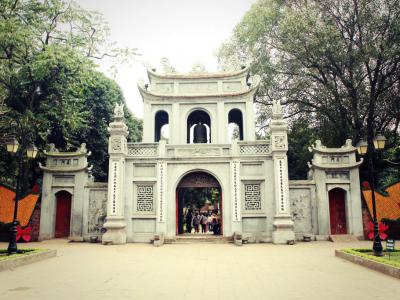
The Temple of Literature, dedicated to the Chinese Philosopher is one of Hanoi’s oldest structures. There are many temples of literature across Vietnam but the Hanoi temple is the oldest and the most important among them. It is also the venue of the country’s earliest university.
The Temple of Literature was founded by Emperor Ly Thanh Tong in 1070 a few years after the establishment of the city of Hanoi. The University established six years later admitted children from the royal family and students from the families of Mandarins. In 1484, Emperor Le Thanh Tong erected steles to record the achievements of students who were awarded doctorates by the university. It ceased to function in 1802 when it was shifted to a new venue.
The temple has five courtyards with boundary walls. Two courtyards have trees, some of which are over a hundred years old. One courtyard has a pond surrounded by sheltered pavilions and steles with details of students who earned doctorates at the university. The Courtyard of the Sage Sanctuary has a building called the Great House of Ceremonies. The house has a large red lacquer figure of Confucius. The last courtyard called the Thai Hoc has a two storey building honoring the founders of the university. There are two square structures on either side of the building to house a drum and a bell.
The Temple of Literature is open from Tuesdays to Sundays and visitors can find mementoes to take home at the souvenir and craft shops near the Great House of Ceremonies.
The Temple of Literature was founded by Emperor Ly Thanh Tong in 1070 a few years after the establishment of the city of Hanoi. The University established six years later admitted children from the royal family and students from the families of Mandarins. In 1484, Emperor Le Thanh Tong erected steles to record the achievements of students who were awarded doctorates by the university. It ceased to function in 1802 when it was shifted to a new venue.
The temple has five courtyards with boundary walls. Two courtyards have trees, some of which are over a hundred years old. One courtyard has a pond surrounded by sheltered pavilions and steles with details of students who earned doctorates at the university. The Courtyard of the Sage Sanctuary has a building called the Great House of Ceremonies. The house has a large red lacquer figure of Confucius. The last courtyard called the Thai Hoc has a two storey building honoring the founders of the university. There are two square structures on either side of the building to house a drum and a bell.
The Temple of Literature is open from Tuesdays to Sundays and visitors can find mementoes to take home at the souvenir and craft shops near the Great House of Ceremonies.
5) Ngoc Son Temple
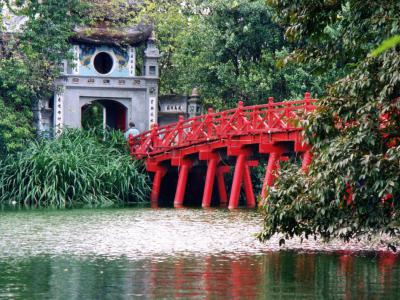
The Ncog Son temple stands on an island of the Hoan Kiem Lake. There was a temple at the location from the 14th century. The present structure was built in the 18th century. A three passage gate called the Tam Quan stands at one end of a red wooden bridge called The Huc (Rising Sun bridge). The Huc connects the Island with the mainland.
The Ncog Son temple is dedicated to many heroes. The main altar is dedicated to the hero Tran Hung Dao, who defeated and army of 300,000 invaders from the Chinese Yuan dynasty. Other altars are dedicated to La To, the patron saint of physicians, the scholar Van Xuong and Nguyen Van Sieu, a Confucian scholar who voluntarily restored the temple and its surroundings in 1864.
Nguyen Van Sieu added the Thap But, a 30 foot stone obelisk with a tip that resembles a paintbrush found to the left of the gates and Dai Nghien, a hollowed rock in the shape of a peach called the writing pad to the temple complex.
The temple has a pavilion in front of the altars and many souvenir shops for tourists. Elderly Vietnamese gather at the courtyard of the temple to play danh co tuong or Chinese Chess.
The Ncog Son temple is dedicated to many heroes. The main altar is dedicated to the hero Tran Hung Dao, who defeated and army of 300,000 invaders from the Chinese Yuan dynasty. Other altars are dedicated to La To, the patron saint of physicians, the scholar Van Xuong and Nguyen Van Sieu, a Confucian scholar who voluntarily restored the temple and its surroundings in 1864.
Nguyen Van Sieu added the Thap But, a 30 foot stone obelisk with a tip that resembles a paintbrush found to the left of the gates and Dai Nghien, a hollowed rock in the shape of a peach called the writing pad to the temple complex.
The temple has a pavilion in front of the altars and many souvenir shops for tourists. Elderly Vietnamese gather at the courtyard of the temple to play danh co tuong or Chinese Chess.
