Custom Walk in Rome, Italy by anscic_29d8d created on 2025-03-29
Guide Location: Italy » Rome
Guide Type: Custom Walk
# of Sights: 6
Tour Duration: 3 Hour(s)
Travel Distance: 7.7 Km or 4.8 Miles
Share Key: DB37J
Guide Type: Custom Walk
# of Sights: 6
Tour Duration: 3 Hour(s)
Travel Distance: 7.7 Km or 4.8 Miles
Share Key: DB37J
How It Works
Please retrieve this walk in the GPSmyCity app. Once done, the app will guide you from one tour stop to the next as if you had a personal tour guide. If you created the walk on this website or come to the page via a link, please follow the instructions below to retrieve the walk in the app.
Retrieve This Walk in App
Step 1. Download the app "GPSmyCity: Walks in 1K+ Cities" on Apple App Store or Google Play Store.



Step 2. In the GPSmyCity app, download(or launch) the guide "Rome Map and Walking Tours".
Step 3. Tap the menu button located at upper right corner of the "Walks" screen and select "Retrieve custom walk". Enter the share key: DB37J
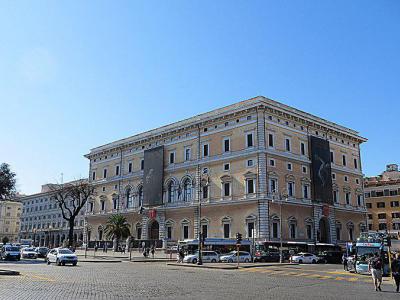
1) Museo Nazionale Romano - Palazzo Massimo alle Terme (National Museum of Rome in Massimo Palace) (must see)
Visit the Palazzo Massimo alle Terme to truly immerse yourself in the world of ancient Roman art, rivaling even the collections found within the Vatican. As part of the Museo Nazionale Romano, this location serves as the main site among the four museum locations, which also include Palazzo Altemps, Crypta Balbi, and the Museo delle Terme di Diocleziano. Within its expansive structure, you will discover a wealth of ancient treasures from the archaeological and coin collections, spanning from the 2nd century BC to the end of the 4th century AD.
Upon entering, the courtyard greets you with its enchanting portico adorned with statues, creating a captivating introduction to the remarkable treasures housed within. Noteworthy highlights include the Dying Niobid, the renowned bronze sculpture of the Boxer at Rest, and the iconic Discobolus Lancellotti. However, the true gem of the museum lies on the top floor, where ancient frescoes are meticulously displayed to "re-create" the ambiance of the homes they once adorned. Among them are the extraordinary stuccoes and wall paintings discovered in the area of the Villa Farnesina in Trastevere, as well as the legendary frescoes from Empress Livia's villa at Prima Porta. These delightful depictions showcase blooming gardens and lively orchards teeming with birds, their vibrant colors remarkably preserved. Such intricate decorations once adorned the walls of cool, sunken rooms in Livia's countryside retreat, offering a glimpse into the elegant lifestyle enjoyed outside the bustling city.
Why You Should Visit:
The wall paintings transported here from the Casa di Livia are quite stunning, but there are also some wonderful mosaics and sculptures, including the bronze Boxer – surprisingly moving.
The building is airy and there are several excellent restrooms, plus cloakroom and gift shop. The only thing lacking is a café, but there is one in the square opposite which compensates.
Tip:
If you visit, take the lift to the 2nd floor and then work your way down.
It is possible to buy a ticket that allows you to see the three other Museo Nazionale venues in the span of 5 days.
Upon entering, the courtyard greets you with its enchanting portico adorned with statues, creating a captivating introduction to the remarkable treasures housed within. Noteworthy highlights include the Dying Niobid, the renowned bronze sculpture of the Boxer at Rest, and the iconic Discobolus Lancellotti. However, the true gem of the museum lies on the top floor, where ancient frescoes are meticulously displayed to "re-create" the ambiance of the homes they once adorned. Among them are the extraordinary stuccoes and wall paintings discovered in the area of the Villa Farnesina in Trastevere, as well as the legendary frescoes from Empress Livia's villa at Prima Porta. These delightful depictions showcase blooming gardens and lively orchards teeming with birds, their vibrant colors remarkably preserved. Such intricate decorations once adorned the walls of cool, sunken rooms in Livia's countryside retreat, offering a glimpse into the elegant lifestyle enjoyed outside the bustling city.
Why You Should Visit:
The wall paintings transported here from the Casa di Livia are quite stunning, but there are also some wonderful mosaics and sculptures, including the bronze Boxer – surprisingly moving.
The building is airy and there are several excellent restrooms, plus cloakroom and gift shop. The only thing lacking is a café, but there is one in the square opposite which compensates.
Tip:
If you visit, take the lift to the 2nd floor and then work your way down.
It is possible to buy a ticket that allows you to see the three other Museo Nazionale venues in the span of 5 days.
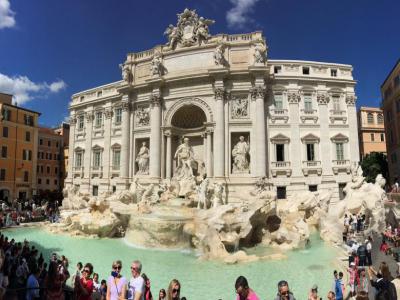
2) Piazza di Trevi & Fontana di Trevi (Trevi Square & Trevi Fountain) (must see)
The Trevi Fountain is one of Rome’s most iconic landmarks, drawing visitors to the eponymous Trevi Square all day long. Surprisingly, the fountain was not initially built in the heart of the city; instead, the city grew around it. Its name derives from the Latin word "trivium," which means “three streets,” as it sits at the junction of three streets: De Crocicchi, Poli, and Delle Muratte.
The fountain’s history dates back to 1629 when Pope Urban VIII commissioned Gian Lorenzo Bernini to redesign it, though his plans were never realized. Later, Pope Clement XII organized a competition in 1730, leading to Nicola Salvi's selection for the project, who incorporated the fountain into the rear of the Poli Palace. Salvi passed away before its completion. Giuseppe Pannini and other artists finalized the work in 1762.
Measuring over 26 meters in height and 49 meters in width, it is the largest Baroque fountain in Rome.
The Trevi Fountain features a Corinthian façade and bas-reliefs depicting the origins of the Acqua Vergine aqueduct, constructed in 19 BC. According to legend, a virgin guided Roman engineers to the aqueduct’s source, an event depicted in the fountain’s bas-reliefs. The aqueduct, which survived the Gothic invasions and was restored during the Middle Ages, still supplies water to the fountain today.
At the heart of the fountain is Oceanus, depicted riding a shell-shaped chariot drawn by two horses and guided by Tritons. The horses symbolize the sea’s contrasting moods-calm and turbulent. Flanking Oceanus are the statues of Abundance and Salubrity, representing prosperity and health. The symmetrical Rococo design combines dynamic artistry with Baroque grandeur, reflecting 18th-century European trends.
The Trevi Fountain is also known for the tradition of tossing coins, which promises a return to Rome. Popularized by the 1954 Hollywood film "Three Coins in the Fountain," visitors toss coins over their left shoulder with their right hand, generating daily about €3,000. This money, collected by municipal authorities, is donated to charity.
Celebrated in films like Roman Holiday and La Dolce Vita, the Trevi Fountain’s global fame is further evidenced by replicas worldwide. Access to the fountain is now limited to 400 visitors at a time, ensuring a more enjoyable visit to this timeless masterpiece. Surrounding the fountain are charming shops, restaurants, and gelaterias, making it a delightful spot to soak in Rome’s vibrant atmosphere.
Tip:
The fountain holds particular allure at night, especially after 10 pm when it is beautifully illuminated and the crowds dissipate, allowing you to enjoy the site almost exclusively.
The fountain’s history dates back to 1629 when Pope Urban VIII commissioned Gian Lorenzo Bernini to redesign it, though his plans were never realized. Later, Pope Clement XII organized a competition in 1730, leading to Nicola Salvi's selection for the project, who incorporated the fountain into the rear of the Poli Palace. Salvi passed away before its completion. Giuseppe Pannini and other artists finalized the work in 1762.
Measuring over 26 meters in height and 49 meters in width, it is the largest Baroque fountain in Rome.
The Trevi Fountain features a Corinthian façade and bas-reliefs depicting the origins of the Acqua Vergine aqueduct, constructed in 19 BC. According to legend, a virgin guided Roman engineers to the aqueduct’s source, an event depicted in the fountain’s bas-reliefs. The aqueduct, which survived the Gothic invasions and was restored during the Middle Ages, still supplies water to the fountain today.
At the heart of the fountain is Oceanus, depicted riding a shell-shaped chariot drawn by two horses and guided by Tritons. The horses symbolize the sea’s contrasting moods-calm and turbulent. Flanking Oceanus are the statues of Abundance and Salubrity, representing prosperity and health. The symmetrical Rococo design combines dynamic artistry with Baroque grandeur, reflecting 18th-century European trends.
The Trevi Fountain is also known for the tradition of tossing coins, which promises a return to Rome. Popularized by the 1954 Hollywood film "Three Coins in the Fountain," visitors toss coins over their left shoulder with their right hand, generating daily about €3,000. This money, collected by municipal authorities, is donated to charity.
Celebrated in films like Roman Holiday and La Dolce Vita, the Trevi Fountain’s global fame is further evidenced by replicas worldwide. Access to the fountain is now limited to 400 visitors at a time, ensuring a more enjoyable visit to this timeless masterpiece. Surrounding the fountain are charming shops, restaurants, and gelaterias, making it a delightful spot to soak in Rome’s vibrant atmosphere.
Tip:
The fountain holds particular allure at night, especially after 10 pm when it is beautifully illuminated and the crowds dissipate, allowing you to enjoy the site almost exclusively.
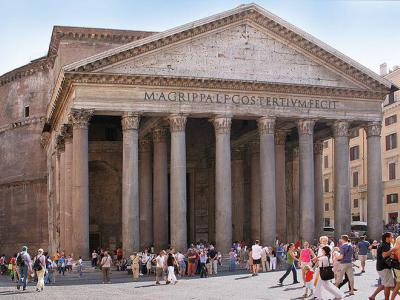
3) Pantheon (must see)
The Pantheon is one of Rome’s most iconic landmarks, renowned for its architectural brilliance. Originally a Roman temple, its name comes from the Ancient Greek "pan theos," which means dedication to all gods. Built on the site of a temple commissioned by consul Marcus Agrippa during Augustus’ reign, the current structure was completed under Emperor Hadrian around 126 AD. It was transformed into a Catholic Church of Saint Mary and the Martyrs in 609 AD, ensuring its preservation through centuries.
The Pantheon’s unique design combines a classical portico supported by Corinthian granite columns with a domed cylindrical structure (called a rotunda). The unsupported concrete dome, still the largest of its kind in the world, features a central oculus that provides natural light, ventilation, and symbolic celestial connections. The rotunda's harmonious dimensions-43 meters in both height and diameter-epitomize Roman engineering excellence, while its original massive bronze doors, each weighing over 20 tons, and intricate drainage system (allowing to effectively divert rainwater) highlight the ingenuity of its creators.
Throughout its history, the Pantheon has been a vibrant part of Roman life. It served as a burial site during the Renaissance, housing notable figures like painter Raphael and Italian kings Victor Emmanuel II and Umberto I. Its materials, such as bronze, have been repurposed for other projects like Bernini’s baldachin above the high altar of Saint Peter's Basilica. However, its core structure remains remarkably intact. Today, the church still host religious ceremonies, including masses, weddings, and Pentecost celebrations.
The Pantheon’s influence extends far beyond Rome. Its dome inspired architectural marvels like the Florence Cathedral and Rotunda of the U.S. Capital in Washington D.C., while its combination of classical and modern elements shaped countless government and academic buildings worldwide.
With over six million annual visitors, the Pantheon remains a symbol of Roman ingenuity and artistic achievement. Tourists can enjoy free entry to this historic site or soak in its splendor from Rotonda Square, savoring gelato while marveling at its timeless beauty.
Tip:
Incredible at night (from the outside), it is especially so if you enjoy musicians with talent and engagement... but beware of pickpockets.
The Pantheon’s unique design combines a classical portico supported by Corinthian granite columns with a domed cylindrical structure (called a rotunda). The unsupported concrete dome, still the largest of its kind in the world, features a central oculus that provides natural light, ventilation, and symbolic celestial connections. The rotunda's harmonious dimensions-43 meters in both height and diameter-epitomize Roman engineering excellence, while its original massive bronze doors, each weighing over 20 tons, and intricate drainage system (allowing to effectively divert rainwater) highlight the ingenuity of its creators.
Throughout its history, the Pantheon has been a vibrant part of Roman life. It served as a burial site during the Renaissance, housing notable figures like painter Raphael and Italian kings Victor Emmanuel II and Umberto I. Its materials, such as bronze, have been repurposed for other projects like Bernini’s baldachin above the high altar of Saint Peter's Basilica. However, its core structure remains remarkably intact. Today, the church still host religious ceremonies, including masses, weddings, and Pentecost celebrations.
The Pantheon’s influence extends far beyond Rome. Its dome inspired architectural marvels like the Florence Cathedral and Rotunda of the U.S. Capital in Washington D.C., while its combination of classical and modern elements shaped countless government and academic buildings worldwide.
With over six million annual visitors, the Pantheon remains a symbol of Roman ingenuity and artistic achievement. Tourists can enjoy free entry to this historic site or soak in its splendor from Rotonda Square, savoring gelato while marveling at its timeless beauty.
Tip:
Incredible at night (from the outside), it is especially so if you enjoy musicians with talent and engagement... but beware of pickpockets.
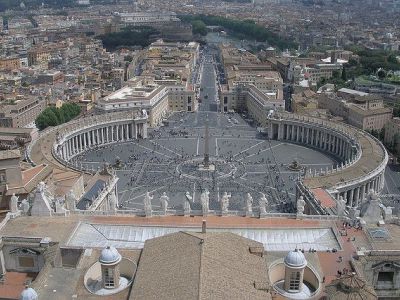
4) Piazza San Pietro (St. Peter's Square) (must see)
Saint Peter's Square is a grand plaza in front of Saint Peter's Basilica in Vatican City. Both the square and the basilica (the largest Christian temple and spiritual heart of Catholicism), are dedicated to Saint Peter, one of Jesus’s apostles, who is also regarded as the first Pope.
Dominating the square's center is the Vatican obelisk, a red granite structure, rising to approximately 25 meters (or 83 feet). Originally erected in Heliopolis, Egypt, it was moved to Rome by Emperor Caligula in the 1st century AD and was finally relocated to its current position in 1586 by engineer Domenico Fontana under Pope Sixtus V. The obelisk, adorned with bronze lions and a cross-topped Chigi family crest, has remained intact since antiquity. It serves as the plaza's focal point and symbolizes the triumph of Christianity over paganism.
Designed by Gian Lorenzo Bernini between 1656 and 1667 under Pope Alexander VII, the square was intended to maximize visibility for papal blessings. Bernini incorporated colossal Tuscan colonnades, which are four columns deep and comprise 284 columns and 88 pilasters. The colonnades encircle the oval-shaped plaza, symbolizing the "maternal arms of Mother Church." The trapezoidal approach enhances the visual impact, a hallmark of Baroque design.
The square also features two matching fountains, flanking the obelisk, created by Carlo Maderno and Bernini (in 1613 and 1675 respectively), balancing the architectural harmony. The fountains represent the life-giving waters of the Christian faith.
The paving of the square includes travertine lines that radiate outward, breaking up the vast stone surface. In 1817, circular stones were added to transform the obelisk into a giant sundial, marking the sun’s position as it enters each zodiac sign.
Saint Peter's Square is accessible via Conciliation Street, an avenue created between 1937 and 1950 following the demolition of the medieval “spina” area. Its removal, under Mussolini's directive, made the basilica visible from Saint Angel's Castle.
Apart from being an architectural marvel, today the square serves as a gathering space for momentous events and ceremonies within the Catholic Church. These attract annually millions of visitors and pilgrims from across the globe seeking to attend papal audiences and receive blessings from the Pope. During significant occasions like Easter Sunday and Christmas, the square transforms into a splendid backdrop for grand celebrations and religious rituals, much as for capturing memorable photos.
Dominating the square's center is the Vatican obelisk, a red granite structure, rising to approximately 25 meters (or 83 feet). Originally erected in Heliopolis, Egypt, it was moved to Rome by Emperor Caligula in the 1st century AD and was finally relocated to its current position in 1586 by engineer Domenico Fontana under Pope Sixtus V. The obelisk, adorned with bronze lions and a cross-topped Chigi family crest, has remained intact since antiquity. It serves as the plaza's focal point and symbolizes the triumph of Christianity over paganism.
Designed by Gian Lorenzo Bernini between 1656 and 1667 under Pope Alexander VII, the square was intended to maximize visibility for papal blessings. Bernini incorporated colossal Tuscan colonnades, which are four columns deep and comprise 284 columns and 88 pilasters. The colonnades encircle the oval-shaped plaza, symbolizing the "maternal arms of Mother Church." The trapezoidal approach enhances the visual impact, a hallmark of Baroque design.
The square also features two matching fountains, flanking the obelisk, created by Carlo Maderno and Bernini (in 1613 and 1675 respectively), balancing the architectural harmony. The fountains represent the life-giving waters of the Christian faith.
The paving of the square includes travertine lines that radiate outward, breaking up the vast stone surface. In 1817, circular stones were added to transform the obelisk into a giant sundial, marking the sun’s position as it enters each zodiac sign.
Saint Peter's Square is accessible via Conciliation Street, an avenue created between 1937 and 1950 following the demolition of the medieval “spina” area. Its removal, under Mussolini's directive, made the basilica visible from Saint Angel's Castle.
Apart from being an architectural marvel, today the square serves as a gathering space for momentous events and ceremonies within the Catholic Church. These attract annually millions of visitors and pilgrims from across the globe seeking to attend papal audiences and receive blessings from the Pope. During significant occasions like Easter Sunday and Christmas, the square transforms into a splendid backdrop for grand celebrations and religious rituals, much as for capturing memorable photos.
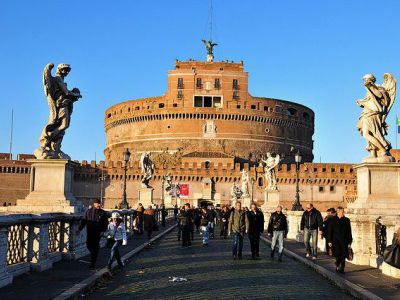
5) Museo Nazionale di Castel Sant'Angelo (National Museum of the Holy Angel Castle) (must see)
The Mausoleum of Hadrian, commonly known as the Castle of the Holy Angel, is a cylindrical tower in Rome’s Adriano Park. Commissioned by Emperor Hadrian between 134 and 139 AD as a family mausoleum, it was once the tallest building in Rome.
Initially, the mausoleum housed the ashes of Hadrian, his wife Sabina, and subsequent emperors, ending with Caracalla in 217. The structure was adorned with a garden-topped cylinder and a golden quadriga. Hadrian also built the nearby Pons Aelius bridge, which still offers a scenic route adorned with Baroque angel statues.
In 401, the mausoleum was converted into a fortress and incorporated into Rome's Aurelian Walls. Over centuries, its treasures and urns were scattered, including during the Visigoth sack of Rome in 410. The building also served as a defense during the Gothic siege in 537, with statues thrown down on attackers. Some remnants, like a capstone from Hadrian's urn, found their way into significant structures such as Saint Peter’s Basilica.
Legend holds that Archangel Michael appeared over the building in 590, signaling the end of a plague and inspiring the castle's current name. The statue of Michael atop the castle, first sculpted in 1536 and replaced by a bronze version in 1753, commemorates this event.
The popes transformed the structure into a fortress and residence. Pope Nicholas III linked it to Saint Peter's Basilica with the fortified Borgo Passage, while Clement VII used it as a refuge during the 1527 Sack of Rome (by the mutinous troops of the Holy Roman Emperor, Charles V). The castle also became a prison, housing figures like the Italian philosopher and astrologer Giordano Bruno. Executions occurred in its courtyard, and the structure was immortalized in Puccini’s opera Tosca.
Decommissioned as a fortress in 1901, the castle now operates as a museum, attracting over a million visitors per year. It offers a fascinating display, featuring cannons, armor, and ornately decorated papal apartments. A highlight is the hidden passageway connecting the Vatican to the castle.
Visitors can enjoy coffee with incredible views of Saint Peter's Basilica at the on-site café. For breathtaking panoramas of Rome and Vatican City, head to the rooftop terrace, ideal on clear days or evenings to experience the city's vibrant nighttime charm. While there is some walking involved, the museum is easily navigable and offers a memorable blend of history, architecture, and stunning vistas.
Initially, the mausoleum housed the ashes of Hadrian, his wife Sabina, and subsequent emperors, ending with Caracalla in 217. The structure was adorned with a garden-topped cylinder and a golden quadriga. Hadrian also built the nearby Pons Aelius bridge, which still offers a scenic route adorned with Baroque angel statues.
In 401, the mausoleum was converted into a fortress and incorporated into Rome's Aurelian Walls. Over centuries, its treasures and urns were scattered, including during the Visigoth sack of Rome in 410. The building also served as a defense during the Gothic siege in 537, with statues thrown down on attackers. Some remnants, like a capstone from Hadrian's urn, found their way into significant structures such as Saint Peter’s Basilica.
Legend holds that Archangel Michael appeared over the building in 590, signaling the end of a plague and inspiring the castle's current name. The statue of Michael atop the castle, first sculpted in 1536 and replaced by a bronze version in 1753, commemorates this event.
The popes transformed the structure into a fortress and residence. Pope Nicholas III linked it to Saint Peter's Basilica with the fortified Borgo Passage, while Clement VII used it as a refuge during the 1527 Sack of Rome (by the mutinous troops of the Holy Roman Emperor, Charles V). The castle also became a prison, housing figures like the Italian philosopher and astrologer Giordano Bruno. Executions occurred in its courtyard, and the structure was immortalized in Puccini’s opera Tosca.
Decommissioned as a fortress in 1901, the castle now operates as a museum, attracting over a million visitors per year. It offers a fascinating display, featuring cannons, armor, and ornately decorated papal apartments. A highlight is the hidden passageway connecting the Vatican to the castle.
Visitors can enjoy coffee with incredible views of Saint Peter's Basilica at the on-site café. For breathtaking panoramas of Rome and Vatican City, head to the rooftop terrace, ideal on clear days or evenings to experience the city's vibrant nighttime charm. While there is some walking involved, the museum is easily navigable and offers a memorable blend of history, architecture, and stunning vistas.
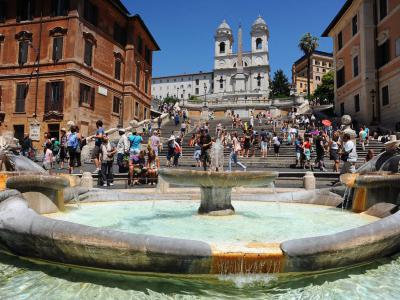
6) Scalinata di Trinita dei Monti (Spanish Steps) (must see)
The Spanish Steps, a monumental stairway of 135 steps, holds the distinction of being the longest and widest in Europe. The steps link Spanish Square, at the base, with the Trinity of the Mountains Square at the top.
The stairway was completed under Pope Clement XI in 1717, deriving its name from the nearby Spanish Embassy to the Holy See. Financed in part by a French diplomat, it features Baroque elements, inspired by garden stairs, and incorporates symbolic decorations such as the Bourbon heraldic lily flowers and papal eagles.
As a cultural and seasonal hub hosting public events such as Christmas cribs, spring azalea displays, and a flower market, the Spanish Steps have captivated artists and people of letters since the 18th century. Among them was the renowned English poet, John Keats, who lived and died practically next door. His house, at the base of the steps (located to the right, if you face the stairs), is now a museum.
Other nearby landmarks include the Ferrari di Valbona Palace, redesigned in 1936, and Babington's tea room, a resilient establishment that has withstood two world wars and numerous adversities, ultimately becoming a beloved tourist attraction.
The steps' cinematic appeal also made them a backdrop for numerous films, including the Hollywood blockbuster “Roman Holiday” made in 1953, starring Audrey Hepburn and Gregory Peck. In the scene where Joe Bradley, played by Peck, meets Princess Ann, played by Hepburn, she sits on the steps, enjoying the view and eating ice cream. Fresh after the haircut, the princess takes compliments for her new look and makes up a story that she has run away from school. She accepts his proposal to spend the day together before she returns, and thus the Roman Holiday story begins!
Other filmmakers also made a mark on the steps, such as “The Talented Mr. Ripley” movie with Matt Damon, shot in 1999, and “Mission: Impossible – Dead Reckoning Part One,” featuring Tom Cruise, which premiered at the steps on June 19, 2023.
Consequently, the Spanish Steps became a magnet for aspiring models, affluent Romans, international travelers, and people from all walks of life. The tradition of gathering here is deeply ingrained in the locals and visitors alike. Today, the steps are protected by strict regulations against loitering, eating, or damaging, with heavy fines introduced to maintain decorum.
Tip:
The staircase offers picturesque views of Rome from its pinnacle, particularly at sunset-a truly unbeatable sight!
The afternoon and late hours are the best for visiting, so to avoid the heat of the day.
Alongside tourist activities such as carriage rides, you'll find nearby an array of shops and bars worth exploring.
The stairway was completed under Pope Clement XI in 1717, deriving its name from the nearby Spanish Embassy to the Holy See. Financed in part by a French diplomat, it features Baroque elements, inspired by garden stairs, and incorporates symbolic decorations such as the Bourbon heraldic lily flowers and papal eagles.
As a cultural and seasonal hub hosting public events such as Christmas cribs, spring azalea displays, and a flower market, the Spanish Steps have captivated artists and people of letters since the 18th century. Among them was the renowned English poet, John Keats, who lived and died practically next door. His house, at the base of the steps (located to the right, if you face the stairs), is now a museum.
Other nearby landmarks include the Ferrari di Valbona Palace, redesigned in 1936, and Babington's tea room, a resilient establishment that has withstood two world wars and numerous adversities, ultimately becoming a beloved tourist attraction.
The steps' cinematic appeal also made them a backdrop for numerous films, including the Hollywood blockbuster “Roman Holiday” made in 1953, starring Audrey Hepburn and Gregory Peck. In the scene where Joe Bradley, played by Peck, meets Princess Ann, played by Hepburn, she sits on the steps, enjoying the view and eating ice cream. Fresh after the haircut, the princess takes compliments for her new look and makes up a story that she has run away from school. She accepts his proposal to spend the day together before she returns, and thus the Roman Holiday story begins!
Other filmmakers also made a mark on the steps, such as “The Talented Mr. Ripley” movie with Matt Damon, shot in 1999, and “Mission: Impossible – Dead Reckoning Part One,” featuring Tom Cruise, which premiered at the steps on June 19, 2023.
Consequently, the Spanish Steps became a magnet for aspiring models, affluent Romans, international travelers, and people from all walks of life. The tradition of gathering here is deeply ingrained in the locals and visitors alike. Today, the steps are protected by strict regulations against loitering, eating, or damaging, with heavy fines introduced to maintain decorum.
Tip:
The staircase offers picturesque views of Rome from its pinnacle, particularly at sunset-a truly unbeatable sight!
The afternoon and late hours are the best for visiting, so to avoid the heat of the day.
Alongside tourist activities such as carriage rides, you'll find nearby an array of shops and bars worth exploring.
